
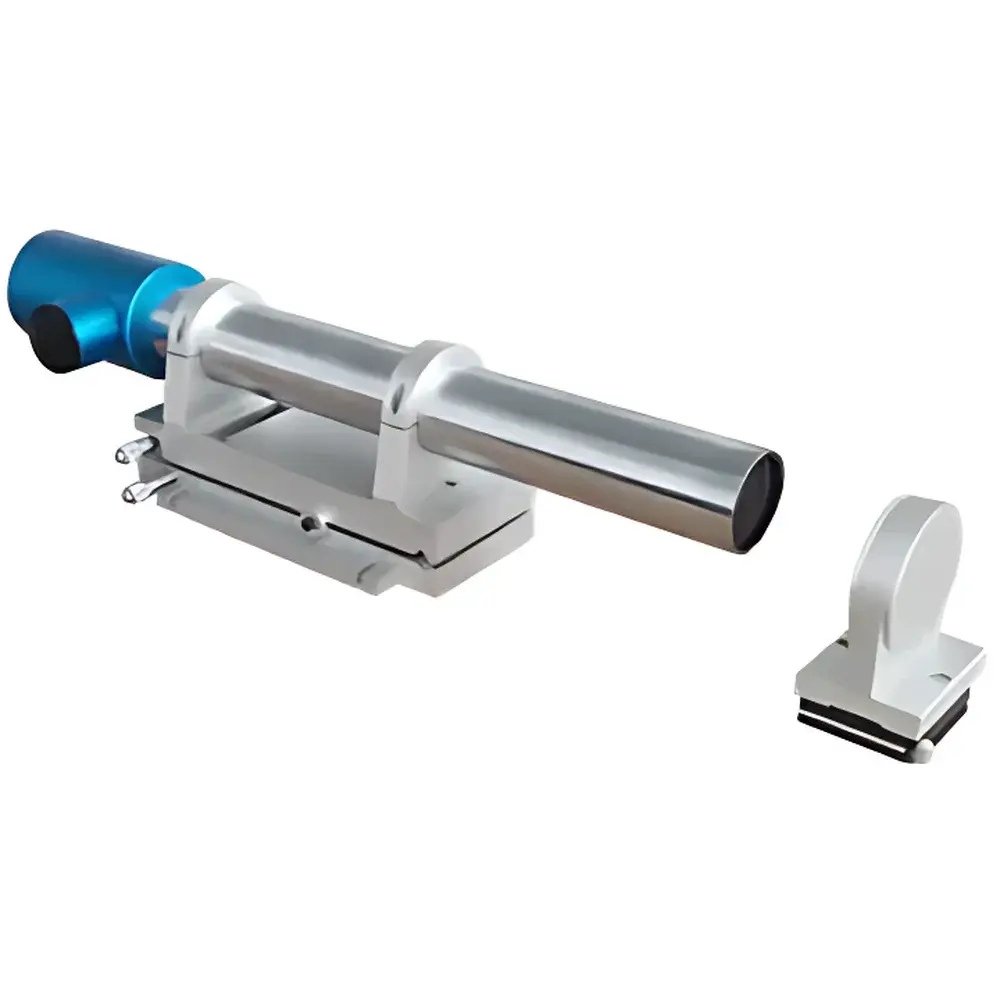
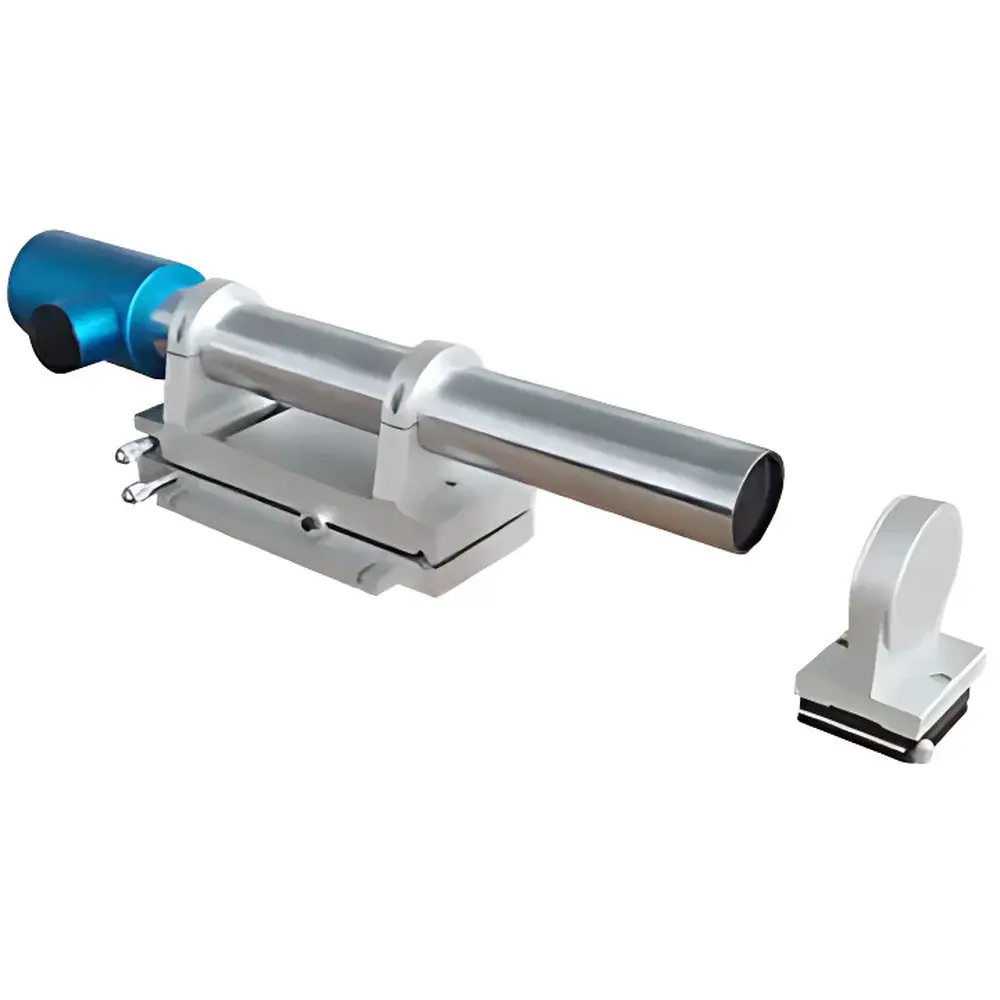
YANRUN YRUH5000U Dual-Axis Photoelectric Autocollimator (0.1 arcsec Resolution)
| Brand | YANRUN |
|---|---|
| Origin | Shanghai, China |
| Manufacturer Type | Direct Manufacturer |
| Model | YRUH5000U |
| Optical Focal Length | 500 mm |
| Objective Aperture | 50 mm |
| Light Source | High-Stability Semiconductor LED |
| Interface | USB 2.0 / 3.0 |
| Detector | High-Resolution Position-Sensitive Photodetector (PSD) or CMOS Imaging Sensor |
| Angular Resolution | Adjustable from 1.0 to 0.01 arcsec |
| Accuracy (Center Range) | ≤ ±0.1 arcsec within ±100 arcsec |
| Accuracy (Extended Range) | ≤ ±0.15 arcsec within ±300 arcsec |
| Repeatability | 0.05 arcsec |
| Maximum Field of View | 1200″ × 1000″ (arcsec) |
| Mass | 4.3 kg |
| Operating System | Windows 7/10/11 (64-bit), Intel Core i3-4th Gen or higher, ≥2.3 GHz CPU |
Overview
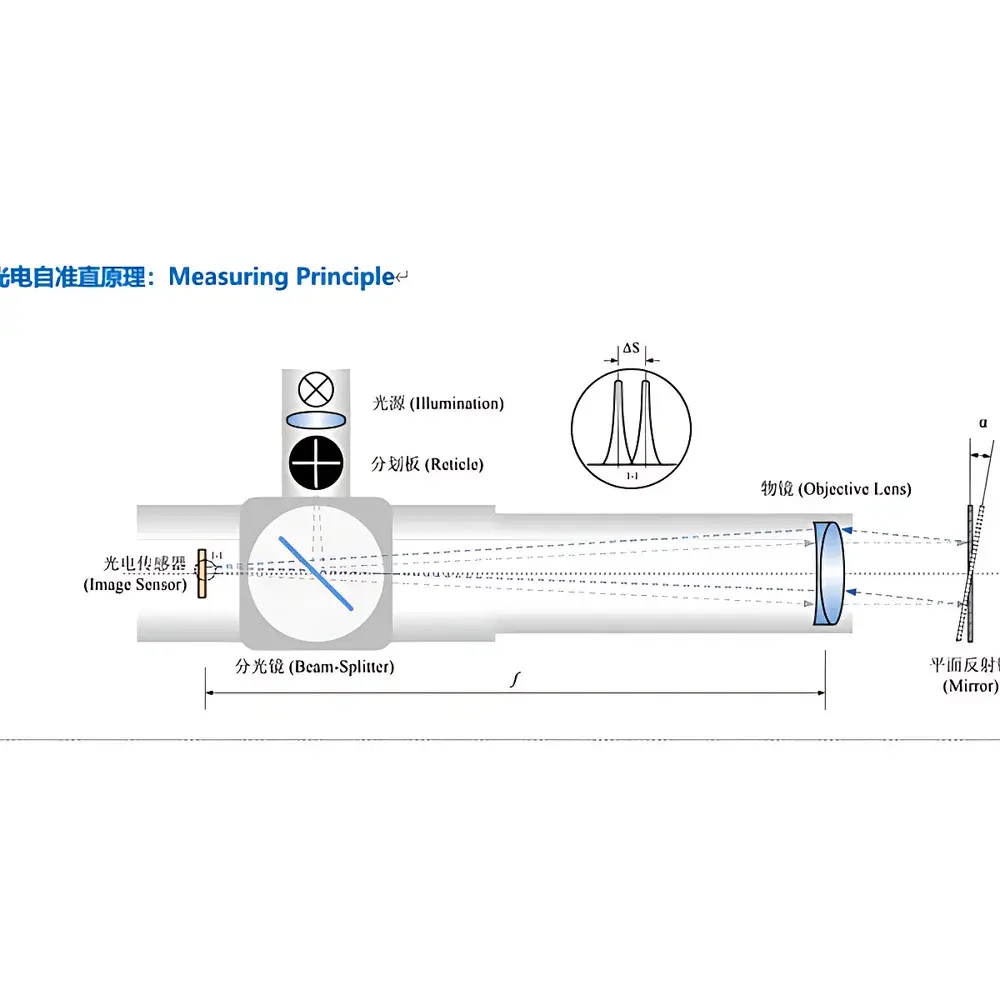
The YANRUN YRUH5000U Dual-Axis Photoelectric Autocollimator is an advanced angular metrology instrument engineered for high-precision, non-contact measurement of minute angular deviations in optical and mechanical systems. It operates on the fundamental principle of optical autocollimation: a collimated beam—generated by projecting a reticle located at the focal plane of a 500 mm focal-length objective lens—is directed onto a reflective surface (e.g., a precision mirror). The reflected beam retraces its path and reimages the reticle onto a high-resolution position-sensitive photodetector or CMOS imaging sensor, also positioned at the same focal plane. Any angular tilt α of the reflector induces a linear displacement ΔS of the imaged reticle, related by ΔS = 2f·tan(α) ≈ 2f·α (for small angles in radians). This geometric relationship enables traceable, sub-arcsecond angular quantification with exceptional linearity and stability. Designed for laboratory-grade calibration, machine tool alignment, and optical assembly verification, the YRUH5000U replaces traditional visual autocollimators with digital real-time imaging, eliminating observer-dependent parallax and human aiming error.
Key Features
- Dual-axis simultaneous measurement of X- and Y-direction angular deviations, enabling full 2D angular vector analysis without mechanical reorientation.
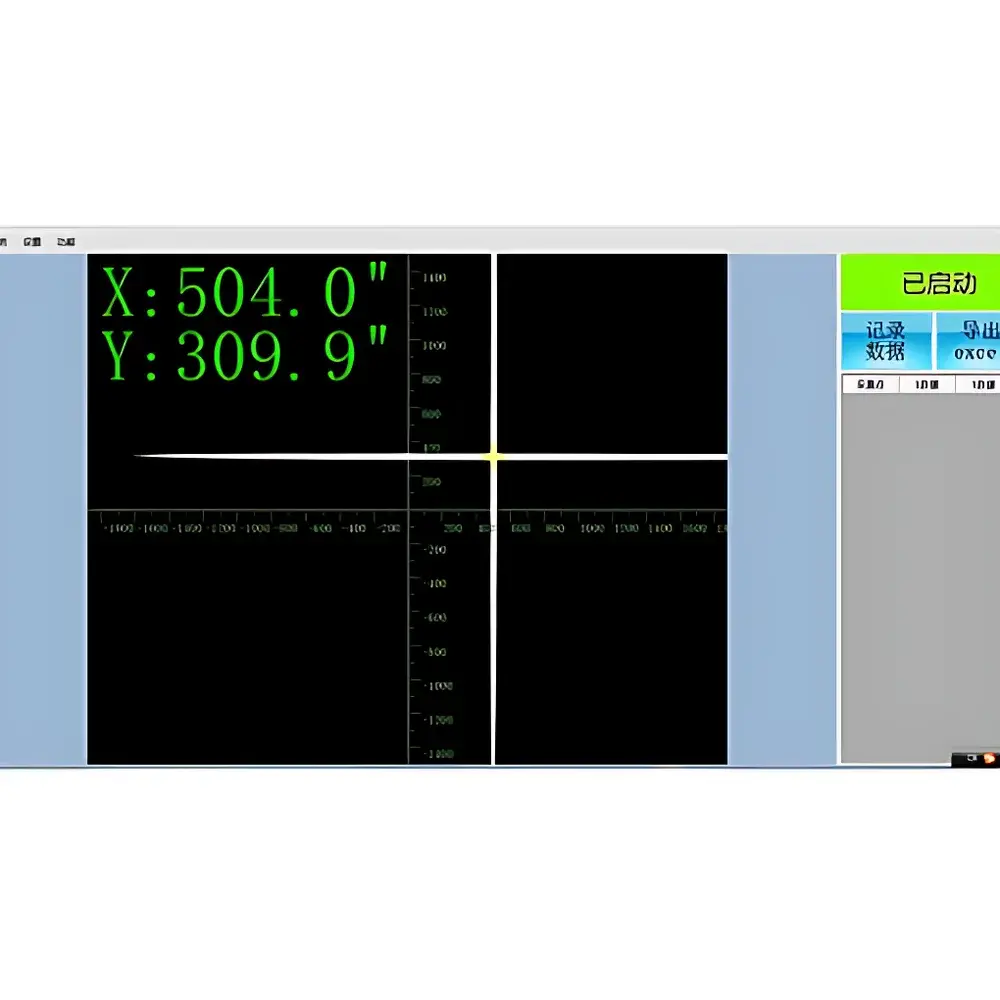
- Real-time electronic eyepiece interface with live centroid tracking and dynamic crosshair overlay—supports automated drift compensation and continuous monitoring.
- Adjustable angular resolution down to 0.01 arcsec, calibrated and verified under ISO 10110-5 and ISO 21087 metrological conditions.
- Integrated long-life semiconductor LED illumination system (rated >20,000 hours), ensuring spectral stability and minimal thermal drift during extended operation.
- Compact, rigid aluminum alloy housing (4.3 kg total mass) with precision-machined kinematic base for vibration-damped mounting on optical tables or industrial fixtures.
- USB 2.0/3.0 plug-and-play connectivity with low-latency data acquisition; no external frame grabber or proprietary hardware required.
- Multi-language software interface supporting English, Chinese, Russian, and Korean—designed for international metrology labs and OEM integration.
Sample Compatibility & Compliance
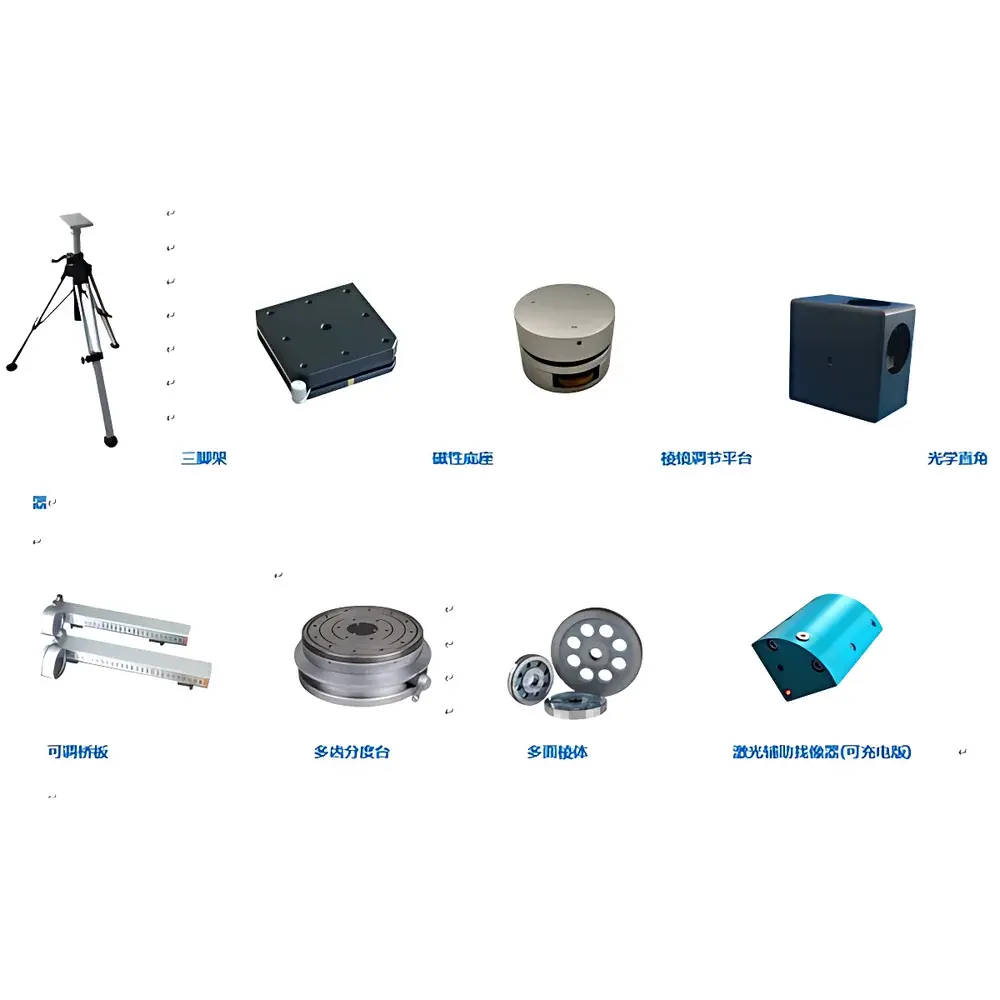
The YRUH5000U is compatible with standard optical flats, kinematic mirror mounts, magnetic bases, and custom retroreflective targets meeting ISO 10110 surface quality specifications (scratch-dig ≤ 10–5, λ/20 flatness). It supports optional accessories including laser-assisted target acquisition modules, multi-face polygons (8-, 12-, 23-, and 36-sided, Grade 0/1 per ISO 230-2), and motorized rotary stages for automated angular calibration. The instrument complies with electromagnetic compatibility (EMC) requirements per EN 61326-1:2013 and meets safety standards per IEC 61010-1:2010 for laboratory electrical equipment. Measurement traceability is maintained through factory calibration against NIM (National Institute of Metrology, China)-certified angle standards, with optional UKAS-accredited calibration certificates available upon request. Data integrity conforms to GLP/GMP-aligned audit trail requirements when used with validated software modules.
Software & Data Management
The bundled control software runs natively on Windows 7/10/11 (64-bit) and requires no runtime licenses. It provides real-time image capture, centroid calculation via sub-pixel Gaussian fitting, and automatic error curve generation per ISO 230-2 Annex B for straightness and flatness evaluation. All raw pixel displacement data, timestamped metadata, and environmental logs (ambient temperature, exposure time, gain settings) are stored in open HDF5 format. Export options include standardized Excel (.xlsx) reports compliant with ISO/IEC 17025 documentation requirements, CSV for statistical process control (SPC) integration, and XML for LIMS interoperability. Optional modules support verticality/parallelism analysis (per ISO 230-1), rotational stage characterization (per ISO 230-4), and multi-instrument synchronization (1-to-N autocollimator networks). Software updates are delivered via secure HTTPS channel with SHA-256 signature verification.
Applications
- Precision alignment of CNC machine tool guideways, spindles, and hydrostatic bearing assemblies per ISO 230-1 and VDI/VDE 2617.
- Verification of optical component angular orientation in interferometer cavities, laser resonators, and adaptive optics systems.
- Calibration of high-accuracy rotary tables, indexing heads, and polygon mirrors used in encoder metrology.
- Plane flatness assessment using bridge-type or grid-based measurement protocols (e.g., diagonal method per ISO 10360-2).
- Aerospace structural assembly—wing spar alignment, satellite payload pointing verification, and inertial sensor mount leveling.
- Research-grade angular metrology in national metrology institutes, university optics laboratories, and quantum sensing facilities.
FAQ
What is the recommended warm-up time before high-accuracy measurements?
For measurements requiring ≤±0.1 arcsec uncertainty, power-on stabilization for ≥15 minutes is mandatory. For formal calibration or ISO/IEC 17025-compliant reporting, the instrument must be thermally equilibrated in a temperature-controlled environment (±0.5°C) for ≥24 hours prior to use.
Does the system support external triggering or synchronization with other metrology instruments?
Yes—the USB interface supports hardware TTL trigger input for synchronized acquisition across multiple sensors. Optional network-enabled firmware allows TCP/IP-based remote command execution and time-stamped data streaming.
Can the software generate ISO-compliant measurement reports?
Yes. The export module produces Excel reports containing uncertainty budgets, calibration history, environmental conditions, and pass/fail status against user-defined tolerances—all structured per ISO/IEC 17025 Clause 7.8 requirements.
Is the detector sensitive to ambient light or vibration?
The optical path includes narrowband interference filtering centered at the LED emission wavelength (typically 635 nm ±5 nm), minimizing ambient light interference. Mechanical isolation is achieved via internal damping mounts; however, operation on actively vibrating surfaces (>0.5 µm RMS at 10–100 Hz) is not recommended without supplemental passive isolation.
What is the maximum working distance for nominal accuracy?
The specified accuracy (≤±0.1 arcsec) is guaranteed at distances up to 1 meter under controlled lab conditions. At extended ranges (up to 5 m), accuracy degrades predictably due to beam divergence and air turbulence; correction algorithms are included in the advanced software module.




