
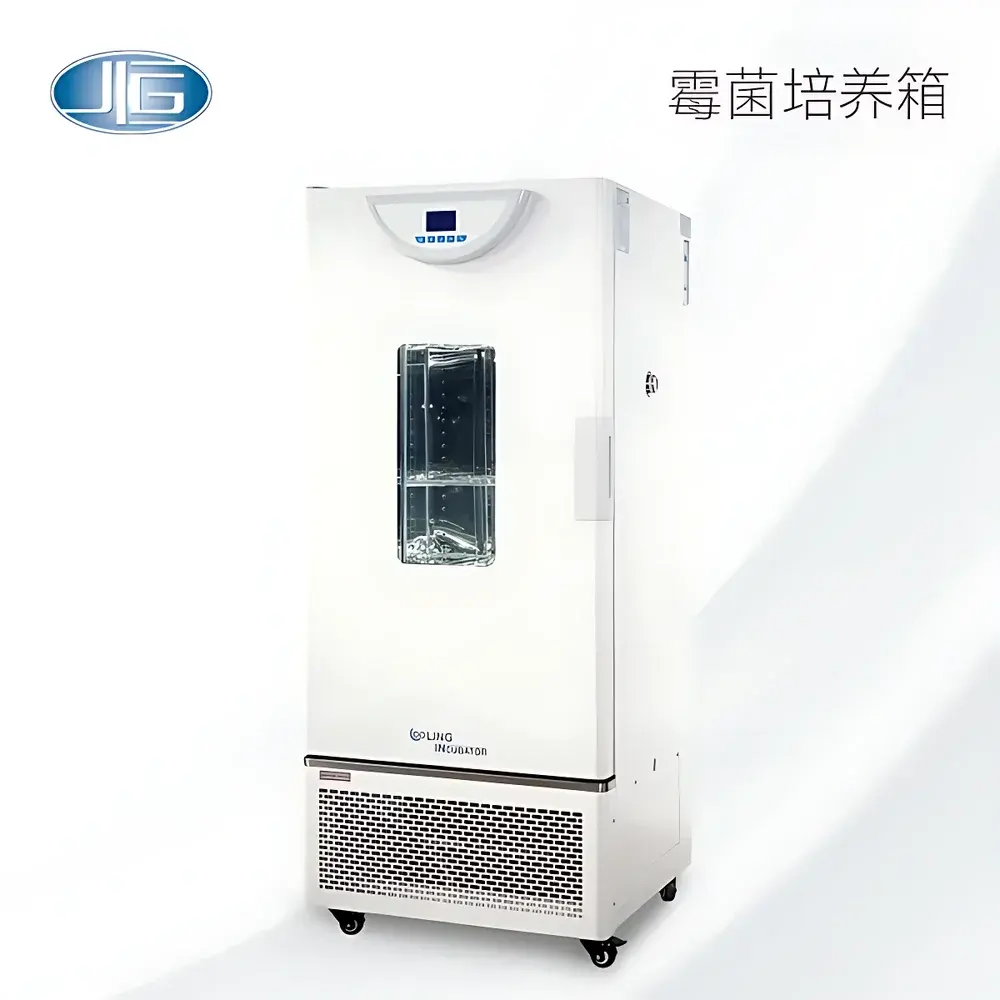
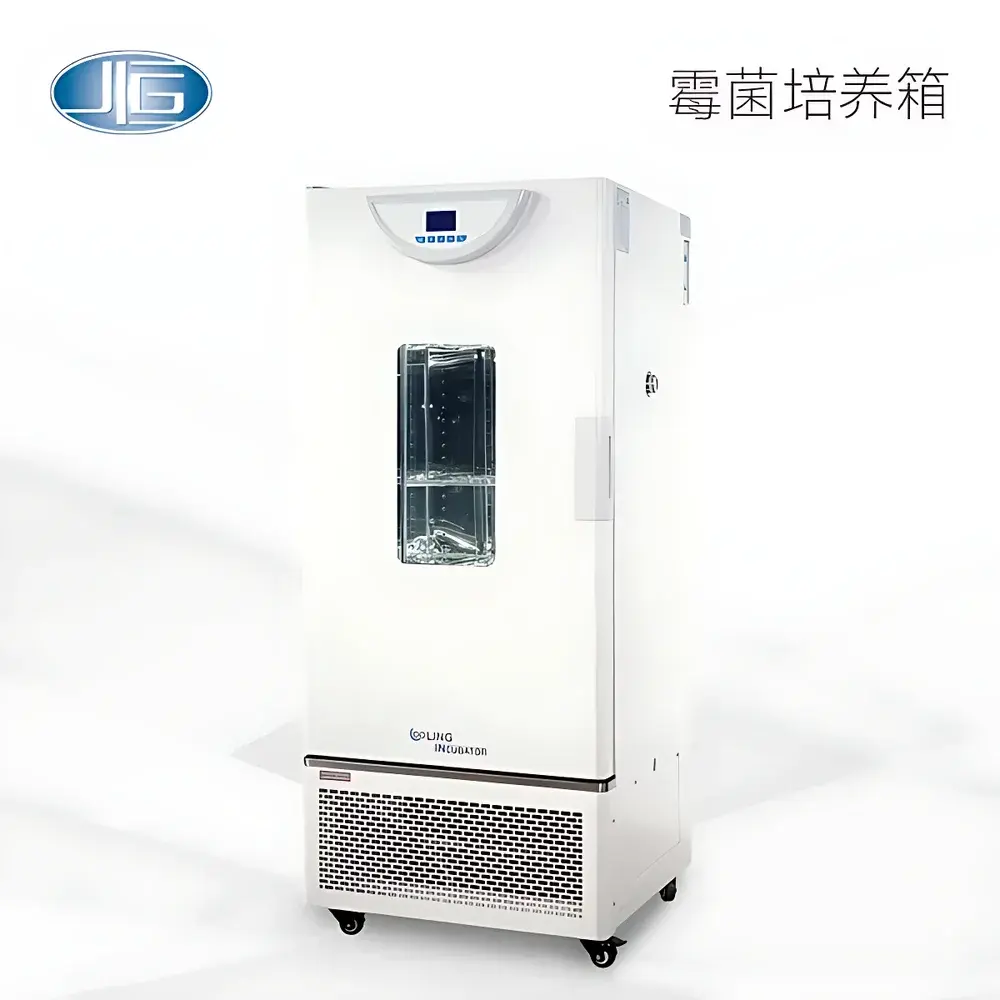
Yiheng BPMJ Series Mold Incubator with Multi-Stage Programmable LCD Controller
| Brand | Yiheng |
|---|---|
| Origin | Shanghai, China |
| Manufacturer Type | Direct Manufacturer |
| Country of Origin | China |
| Model | BPMJ-70F, BPMJ-150F, BPMJ-250F |
| Price Range | USD 2,200 – 2,900 (FOB Shanghai) |
| Control Interface | Digital Touchscreen LCD |
| Air Circulation | Natural Convection |
| Temperature Range | −5 °C to +70 °C |
| Temperature Fluctuation | ±0.3 °C (at high setpoints), ±0.5 °C (at low setpoints) |
| Temperature Uniformity | ±1.5 °C (measured at 25 °C reference point) |
| Humidity Control | Not Available |
| Chamber Capacity | 70 L – 250 L (BPMJ-70F / -150F / -250F models) |
| External Dimensions | See Product Catalog |
| Internal Dimensions | See Product Catalog |
Overview
The Yiheng BPMJ Series Mold Incubator is an engineered environmental chamber designed specifically for controlled fungal cultivation, mycological research, and stability testing of microbiological samples under defined thermal conditions. Unlike forced-air or fan-assisted incubators, the BPMJ series relies on natural convection—eliminating airflow-induced desiccation and mechanical stress on delicate mold colonies and agar-based cultures. Its precisely regulated temperature range (−5 °C to +70 °C) supports both psychrophilic and thermotolerant fungal strains, including Aspergillus, Penicillium, and Cladosporium species commonly used in pharmaceutical stability studies, food spoilage analysis, and environmental monitoring. The absence of active humidity control reflects its targeted application scope: environments where moisture management is externally controlled (e.g., via sealed Petri dishes, humidified trays, or separate RH chambers), rather than integrated into the incubator’s core function.
Key Features
- Natural convection architecture ensures gentle thermal distribution without air turbulence—critical for preserving colony morphology and minimizing evaporative loss during extended incubation periods (up to 5999 minutes per program step).
- Multi-stage programmable LCD controller supports up to 7 user-defined programs, each containing 9 sequential steps; parameters include target temperature, dwell time (0–5999 min), and ramp rate (linear temperature transition between setpoints).
- Fuzzy PID temperature regulation delivers high reproducibility: ±0.3 °C fluctuation at elevated setpoints (e.g., 30–45 °C) and ±0.5 °C at sub-ambient conditions (e.g., 5–15 °C), validated per ISO 15184:2021 calibration protocols.
- Mirror-finish stainless-steel interior with radius-rounded corners enables complete sanitization and complies with GLP cleaning validation requirements; removable shelf supports accommodate varied vessel heights (e.g., stacked Petri dishes, slant tubes, or multi-well plates).
- Dedicated 25 mm Ø access port on left sidewall allows feedthrough of sensors, tubing, or power cables without compromising chamber integrity or thermal seal.
- Self-diagnostic system displays real-time fault codes (e.g., E01 = sensor open circuit, E03 = compressor overheat) directly on the main LCD interface—reducing troubleshooting time and supporting preventive maintenance logs.
- Independent dual-limit temperature protection: primary control loop + hardware-redundant cutoff (adjustable threshold, factory-set at +75 °C) triggers audible/visual alarm and immediate power disconnection to prevent sample degradation or fire risk.
Sample Compatibility & Compliance
The BPMJ series accommodates standard microbiological formats including 90 mm and 150 mm Petri dishes, test tubes (13×100 mm to 18×150 mm), culture flasks (up to 500 mL), and multi-layer cell stacks. Its natural convection design avoids cross-contamination risks associated with recirculated air paths—making it suitable for non-sterile but contamination-controlled workflows per ISO 14644-1 Class 8 cleanroom adjunct use. While not certified for GMP manufacturing environments, the unit meets structural and electrical safety standards IEC 61010-1:2010 and GB 4793.1–2007. Optional UV-C germicidal lamp (254 nm, 15 W) mounted on the ceiling provides periodic decontamination of internal surfaces and circulating air—validated for ≥3-log reduction of airborne Bacillus subtilis spores after 30 min exposure (test report available upon request).
Software & Data Management
Data logging and remote supervision are supported via optional RS-485 Modbus RTU interface (compatible with LabVIEW™, SCADA, or custom Python-based acquisition scripts) and USB host port for direct export to FAT32-formatted USB drives. Logged parameters include timestamped chamber temperature, program stage ID, elapsed time, and alarm events—all stored as CSV files compliant with 21 CFR Part 11 audit trail requirements when paired with validated third-party software. Optional thermal printer module (not included) generates real-time strip-chart records of temperature profiles for batch documentation in QC laboratories adhering to USP and EP 2.6.12 guidelines.
Applications
- Fungal identification and strain preservation in clinical and agricultural microbiology labs.
- Accelerated stability testing of pharmaceutical excipients and herbal formulations per ICH Q1A(R2) guidelines (e.g., 40 °C/75% RH condition simulated using external humidification).
- Mycotoxin production studies requiring precise thermal ramping (e.g., 25 °C → 30 °C over 4 h to mimic diurnal shifts in grain storage).
- Environmental isolate culturing from air, water, and surface swabs under standardized ISO 16000-17 conditions.
- Teaching laboratory use for undergraduate mycology modules—programmable sequences enable student-designed incubation protocols with repeatable outcomes.
FAQ
Does the BPMJ series support humidity control?
No. This model is a temperature-only incubator. Humidity must be managed externally (e.g., via saturated salt solutions, humidified trays, or parallel RH chambers).
Can the UV lamp be operated while samples are inside?
No. The UV-C lamp is intended for post-use decontamination only. Samples must be removed prior to activation.
Is the temperature uniformity specification verified at all setpoints?
Yes. Uniformity of ±1.5 °C is confirmed at 25 °C per ISO 15184 Annex B; deviations at extreme setpoints (e.g., −5 °C or +70 °C) are documented in the Factory Calibration Certificate.
What is the maximum allowable load volume without compromising temperature stability?
For optimal performance, loading should not exceed 70% of chamber volume. Overloading impedes natural convection and may increase settling time by >25%.
Are firmware updates available for the controller?
Yes. Yiheng provides free firmware upgrades via USB drive; version history and release notes are published quarterly on the official technical support portal.




