
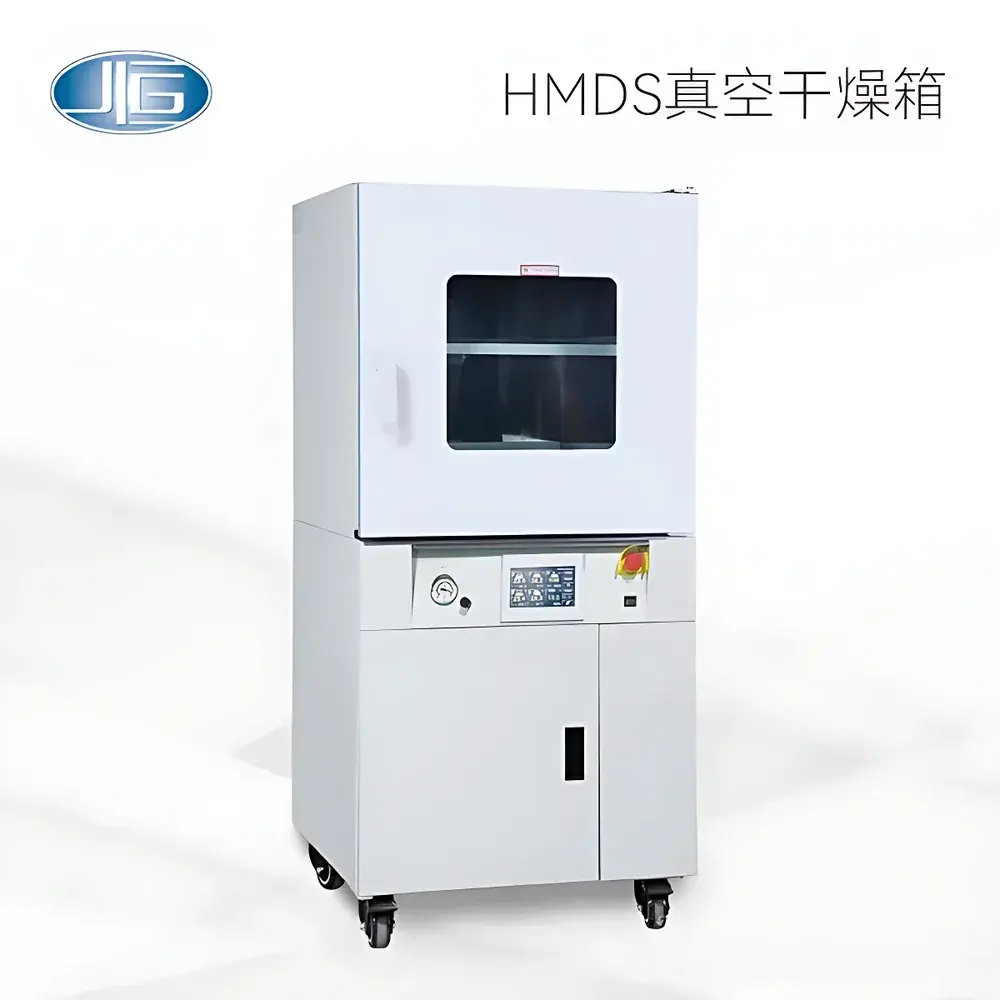
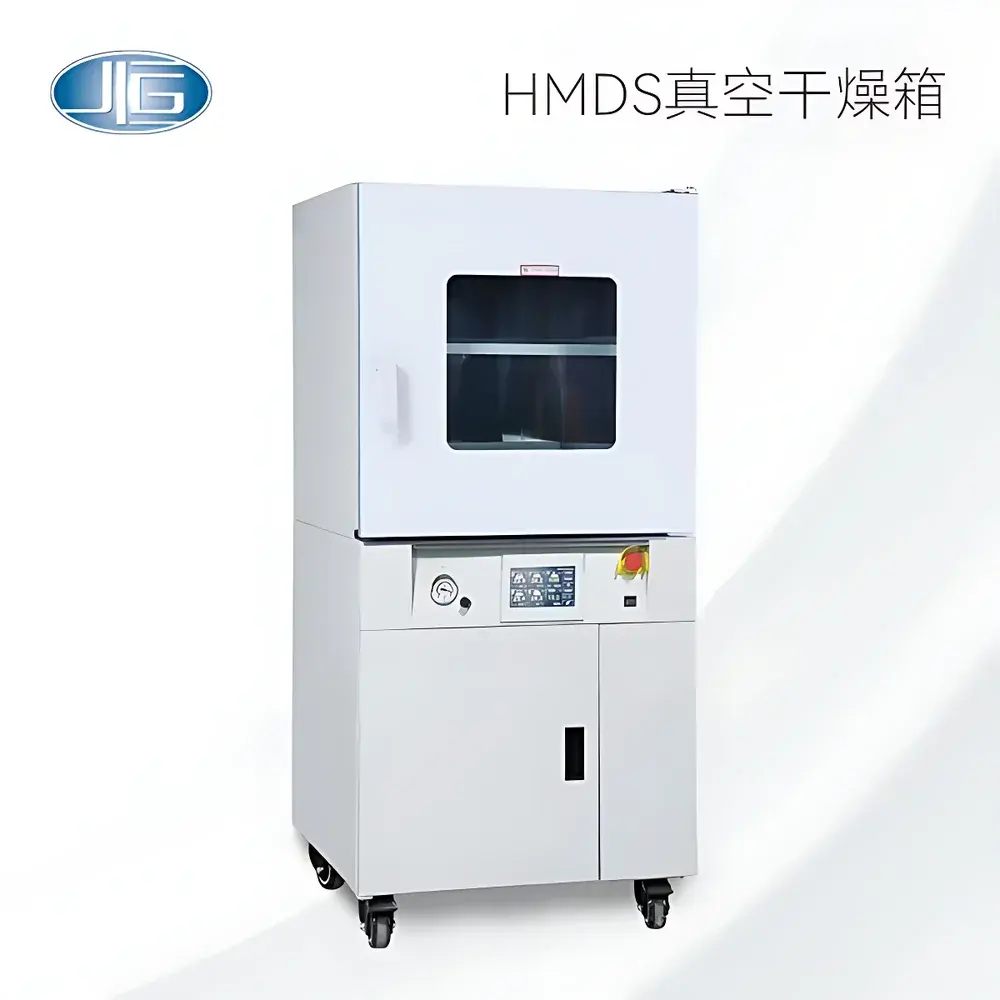
Yiheng BPZ-6060MS / BPZ-6090MS HMDS Vacuum Oven
| Brand | Yiheng |
|---|---|
| Origin | Jiangsu, China |
| Manufacturer Type | Direct Manufacturer |
| Region Classification | Domestic (China) |
| Models | BPZ-6060MS, BPZ-6090MS |
| Pricing | Upon Request |
| Chamber Material | 316 Stainless Steel |
| Vacuum Level | ≤1.0 × 10⁻⁴ Pa |
| Control Interface | Touchscreen HMI with Menu-Based Operation |
| Programmable Stages | Vacuum–N₂ Purge–Vacuum–HMDS Vapor Exposure–Venting Sequence |
| Communication | RS-485 Interface for Remote Monitoring |
| Safety Features | Over-Temperature Protection Port, Integrated Silicone Door Seal, Internal Heating Architecture (No Internal Electronics) |
| Optional | Low-Noise Dedicated Vacuum Pump |
Overview
The Yiheng BPZ-6060MS and BPZ-6090MS HMDS Vacuum Ovens are engineered for precision pre-bake processing of semiconductor wafers prior to photoresist spin-coating. These systems implement a controlled vacuum–inert gas purge–vapor exposure sequence to facilitate uniform hexamethyldisilazane (HMDS) surface modification of silicon dioxide and silicon nitride layers. HMDS treatment enhances photoresist adhesion by replacing surface hydroxyl groups with hydrophobic trimethylsilyl moieties—critical for high-resolution lithography in advanced node fabrication (e.g., ≤28 nm). Unlike conventional convection ovens, these units operate under ultra-high vacuum (≤1.0 × 10⁻⁴ Pa), eliminating oxygen and moisture to prevent oxidation and ensure reproducible monolayer formation. The internal heating architecture—where resistive elements are embedded within the chamber walls—eliminates internal wiring or sensors inside the process zone, minimizing particle generation and corrosion risk in Class 100–Class 10 cleanroom environments.
Key Features
- Ultra-high vacuum capability (≤1.0 × 10⁻⁴ Pa) achieved via integrated high-performance vacuum pumping system, optionally configured with low-noise dry scroll or turbomolecular pump assemblies.
- 316 stainless steel working chamber with electropolished interior surface—resistant to HMDS decomposition byproducts, acidic vapors, and routine solvent cleaning agents (e.g., acetone, IPA).
- Programmable multi-stage cycle control: independent setting of vacuum ramp rate, N₂ purge duration/pressure, HMDS vapor introduction timing, dwell time at target temperature, and controlled venting sequence.
- Touchscreen human-machine interface (HMI) with intuitive menu navigation; supports up to 20 user-defined process recipes with password-protected editing and audit trail logging.
- Double-layer tempered glass observation door with adjustable silicone gasket compression mechanism—ensures long-term vacuum integrity while enabling real-time visual monitoring without process interruption.
- Internal heating design isolates all electrical components from the vacuum chamber, reducing outgassing sources and eliminating risk of arcing or contamination during HMDS vapor exposure.
- Over-temperature safety cutoff port compatible with external limit controllers—meets IEC 61000-6-2 EMC immunity requirements for industrial semiconductor tool integration.
Sample Compatibility & Compliance
These ovens accommodate standard semiconductor wafer formats (100 mm to 300 mm diameter) on quartz or ceramic carriers. Chamber dimensions (BPZ-6060MS: 600 × 600 × 600 mm; BPZ-6090MS: 600 × 900 × 600 mm) support batch processing of multiple cassettes or FOUP-compatible fixtures. All wetted materials comply with SEMI F57 (Materials Compatibility for Semiconductor Processing Equipment) guidelines. The system architecture supports GLP/GMP-aligned operation: RS-485 interface enables integration with MES platforms for electronic batch record generation, and process parameter logging satisfies FDA 21 CFR Part 11 data integrity requirements when paired with validated third-party SCADA software.
Software & Data Management
The onboard controller stores full cycle logs—including vacuum pressure vs. time profiles, chamber temperature ramps, N₂ flow timestamps, and HMDS injection events—with timestamped entries and operator ID tagging. Data export is supported via USB flash drive (CSV format) or real-time streaming over RS-485 to host supervisory systems. Optional Yiheng ProcessLink™ software provides remote visualization of live chamber status, historical trend analysis, alarm event correlation, and automated report generation compliant with ISO 9001:2015 clause 8.5.2 (Identification and traceability).
Applications
- Semiconductor front-end manufacturing: HMDS priming of SiO₂, SiNₓ, and low-k dielectrics prior to i-line, KrF, or ArF photoresist application.
- MEMS device fabrication requiring oxide surface passivation before polymer patterning.
- High-reliability optoelectronic packaging where moisture-sensitive die attach adhesives require oxygen-free thermal curing.
- Research laboratories conducting surface chemistry studies of silanization kinetics under controlled partial pressures.
- Medical device component drying where ISO 13485-certified non-oxidative thermal treatment is mandated for metallic implants.
FAQ
What vacuum level is required for effective HMDS monolayer formation?
A base pressure ≤5.0 × 10⁻³ Pa is sufficient for most applications; however, ≤1.0 × 10⁻⁴ Pa ensures minimal residual H₂O/O₂ partial pressure—critical for sub-10 nm feature lithography and low-defect yield targets.
Can the system be integrated into a cluster tool environment?
Yes—the RS-485 interface supports Modbus RTU protocol, enabling handshake signaling with load-lock controllers and SECS/GEM-compliant host systems.
Is HMDS liquid delivery included as standard equipment?
No—HMDS vapor generation requires an external, temperature-controlled saturator and mass flow controller; the oven provides dedicated inlet/outlet ports and pressure-rated sealing flanges for seamless integration.
How is calibration traceability maintained?
Chamber temperature sensors (PT100 Class A) and vacuum gauges (capacitance manometer) are supplied with factory calibration certificates traceable to NIM (China National Institute of Metrology); annual recalibration intervals align with ISO/IEC 17025 requirements.
Does the system meet cleanroom compatibility standards?
Yes—surface roughness Ra ≤0.4 µm, zero organic sealants in the chamber, and absence of internal PCBs or conformal coatings satisfy SEMI E10-0303 particulate emission limits for Class 10 environments.



