
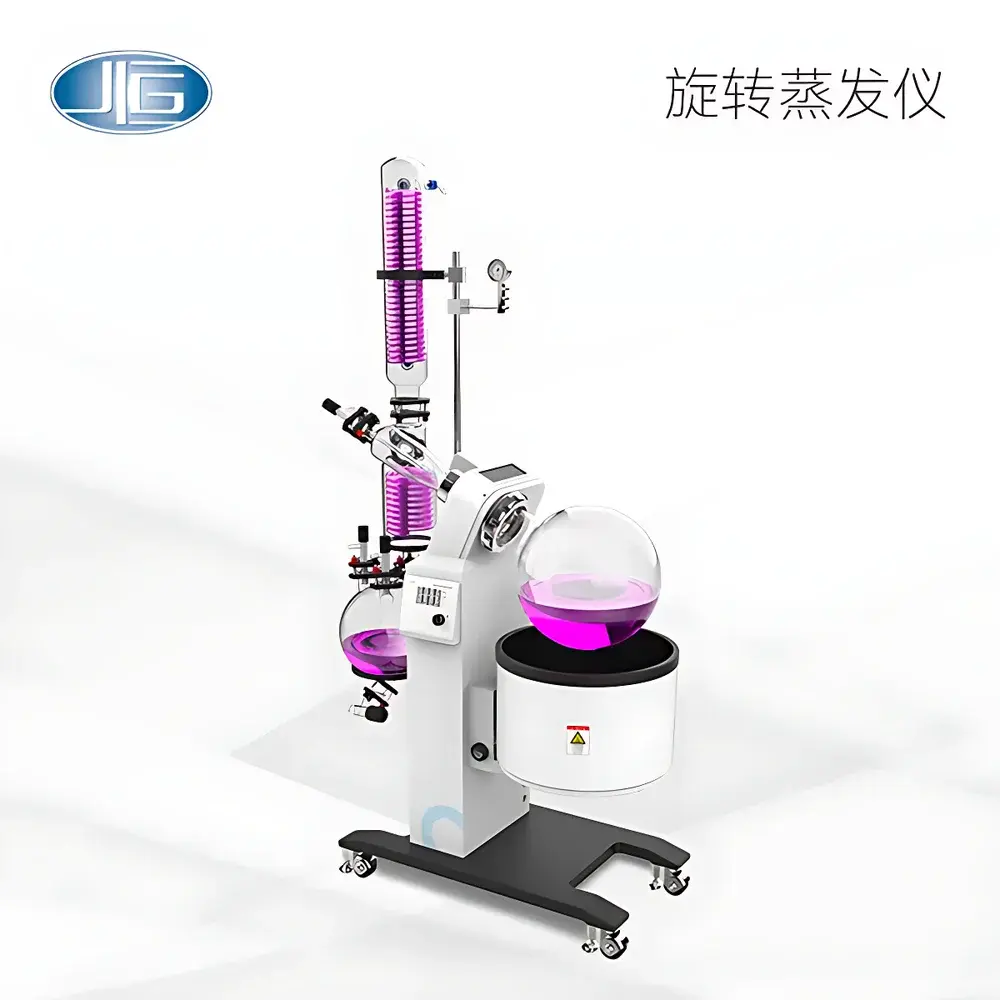
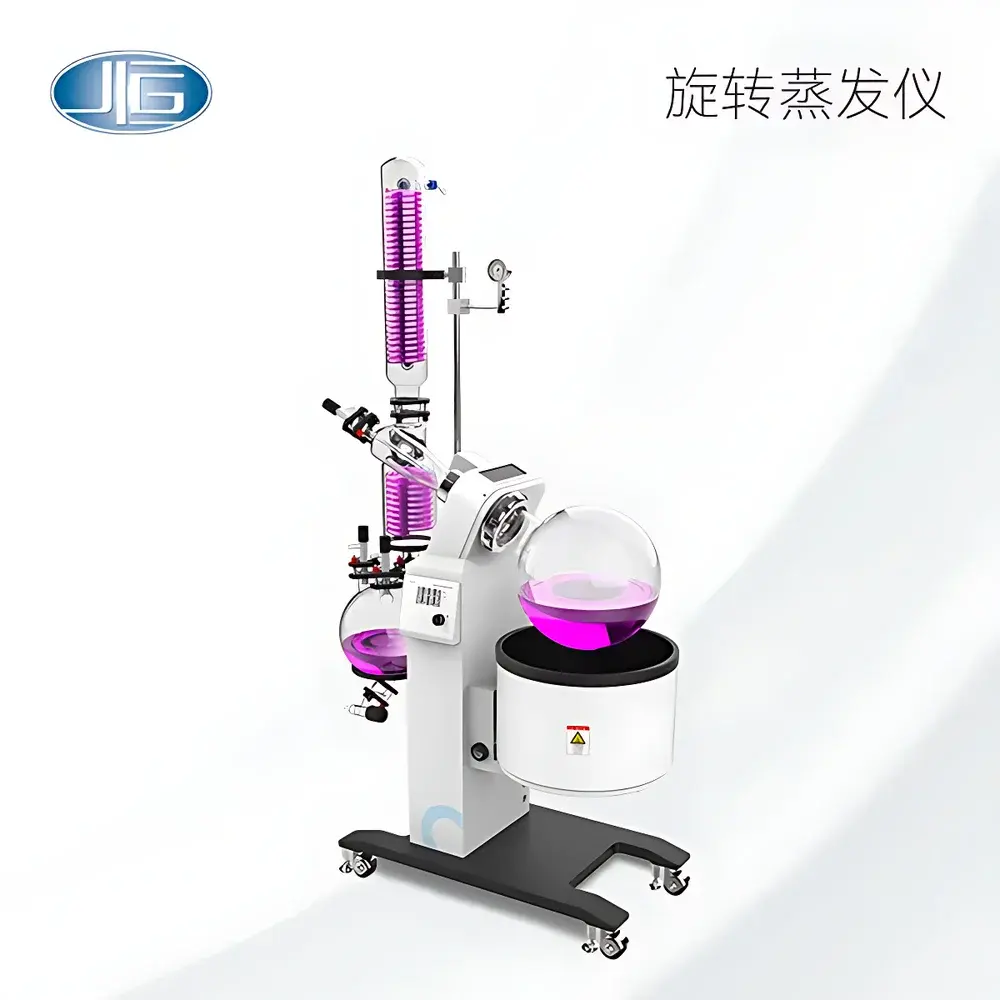
YIHENG BRE-Series Pilot-Scale Rotary Evaporator
| Brand | YIHENG |
|---|---|
| Model | BRE-05 / BRE-10 / BRE-20 / BRE-50 |
| Capacity | 5 L / 10 L / 20 L / 50 L |
| Rotation Speed | 20–140 rpm |
| Temperature Control Accuracy | ±1 °C |
| Origin | Shanghai, China |
| Manufacturer Type | Direct Manufacturer |
| Heating Mode | Water Bath (Standard) / Oil Bath (Optional) |
| Safety Features | Dry-run Protection, Dual-Temperature Limit Alarm, PTFE-Sealed Vacuum System, Teflon Drain Valve, Motorized Lift Mechanism, Flame-Retardant Bath Housing, Touch-Safe External Surface Temperature |
Overview
The YIHENG BRE-Series Pilot-Scale Rotary Evaporator is an engineered solution for controlled, efficient solvent removal and concentration under reduced pressure in laboratory-to-pilot-scale purification workflows. Based on the fundamental principle of rotary evaporation—simultaneous rotation, gentle heating, and vacuum-assisted vaporization—the system enables rapid, reproducible distillation of heat-sensitive compounds across pharmaceutical, biotechnology, fine chemical, and food R&D environments. Designed for scalability from benchtop development to process validation, each BRE model (BRE-05, BRE-10, BRE-20, BRE-50) supports volumetric throughput aligned with ICH Q5A/Q5C stability study requirements and USP <721> solvent residue testing protocols. The unit integrates seamlessly into GLP-compliant workflows when paired with validated vacuum controllers and temperature-calibrated bath systems.
Key Features
- Motorized Lift Mechanism: Precision wedge-belt drive ensures smooth, low-vibration vertical movement of the heating bath—critical for maintaining seal integrity and preventing mechanical stress during repeated thermal cycling.
- Dual-Mode Heating System: Standard water bath (up to 99 °C) and optional oil bath (up to 180 °C) configurations, both featuring flame-retardant housing and independent overtemperature cutoff (dual-stage limit switch + digital PID alarm).
- High-Integrity Vacuum Sealing: PTFE-coated O-rings and ground-glass joints rated for continuous operation at ≤5 mbar; sealing life extended ≥2× versus conventional silicone or Viton alternatives under cyclic thermal load.
- Optimized Condensation Architecture: Double-layer vertical condenser with enhanced surface area and anti-backflow geometry—ensures >95% condensate recovery efficiency across 5–50 L batch volumes per ISO 21738:2021 evaporative performance benchmarks.
- Intuitive Operator Interface: Backlit LCD display showing real-time bath temperature, rotation speed, timer, and system status; menu-driven navigation with rotary encoder input and PID-based parameter tuning.
- Process-Safe Drainage: PTFE-lined discharge valve located at the base of the collection flask—enabling contamination-free, quantitative transfer of recovered material without disassembly.
- Stabilized Mobile Platform: Reinforced chassis with locking casters and adjustable leveling feet—meets ISO 14644-1 Class 8 cleanroom compatibility requirements when anchored during operation.
Sample Compatibility & Compliance
The BRE-Series accommodates a broad range of solvents—including acetone, ethyl acetate, methanol, dichloromethane, and toluene—as well as aqueous and viscous matrices up to 500 cP viscosity. All wetted surfaces contact only borosilicate glass (DIN ISO 3585), PTFE, or electropolished stainless steel (316L), ensuring compliance with USP Class VI biocompatibility standards and FDA 21 CFR Part 11 data integrity requirements when used with audit-trail-enabled vacuum controllers. The system meets CE Machinery Directive 2006/42/EC and conforms to IEC 61010-1:2010 safety standards for laboratory equipment. Optional IQ/OQ documentation packages support GMP validation per Annex 15 of the EU Guidelines.
Software & Data Management
While the base unit operates via embedded microcontroller logic, optional integration with YIHENG’s EVAP-Link™ vacuum control module enables automated pressure ramping, endpoint detection via condensate weight stabilization, and CSV-exportable log files (timestamp, setpoint, actual temp/rpm/vacuum, alarms). All digital records include electronic signatures, user access levels, and immutable audit trails—fully aligned with ALCOA+ principles and 21 CFR Part 11 Subpart B technical controls. Calibration certificates traceable to NIST standards are available upon request.
Applications
- Concentration of natural product extracts (e.g., botanicals, fermentation broths) prior to HPLC analysis or lyophilization
- Solvent exchange in API intermediate purification under cGMP pilot batches
- Removal of residual solvents from polymer synthesis reactions per ICH Q3C(R8)
- Preparative-scale dehydration of heat-labile proteins and peptides
- Batch-wise concentration of flavor/aroma fractions in food R&D
- Recovery and recycling of high-value organic solvents in green chemistry workflows
FAQ
What is the maximum recommended operating vacuum level for the BRE-Series?
The system is optimized for stable operation between 5–50 mbar; lower pressures require external vacuum regulation and may affect condensation efficiency in high-boiling-point solvents.
Can the BRE-50 be validated for GMP manufacturing use?
Yes—when configured with documented IQ/OQ protocols, calibrated sensors, and integrated vacuum control with audit trail, it satisfies pre-commercial scale process validation requirements per FDA Guidance for Industry: Process Validation.
Is the water bath compatible with corrosive media such as hydrochloric acid solutions?
No—the standard water bath is intended for aqueous or neutral organic heating media only; aggressive acids require external oil bath or jacketed reactor coupling.
How often should the PTFE sealing components be replaced under continuous daily use?
Under typical 8-hr/day operation at ≤80 °C, replacement interval exceeds 12 months; lifetime is extended further with periodic cleaning using isopropanol and avoidance of mechanical twisting during assembly.



