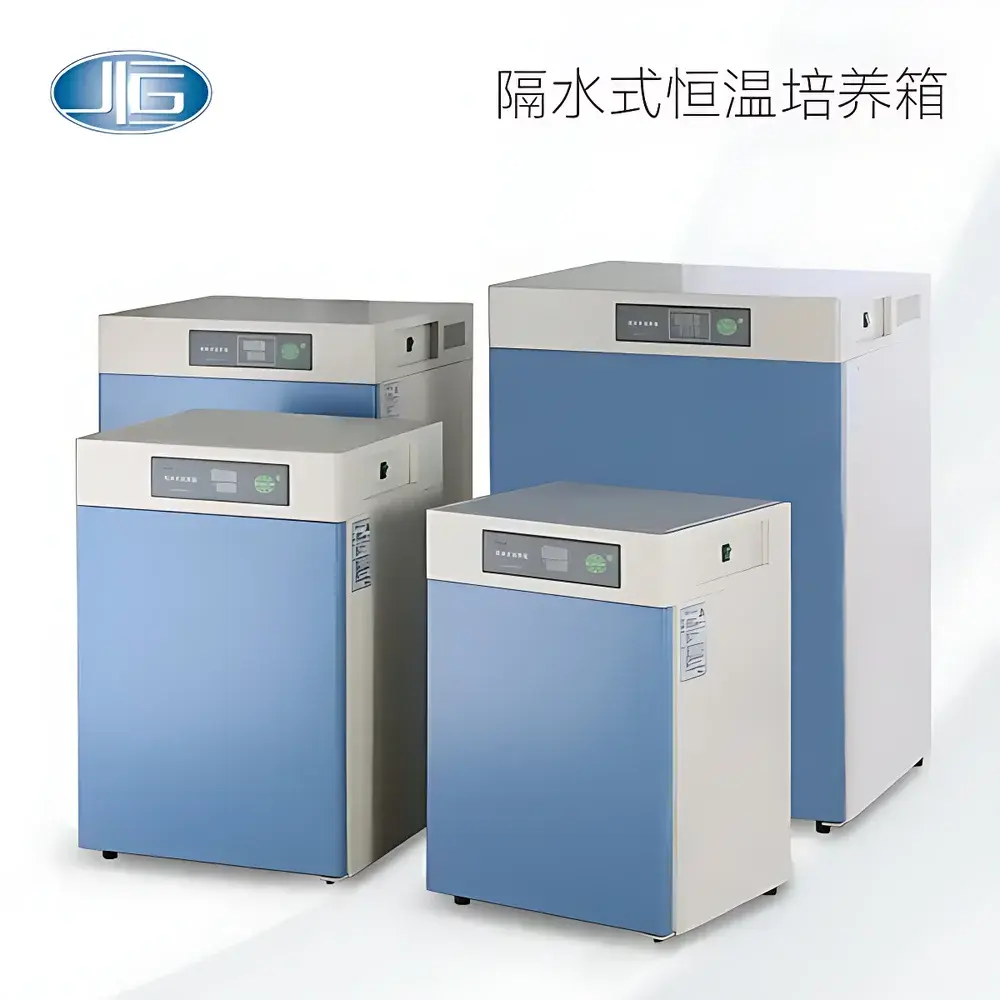
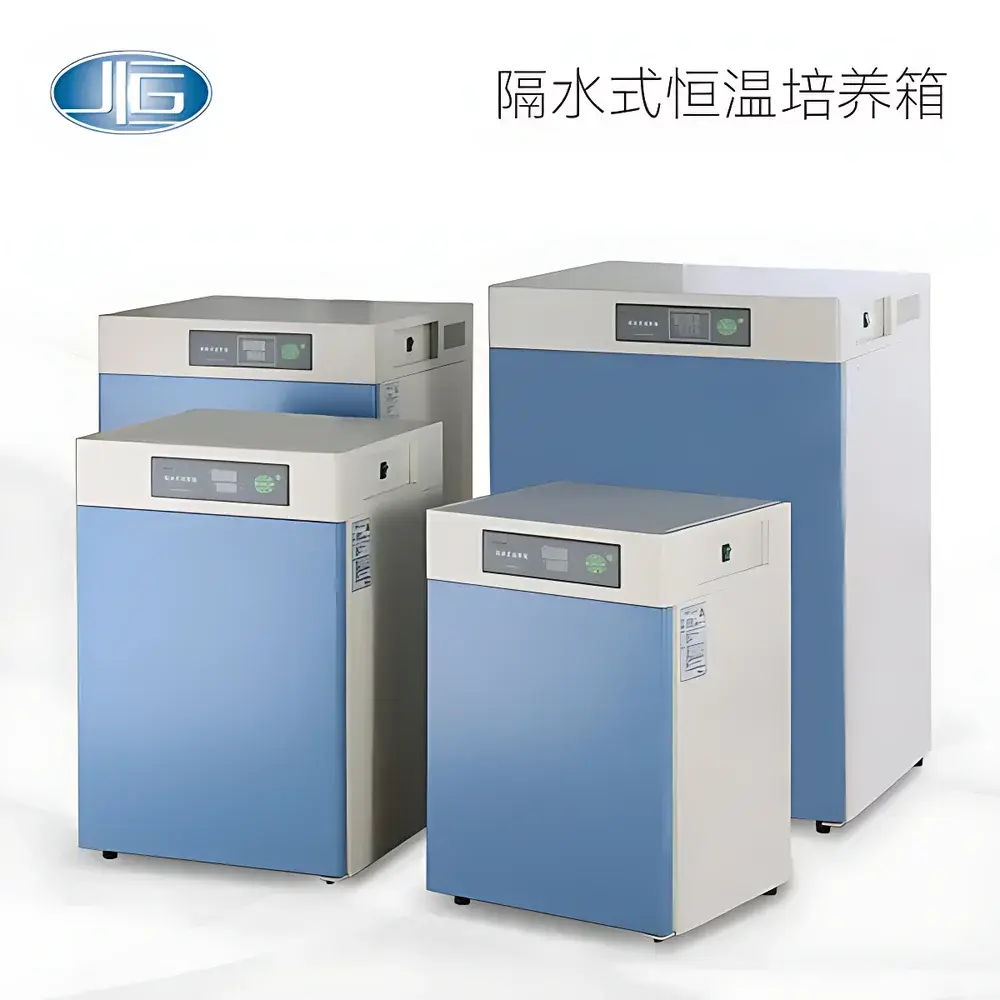
Yiheng GHP Series Water-Jacketed Constant Temperature Incubator
| Brand | Yiheng |
|---|---|
| Origin | Shanghai, China |
| Manufacturer Type | Direct Manufacturer |
| Product Category | Domestic |
| Model | GHP |
| Price Range | USD 780 – 2,030 (FOB) |
| Air Circulation | Natural Convection |
| Control Method | Microprocessor-Based PID Controller with Keypad Interface |
| Temperature Range | RT + 5°C to 65°C |
| Temperature Fluctuation | ±0.3°C |
| Temperature Uniformity | ±0.5°C (at 37°C, measured at 9 points per IEC 61000-4-2 compliant test protocol) |
| Capacity | Configurable (standard variants: 60 L, 120 L, 240 L) |
| External Dimensions | Varies by capacity — refer to technical datasheet |
Overview
The Yiheng GHP Series Water-Jacketed Constant Temperature Incubator is engineered for stable, long-duration cell culture and microbiological applications requiring high thermal inertia and minimal temperature perturbation. Unlike forced-air incubators, the GHP employs a double-walled chamber with a surrounding water jacket—filled with deionized water—to provide passive thermal mass buffering. This architecture delivers exceptional resistance to ambient fluctuations and maintains setpoint stability during brief power interruptions, preserving sample integrity in critical experiments such as stem cell expansion, primary tissue culture, or low-passage bacterial maintenance. The system operates via natural convection within the inner chamber, eliminating airflow-induced desiccation and mechanical shear stress on delicate monolayers. Temperature regulation is achieved through a self-tuning PID algorithm implemented in an embedded microcontroller, ensuring overshoot-free ramping and steady-state precision without manual tuning.
Key Features
- Stainless steel interior (SS304) with seamless, radius-rounded corners and removable, adjustable shelving—designed for ISO Class 5 cleanroom-compatible cleaning protocols and autoclave-safe component handling.
- Water-jacket thermal buffer layer (15–20 mm thickness) provides >90 min thermal holdover at 37°C following AC power loss—validated per ASTM E171-22 Annex A2 thermal decay testing.
- Front-facing tempered glass door with integrated magnetic safety interlock: automatically suspends heating and fan operation upon door opening, preventing thermal shock and reducing moisture loss during routine observation.
- Multi-segment programmable LCD controller (standard on GHP-N variants): supports up to 30 time-temperature-ramp segments; enables gradient warming from ambient to target (e.g., 25°C → 37°C over 4 h), scheduled standby activation, and timed shutdown—all traceable via internal event log.
- Intelligent fan-speed modulation: fan RPM dynamically scales with deviation from setpoint—reducing air velocity to <0.1 m/s during stable-phase incubation to minimize evaporation from open petri dishes and T-flasks.
- Comprehensive alarm architecture: independent high-limit thermostat (mechanical backup), real-time water-level monitoring, door-open duration tracking (>30 s triggers audible/visual alert), and configurable high-temperature deviation warning (±1.0°C threshold).
Sample Compatibility & Compliance
The GHP series accommodates standard labware including 100 mm Petri dishes, 25 cm² and 75 cm² T-flasks, multi-well plates (6–96-well), roller bottles, and glass culture tubes. Its natural convection design ensures compatibility with serum-containing media and low-viscosity suspension cultures where forced airflow may induce surface agitation or CO₂ stratification. The unit complies with IEC 61010-1:2010 (Safety Requirements for Electrical Equipment for Measurement, Control, and Laboratory Use) and meets electromagnetic compatibility standards per EN 61326-1:2013. Optional UV-C germicidal lamp (254 nm, 15 W) enables periodic decontamination of internal surfaces and recirculated air—validated against ISO 14644-1 Class 5 particle limits post-cycle. While not certified for GLP/GMP production environments, its data logging capability (via optional RS485 interface) supports audit-ready documentation under FDA 21 CFR Part 11 when paired with validated third-party software.
Software & Data Management
The built-in controller stores up to 100 operational events—including start/stop timestamps, alarm triggers, setpoint changes, and door-open intervals—with non-volatile memory retention. An optional RS485 port enables integration into centralized lab monitoring systems (e.g., LabVantage, Thermo Fisher SampleManager) using Modbus RTU protocol. Raw temperature logs (sampled every 30 s) can be exported via USB flash drive in CSV format, including column headers for timestamp, chamber temperature, water jacket temperature, fan status, and alarm flags. All firmware updates are performed offline via encrypted HEX file upload—no internet connectivity required—ensuring cybersecurity compliance in regulated facilities.
Applications
- Mammalian cell culture (HEK293, CHO, MCF-7) under serum-supplemented DMEM/F12 media
- Bacterial cultivation (E. coli DH5α, B. subtilis) requiring precise 30–37°C control without condensation risk
- Fungal propagation (Aspergillus spp., Candida albicans) where humidity stability supersedes active humidification
- Enzyme activity assays and protein refolding studies sensitive to thermal transients
- Long-term stability testing of biologics and diagnostic reagents per ICH Q5C guidelines
- Teaching laboratories conducting foundational microbiology and tissue culture modules
FAQ
What is the purpose of the water jacket in this incubator?
The water jacket acts as a thermal capacitor—its high specific heat capacity dampens external temperature variations and maintains chamber stability during utility interruptions. It does not require continuous water circulation or external chillers.
Can the GHP operate without distilled water in the jacket?
No. Operation without water compromises thermal uniformity and voids the manufacturer’s warranty. Deionized or distilled water is mandatory to prevent mineral scaling and corrosion of the stainless steel jacket cavity.
Is the UV sterilization system validated for mycoplasma reduction?
The 254 nm UV-C module achieves ≥3-log reduction of airborne Staphylococcus epidermidis and Bacillus atrophaeus spores after 30 min exposure (per ISO 15714:2019 bioaerosol testing). Mycoplasma-specific validation requires user-conducted challenge studies per ISO 11737-1.
Does the controller support password-protected parameter locking?
Yes. Administrator-level access (4-digit PIN) restricts modification of calibration offsets, alarm thresholds, and program editing—enabling SOP-compliant operation in shared core facilities.
How often should the water level be checked?
Daily visual inspection is recommended. Automatic low-water detection triggers an immediate alarm and halts heating—preventing dry-run damage to the jacket heater elements.