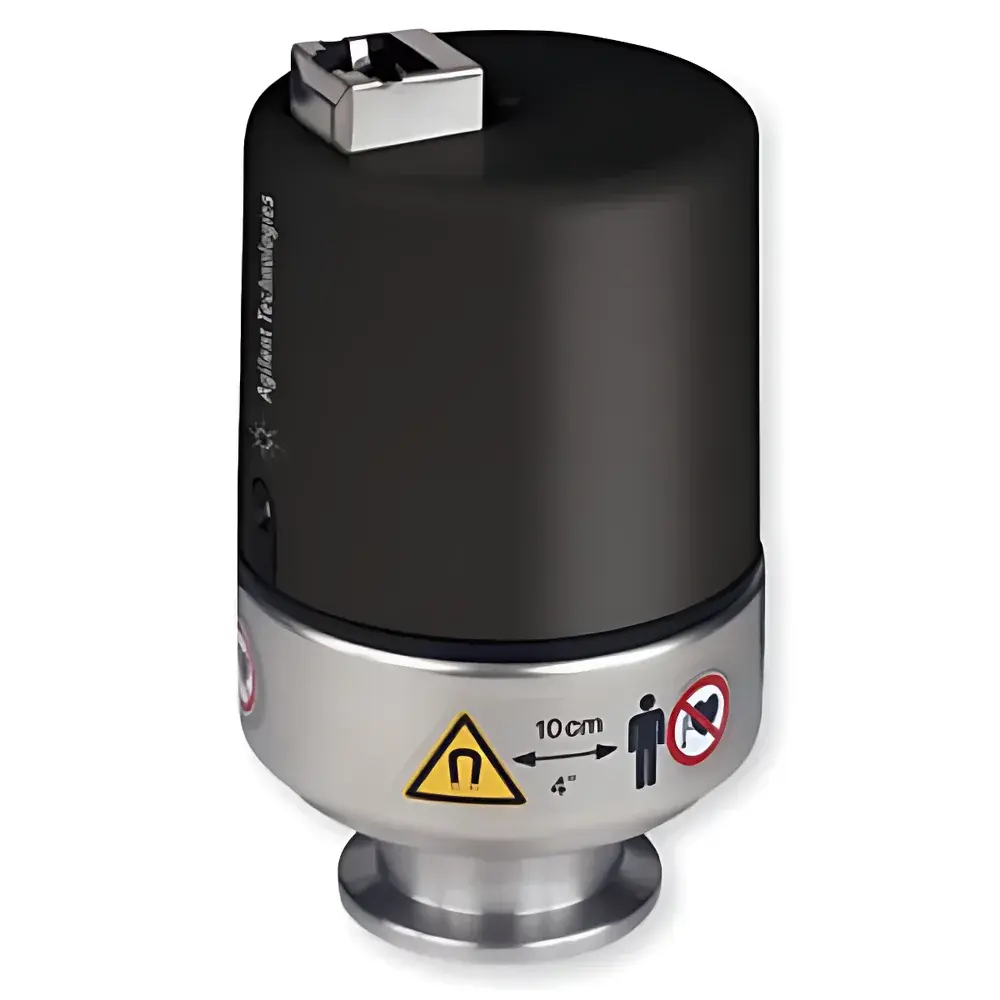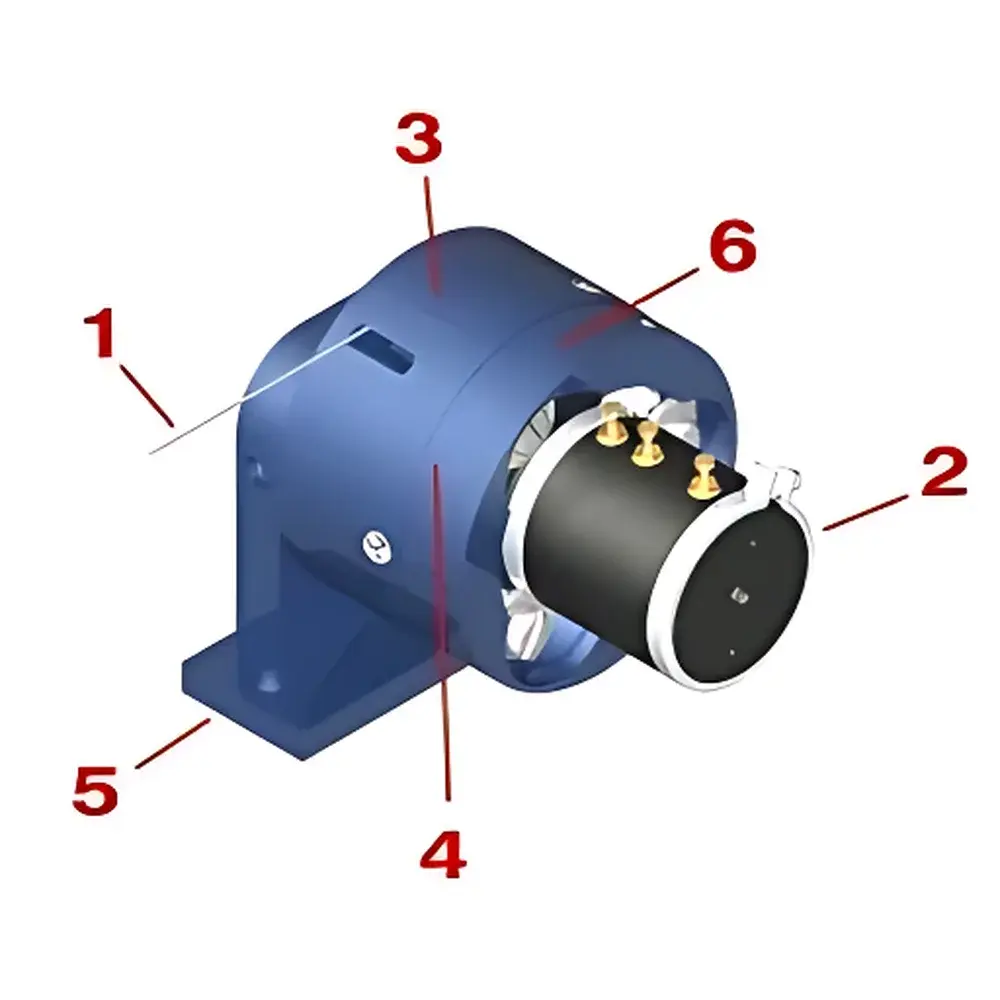
York Instrument YK160-162 Series Miniature Linear Displacement Sensor
| Brand | York Instrument |
|---|---|
| Origin | USA |
| Manufacturer Type | Manufacturer |
| Origin Category | Imported |
| Model | YK160-162 |
| Price | Upon Request |
| Measurement Range | 0–1079.5 mm (across 60 standard configurations) |
| Dimensions (YK160) | 46.0 mm × 57.9 mm × 41.2 mm |
| Weight | 113 g |
Overview
The York Instrument YK160-162 Series Miniature Linear Displacement Sensor is a precision-engineered, non-contact or contact-based (model-dependent) transducer designed for high-repeatability positional feedback in constrained mechanical environments. Built upon a robust strain-gauge or potentiometric sensing architecture—depending on specific variant configuration—the series delivers stable analog output (e.g., 0–5 V, 0–10 V, or 4–20 mA) proportional to axial displacement along its active stroke. Its compact form factor and threaded hub interface enable direct integration into OEM machinery, test fixtures, and automated assembly systems where space, mounting rigidity, and thermal stability are critical. Unlike optical encoders or LVDTs requiring external signal conditioning, the YK160-162 integrates signal conditioning circuitry internally, minimizing external component dependency and reducing susceptibility to electromagnetic interference in industrial settings.
Key Features
- Threaded hub design with precision-machined mounting threads—ensures repeatable mechanical alignment and minimizes zero-shift under cyclic loading.
- Compact footprint (46.0 × 57.9 × 41.2 mm for YK160 variant) optimized for integration into tight spaces without compromising structural integrity or thermal drift performance.
- 60 standardized stroke lengths spanning 0–1079.5 mm, allowing selection of optimal range-to-resolution ratio for application-specific accuracy requirements.
- Hermetically sealed housing rated to IP65, protecting internal electronics from dust ingress and incidental water exposure during operation in laboratory or light-industrial environments.
- Low mass (113 g) and rigid aluminum alloy housing contribute to high natural frequency response—suitable for dynamic measurements up to 100 Hz bandwidth under controlled excitation conditions.
- Calibration traceable to NIST standards; factory calibration certificate included with each unit, documenting linearity error (±0.25% FS typical), hysteresis (<0.1% FS), and temperature coefficient (<±0.02% FS/°C).
Sample Compatibility & Compliance
The YK160-162 Series is compatible with metallic, composite, and polymer-based target structures exhibiting sufficient rigidity to avoid deflection-induced measurement error. It requires direct mechanical coupling via its threaded hub—no adhesives or clamps necessary—making it suitable for permanent installation in fatigue testing rigs, hydraulic actuator position monitoring, and precision stage feedback loops. The sensor complies with CE marking requirements for electromagnetic compatibility (EN 61326-1) and low-voltage directive (2014/35/EU). RoHS 2011/65/EU compliance is certified for all PCB assemblies and housing materials. While not intrinsically safe, optional ATEX-certified variants (YK160-Ex) are available for Zone 2 hazardous locations upon request.
Software & Data Management
The YK160-162 operates as an analog transducer and does not require proprietary firmware or embedded software. Output signals interface seamlessly with industry-standard DAQ systems—including National Instruments USB-6009, Keysight 34972A, and Dewesoft X—enabling real-time acquisition, time-synchronized logging, and post-processing in MATLAB, Python (via PyDAQmx), or LabVIEW. York Instrument provides a downloadable calibration lookup table (CSV format) and Excel-based linearization tool for users performing custom compensation of nonlinearity or thermal drift. All delivered units support GLP-compliant audit trails when integrated into validated data acquisition workflows compliant with 21 CFR Part 11 (with appropriate system-level controls).
Applications
- Position feedback in servo-controlled pneumatic/hydraulic cylinders used in packaging machinery and material handling systems.
- Displacement monitoring in ASTM E8/E21 tensile and compression test frames for strain-controlled loading protocols.
- Real-time gap measurement between rotating and stationary components in turbine blade clearance studies.
- End-of-travel detection and closed-loop control in semiconductor wafer handling robots and photolithography stage positioning.
- Vibration amplitude tracking in modal analysis setups where sensor mass loading must remain below 0.5% of test structure mass.
- Quality assurance verification of part geometry (e.g., weld seam height, bearing preload displacement) in automotive Tier-1 production lines.
FAQ
Is the YK160-162 suitable for high-temperature environments?
Standard models operate within –20 °C to +85 °C ambient range; extended-range variants (YK160-HT) support –40 °C to +125 °C with modified potentiometer windings and thermal-compensated signal conditioning.
Can multiple sensors be daisy-chained on a single analog input channel?
No—each YK160-162 requires an independent analog input due to lack of digital addressing or multiplexing capability. For multi-channel deployments, use a DAQ system with sufficient isolated analog inputs.
Does York Instrument offer custom stroke lengths or electrical outputs?
Yes—custom stroke lengths beyond the 60 standard options, as well as nonstandard output types (e.g., RS-485 Modbus RTU, CANopen), are available under OEM agreements with minimum order quantities.
What is the expected service life under continuous operation?
Rated for ≥50 million full-stroke cycles at rated load; lifetime is dependent on mechanical loading profile, environmental contamination, and proper mounting alignment per installation manual.
Is recalibration required after mechanical shock or impact?
Yes—if subjected to shock exceeding 50 g peak acceleration, factory recalibration is recommended prior to resuming metrologically critical applications.