
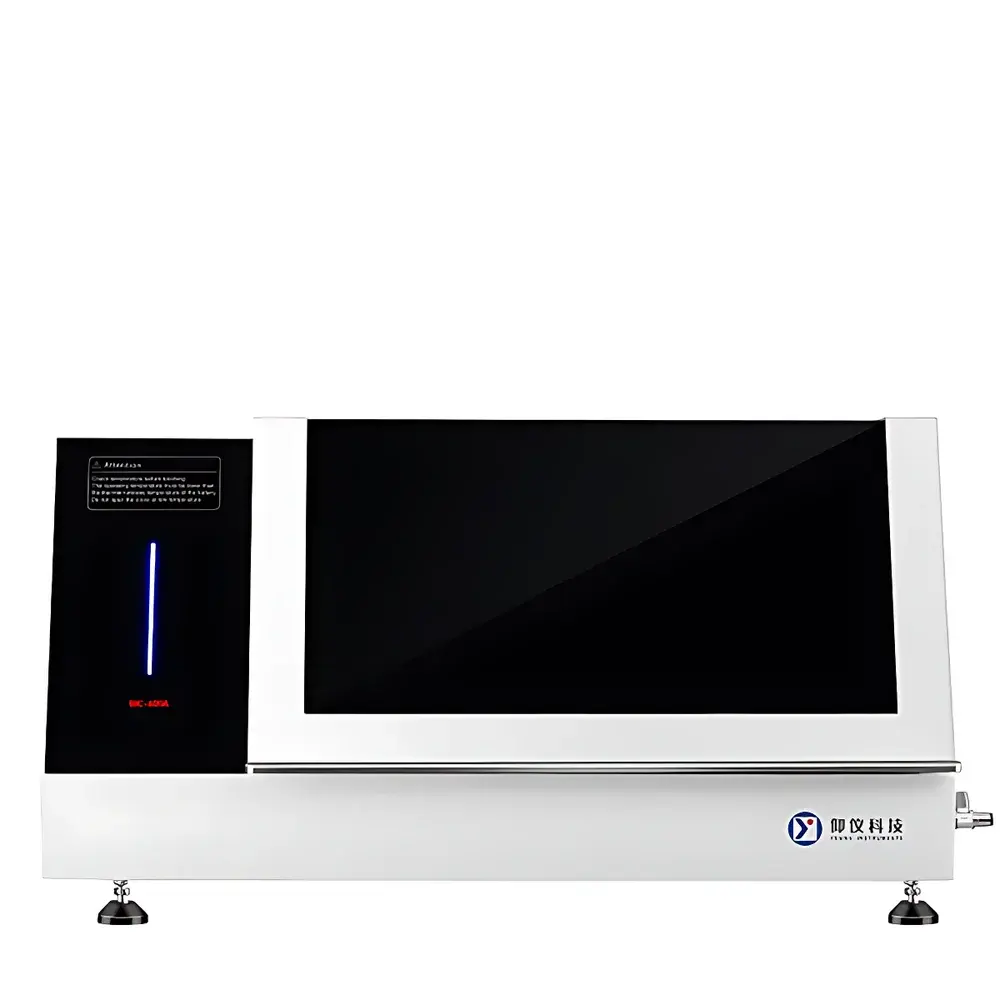
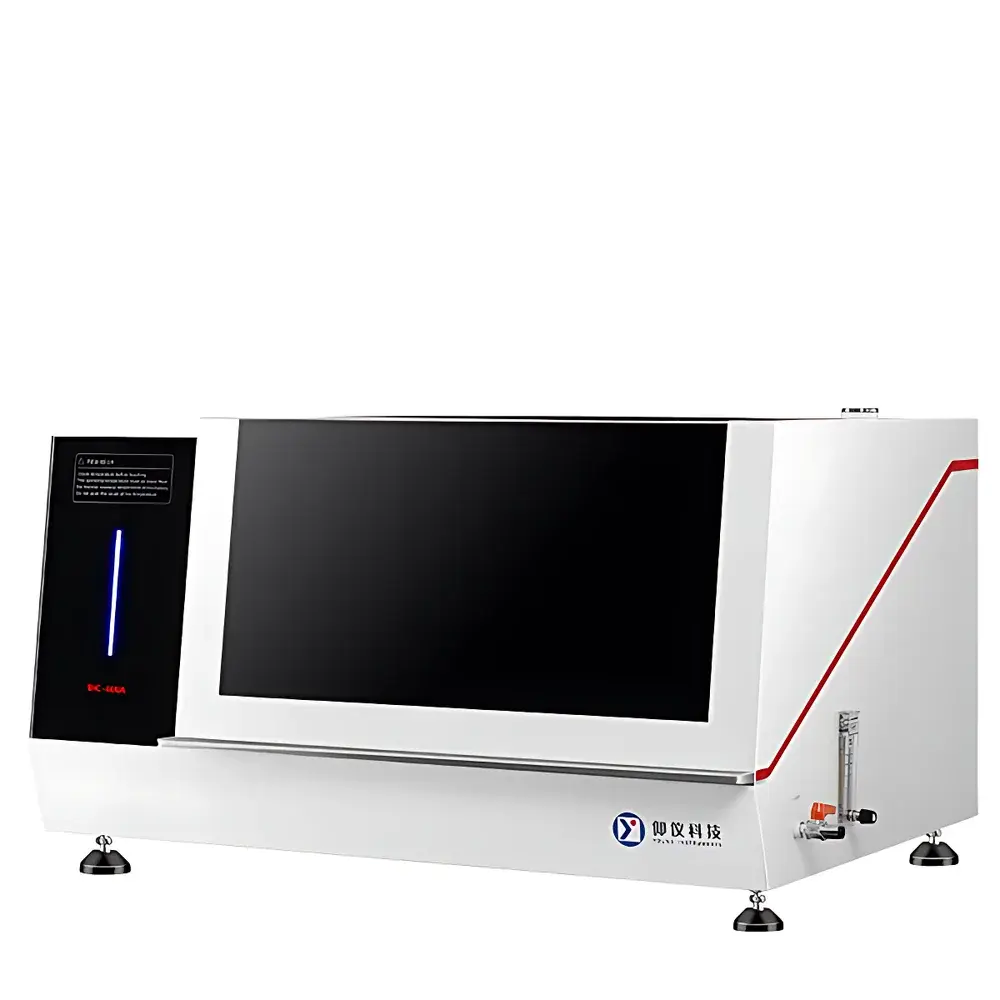
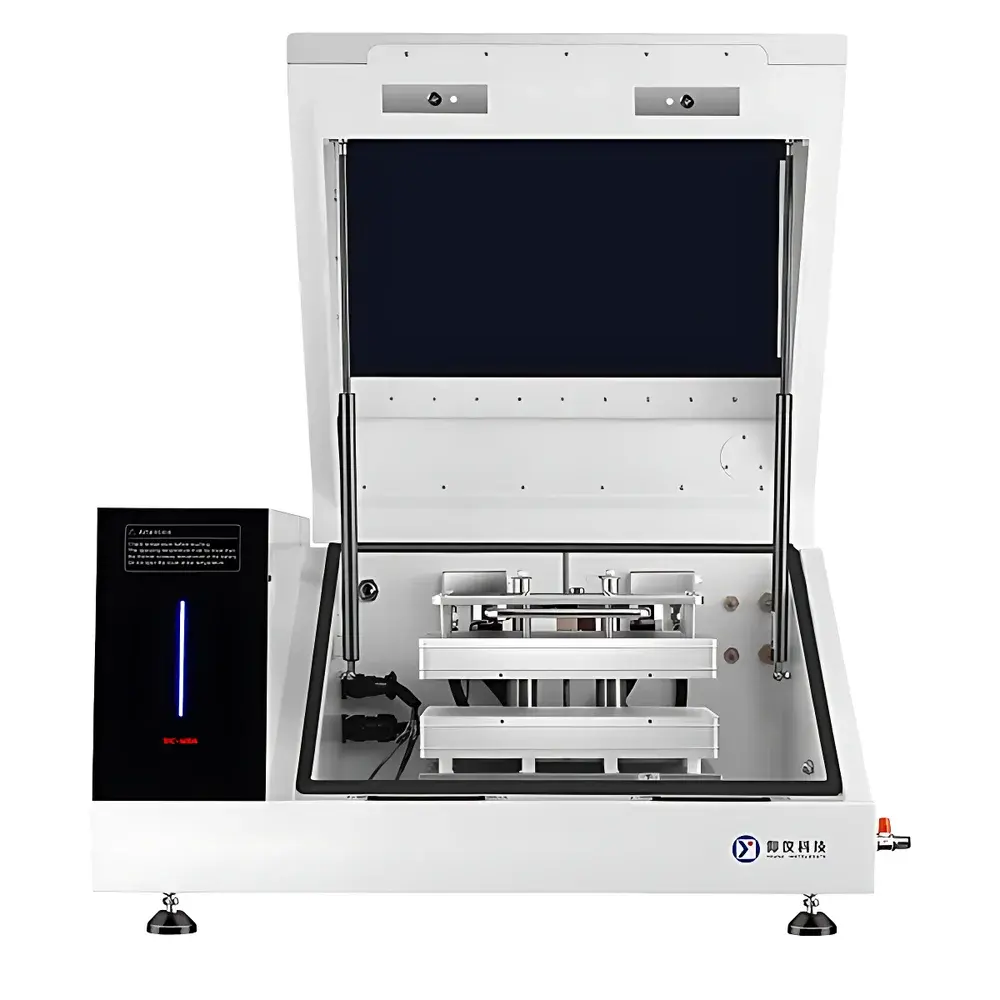
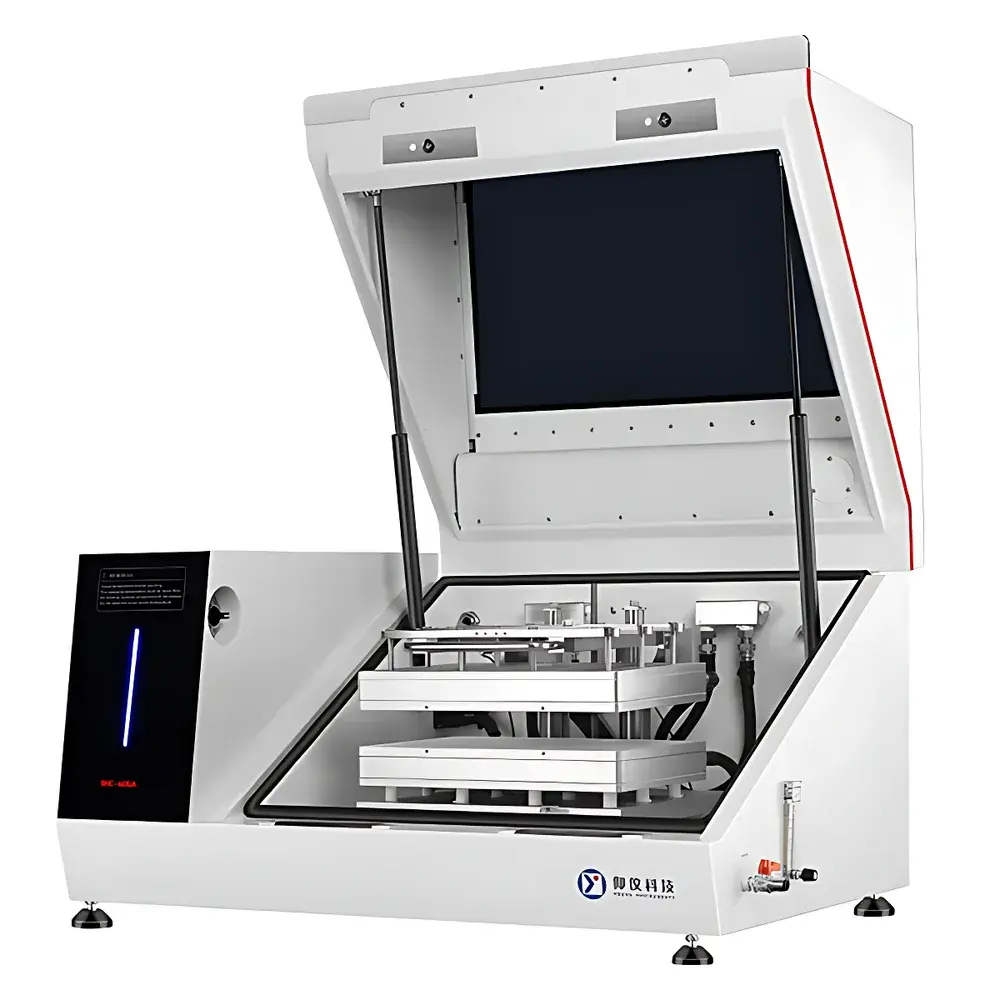
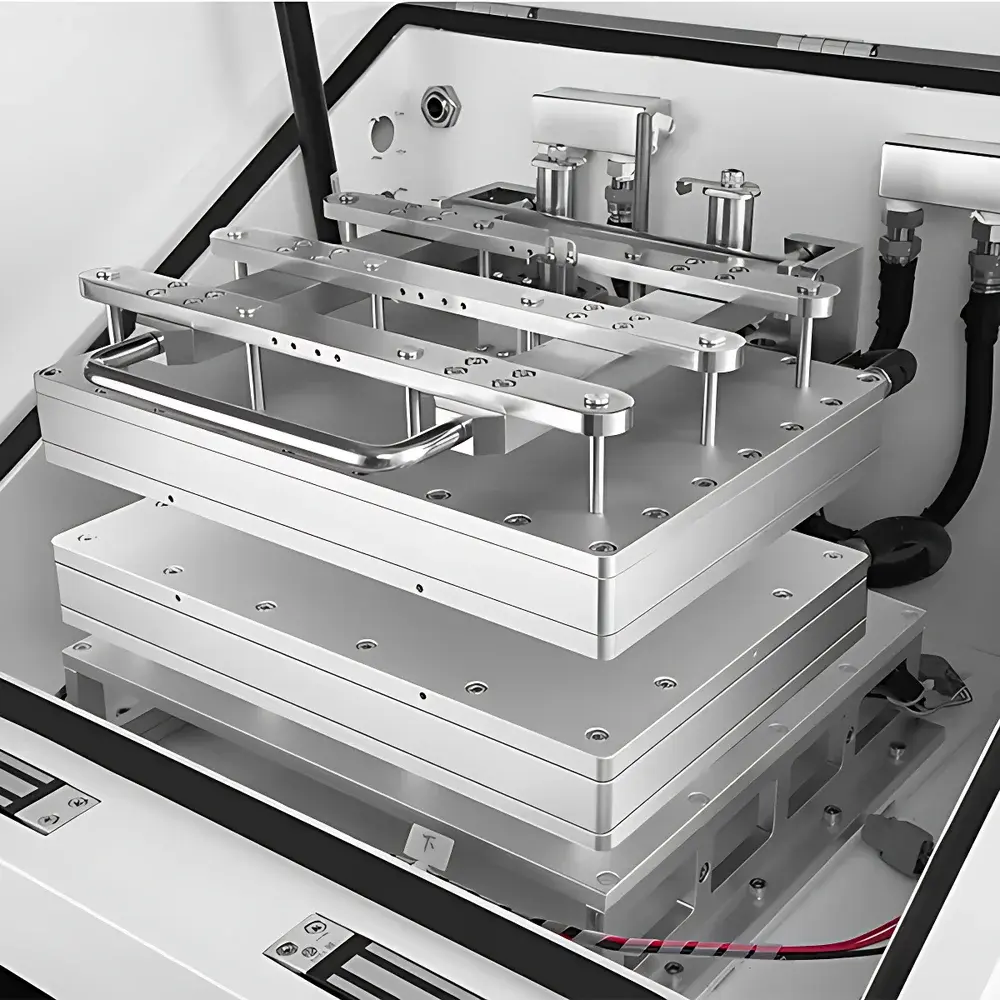
Young Instruments BIC-400A Battery Isothermal Calorimeter
| Brand | Young Instruments |
|---|---|
| Origin | Zhejiang, China |
| Manufacturer Type | Manufacturer |
| Product Origin | Domestic |
| Model | BIC-400A |
| Pricing | Upon Request |
| Automation | Fully Automated |
| Instrument Type | Isothermal Calorimeter |
| Measurement Principle | Power Compensation Isothermal Calorimetry |
| Temperature Range | −40 °C to 100 °C |
| Temperature Resolution | 0.001 °C |
| Thermal Enthalpy Measurement Accuracy | ±1% (Power Compensation Mode) |
| Baseline Noise | 10 mW (Power Compensation), 0.2 mW (Heat Flow Mode) |
| Maximum Sample Dimensions | 345 mm × 230 mm × 100 mm |
| Max Compensation Power | 200 W |
| Sensitivity | 10 mW (Power Compensation), 0.2 mW (Heat Flow) |
| Temperature Stability | ±0.005 °C (Oil Bath Operation) |
| Oil Bath Temp Range | −40 °C to 200 °C |
| Heating Power | 3 kW |
| Cooling Capacity | 1.5 kW @ 20 °C, 1.5 kW @ 0 °C, 1 kW @ −20 °C, 0.3 kW @ −40 °C |
| Circulation Flow Rate | 22–26 L/min |
| Dual-Stage Pump Pressure | 0.4–0.7 bar (Heating/Cooling Loop), 0.2–0.4 bar (Suction) |
| Bath Opening/Volume | 12 × 11 / 16 cm, 5 L |
| Communication Interface | RS-232 (RJ45 adapter available) |
| Optional Battery Cycler | 4-channel, ±400 A / 0–5 V, ±0.1% FS voltage & current accuracy, SOC estimation support |
Overview
The Young Instruments BIC-400A Battery Isothermal Calorimeter is an engineered platform for high-fidelity thermal characterization of lithium-ion battery cells under controlled isothermal conditions. It operates on the principle of power compensation calorimetry—where electrical energy input to a thermally isolated sample chamber is dynamically adjusted to maintain constant temperature during electrochemical cycling. This method enables direct quantification of reversible and irreversible heat generation rates (dQ/dt) with minimal thermal lag, supporting first-principles validation of enthalpy, entropy, and polarization losses in battery electrodes. Designed specifically for single-cell testing, the BIC-400A delivers traceable, reproducible thermal data essential for calibrating multi-scale thermal models—from cell-level lumped-parameter networks to 3D CFD simulations of battery packs. Its dual-mode operation (power compensation and heat flow) allows cross-validated measurement strategies aligned with ASTM E1269 and ISO 11357-4 standards for polymer and electrochemical systems.
Key Features
- High-stability oil bath temperature control (−40 °C to 100 °C) with ±0.005 °C stability and 0.001 °C resolution, achieved via dual-stage circulation pumps and precision PID regulation.
- Integrated 200 W dynamic power compensation circuitry with baseline noise ≤10 mW, enabling detection of sub-milliwatt thermal transients during low-rate or pulsed charge/discharge protocols.
- Modular architecture supporting optional 4-channel battery cycler (±400 A, 0–5 V) with 0.1% full-scale accuracy in voltage and current measurement, compliant with IEC 62660-1 for performance testing.
- Multi-point thermal monitoring: 8 calibrated Pt100 sensor inputs distributed across cell surfaces and bath zones for spatial thermal gradient mapping.
- Rugged mechanical design accommodating diverse form factors—including prismatic (up to 345 × 230 × 100 mm), cylindrical (18650/21700/26650), and pouch cells—within a sealed, gas-flushed chamber (5–25 L/min adjustable flow).
- Compliance-ready firmware with audit trail logging, user access levels, and timestamped metadata export—facilitating GLP/GMP-aligned workflows per FDA 21 CFR Part 11 requirements.
Sample Compatibility & Compliance
The BIC-400A accepts commercially available lithium-ion configurations without modification: standard cylindrical cells (18650, 21700, 26650), large-format prismatic units, and flexible pouch cells up to 100 mm thickness. All sample fixtures are non-invasive and electrically isolated to prevent parasitic current paths. The system conforms to IEC 62133-2 for safe thermal testing of secondary cells and batteries, and its temperature control subsystem meets ISO/IEC 17025 calibration traceability requirements when operated with NIST-traceable reference sensors. Gas purge capability supports inert-atmosphere testing (N₂ or Ar) to eliminate oxidation artifacts during high-temperature cycling—critical for evaluating thermal runaway onset thresholds per UL 9540A Section 5.2.
Software & Data Management
Control and analysis are performed via CaloSuite™ v3.x—a Windows-based application supporting synchronized acquisition of thermal, electrical, and environmental parameters at up to 10 Hz sampling rate. Raw data is stored in HDF5 format with embedded metadata (operator ID, test protocol, calibration certificates). The software includes built-in modules for: (1) heat generation decomposition (reversible vs. irreversible components), (2) specific heat capacity derivation via modulation-based heating cycles (ASTM E1269), and (3) real-time thermal resistance calculation using interfacial temperature differentials. Export options include CSV, MATLAB .mat, and Excel-compatible reports with configurable templates for internal QA documentation or external regulatory submission. Remote monitoring and script-driven batch testing are supported via TCP/IP (RJ45) and SCPI command set.
Applications
- Quantitative evaluation of heat generation mechanisms during constant-current, constant-voltage, and pulse charging profiles.
- Determination of entropic heat coefficients (∂T/∂t) for state-of-charge (SOC)-dependent thermodynamic modeling.
- Validation of thermal-electrochemical coupling terms in Newman-type porous electrode models.
- Thermal safety assessment including self-heating rate (dT/dt) tracking during accelerated rate calorimetry (ARC)-compatible slow-heating sequences.
- Baseline characterization of thermal interface materials (TIMs) and cooling plate contact resistance under realistic load conditions.
- Support for UN 38.3 T5/T6 thermal abuse testing protocols through programmable ramp-hold-ramp temperature profiles.
FAQ
What calibration standards are supported for traceable thermal measurements?
Calibration follows ISO/IEC 17025 guidelines using certified reference resistors and NIST-traceable Pt100 probes. Certificate of Calibration (CoC) includes uncertainty budgets per GUM (JCGM 100:2008).
Can the BIC-400A operate in continuous unattended mode for long-duration aging studies?
Yes—system uptime exceeds 99.5% over 30-day continuous runs. Auto-recovery logic restores thermal equilibrium after communication interruption, and event-triggered email/SNMP alerts notify operators of out-of-spec conditions.
Is third-party battery cycler integration possible if the optional module is not selected?
Yes—RS-232 and TCP/IP interfaces allow synchronization with commercial cyclers (e.g., Arbin, Bio-Logic, Neware) via TTL-level trigger signals and ASCII command protocols.
How is thermal uniformity ensured across large-format prismatic cells?
Oil bath circulation employs laminar-flow nozzles and baffled chamber geometry to achieve <±0.02 °C spatial variation across the 345 × 230 mm footprint, verified by 3D thermal mapping with calibrated micro-thermocouples.
Does the system support custom test sequencing beyond pre-defined modes?
Yes—Python API (PyBIC) enables full programmatic control of temperature ramps, power compensation setpoints, data logging intervals, and conditional branching based on real-time thermal feedback.



