
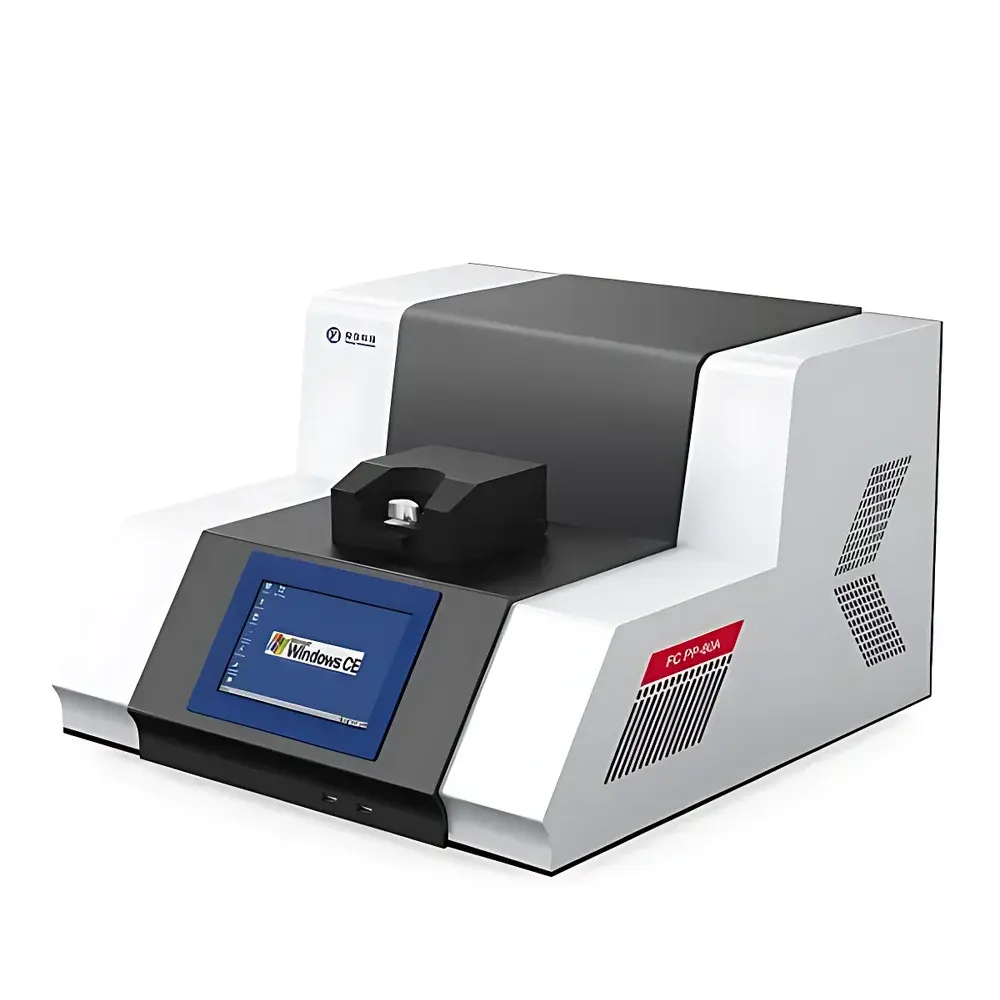
Young Instruments FCPP-80A Automatic Cloud Point, Pour Point, Freeze Point and Cold Filter Plugging Point (CFPP) Analyzer
| Brand | Young Instruments |
|---|---|
| Origin | Zhejiang, China |
| Manufacturer Type | Direct Manufacturer |
| Region of Origin | Domestic (China) |
| Model | FCPP-80A |
| Pricing | Upon Request |
Overview
The Young Instruments FCPP-80A is a fully automated, multi-parameter low-temperature property analyzer engineered for precise determination of cloud point (CP), pour point (PP), freeze point (FP), and cold filter plugging point (CFPP) in petroleum-based and alternative liquid fuels. It operates on two complementary physical principles: automatic phase transition detection—based on real-time optical transmittance monitoring during controlled cooling—and pulsed-pressure-assisted flow assessment for CFPP and pour point evaluation. This dual-method architecture ensures high reproducibility across diverse sample matrices, including jet fuels (Jet A-1, JP-8), biodiesel blends (B5–B100), lubricating oils, engine coolants, and synthetic hydrocarbon fluids. Designed to meet stringent regulatory and quality assurance requirements in refinery laboratories, fuel distribution centers, and R&D facilities, the FCPP-80A delivers traceable, auditable results aligned with internationally recognized test methodologies.
Key Features
- Integrated dual-mode measurement system: optical phase-transition detection for cloud and freeze points; programmable pulse-pressure flow initiation for pour point and CFPP determination
- Compact, self-contained refrigeration architecture with built-in Peltier-based cooling module—eliminates dependency on external cryogenic media (e.g., dry ice or liquid nitrogen)
- Minimal sample consumption (as low as 0.15 mL per test), reducing reagent cost, waste generation, and exposure risk during handling
- Precision temperature control over –80 °C to +55 °C, with selectable ramp rates (15 ± 5 °C/min, 10 ± 0.5 °C/min, and 1.5 ± 0.1 °C/min) optimized for ASTM and SH/T method compliance
- High-resolution optical sensor with real-time transmittance curve visualization synchronized to temperature profile—enabling immediate identification of phase boundaries
- Automated post-test cup heating and pressurized cleaning cycle, minimizing carryover and operator intervention
- Industrial-grade components from globally certified suppliers—including temperature sensors (PT100 Class A), pressure transducers (0–10 bar, ±0.5% FS), and optical detectors (635 nm laser diode with photodiode array)
- User-level access control with three-tier account management (Administrator, Supervisor, Operator) supporting GLP-compliant workflow segregation
- 7-inch capacitive color touchscreen with multilingual UI support (English default), on-screen keyboard, and intuitive drag-and-drop method selection
- Standard connectivity suite: RS-232 (for legacy LIMS integration), USB 2.0 (for flash drive data export or peripheral attachment), and RJ-45 Ethernet (for networked instrument monitoring and remote diagnostics)
Sample Compatibility & Compliance
The FCPP-80A accommodates transparent to semi-opaque hydrocarbon liquids with kinematic viscosity up to 150 mm²/s at 40 °C. Compatible sample types include aviation turbine fuels, diesel/biodiesel blends (EN 14214, ASTM D7467), base oils, antifreeze solutions, and bio-derived solvents. It is validated per multiple international and national standards: ASTM D5972 (freeze point of aviation fuels), ASTM D5773 (cloud point of distillate fuels), ASTM D5949 (cold filter plugging point), ASTM D5900 (pour point by automatic apparatus), SH/T 0770 (cloud point of diesel fuels), SH/T 0771 (pour point of lubricating oils), and GB/T 510 (conventional pour point). All firmware and calibration routines are traceable to NIST-certified reference materials, and audit trails comply with FDA 21 CFR Part 11 requirements when paired with optional electronic signature modules.
Software & Data Management
The embedded firmware supports method-driven testing with preloaded templates for all referenced standards. Each test generates a timestamped, digitally signed result file containing raw temperature vs. transmittance/pressure data, annotated phase transition markers, and pass/fail flags against specification limits. Data export formats include CSV (for Excel analysis), PDF (with embedded graphs and metadata), and XML (for LIMS ingestion). Local storage retains up to 5,000 complete test records with automatic overwrite protection for flagged anomalies. Optional PC-based software enables centralized fleet management, trend analysis across instruments, and automated report generation compliant with ISO/IEC 17025 documentation frameworks.
Applications
- Refinery QC labs: Routine verification of jet fuel freeze point prior to dispatch (per ASTM D1655 Annex A1)
- Biofuel certification: CFPP validation of FAME blends under EN 14214 cold weather specifications
- Lubricant formulation R&D: Correlation of pour point depression with additive package optimization
- Aviation maintenance depots: On-site screening of fuel contamination via abnormal cloud point elevation
- Contract testing laboratories: Accredited reporting for ISO/IEC 17025 scope expansion in low-temperature fuel characterization
FAQ
What cooling medium does the FCPP-80A require?
None—the system uses a closed-loop thermoelectric (Peltier) cooling module with forced-air heat dissipation.
Can the instrument perform ASTM D5900 and ASTM D5949 in a single run?
No—each test mode requires dedicated thermal programming and sensor configuration; however, sequential execution is fully automated without manual reconfiguration.
Is the optical detection system susceptible to sample discoloration or particulate interference?
The 635 nm laser path includes dynamic baseline compensation and threshold-adaptive signal processing to mitigate interference from mild haze or pigment carryover.
How is temperature calibration verified?
Calibration is performed using certified reference standards (e.g., n-decane for –29.7 °C, cyclohexane for 6.5 °C) traceable to NIST SRM 1493; internal PT100 sensors are field-verifiable with handheld metrology tools.
Does the system support remote software updates and diagnostic logging?
Yes—via secure HTTPS connection to authorized service portals; all diagnostic logs include hardware ID, firmware version, and environmental condition timestamps.






