
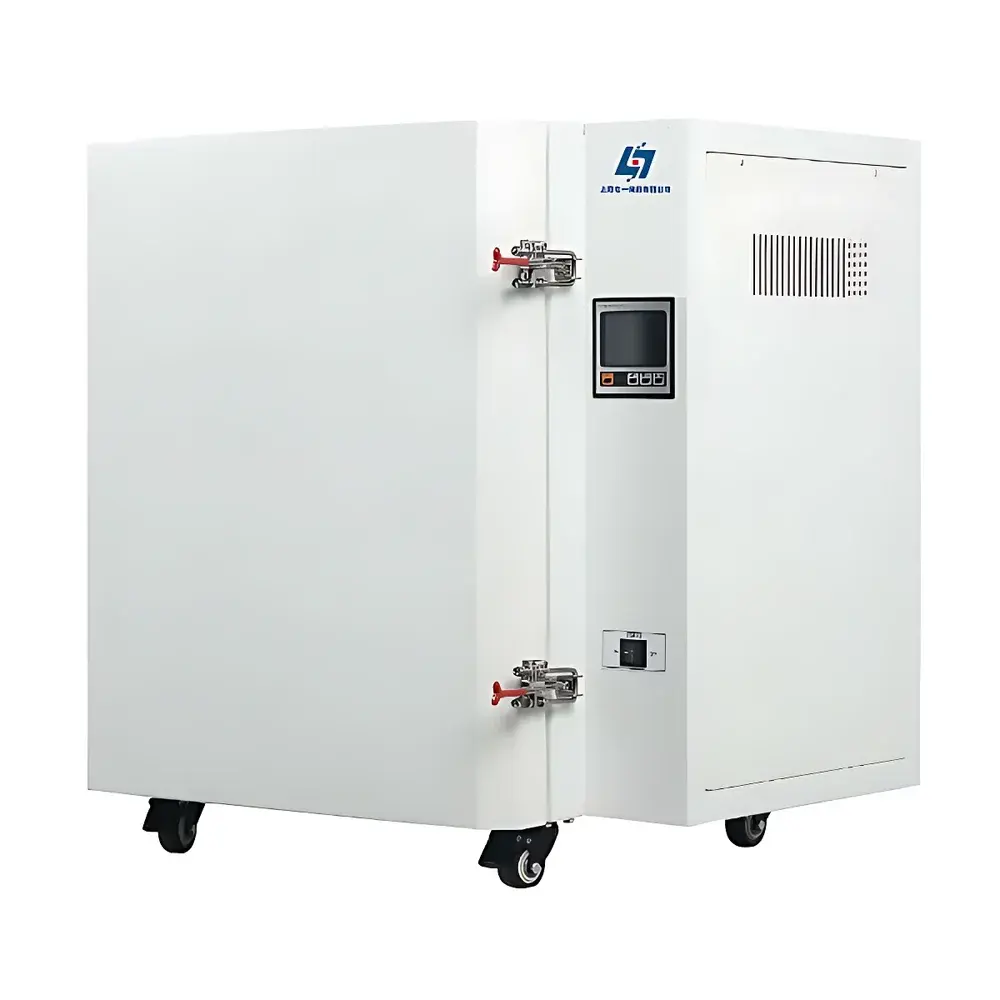
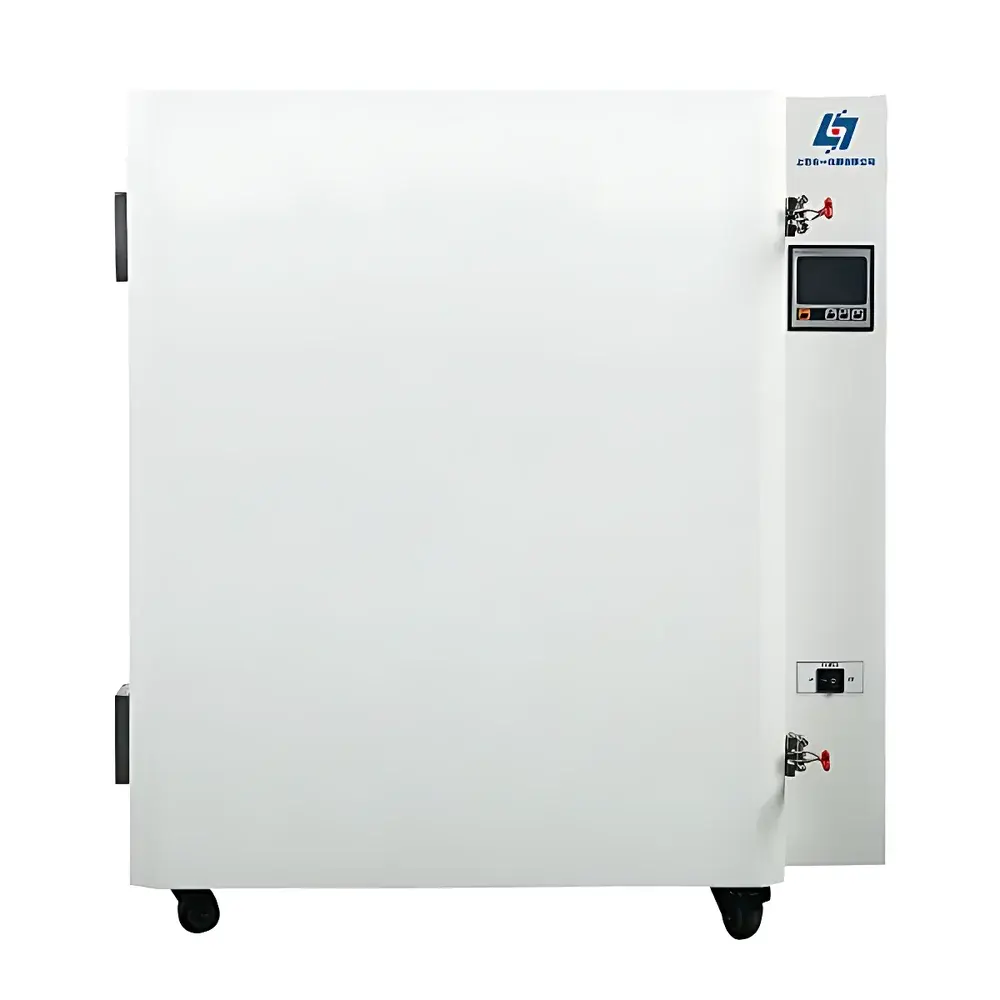
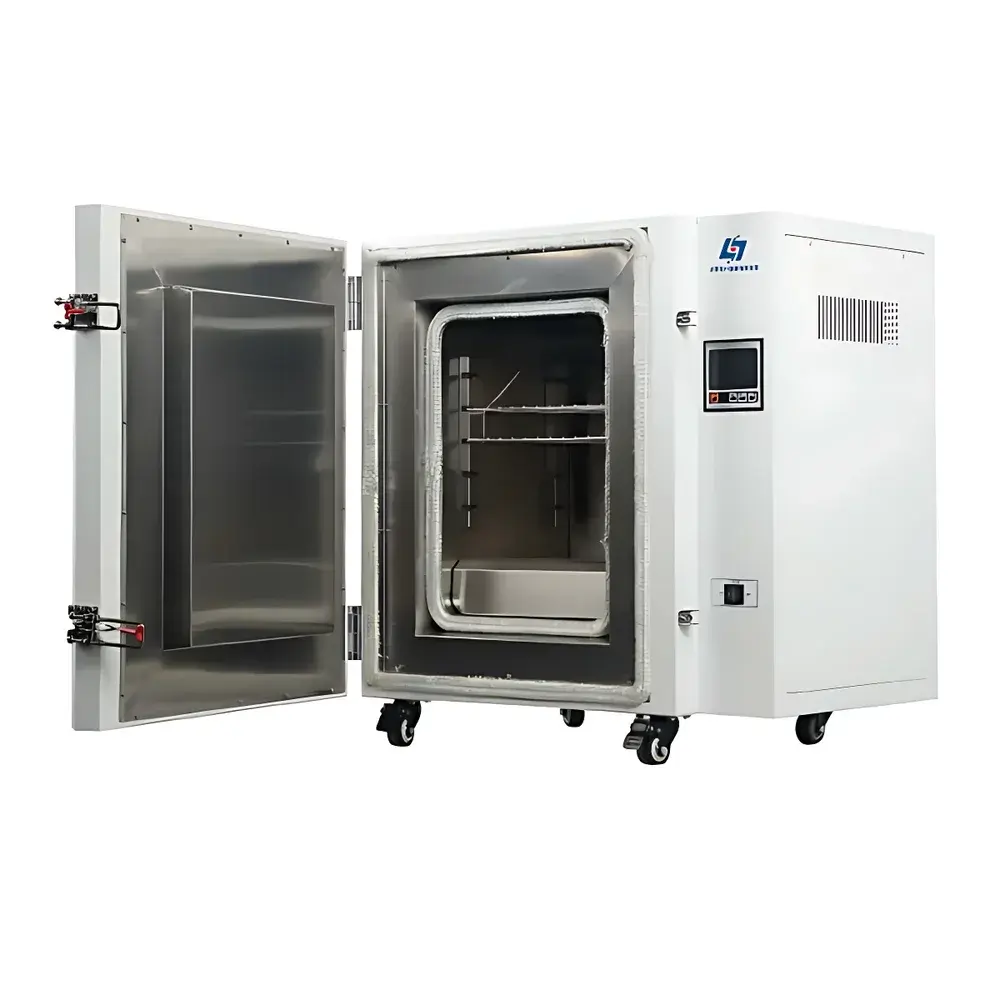
Yoyi DGG-78C High-Temperature Nitrogen-Purged Drying Oven (400 °C)
| Brand | Yoyi |
|---|---|
| Origin | Shanghai, China |
| Manufacturer | Yes |
| Type | High-Temperature Forced-Air Drying Oven |
| Model | DGG-78C |
| Temperature Range | RT+20 °C to 400 °C |
| Temperature Resolution | 1 °C |
| Interior Material | Mirror-Finish Stainless Steel (SUS304) |
| Temperature Uniformity | ±2.5% (measured at 100 °C, non-purged condition) |
| Nitrogen Inlet Port | Φ10 mm |
| Gas Flow Control | 0–10 L/min (with calibrated float flowmeter) |
| Power Supply | AC 380 V, 50 Hz |
| Rated Power | 3000 W |
| Chamber Dimensions (W×D×H) | 400×400×450 mm |
| External Dimensions (W×D×H) | 770×580×800 mm |
| Net Volume | 70 L |
| Standard Shelving | 2 adjustable stainless steel trays |
| Control System | Microcomputer-based PID controller with LCD interface, multi-segment programmable timing, auto-tuning, and power modulation |
Overview
The Yoyi DGG-78C is a benchtop high-temperature nitrogen-purged drying oven engineered for precise thermal processing under inert atmospheric conditions. It operates on the principle of forced convection heating with active nitrogen gas displacement—designed to suppress oxidation, prevent sample degradation, and eliminate moisture or volatile residues in oxygen-sensitive materials. The chamber maintains stable temperatures from ambient +20 °C up to 400 °C, meeting critical requirements for applications including polymer curing, catalyst activation, metallurgical pre-treatment, ceramic sintering support, and high-temperature gravimetric analysis. Its construction complies with GB/T 30435–2013 (General Technical Requirements for Industrial Electric Heating Ovens), ensuring structural integrity, thermal safety, and operational repeatability in regulated laboratory and pilot-scale industrial environments.
Key Features
- Forced-air circulation system with shielded high-temp motor and optimized airfoil impeller—ensures uniform laminar airflow and minimizes thermal stratification.
- Mirror-finish SUS304 stainless steel interior with seamless corner radiusing (R≥10 mm) for easy cleaning, corrosion resistance, and reduced particle entrapment.
- Dual-stage sealing architecture: high-density ceramic fiber door gasket (rated to 600 °C) combined with dual cam-action compression latches for leak-resistant inert gas retention.
- Preheated air injection duct design—ambient air is heated externally and blended before entering the working chamber, enabling rapid ramp rates and improved spatial temperature homogeneity.
- Intelligent microprocessor PID controller with 30-segment programmable profile capability, real-time deviation alarm, and power-limiting function to prevent overshoot during high-setpoint transitions.
- Robust thermal insulation: 100 mm thick glass fiber packing between inner chamber and outer casing—reducing surface temperature rise and energy consumption by >35% versus standard designs.
- Power-fail recovery mode retains all setpoints and active program steps; resumes operation automatically upon grid restoration without manual reinitialization.
Sample Compatibility & Compliance
The DGG-78C accommodates a broad range of sample formats—including crucibles, quartz boats, ceramic setters, metal trays, and custom fixtures—within its 70 L workspace. Adjustable shelving (2 standard trays, load capacity ≤15 kg per shelf) supports flexible loading configurations. The nitrogen purge system enables compliance with ASTM E145 (Standard Practice for Gravity-Convection and Forced-Ventilation Ovens), ISO 5725 (accuracy and precision of measurement methods), and internal GLP/GMP workflows requiring documented atmosphere control. Optional RS485 communication interface supports integration into centralized lab monitoring systems compliant with FDA 21 CFR Part 11 for electronic record integrity.
Software & Data Management
While the base unit features an embedded LCD interface with timestamped event logging (start/stop, alarm triggers, setpoint changes), optional upgrades extend data governance capabilities: the RS485 + PC software package provides full-cycle temperature profiling, CSV export, audit trail generation, and user-access-level permissions. An optional embedded thermal printer delivers hard-copy validation records for batch release documentation. All firmware adheres to IEC 61508 functional safety principles for control system reliability.
Applications
- Thermal aging studies of aerospace composites and elastomers under inert atmosphere
- Pre-drying of hygroscopic reference standards prior to Karl Fischer titration
- Debinding of metal injection molded (MIM) green parts
- Calcination of battery cathode precursors (e.g., LiCoO₂, NMC)
- Residue-free solvent removal from pharmaceutical intermediates
- Calibration verification of thermocouples and RTDs at elevated setpoints
- Accelerated stability testing per ICH Q1A(R3) guidelines (when operated within validated temperature bands)
FAQ
What is the maximum recommended continuous operating temperature?
The DGG-78C is rated for continuous operation at 400 °C. Prolonged use above this threshold may compromise gasket longevity and sensor calibration stability.
Can the nitrogen flow rate be precisely controlled and logged?
Yes—the integrated float-type flowmeter (0–10 L/min, ±5% FS accuracy) allows manual regulation; when paired with the RS485 option, flow-triggered event stamps are recorded alongside temperature data.
Is the chamber volume verified per ISO 17025 requirements?
Chamber dimensions are factory-measured and documented in the Certificate of Conformance; volumetric validation per ISO/IEC 17025 can be performed on-site using traceable calipers and certified dimensional standards.
Does the unit support external data acquisition via analog output?
Not natively—but the RS485 interface enables Modbus RTU protocol communication, permitting third-party SCADA or LIMS integration with appropriate gateway hardware.
How often should the ceramic fiber door seal be inspected?
Visual inspection is recommended every 200 operational hours; replacement is advised if cracking, compression set exceeding 20%, or visible gas leakage (verified via helium sniffer test) is observed.



