
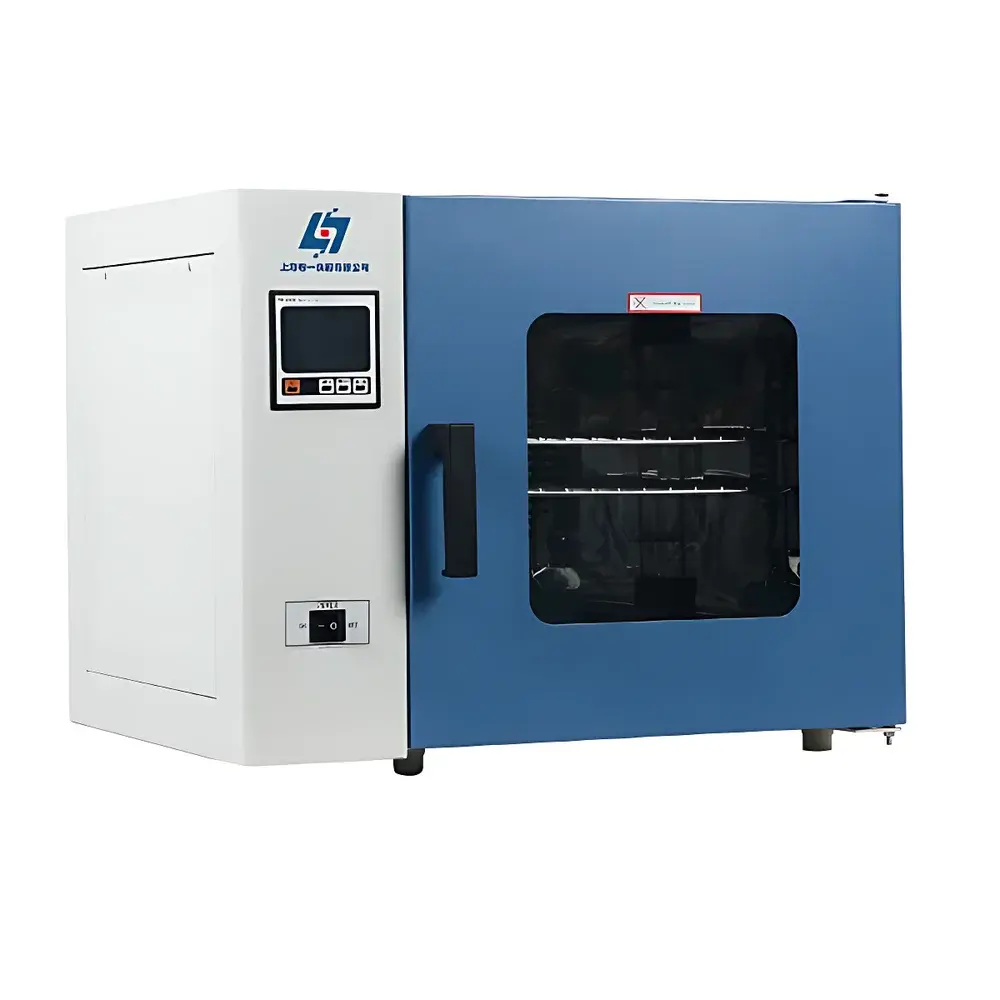
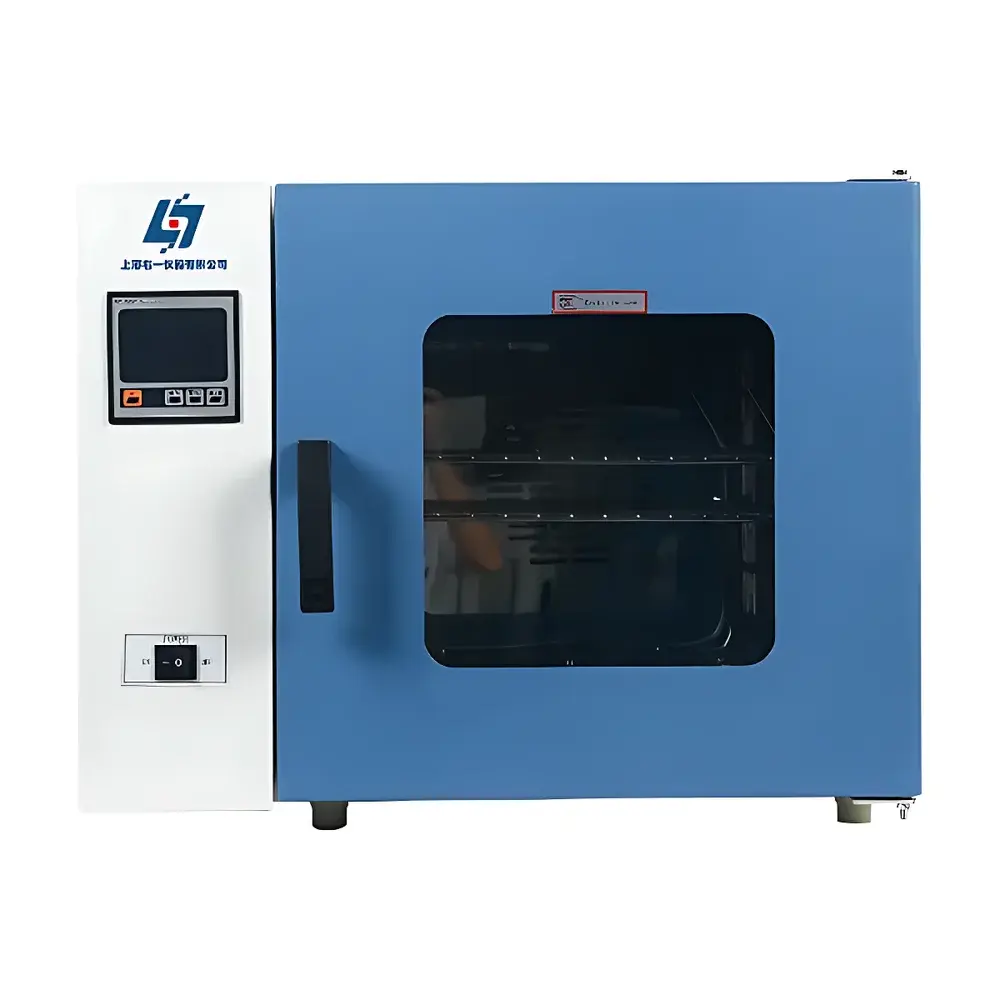
Yoyi DHG-9265C Nitrogen-Purged Forced-Air Drying Oven
| Brand | Yoyi |
|---|---|
| Origin | Shanghai, China |
| Manufacturer Type | Direct Manufacturer |
| Product Category | Domestic |
| Model | DHG-9265C |
| Instrument Type | Precision Drying Oven |
| Temperature Fluctuation | ±1℃ |
| External Dimensions | 880×800×930 mm |
| Temperature Control Range | RT+10~300℃ |
| Internal Chamber Dimensions | 600×595×750 mm |
| Temperature Resolution | 0.1℃ |
| Interior Material | Mirror-Finish Stainless Steel |
| Heating Method | Electric Resistance Heating |
| Temperature Uniformity | ±2.5% (measured at 100℃, non-purged condition) |
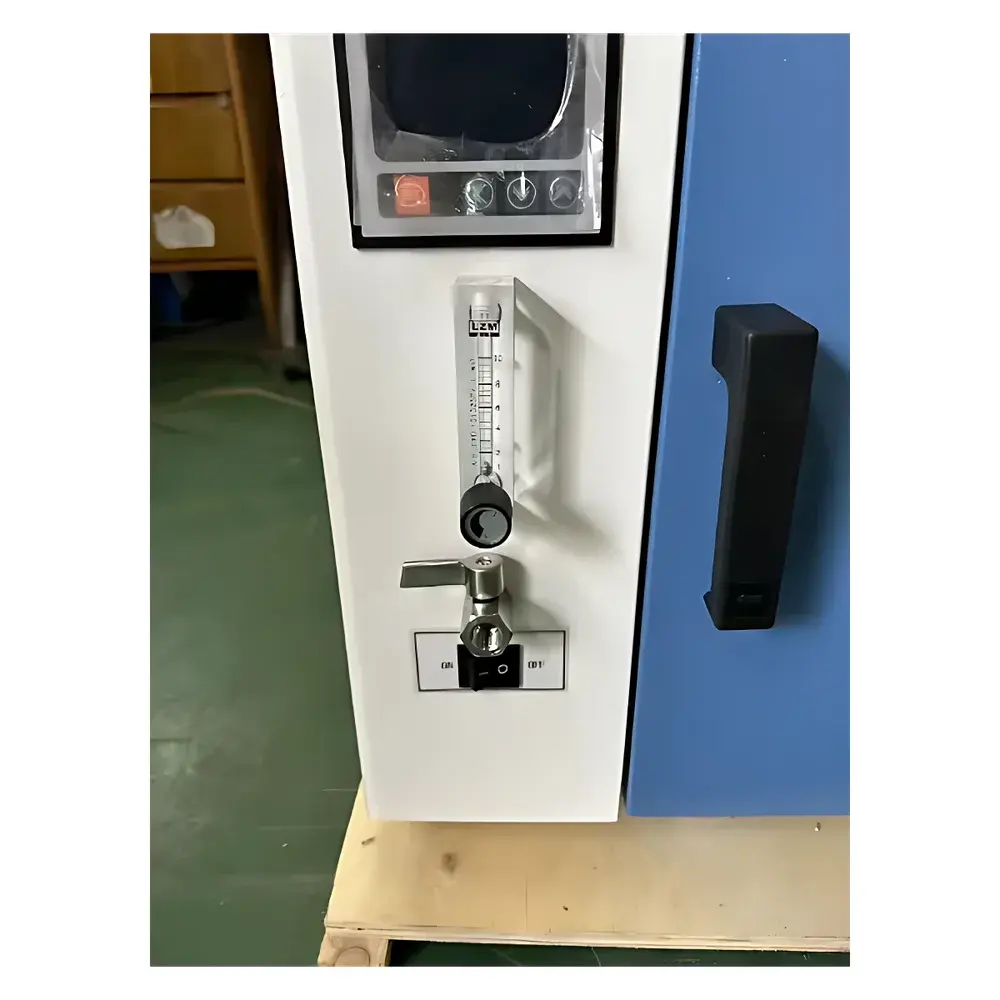
| Nitrogen Inlet Port | Φ10 mm |
| N₂ Flow Rate Range | 0–10 L/min |
| Power Input | 2550 W |
| Working Environment | RT+5~40℃ |
| Timer Range | 1–9999 min |
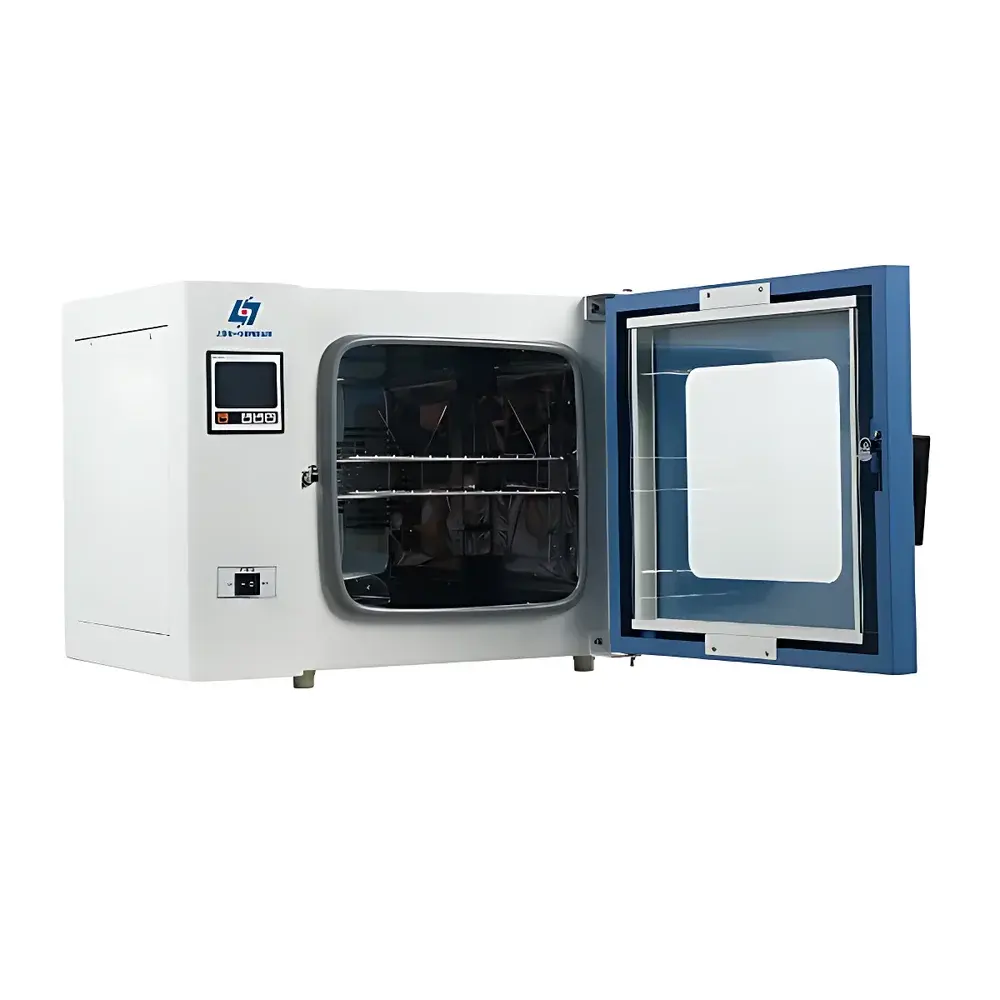
| Load Capacity | 2 adjustable stainless steel shelves |
| Compliance | Designed for GLP-compliant laboratories |
| Optional Accessories | Multi-segment programmable controller, independent overtemperature limiter, embedded thermal printer, RS485 interface with data logging software, test ports (25 mm / 50 mm) |
Overview
The Yoyi DHG-9265C Nitrogen-Purged Forced-Air Drying Oven is an engineered solution for applications requiring inert-atmosphere thermal processing under tightly controlled temperature conditions. Unlike conventional convection ovens, this model integrates a dedicated nitrogen purge system to displace ambient oxygen and moisture—enabling oxidation-sensitive drying, degassing, solvent removal, and heat treatment of reactive or hygroscopic materials. Its operation relies on forced-air circulation driven by a rear-mounted centrifugal blower, coupled with a precisely balanced air inlet/exhaust duct system and a calibrated float-type flowmeter for repeatable gas dosing. The chamber operates within a wide controllable range of RT+10℃ to 300℃, with microprocessor-based PID regulation ensuring stability and repeatability essential for method validation in regulated environments.
Key Features
- Microcomputer-controlled 4.3-inch LCD interface with intuitive menu navigation—supports simultaneous display of setpoint temperature, real-time chamber temperature, elapsed time, and remaining hold time.
- Intelligent power recovery function: automatically resumes prior operating parameters—including temperature setpoint and timer status—after unexpected power interruption or system reset.
- Double-layer tempered glass observation window with integrated anti-fog heating element ensures unobstructed visual monitoring without condensation interference.
- High-efficiency airflow architecture: optimized wind tunnel design with rear-mounted intake and top-mounted exhaust enables uniform thermal distribution across the full working volume (±2.5% deviation at 100℃, per ISO 17025-aligned test protocol).
- Dual-seal door assembly featuring high-temperature silicone gasket and magnetic latch provides reliable inert-gas retention and long-term sealing integrity.
- Stainless steel interior (AISI 304, mirror finish) and cold-rolled steel exterior with epoxy-polyester powder coating ensure corrosion resistance, cleanability, and mechanical durability.
- Standard nitrogen inlet port (Φ10 mm) with inline float flowmeter (0–10 L/min range) allows rapid, quantitative purging without external regulators or secondary instrumentation.
Sample Compatibility & Compliance
The DHG-9265C accommodates diverse sample formats—including Petri dishes, crucibles, vials, trays, and electronic substrates—within its 270 L working chamber. Its inert atmosphere capability supports ASTM D2879 (vapor pressure of volatile organic compounds), ISO 554 (standard atmospheres for conditioning), and USP (sterile processing validation). The oven’s construction and control architecture align with fundamental requirements for Good Laboratory Practice (GLP) and Good Manufacturing Practice (GMP) environments, including traceable temperature logging (when paired with optional RS485 interface), configurable alarm thresholds, and hardware-based overtemperature cut-off (independent of main controller). All electrical components comply with IEC 61010-1 safety standards for laboratory equipment.
Software & Data Management
While the base unit operates via standalone microcontroller firmware, optional digital interfaces extend its integration capability. The RS485 communication module supports Modbus RTU protocol for bidirectional data exchange with LIMS or SCADA systems. When used with supplied PC software, users can configure multi-step temperature ramps, export timestamped temperature logs (CSV format), and generate audit trails compliant with FDA 21 CFR Part 11 requirements—including user authentication, electronic signatures, and immutable record retention. The optional multi-segment programmable controller enables up to 30 programmable steps per cycle, supporting complex thermal profiles required in polymer curing, catalyst activation, or residual solvent analysis.
Applications
This oven serves critical roles across multiple regulated and research-intensive domains. In pharmaceutical development, it facilitates moisture content determination (per USP ) and excipient drying under nitrogen to prevent degradation of APIs. Biotechnology labs employ it for lyophilization pre-drying, enzyme stabilization, and DNA/RNA sample preparation where oxidative damage must be minimized. Materials science users apply it for thermal aging studies of composites, outgassing characterization of aerospace sealants, and pre-bake cycles for semiconductor packaging. Additional use cases include moisture-free wax melting in histology, inert-atmosphere annealing of metal powders, and accelerated shelf-life testing of food ingredients under low-oxygen conditions.
FAQ
What inert gases are compatible with the DHG-9265C?
Nitrogen (N₂) is the standard and recommended purge gas; argon may also be used, provided pressure and flow rate remain within the specified 0–10 L/min range and system integrity is verified.
Is the temperature uniformity specification valid during active nitrogen purging?
The stated ±2.5% uniformity applies to non-purged operation at 100℃. Under continuous nitrogen flow, uniformity may vary slightly depending on flow rate and chamber loading; users should validate performance under their specific process conditions per ISO/IEC 17025 guidelines.
Can the oven be validated for GMP compliance?
Yes—the unit supports IQ/OQ documentation packages. With optional accessories (programmable controller, printer, RS485 interface), it meets core data integrity and traceability requirements for Annex 11 and EU GMP Chapter 4.
What maintenance is required for long-term reliability?
Routine cleaning of the stainless steel chamber and air filter (located behind the rear panel) every 100 operating hours is recommended. The silicone door gasket should be inspected quarterly and replaced if cracking or compression set exceeds 20%.
Does the oven support remote monitoring?
Remote monitoring is enabled only when equipped with the RS485 interface and configured with third-party SCADA or LabView-compatible software; no built-in Wi-Fi or Ethernet connectivity is provided in the base configuration.



