
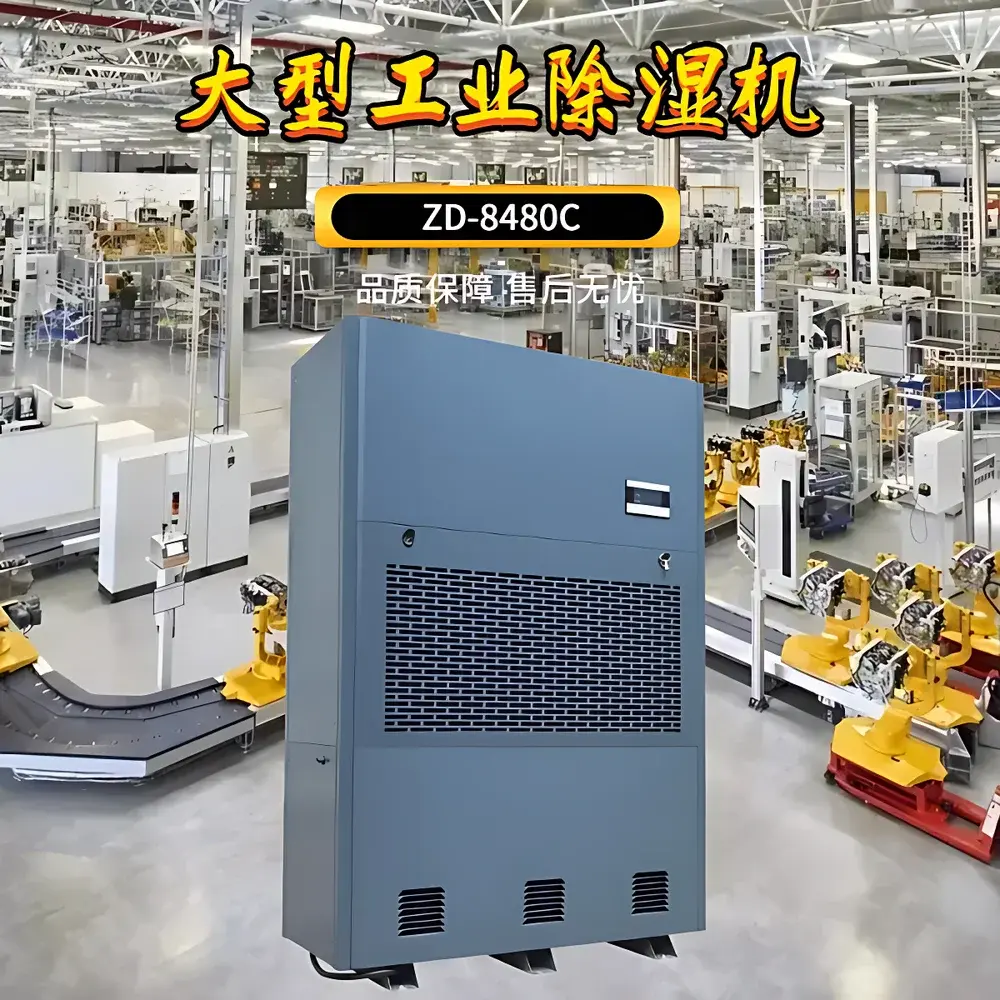
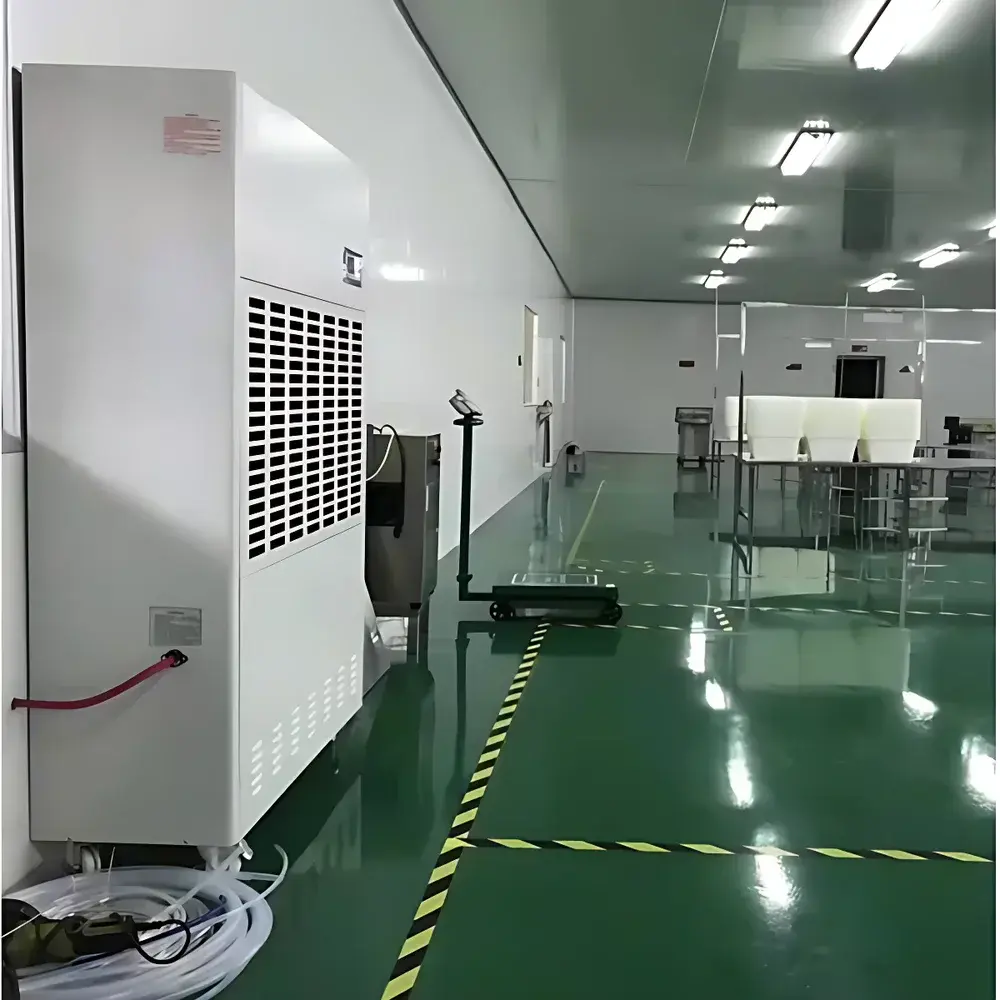
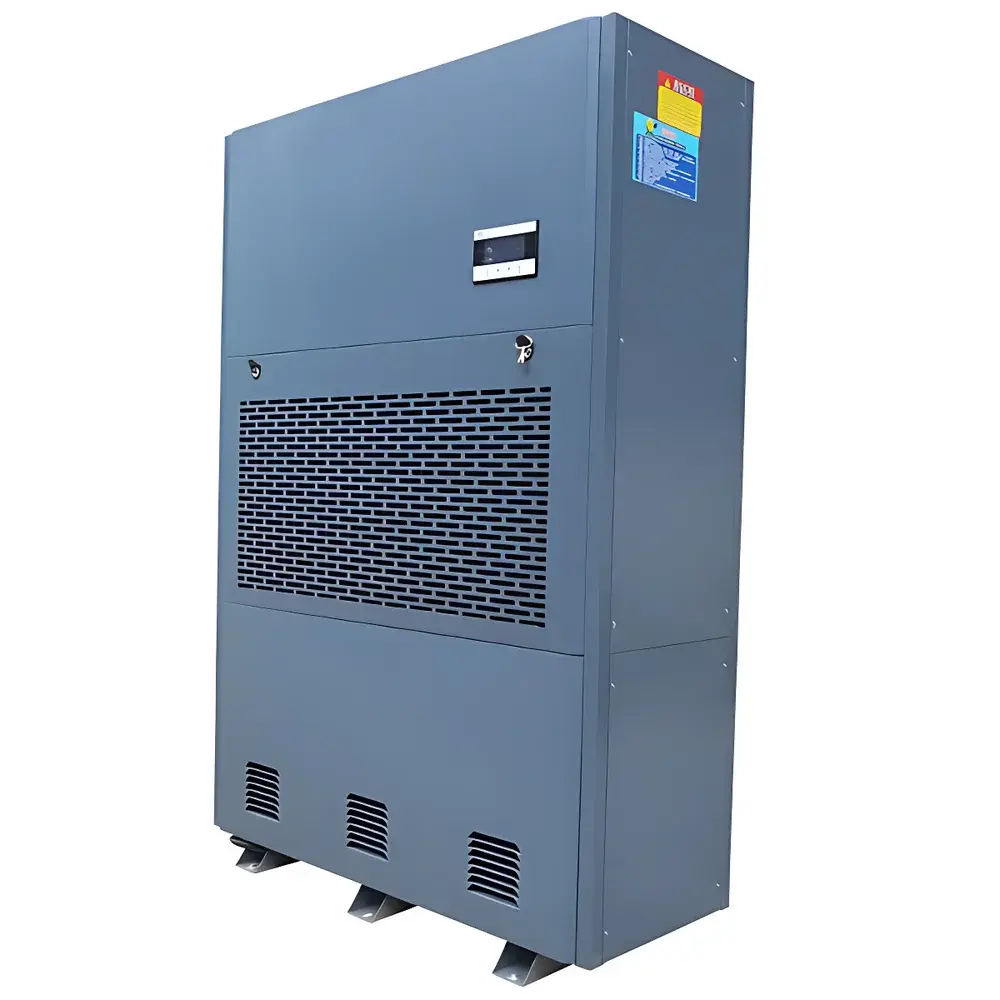
ZEDO ZD-8480C Industrial High-Bay Warehouse Dehumidifier
| Brand | ZEDO |
|---|---|
| Origin | Zhejiang, China |
| Manufacturer Type | Direct Manufacturer |
| Country of Origin | China |
| Model | ZD-8480C |
| Instrument Type | Compressor-Based Dehumidifier |
| Application Type | Industrial Dehumidifier |
| Dimensions (L×W×H) | 1240 × 460 × 1750 mm |
| Operating Temperature Range | 5–38 °C |
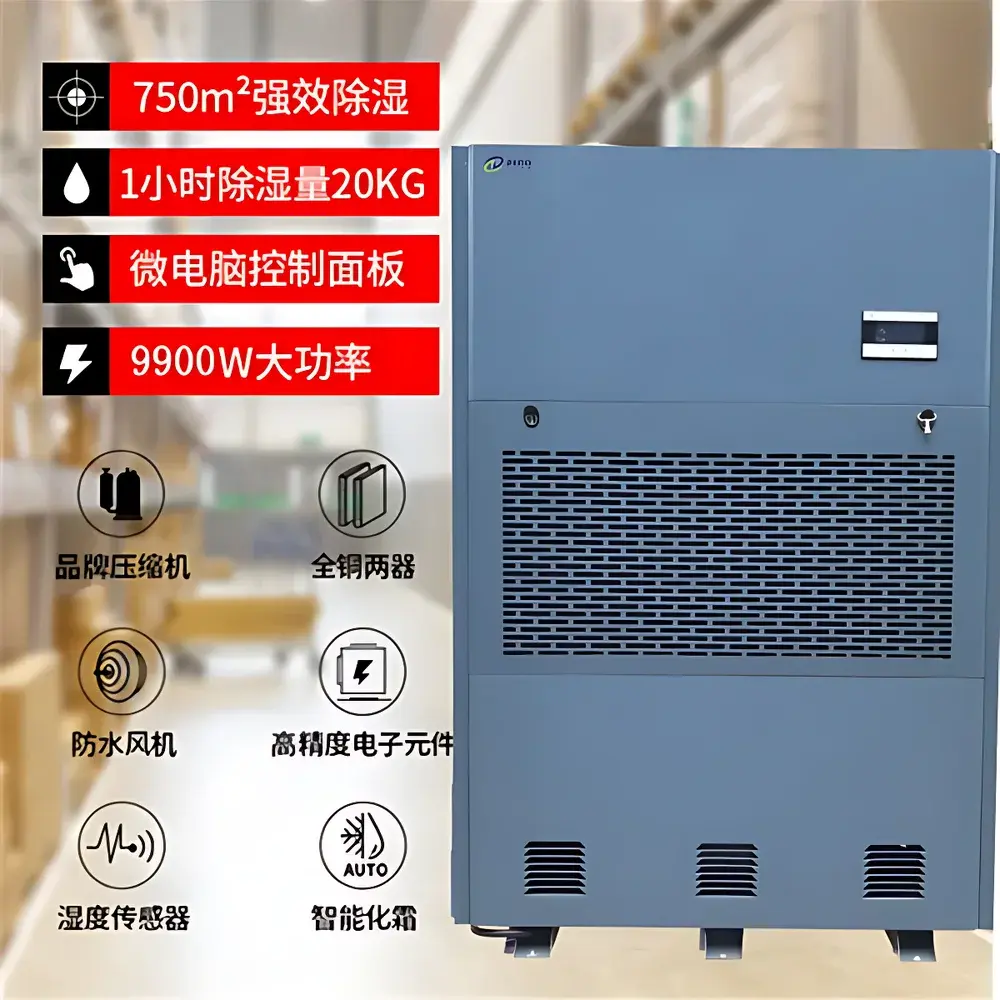
| Recommended Coverage Area | 500–800 m² |
| Airflow Rate | 6000 m³/h |
| Dehumidification Capacity | 480 L/day (20 kg/h) |
| Power Supply | 380 V ~ 50 Hz |
| Input Power | 9900 W |
| Noise Level | 55 dB(A) |
| Weight | 300 kg |
| Drainage Method | Continuous via PVC hose |
| Control Mode | Microprocessor-Based Humidity Setpoint Control |
| Safety Features | 3-Minute Compressor Delay, Overheat/Overcurrent Protection, Fault Self-Diagnosis |
| Standard Filtration | Activated Carbon Filter |
Overview
The ZEDO ZD-8480C Industrial High-Bay Warehouse Dehumidifier is an engineered solution for precise, continuous humidity control in large-volume, vertically structured storage environments—particularly those exceeding standard ceiling heights and featuring multi-tier racking systems. Unlike conventional floor-level dehumidifiers, the ZD-8480C is designed to address stratified humidity distribution, where warm, moisture-laden air accumulates at elevated zones due to thermal buoyancy—a common challenge in high-bay logistics centers, pharmaceutical cold-chain staging areas, and archival vaults with ceiling heights above 6 meters. Its operation relies on refrigerant-based condensation: ambient air is drawn across a finned evaporator coil, cooled below its dew point to precipitate moisture, then reheated via the condenser before discharge. This thermodynamic cycle ensures stable dew point depression and avoids overcooling of conditioned space—a critical requirement for preserving hygroscopic materials such as lithium-ion battery cells, printed circuit boards, tobacco leaf bales, and archival paper stocks.
Key Features
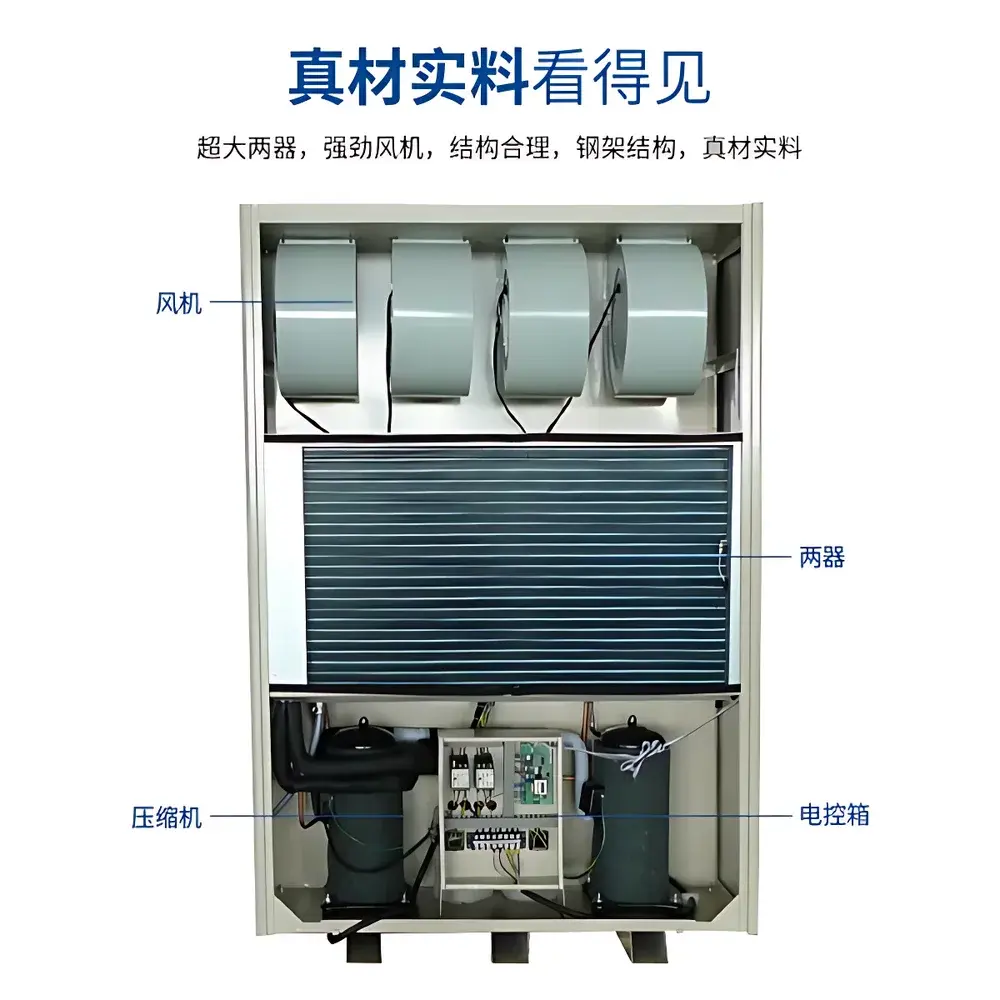
- High-Capacity Dual Rotary Compressor System: Equipped with two hermetically sealed scroll compressors operating in parallel or staggered mode, enabling load balancing, extended service life, and redundancy during maintenance cycles—critical for 24/7 operational continuity in mission-critical logistics hubs.
- Optimized Air Distribution Architecture: A high-static-pressure centrifugal blower delivers 6000 m³/h airflow with uniform velocity profiles across vertical ducting paths, ensuring effective moisture removal from upper storage tiers without requiring supplemental ceiling-mounted units.
- Microprocessor-Controlled Humidity Regulation: Programmable setpoint range of 30–80% RH with ±3% RH repeatability; supports hysteresis-based cycling and timed dehumidification schedules aligned with shift patterns or ambient weather forecasts.
- Robust Thermal Management: Internally insulated copper tubing with internal grooving enhances heat transfer efficiency; condensate management system includes anti-siphon valve and slope-guided drainage channel to prevent backflow during continuous hose discharge.
- Industrial-Grade Structural Integrity: Powder-coated steel chassis rated IP54 for dust and splash resistance; vibration-dampened compressor mounts reduce mechanical transmission to adjacent racking structures.
- Comprehensive Operational Safeguards: Real-time diagnostics for refrigerant pressure imbalance, coil frost detection, fan motor current deviation, and compressor winding temperature—all logged with timestamped event codes accessible via front-panel display.
Sample Compatibility & Compliance
The ZD-8480C is validated for use in environments handling moisture-sensitive commodities governed by industry-specific environmental control standards. Its performance aligns with ASTM D6413 (fire-retardant fabric storage), ISO 14644-1 Class 8 cleanroom support zones, and USP Annex requirements for non-sterile compounding storage areas. For regulated sectors—including pharmaceutical warehousing (FDA 21 CFR Part 211), archival preservation (ISO 11799), and electronics logistics (IPC-A-610)—the unit supports audit-ready documentation through optional RS485 Modbus RTU interface, enabling integration into facility-wide Building Management Systems (BMS) with full data logging and alarm escalation protocols. All electrical components comply with IEC 60335-1 and CE marking directives; refrigerant charge uses R410A (GWP 2088), conforming to EU F-Gas Regulation (EU) No 517/2014 phase-down schedules.
Software & Data Management
While the base model features standalone microcontroller operation, optional firmware upgrade enables Ethernet/Wi-Fi connectivity for remote monitoring via secure HTTPS web interface. Logged parameters include real-time RH%, dry-bulb temperature, cumulative runtime, total water extracted (L), compressor duty cycle (%), and fault history with severity classification (Warning/Alarm/Critical). Data export supports CSV and XML formats compatible with LIMS and ERP platforms (e.g., SAP EWM, Oracle SCM Cloud). Audit trail functionality meets GLP/GMP requirements: all parameter changes are time-stamped, user-ID authenticated, and immutable unless authorized via dual-factor administrative login. Firmware updates are digitally signed to prevent unauthorized modification.
Applications
- Automated high-bay distribution centers managing e-commerce fulfillment with ambient RH control ≤60% to prevent cardboard pallet deformation and label adhesion failure.
- Pharmaceutical secondary packaging zones where blister-pack integrity depends on sustained RH <45% during cartoning and case-packing operations.
- Tobacco leaf aging warehouses requiring seasonal RH modulation between 62–68% (curing) and 55–60% (long-term storage) without condensation risk on metal racking.
- Data center equipment staging areas maintaining dew point ≤10 °C to inhibit electrochemical migration on PCB assemblies prior to installation.
- Museum off-site storage vaults housing cellulose acetate film reels, where RH excursions beyond 35–45% accelerate vinegar syndrome degradation kinetics.
- Marine container depots mitigating intermodal condensation (“container rain”) during coastal transshipment by pre-conditioning air before sealed-container loading.
FAQ
What is the minimum ceiling height recommended for optimal ZD-8480C deployment?
For high-bay applications, a clear ceiling height ≥8 m is advised to allow natural convection assist and avoid recirculation short-circuiting; units may be wall-mounted at 2.5–3.5 m elevation with directional ducting to target upper storage levels.
Can the ZD-8480C operate continuously under 100% duty cycle conditions?
Yes—designed for Class 3 industrial duty per IEC 60034-1, with thermal overload protection and compressor oil management system validated for uninterrupted operation at 40 °C ambient and 80% RH inlet conditions.
Is condensate water quality suitable for greywater reuse?
Condensate meets WHO Guidelines for Safe Use of Wastewater (2006) Category B standards; however, filtration through 5 µm particulate and activated carbon polishing is required prior to irrigation or cooling tower makeup applications.
How does the unit handle low-temperature operation near 5 °C?
Defrost logic activates automatically when evaporator coil surface temperature drops below 2 °C; hot-gas bypass and timed reverse-cycle defrost minimize process interruption while preventing ice bridging across fin arrays.
Does the ZD-8480C support integration with existing SCADA systems?
Standard Modbus RTU (RS485) interface provides register-mapped access to 42 operational variables; optional OPC UA server module enables direct connection to Siemens Desigo CC, Honeywell Experion PKS, or Schneider EcoStruxure platforms.



