
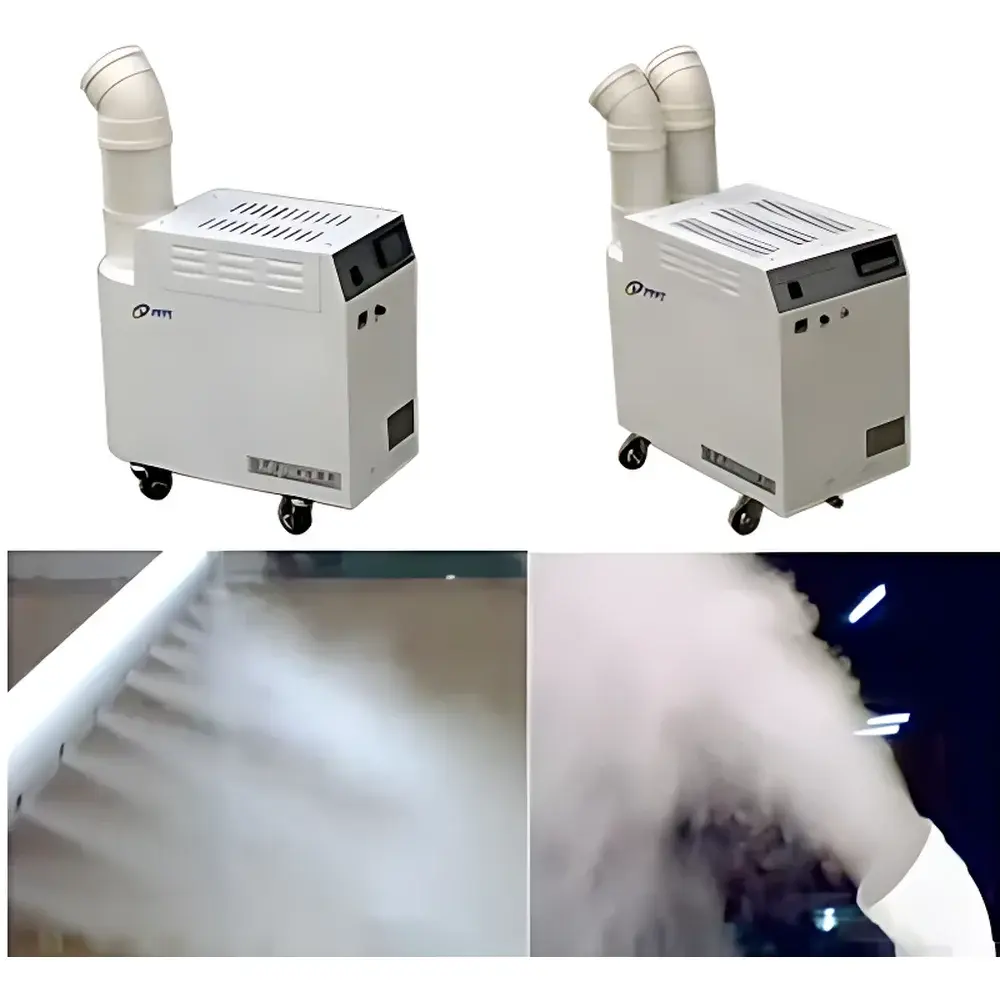
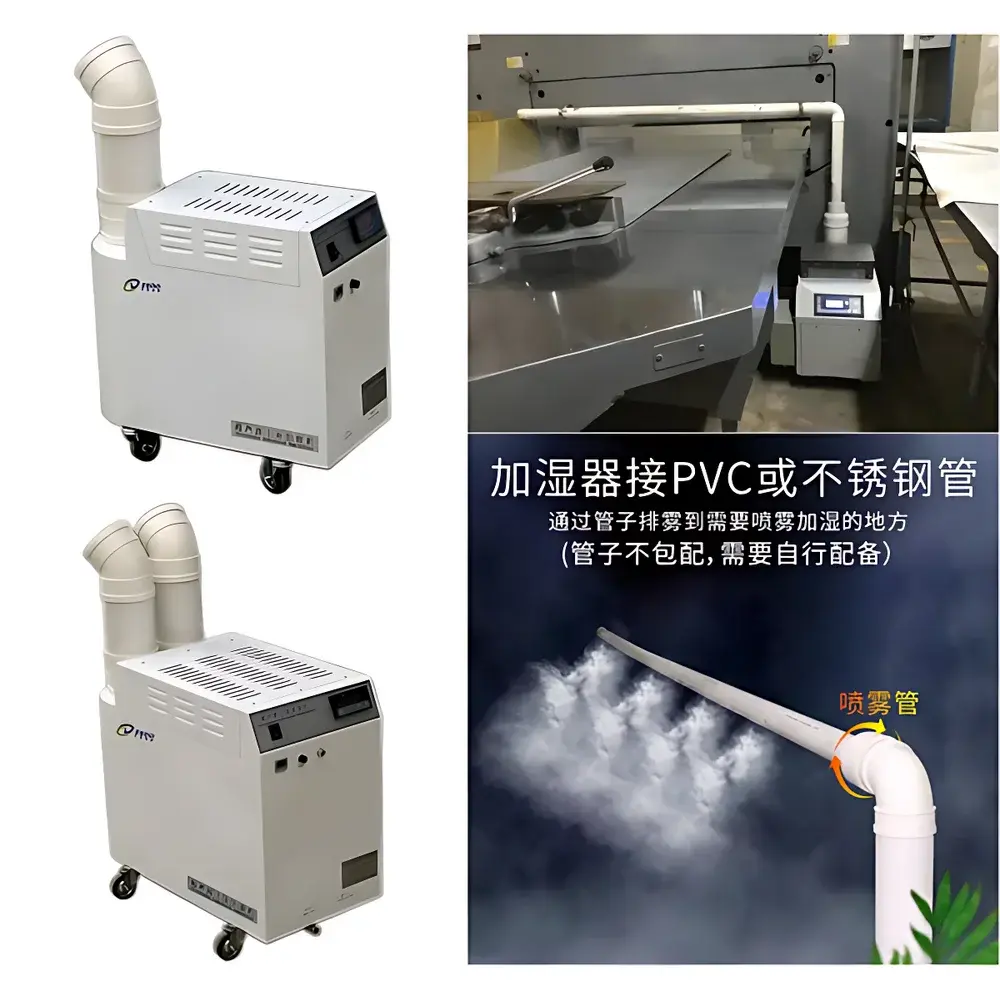
ZEDO ZS-40Z Meltblown Nonwoven Fabric Ultrasonic Humidifier
| Key | Brand: ZEDO |
|---|---|
| Origin | Zhejiang, China |
| Manufacturer Type | Direct Manufacturer |
| Instrument Type | Ultrasonic Humidifier |
| Humidification Capacity | 3–48 kg/h |
| Application | Meltblown nonwoven production lines, nonwoven manufacturing workshops |
| 雾化粒径 | 1–5 µm |
| Power Supply | 220 V AC |
| Control Interface | Line-speed-synchronized automation |
Overview
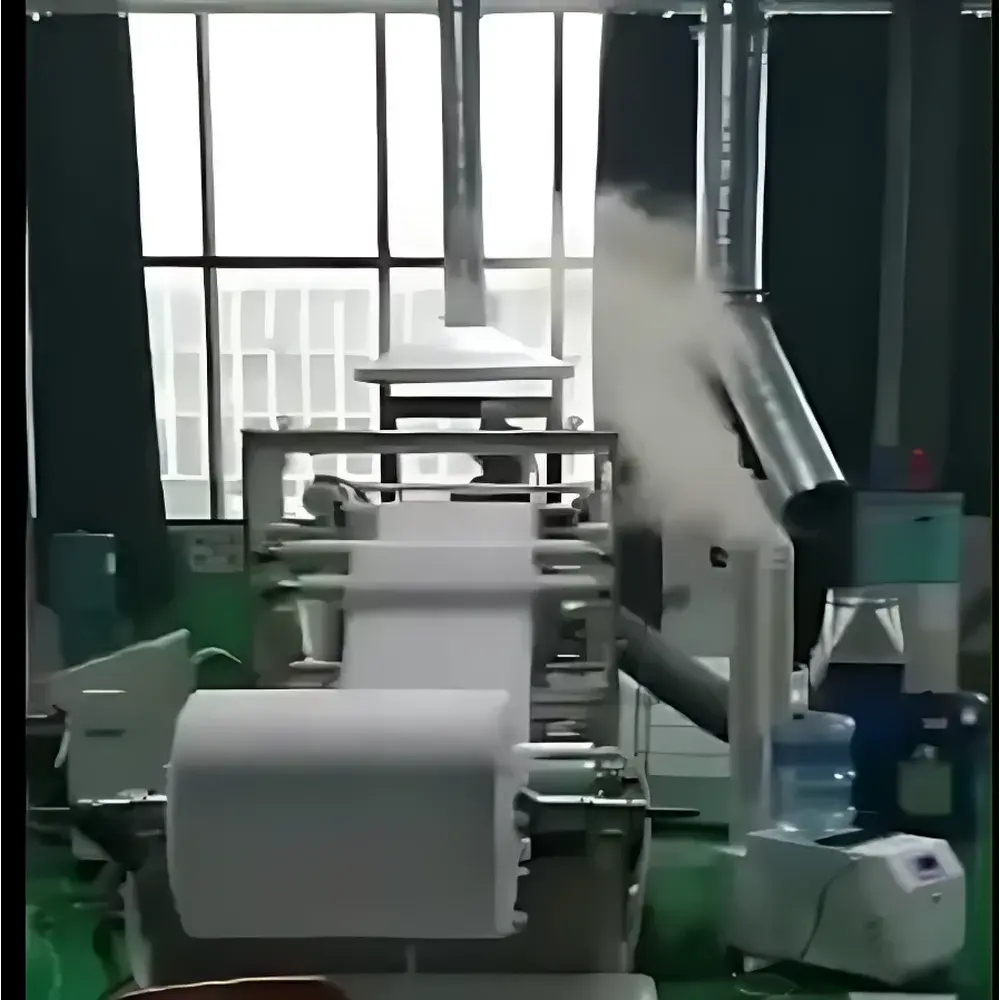
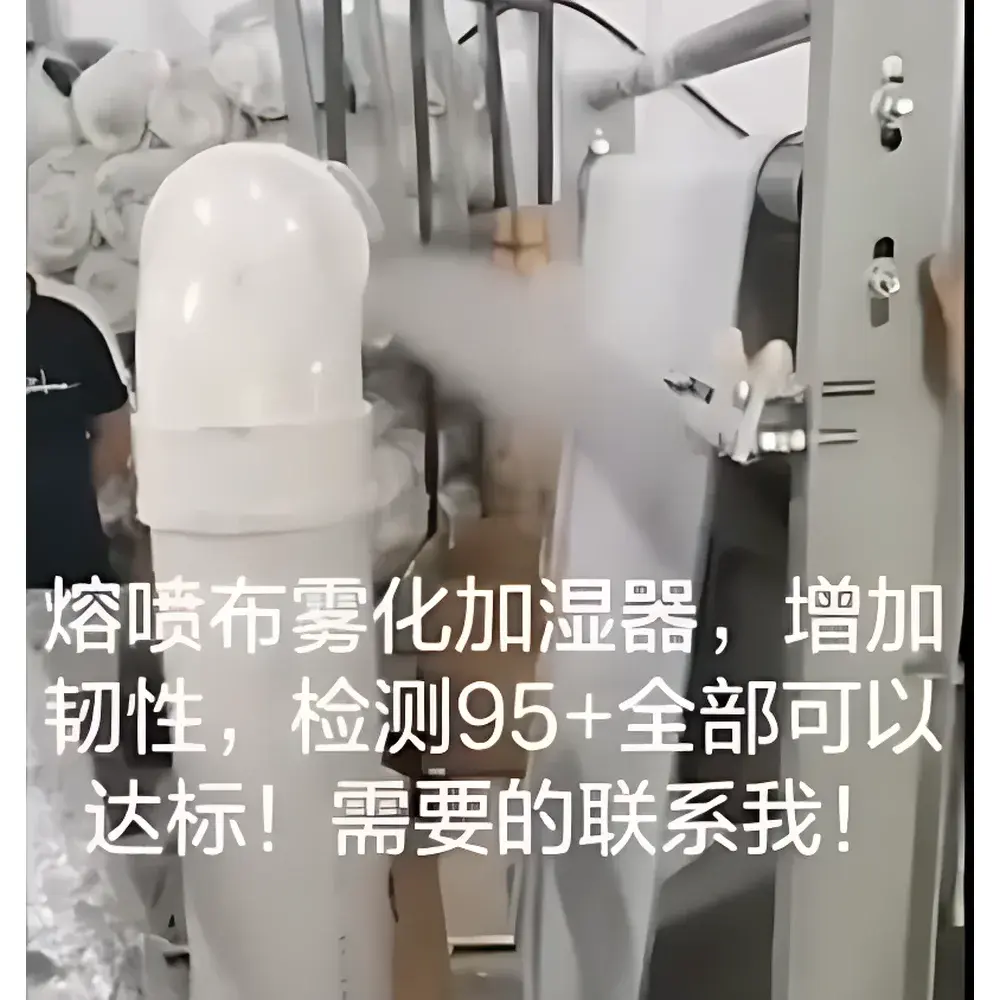
The ZEDO ZS-40Z Meltblown Nonwoven Fabric Ultrasonic Humidifier is an industrial-grade, process-integrated humidification system engineered specifically for meltblown polypropylene (PP) nonwoven production environments. Unlike general-purpose ambient humidifiers, this device operates on the principle of high-frequency ultrasonic atomization—converting deionized or softened water into a stable aerosol of 1–5 µm droplets via piezoelectric transducers operating at ≥1.7 MHz. The resulting ultrafine mist is pneumatically conveyed through adjustable nozzles and directed precisely onto moving web surfaces during post-extrusion cooling. This targeted, inline moisture conditioning mitigates residual thermal stress in freshly formed PP microfibers, thereby suppressing brittle fracture, improving tensile elongation, and stabilizing moisture regain (MR) within the critical 0.3–0.8% range required for consistent electret performance and mechanical integrity.
Key Features
- Ultrasonic atomization core delivering consistent 1–5 µm droplet size distribution (Dv50), verified per ISO 20685:2022 for aerosol characterization
- Line-speed-synchronized control architecture: automatically activates humidification only when web velocity exceeds user-defined threshold (e.g., ≥15 m/min), preventing over-humidification during startup or slowdown
- Modular nozzle array with individually adjustable airflow and mist density—supports variable web widths from 1.2 m to 3.2 m without reconfiguration
- Integrated mist dispersion fan with laminar-flow guidance vanes ensures uniform spatial coverage across the full web cross-section, minimizing streaking or localized saturation
- Stainless steel 304 wetted components and IP54-rated enclosure compliant with CE machinery directive 2006/42/EC for industrial environments
- Optional additive injection port compatible with FDA-approved textile auxiliaries (e.g., cationic softeners, anti-static agents, or hydrophilic polymer dispersions)
Sample Compatibility & Compliance
The ZS-40Z is validated for continuous operation in Class D cleanroom-adjacent meltblown extrusion zones (per ISO 14644-1) and integrates seamlessly with standard PP-based meltblown lines using 1500–2500 mm die widths. It maintains compatibility with common process fluids including deionized water (conductivity ≤5 µS/cm), low-conductivity soft water (hardness <50 ppm CaCO₃), and aqueous formulations containing ≤5 wt% non-ionic surfactants or quaternary ammonium compounds. All electrical components meet IEC 61000-6-2 (immunity) and IEC 61000-6-4 (emission) standards. The unit supports audit-ready operation under GMP-aligned quality systems: event logs record timestamped start/stop events, line speed inputs, and manual override actions—enabling traceability per FDA 21 CFR Part 11 requirements when paired with optional Ethernet-enabled data logger.
Software & Data Management
The ZS-40Z features a programmable logic controller (PLC)-based interface with dual-mode operation: standalone analog control (0–10 VDC input for line speed signal) or Modbus RTU integration (RS-485) for centralized SCADA linkage. Real-time parameters—including actual humidification rate (kg/h), transducer duty cycle (%), inlet water temperature (°C), and fault status codes—are accessible via front-panel LCD or remote HMI. Optional cloud-connected firmware enables encrypted MQTT telemetry to on-premise MES platforms, supporting predictive maintenance scheduling based on cumulative operating hours and transducer impedance drift trends. All configuration changes are logged with operator ID, timestamp, and pre-/post-values—fully satisfying GLP documentation requirements for process validation protocols.
Applications
This humidifier addresses three primary technical challenges in meltblown nonwoven manufacturing: (1) post-die fiber embrittlement due to rapid quench-induced crystallinity gradients; (2) electrostatic charge decay in electret-filter media caused by insufficient surface moisture for charge stabilization; and (3) dimensional instability (curling, edge lifting) arising from asymmetric moisture absorption during winding. Field deployments demonstrate measurable improvements: reduction in断裂伸长率 CV value from >1.2% to ≤0.35%, increase in average tensile strength retention after 72-hour ambient storage by 18–22%, and improvement in filtration efficiency (NaCl @ 0.3 µm) stability across ASTM F2101 test cycles. It is routinely deployed downstream of the collector drum but upstream of the first nip roll—positioned where fiber morphology has stabilized yet remains thermodynamically responsive to controlled vapor-phase hydration.
FAQ
What is the recommended water quality specification for optimal transducer longevity?
Deionized water with conductivity ≤3 µS/cm and silica content <0.1 ppm is strongly recommended. Softened water may be used if hardness is maintained below 25 ppm CaCO₃ and chlorine residual is removed via activated carbon filtration.
Can the ZS-40Z be integrated with existing PLC systems from major OEMs (e.g., Siemens, Allen-Bradley)?
Yes—native Modbus RTU support enables direct communication with S7-1200/1500 controllers and CompactLogix platforms. Configuration files and register maps are provided in standard EDS format.
Does the system comply with explosion-proof requirements for solvent-rich environments?
The base ZS-40Z is rated for Zone 2 / Class I Div 2 environments. For ATEX/IECEx-certified variants (Zone 1 / Class I Div 1), contact ZEDO Engineering Support for custom-built enclosures with intrinsic safety barriers.
How is mist particle size verified and maintained over time?
Each unit undergoes laser diffraction analysis (Malvern Spraytec) during factory acceptance testing. Transducer resonance frequency is monitored continuously; deviation >±2% triggers preventive maintenance alert per ISO 13322-2 guidelines.
Is validation documentation available for IQ/OQ/PQ execution?
Yes—ZEDO provides a complete qualification package including URS template, FAT/SAT protocols, calibration certificates for all embedded sensors, and blank PQ worksheets aligned with ISO 9001:2015 clause 8.5.1.



