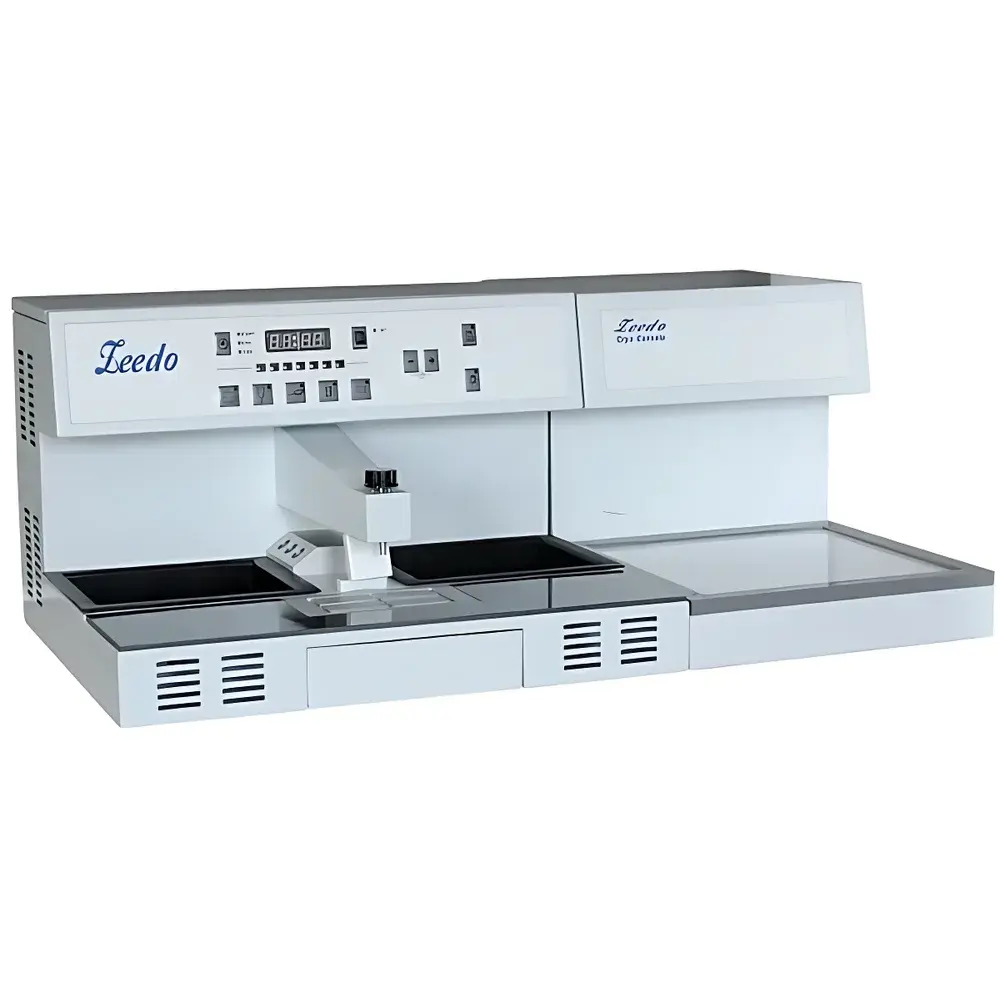
ZEEDO ES-300 Cryo-Embedding Station for Histopathological Tissue Processing
| Origin | Zhejiang, China |
|---|---|
| Manufacturer Type | Authorized Distributor |
| Regional Origin | Domestic (PRC) |
| Model | ES-300 |
| Quotation | Upon Request |
| Wax Bath Temperature Range | Ambient to 99 °C |
| Cold Plate Temperature Range | Ambient to −20 °C |
| Wax Bath Capacity | 3.2 L |
| Operating Ambient Temperature | 0–45 °C |
| Net Weight | 40 kg |
| Embedding Unit Dimensions (W×D×H) | 560 × 540 × 375 mm |
| Cold Plate Dimensions (W×D×H) | 345 × 600 × 375 mm |
| Voltage/Power | 220 V, 50 Hz / 800 W |
Overview
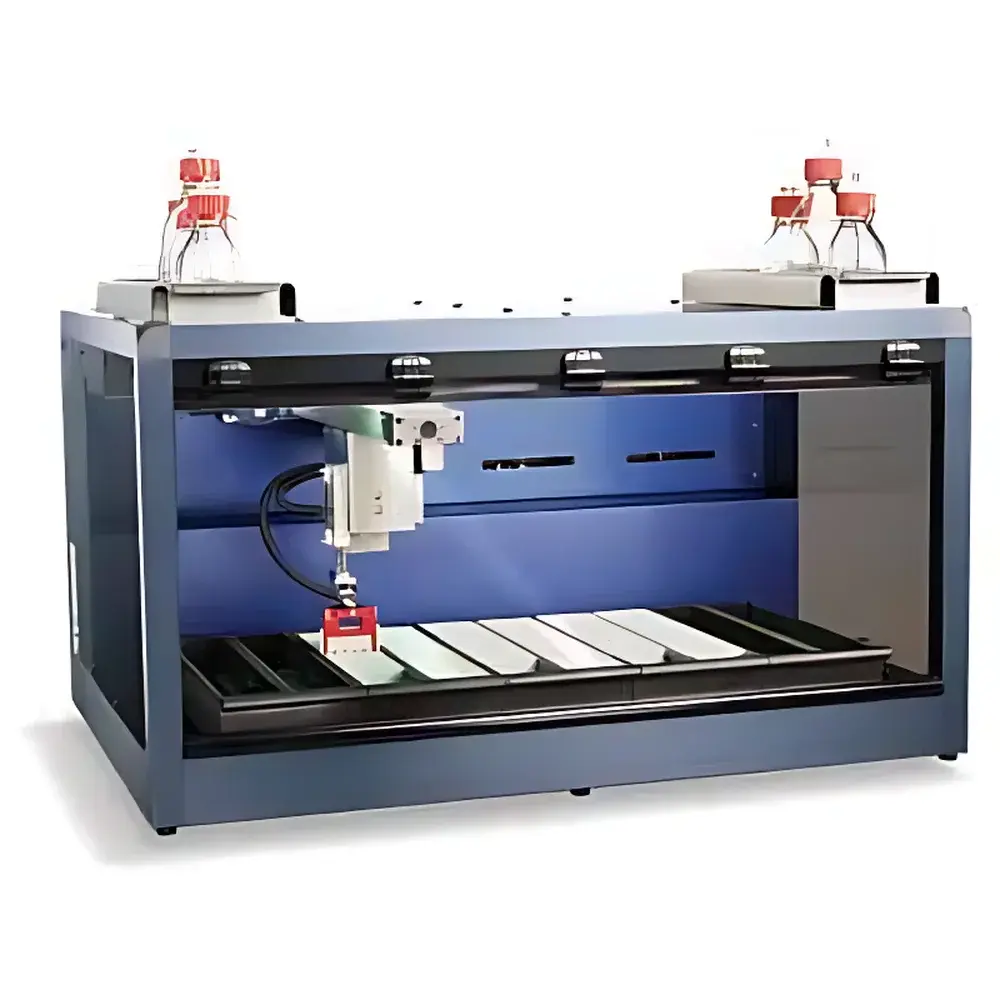
The ZEEDO ES-300 Cryo-Embedding Station is a precision-engineered histotechnological instrument designed for reproducible, high-throughput embedding of fresh or fixed biological tissues under controlled thermal conditions. Unlike conventional paraffin-only embedding systems, the ES-300 integrates dual-temperature domain operation—maintaining a precisely regulated warm zone (up to 99 °C) for molten paraffin handling and a dedicated cryogenic plate (down to −20 °C) for rapid tissue orientation and pre-solidification—thereby supporting both standard paraffin embedding and cryo-assisted embedding protocols. Its architecture adheres to fundamental principles of thermal mass management, capillary-driven wax delivery, and ergonomic workflow segmentation, enabling consistent block formation while minimizing thermal shock to delicate specimens such as neural tissue, embryonic samples, or lipid-rich biopsies. The system is engineered for compliance with routine histopathology laboratory standards, including ISO 15189 pre-analytical requirements and CLSI H25-A3 guidelines for specimen processing integrity.
Key Features
- Five independent PID-controlled temperature zones: wax bath, dispensing nozzle, embedding work surface, wax storage chamber, and forceps holder—each adjustable from ambient to 99 °C with ±0.5 °C stability.
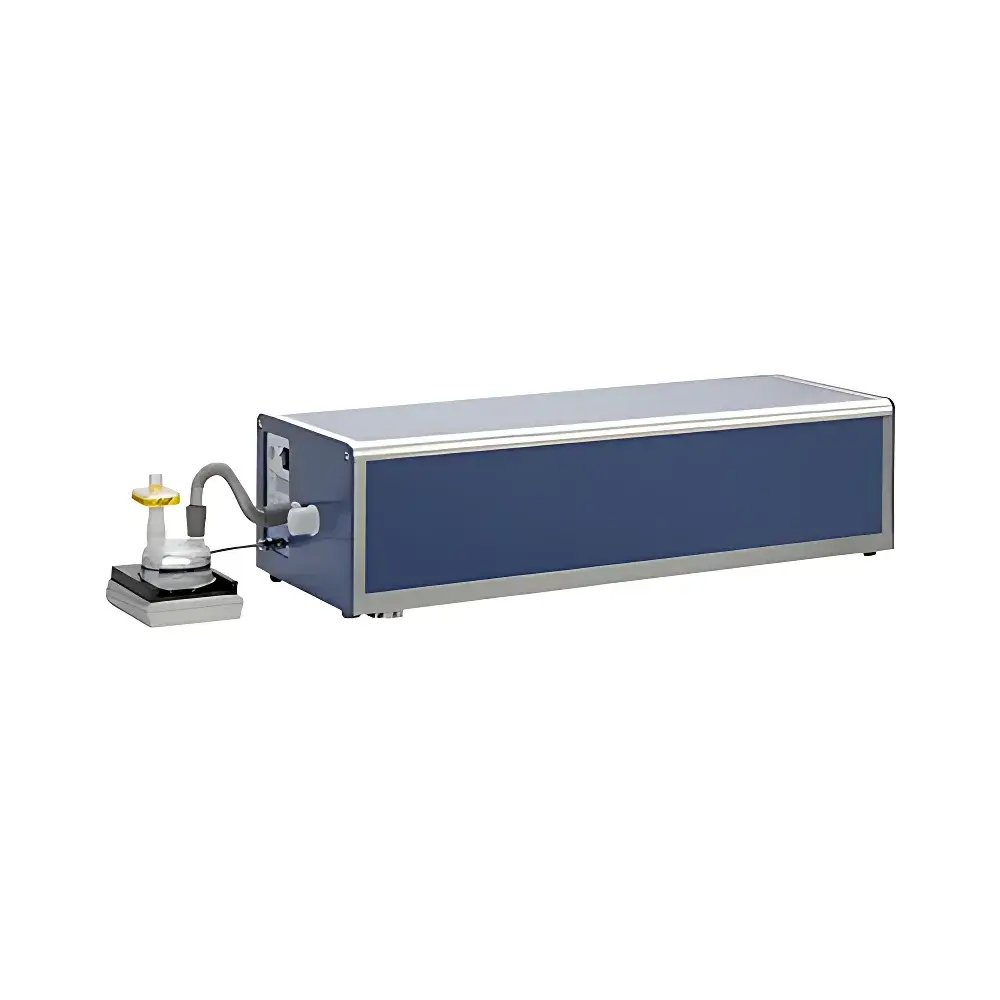
- Cryogenic cold plate operating from ambient to −20 °C, featuring uniform thermal distribution across its 345 × 600 mm surface and integrated condensate management to prevent frost accumulation during extended use.
- Gravity-fed wax recirculation system with high-reliability solenoid valve actuation, eliminating pump-induced shear stress on molten paraffin and reducing maintenance intervals.
- Dual-stage stainless-steel filtration (50 µm coarse + 25 µm fine) installed inline with the wax circulation path to prevent nozzle clogging and ensure laminar flow during dispensing.
- Modular mechanical design permits flexible spatial configuration: embedding unit and cold plate can be positioned adjacently, offset, or separated entirely—supporting lab layout optimization and future workflow expansion.
- Top-mounted, shadow-free LED illumination system (5,000 K CCT, >1,200 lux at working height) with adjustable intensity, facilitating accurate positioning of sub-millimeter tissue fragments prior to embedding.
- Dual activation interface: contactless Hall-effect sensor switch for hands-free operation and industrial-grade footswitch—both programmable for sequence initiation, pause, or emergency stop.
Sample Compatibility & Compliance
The ES-300 accommodates a broad spectrum of specimen types, including formalin-fixed, alcohol-dehydrated, and acetone-cleared tissues; unfixed frozen sections requiring cryo-stabilization; and delicate structures such as corneal buttons, endoscopic biopsies, and microdissected tumor fragments. Its temperature control fidelity ensures compatibility with low-melting-point paraffin blends (e.g., 52–56 °C range) and high-viscosity embedding media used in specialized applications like electron microscopy prep. From a regulatory standpoint, the device supports GLP-compliant documentation workflows when paired with validated LIMS integration. While not certified as medical device under FDA 21 CFR Part 820 or EU MDR, its operational parameters align with ASTM E2919-22 (Standard Guide for Selection of Embedding Media) and ISO/IEC 17025:2017 clause 5.4.2 regarding equipment suitability for intended use.
Software & Data Management
The ES-300 operates via embedded firmware without external PC dependency; however, it includes RS-485 serial output for integration into centralized lab automation networks. Time-stamped event logging (power-on cycles, temperature setpoint changes, auto-start triggers) is retained in non-volatile memory for up to 30 days and exportable via USB-C diagnostic port. Scheduled auto-start functionality allows configuration of up to seven distinct daily schedules—including weekday/weekend differentiation—enabling alignment with shift-based staffing models and reducing manual intervention. All temperature setpoints and operational modes are password-protected (two-tier access: operator vs. administrator), satisfying audit-trail requirements for CAP-accredited pathology labs.
Applications
- Routine surgical pathology: high-volume embedding of resection specimens, lymph nodes, and core biopsies with minimal operator variability.
- Research histology: embedding of fragile or enzyme-sensitive tissues where precise thermal ramping and localized cooling mitigate antigen degradation.
- Quality assurance programs: standardized embedding conditions across multiple technologists to improve inter-operator reproducibility in block face consistency and sectioning quality.
- Training laboratories: intuitive dual-control interface and visual feedback systems support competency-based education in embedding technique fundamentals.
- Multisite pathology networks: modular footprint and protocol portability facilitate method harmonization across geographically distributed facilities.
FAQ
Does the ES-300 support programmable cooling ramp rates for gradient freezing protocols?
No—the cold plate maintains a static setpoint between ambient and −20 °C; it is not equipped with active ramping or programmable cooling profiles.
Is the wax filtration system user-serviceable without tools?
Yes—both filter cartridges are housed in quick-release chambers accessible via front-panel latches; replacement requires no disassembly or calibration.
Can the cold plate operate independently while the embedding unit is powered off?
Yes—each module has separate power inputs and thermal control circuits, allowing standalone cold plate use for specimen staging or storage.
What is the maximum recommended continuous duty cycle for the wax bath heater?
The system is rated for uninterrupted operation at 99 °C for up to 72 hours; extended use beyond this requires periodic thermal recalibration per manufacturer’s maintenance schedule.
Are consumables such as wax nozzles or forceps holders available as OEM replacements?
Yes—ZEEDO provides certified spare parts kits including precision-machined brass nozzles, stainless-steel forceps holders, and PTFE-coated wax bath liners, all traceable to batch-specific QC documentation.