
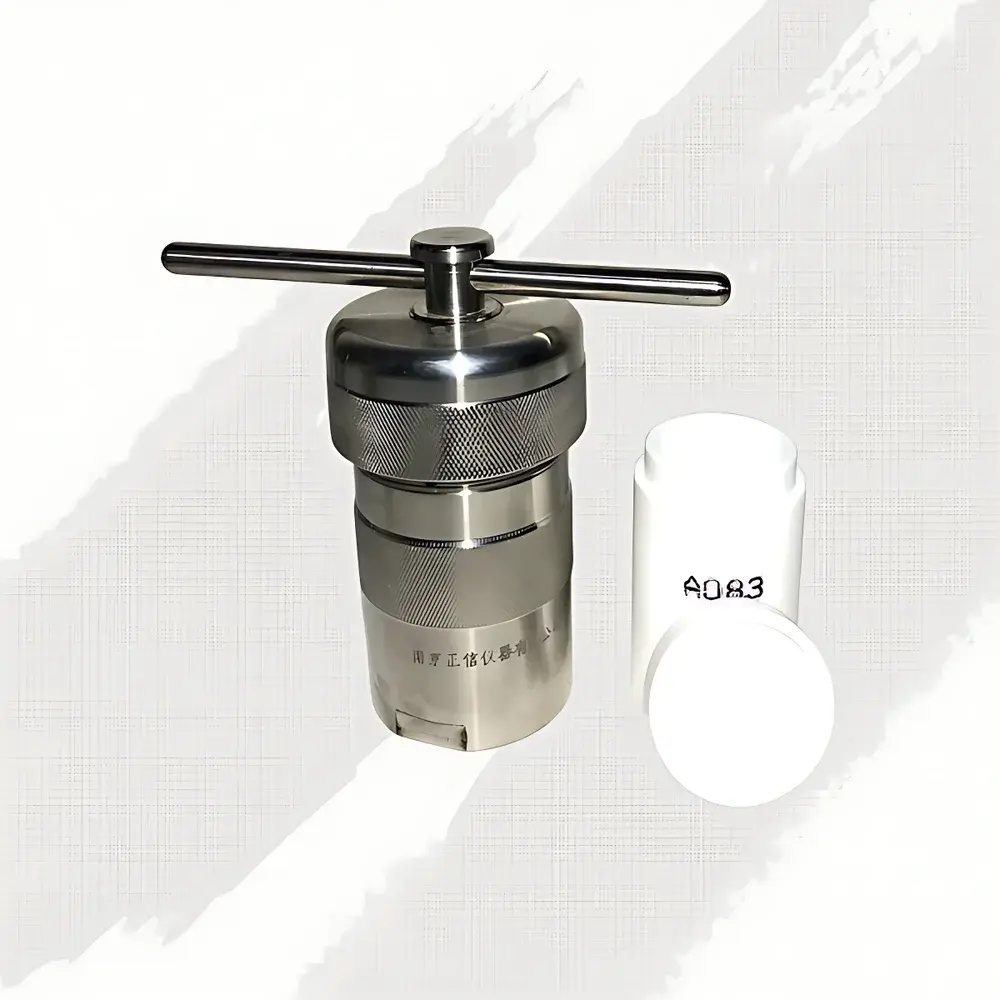
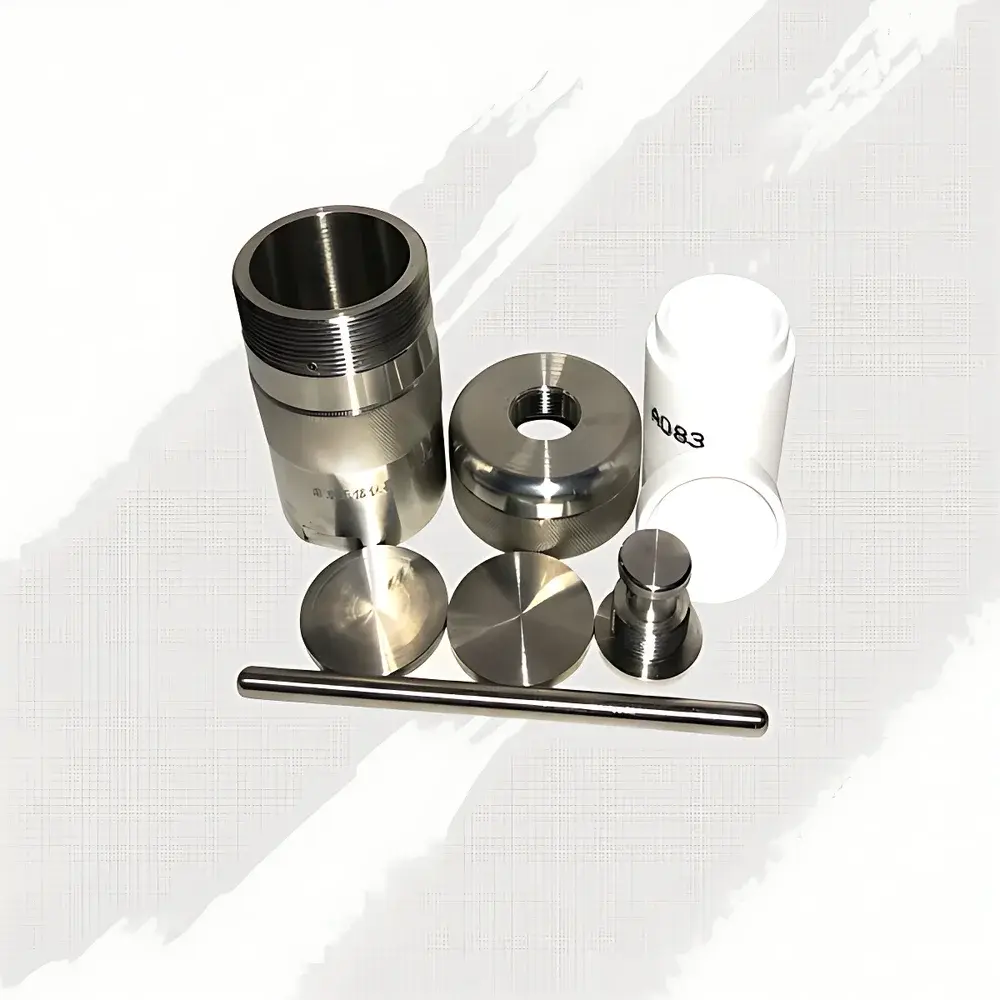
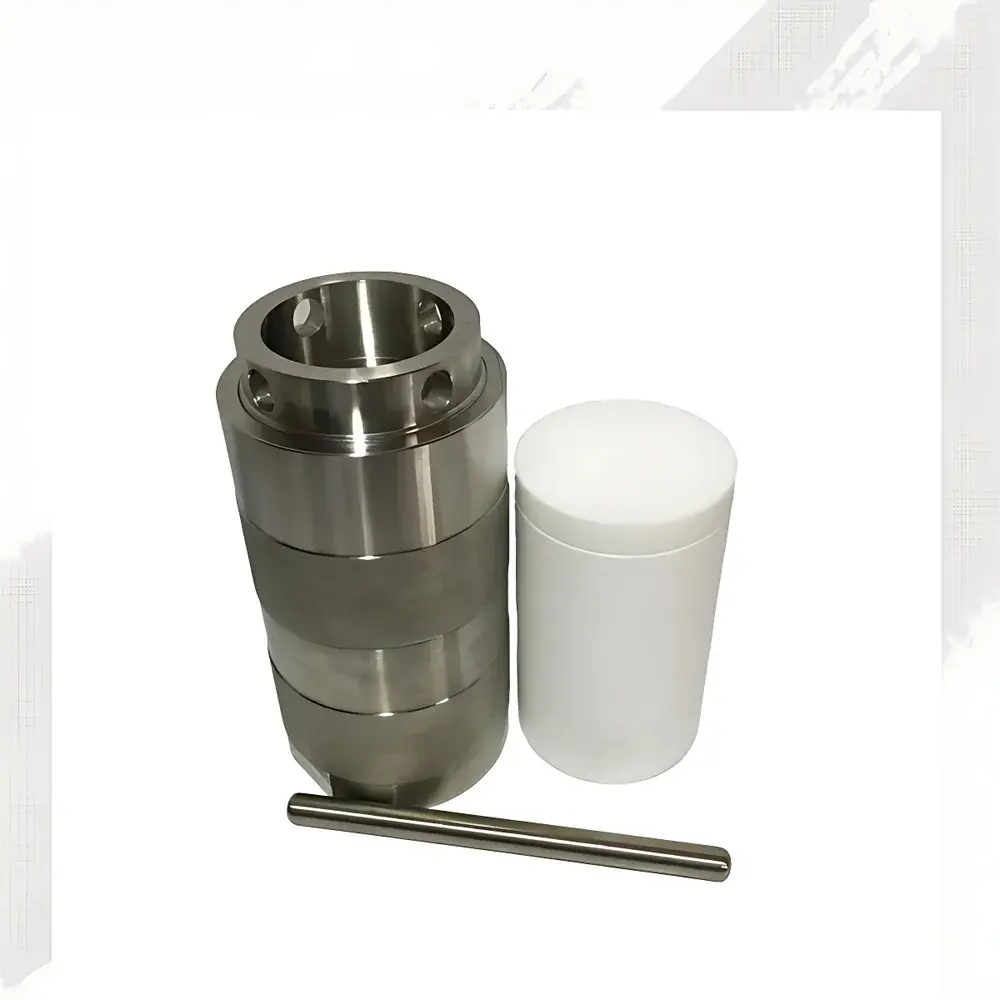
Zhengxin PF2-50ML Hydrothermal Synthesis Reactor
| Brand | Zhengxin Instruments |
|---|---|
| Origin | Jiangsu, China |
| Manufacturer Type | Authorized Distributor |
| Country of Origin | China |
| Model | PF2-50ML |
| Capacity | 50 mL (adjustable range: 25–1000 mL) |
| Vessel Material | Forged 304 Stainless Steel |
| Liner Material | PTFE (F4) or PPL (optional) |
| Max Operating Pressure | 6 MPa |
| Max Temperature (PTFE liner) | 240 °C |
| Max Temperature (PPL liner) | 280 °C |
| Sealing | Circular tenon-groove + manual spiral tightening |
| Vacuum Range | 0–6 MPa (gauge) |
| Liner Thickness | 7 mm |
| Safety Features | Dual anti-explosion venting ports on stainless steel lid and inner lid |
| Compliance | Designed for ASTM E2912-compliant sample digestion workflows |
Overview
The Zhengxin PF2-50ML Hydrothermal Synthesis Reactor is a precision-engineered pressure vessel designed for controlled high-temperature, high-pressure chemical synthesis and sample digestion under inert or reactive atmospheres. Based on the principle of hydrothermal reaction kinetics—where elevated temperature and autogenous pressure accelerate dissolution, crystallization, and phase transformation—the PF2 series enables reproducible decomposition of refractory matrices including silicates, oxides, biological tissues, and organometallic compounds. Its robust forged 304 stainless steel body, combined with chemically inert PTFE or PPL liners, ensures compatibility with aggressive reagents (e.g., HF, HNO₃/HCl mixtures, aqua regia, and organic solvents), making it suitable for trace-element analysis in environmental, geochemical, pharmaceutical, and materials science applications. The reactor operates within defined thermodynamic boundaries (≤6 MPa, ≤240 °C for PTFE; ≤280 °C for PPL), adhering to fundamental safety protocols for closed-vessel digestion per ISO 11885 and EPA Method 3052.
Key Features
- Forged 304 stainless steel construction with precision-machined circular tenon-groove sealing interface, delivering high mechanical integrity and long-term pressure retention.
- 7 mm-thick PTFE (F4) or PPL liner—chemically resistant across pH 0–14, stable in strong oxidants and halogenated solvents, with ultra-low elemental blank values (Pb < 10⁻¹¹ g/mL; U < 10⁻¹² g/mL).
- Dual integrated anti-explosion venting ports on both outer lid and inner lid, enabling passive overpressure relief without component failure.
- Manual spiral-tightening mechanism with torque-assisted lever arm, ensuring consistent seal compression and eliminating cross-threading risk.
- Optimized thermal mass distribution for uniform heating in ovens, muffle furnaces, or heating mantles—minimizing thermal gradients during ramp/hold cycles.
- Drop-tested structural integrity: withstands free-fall from 1.2 m without lid detachment or liner rupture (per internal QA protocol ZQ-HPV-2023).
Sample Compatibility & Compliance
The PF2-50ML supports digestion of diverse sample types—including soils, sediments, plant tissues, seafood, polymers, rare-earth oxides, and ceramic precursors—under certified method conditions. It is routinely deployed in laboratories performing USP <231>, ISO 17294-2, and GB/T 223.74–2022 compliant analyses. When used with documented SOPs, the reactor meets GLP audit requirements for traceability, including batch-specific liner lot tracking and pressure/temperature log correlation. Its low-metal-background design satisfies stringent criteria for ICP-MS and GF-AAS quantification of sub-ppt level analytes (e.g., As, Cd, Pb, Hg in foodstuffs per EU Regulation 1881/2006). The PPL liner option extends operational envelope for high-temperature carbonate fusion or fluoride-based digestions where PTFE would degrade.
Software & Data Management
While the PF2-50ML is a manually operated, non-instrumented reactor, its integration into digital lab workflows is supported via companion documentation templates aligned with 21 CFR Part 11 requirements. Zhengxin provides editable electronic SOPs (PDF + Word), calibration verification records for pressure-rated components, and liner lifetime logs. Laboratories may pair the reactor with external temperature dataloggers (e.g., Omega OM-EL-USB-TC) and pressure transducers (e.g., Druck DPI 610) for full parameter capture—enabling automated audit trails when linked to LIMS platforms such as LabWare LIMS or Thermo Fisher SampleManager. All documentation conforms to ISO/IEC 17025 clause 7.5.2 (control of records) and supports GMP-aligned validation protocols (IQ/OQ/PQ).
Applications
- Trace metal analysis in environmental samples (EPA 3052, ISO 11885)
- Synthesis of nanomaterials (e.g., TiO₂, ZnO, MOFs) via solvothermal routes
- Digestion of high-purity Al₂O₃ for ultratrace impurity profiling
- Decomposition of refractory geological matrices prior to REE quantification
- Preparation of catalyst precursors under reducing or inert atmospheres
- Food safety testing: heavy metals (Cd, Pb, As) in spices, cereals, and seafood
- Pharmaceutical excipient characterization under accelerated aging conditions
FAQ
What is the maximum safe fill volume for the PF2-50ML reactor?
The recommended fill factor is 0.3–0.67 of liner capacity (i.e., 15–33 mL for the 50 mL version) to ensure adequate headspace for vapor expansion and pressure control.
Can the reactor be used with hydrofluoric acid (HF)?
Yes—only with PTFE or PPL liners; never with bare stainless steel. HF exposure must be strictly limited to ≤200 °C and ≤4 MPa to prevent liner creep deformation.
How often should the sealing gasket be replaced?
The PTFE sealing ring should be inspected before each use and replaced after 10–15 autoclave cycles or immediately upon visible compression set, cracking, or loss of resilience.
Is post-digestion cooling rate critical?
Yes—rapid quenching induces thermal shock and compromises liner integrity. Cool passively to <80 °C before mechanical venting; forced air cooling is permitted only below 60 °C.
Does Zhengxin provide validation support for regulated labs?
Yes—customizable IQ/OQ protocols, material certificates (EN 10204 3.1), and pressure test reports (ASME BPVC Section VIII compliance verified by third-party NDT) are available upon request.



