
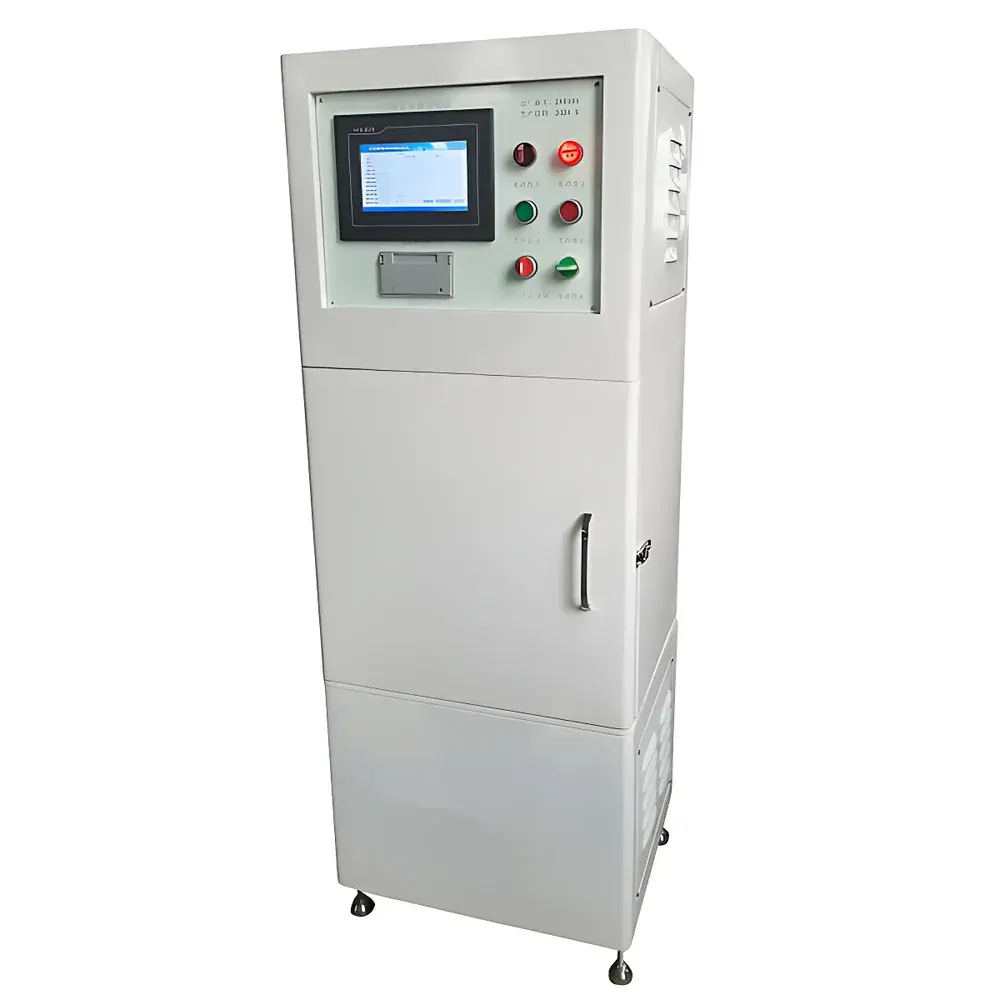
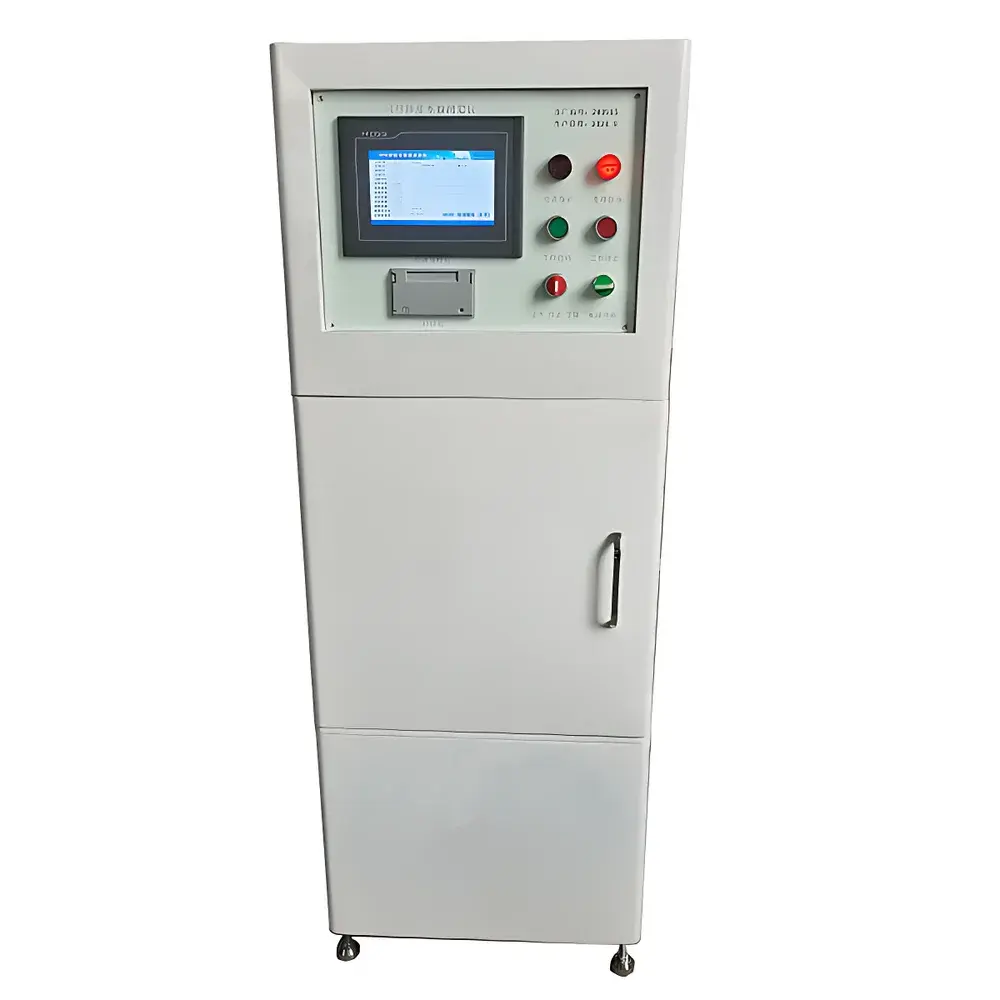
ZHENHUAFENXI PZY-III-1000 Vertical Thermal Dilatometer for Linear Coefficient of Thermal Expansion (CTE) Measurement of Glass Vials and Ampoules
| Brand | ZHENHUAFENXI |
|---|---|
| Origin | Hunan, China |
| Manufacturer Type | Authorized Distributor |
| Country of Origin | China |
| Model | PZY-III-1000 |
| Temperature Range | RT to 1000 °C |
| Heating Rate | 0–30 °C/min (programmable) |
| Displacement Resolution | 0.1 µm |
Overview
The ZHENHUAFENXI PZY-III-1000 is a vertically oriented, microprocessor-controlled thermal dilatometer engineered for precise determination of the linear coefficient of thermal expansion (CTE) of pharmaceutical glass containers—including vials, ampoules, tubing, rods, and flat specimens. It operates on the principle of contact-based displacement measurement under controlled thermal ramping: a high-stability quartz pushrod transmits dimensional changes of the heated sample to an imported high-resolution linear variable differential transformer (LVDT) sensor (0.1 µm resolution), while dual independent thermocouples monitor furnace and sample temperatures in real time. The system complies with pharmacopoeial requirements for glass packaging integrity assessment, specifically designed to meet the procedural and metrological criteria defined in Chinese Pharmacopoeia Supplement YBB00212003-2015 and YBB00202003-2015 (“Method for Determination of Average Linear Coefficient of Thermal Expansion”). Its vertical architecture minimizes gravitational sag effects during high-temperature testing and enables reproducible alignment of cylindrical samples—critical for regulatory-grade CTE reporting in GLP-compliant QC laboratories.
Key Features
- Vertical single/dual pushrod configuration with optional quartz reference支架 for zero-drift compensation and thermal background correction
- Industrial-grade 7-inch color touchscreen HMI running embedded firmware; supports both standalone operation (via onboard smart controller) and PC-integrated automated testing (Windows OS)
- Programmable heating rate from 0.1 to 30 °C/min with ±1 °C temperature stability across the full 1000 °C range; furnace temperature uniformity ≤ ±1 °C over working zone
- High-precision LVDT displacement sensor with auto-calibration function and ±2.5 mm measurable range; resolution 0.1 µm, traceable to NIST-traceable quartz standards
- Integrated air-cooling system enabling rapid post-test furnace cooldown—reducing cycle time by up to 40% compared to passive cooling
- Multi-level user access control with password-protected administrator, operator, and viewer roles; audit trail logging enabled for 21 CFR Part 11 readiness
- Onboard micro-dot matrix printer for immediate hardcopy output of raw data, expansion curves, and calculated CTE values
Sample Compatibility & Compliance
The PZY-III-1000 accommodates a broad range of glass geometries without requiring custom fixtures: standard specimen dimensions are Ø25–50 mm × H30–100 mm, with custom sizing available upon request. Compatible forms include drawn tubing, molded vials, sealed ampoules, polished rods, and flat plates. All measurements adhere to ISO 11359-1 (Plastics — Thermomechanical Analysis) and ASTM E228 (Standard Test Method for Linear Thermal Expansion of Solid Materials With a Push-Rod Dilatometer), while its primary validation framework aligns with YBB00202003-2015. The instrument’s thermal and mechanical design ensures minimal thermal lag and low hysteresis—key performance attributes required for compliance with ICH Q5C (Stability Testing of Biotechnological/Biological Products) and USP (Containers—Glass).
Software & Data Management
The Windows-based acquisition and analysis software provides full experimental control, real-time plotting of ΔL vs. T and αL vs. T curves, and automated CTE calculation per ISO 11359-2 methodology. Raw displacement and temperature datasets are saved in CSV and proprietary binary formats with timestamped metadata (operator ID, test ID, calibration status). Software features include baseline subtraction, tangent/segmental CTE derivation, statistical summary (mean, SD, CV%), and export-ready reports compliant with internal QA templates. Audit logs record all parameter modifications, calibration events, and user logins—supporting retrospective review and FDA inspection preparedness.
Applications
- QC release testing of Type I, II, and III borosilicate and soda-lime glass pharmaceutical containers
- Development and qualification of new glass formulations for improved thermal shock resistance
- Root cause analysis of delamination or cracking incidents linked to mismatched CTE between glass body and stopper/seal materials
- Thermal stress modeling input for lyophilization cycle design and container closure integrity (CCI) validation
- Comparative studies of annealing efficiency across different heat-treatment profiles
- Supporting regulatory submissions requiring documented CTE data per NMPA, PMDA, or EMA guidelines
FAQ
Does the PZY-III-1000 support dual-sample simultaneous measurement?
No—it is configured for single-sample testing per run. Dual pushrod mode allows reference-compensated operation using a quartz standard rod, but only one test specimen is measured at a time.
Is the displacement sensor calibrated traceable to international standards?
Yes—the LVDT sensor is factory-calibrated against NIST-traceable quartz length standards; calibration certificates and uncertainty budgets are supplied with each unit.
Can the system be integrated into a LIMS environment?
Yes—CSV export functionality and configurable data field mapping enable seamless ingestion into common LIMS platforms via scheduled file transfer or API middleware.
What maintenance is required for long-term accuracy?
Annual verification of furnace temperature uniformity and displacement sensor linearity is recommended; quartz pushrods and sample holders should be inspected for thermal degradation before high-temperature cycles exceeding 800 °C.
Is GLP-compliant electronic signature support included?
The software supports role-based electronic signatures for test initiation, data review, and report approval—fully configurable to match site-specific SOPs and aligned with ALCOA+ data integrity principles.



