
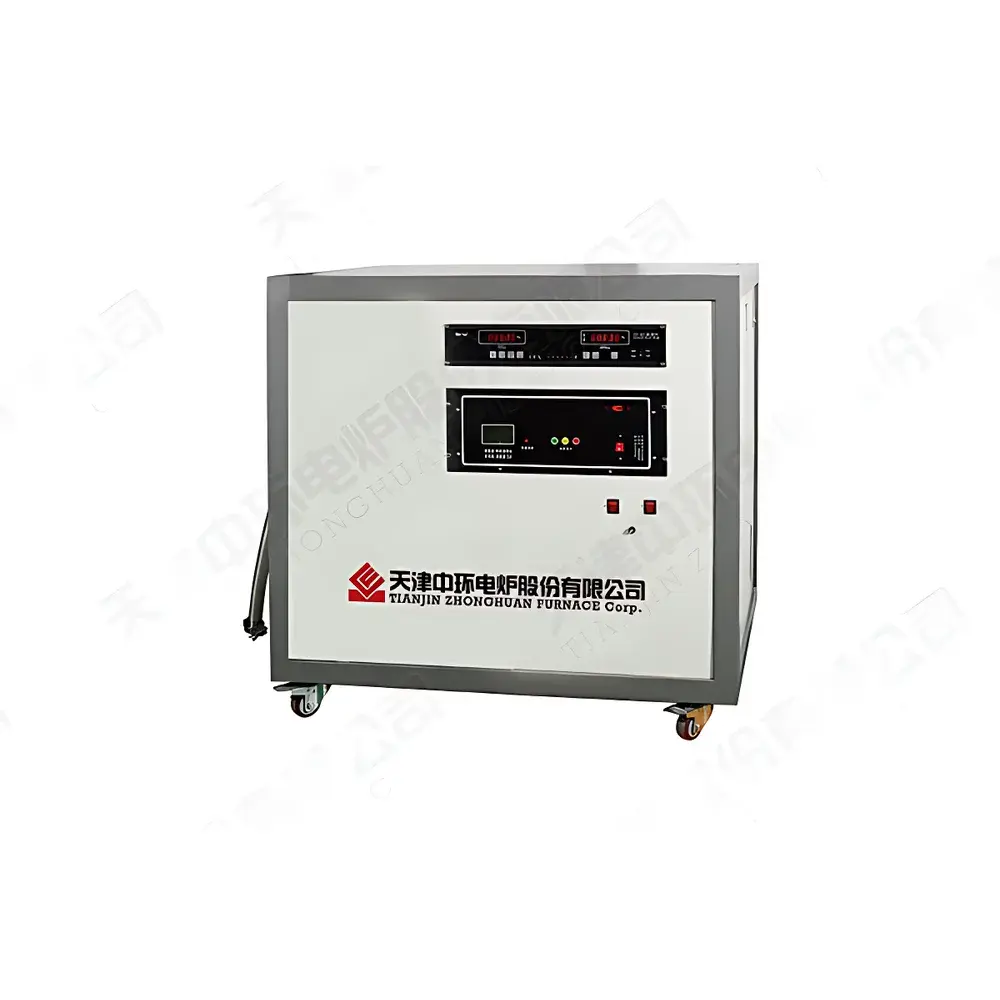
Zhonghuan Furnace High-Vacuum Molecular Pump Control System
| Brand | Zhonghuan Furnace |
|---|---|
| Origin | Tianjin, China |
| Manufacturer Type | Authorized Distributor |
| Country of Origin | China |
| Model | High-Vacuum Molecular Pump Control System |
| Pricing | Available Upon Request |
Overview
The Zhonghuan Furnace High-Vacuum Molecular Pump Control System is an integrated vacuum management platform engineered for precision thermal processing environments—particularly vacuum and controlled-atmosphere tube furnaces and box furnaces. It operates on a two-stage vacuum generation principle: initial rough pumping via an internal dual-stage rotary vane mechanical pump (typically achieving base pressures in the 10−1–10−2 mbar range), followed by high-vacuum pumping using a turbo-molecular pump (capable of reaching ultimate pressures down to 10−7–10−8 mbar, depending on pump selection and system conductance). The system implements active pressure regulation through real-time feedback from a thermocouple gauge (TCG) sensor, enabling closed-loop control of vacuum level during furnace operation. Its architecture supports both automated vacuum sequencing and manual intervention, with built-in safety logic to halt molecular pump operation upon atmospheric breach—ensuring rotor integrity and eliminating risk of backstreaming or mechanical damage.
Key Features
- KF-40 quick-connect flange interface across all gas inlets and exhaust ports—enabling tool-free, leak-tight assembly compliant with ISO-KF standards (DIN 28403); reduces installation time by >60% versus CF or ISO-LF alternatives.
- Digital vacuum display with scientific notation (e.g., “1.23E−5 mbar”) powered by a calibrated thermocouple gauge; offers ±5% full-scale accuracy over 10−3–100 mbar range, with EMI-hardened signal conditioning for stable readings in high-noise industrial lab settings.
- Integrated dual-stage rotary vane mechanical pump with oil mist filter and vibration-dampening mount—provides robust pre-vacuum performance while minimizing acoustic and mechanical coupling to sensitive furnace components.
- Intelligent interlock logic: automatically disables molecular pump power supply when chamber pressure exceeds 10−2 mbar (e.g., during door opening or seal failure), and resumes operation only after safe restart conditions are verified—fully compliant with IEC 61508 functional safety principles for vacuum equipment.
- Modular chassis design functions as both control unit and load-bearing workbench—rated for static loads up to 80 kg, allowing direct placement of tube furnaces (≤Φ120 mm OD) or auxiliary instrumentation without additional support structures.
Sample Compatibility & Compliance
The system is designed for integration with horizontal and vertical tube furnaces (up to 1800 °C operating temperature) and medium-volume box furnaces (≤30 L chamber volume). It accommodates standard quartz, alumina, and stainless-steel process tubes with KF-40 or CF-63 flanged ends. All wetted materials—including pump oil, O-rings (FKM/Viton®), and gauge sensor elements—meet USP Class VI biocompatibility requirements where applicable. The control firmware adheres to GLP-compliant data integrity practices: vacuum logs include timestamped pressure traces, operator ID (via optional login module), and audit-trail-enabled parameter change records. While not certified to UL/CE for standalone sale, the system conforms to EN 61000-6-2 (immunity) and EN 61000-6-4 (emission) when installed per manufacturer guidelines.
Software & Data Management
Vacuum sequence programming is performed via front-panel membrane keypad with non-volatile memory retention (≥10,000 cycles). Optional RS-485 Modbus RTU interface enables integration into SCADA or LabVIEW-based supervisory systems for centralized monitoring. Pressure data can be exported in CSV format via USB host port (no proprietary drivers required). Firmware supports configurable alarm thresholds (e.g., low vacuum, pump overtemperature, seal leak rate >1×10⁻⁶ mbar·L/s), with relay outputs for external PLC signaling. All calibration constants are stored in write-protected EEPROM, traceable to NIST-traceable reference gauges used during factory verification.
Applications
- Controlled-atmosphere sintering of advanced ceramics (e.g., SiC, AlN) requiring <1 ppm O2 partial pressure at 1600 °C.
- Thin-film deposition pre-chamber conditioning prior to PVD/CVD transfer.
- Outgassing studies of battery electrode materials under dynamic vacuum ramp profiles (10−2 → 10−7 mbar over 90 min).
- In-situ XRD sample environment stabilization where pressure-induced lattice strain must remain below 0.005%.
- Research-scale metal purification via vacuum distillation (e.g., Mg, Zn, rare earths) with real-time vapor pressure tracking.
FAQ
Can this system operate independently of Zhonghuan furnaces?
Yes—it is fully functional as a standalone high-vacuum acquisition and control station for any KF-40–compatible chamber, including custom-built reactors or analytical instruments.
Is the thermocouple gauge calibrated before shipment?
Each unit undergoes factory calibration against a reference capacitance manometer (±0.25% reading) at three pressure points (10−3, 10−1, and 1 mbar); calibration certificate included.
What maintenance intervals are recommended for the rotary vane pump?
Oil change every 500 operational hours; full inspection (vane wear, spring tension, oil mist filter) every 2000 hours—per ISO 8573-1 Class 4 compressed air purity standards.
Does the system support analog output for external PID controllers?
Yes—0–10 VDC and 4–20 mA isolated analog outputs are available for pressure signal routing to third-party temperature or gas flow controllers.
How is pump surge protection implemented during venting events?
A fast-acting solenoid valve isolates the molecular pump from the chamber within 80 ms of pressure rise detection, preventing rotor deceleration shock and bearing overload.



