
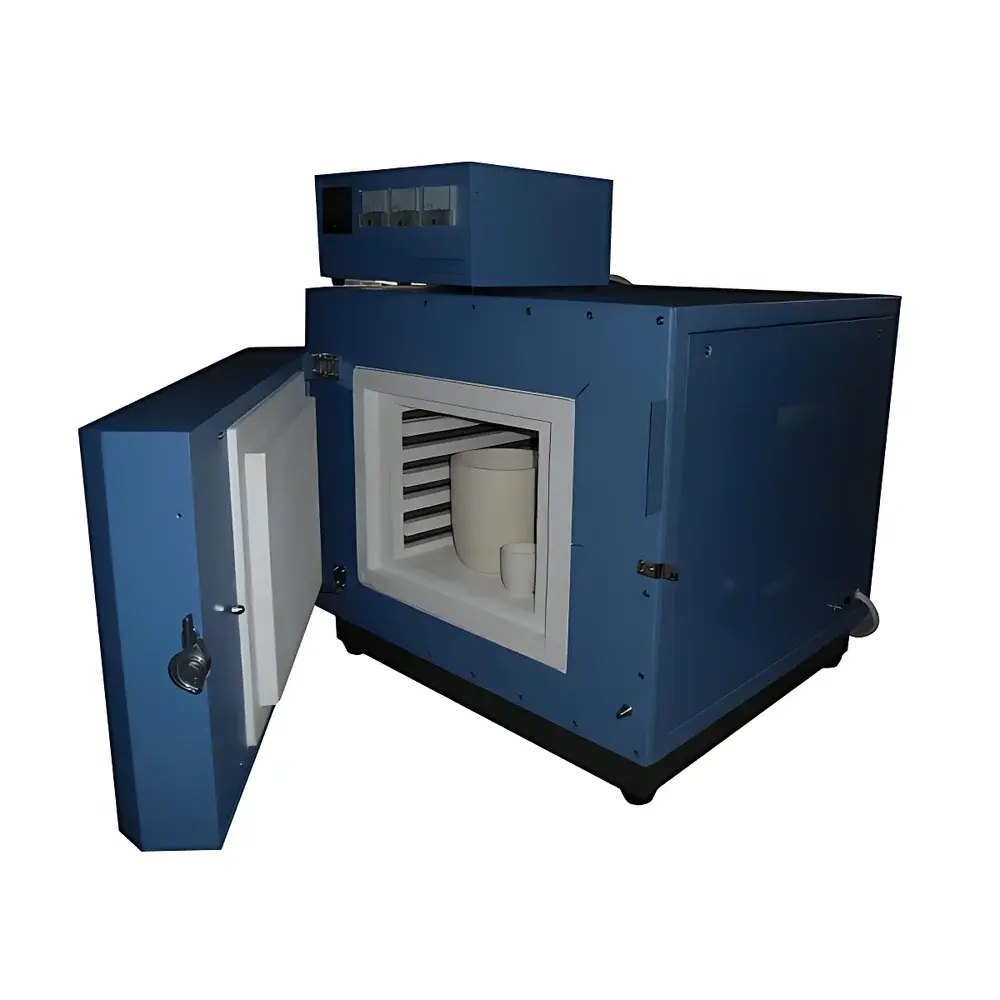
Zhongke Aobo TL3012 Ceramic Fiber High-Temperature Box Furnace
| Brand | Zhongke Aobo |
|---|---|
| Origin | Beijing, China |
| Model | TL3012 |
| Instrument Type | Box-Type Muffle Furnace |
| Max Temperature | 1400 °C |
| Temperature Control Accuracy | ±1 °C |
| Rated Power | 7.5 kW |
| Heating Time to Max Temp | ≤80 min |
| Heating Elements | Resistance Wire & Silicon Carbide Rods |
| Internal Chamber Dimensions | 400 × 250 × 200 mm (W × D × H) |
| Chamber Volume | 30 L |
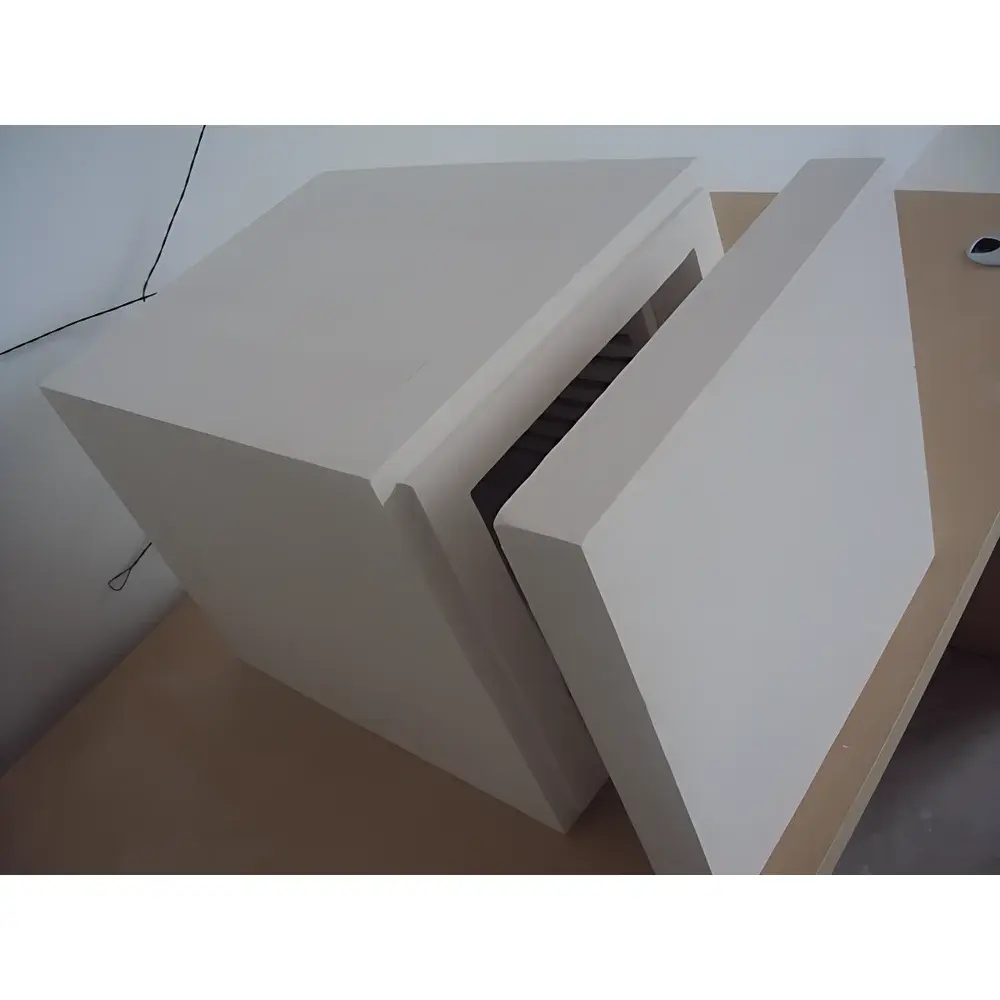
| Insulation Material | High-Purity Ceramic Fiber |
| Thermocouple Type | K-type |
| Control System | PID Programmable Digital Controller (8-step ramp/soak) |
| Power Supply | 3-Phase 380 V AC, 16 A |
Overview
The Zhongke Aobo TL3012 Ceramic Fiber High-Temperature Box Furnace is a precision-engineered laboratory muffle furnace designed for controlled thermal processing up to 1400 °C. It operates on the principle of resistive heating via dual-element architecture—combining high-strength silicon carbide rods and alloy resistance wire—to ensure uniform temperature distribution and long-term stability across the entire working zone. Unlike traditional refractory brick furnaces, the TL3012 employs a monolithic ceramic fiber insulation chamber with low thermal mass and exceptional thermal resistance, enabling rapid heat-up, minimal energy consumption, and surface temperatures below 55 °C under steady-state operation at 1000 °C. This architecture meets fundamental requirements for applications demanding strict thermal reproducibility, such as ashing, calcination, heat treatment, and pre-conditioning of analytical samples in compliance with ASTM E171, ISO 562, USP , and GB/T 212–2008.
Key Features
- High-efficiency ceramic fiber insulation reduces thermal inertia—achieves 1400 °C in ≤80 minutes from ambient, with typical ramp rates of 10–15 °C/min in the 200–1000 °C range.
- Dual heating configuration: silicon carbide rods (for high-temperature zones ≥1200 °C) and Ni-Cr resistance wire (for lower-range stability), ensuring element longevity and oxidative resistance.
- PID programmable digital controller with 8-segment ramp/soak capability, real-time temperature logging, and auto-tuning functionality; supports setpoint retention during brief power interruptions.
- Side-opening door with reinforced ceramic fiber gasket ensures consistent seal integrity and minimizes heat loss during sample loading/unloading.
- Integrated safety architecture includes over-temperature cutoff (independent of main controller), door-open interlock, ground-fault circuit interruption (GFCI), and thermal fuse protection on heating circuits.
- Modular design separates furnace chamber and control unit, facilitating field maintenance, component replacement, and electromagnetic interference (EMI) isolation.
- Optional exhaust port (standard 25 mm diameter) allows connection to fume hoods or inert gas manifolds; configurable with inlet/outlet fittings for N₂ or Ar purging per ASTM D3174 or ISO 1171.
Sample Compatibility & Compliance
The TL3012 accommodates standard crucibles (alumina, quartz, platinum, and silicon carbide), porcelain boats, and custom fixtures up to 300 mm in length. Its 400 × 250 × 200 mm internal cavity provides unobstructed access and uniform thermal gradients (±5 °C at 1400 °C per ASTM C177). The furnace complies with IEC 61000-6-3 (EMC emissions) and IEC 61010-1 (safety for electrical equipment for measurement, control, and laboratory use). For regulated environments—including GLP laboratories and pharmaceutical QC labs—the system supports audit-ready operation when paired with validated data logging software compliant with FDA 21 CFR Part 11 (electronic records/signatures) and EU Annex 11 requirements.
Software & Data Management
While the TL3012 operates natively via its front-panel controller, optional RS485/Modbus RTU interface enables integration with SCADA systems or third-party LIMS platforms. Compatible software packages provide real-time graphing, CSV export of time-stamped temperature profiles, alarm history with timestamps, and configurable pass/fail criteria for thermal validation protocols. All logged data include operator ID, session ID, and environmental metadata (e.g., ambient temperature, humidity), satisfying traceability requirements for ISO/IEC 17025 accreditation.
Applications
- Coal and coke analysis: moisture, ash, volatile matter, fusibility (gray fusion temperature), and elemental composition per ASTM D3172–D3177 and ISO 19579.
- Environmental testing: TGA-style residue quantification in soil, sludge, and wastewater solids per EPA Method 3010A and ISO 11464.
- Pharmaceutical development: residual solvent removal, excipient compatibility studies, and forced degradation per ICH Q1A(R2).
- Cement and refractory R&D: clinker phase transformation, sintering behavior, and thermal expansion coefficient determination.
- Materials science: pre-oxidation of metal powders, ceramic green body densification, and catalyst support activation.
FAQ
What thermocouple type is used for temperature sensing?
K-type thermocouples are standard; optional S-type (platinum-rhodium) sensors are available for extended accuracy above 1200 °C.
Is the furnace suitable for inert or reducing atmospheres?
Yes—when equipped with optional gas inlet/outlet ports and flow regulators, it supports continuous N₂, Ar, or forming gas (5% H₂/95% N₂) operation with leak-tested seals.
Can the TL3012 be validated for GMP use?
Yes—its modular construction, digital control traceability, and configurable alarm/logging features support IQ/OQ/PQ execution per ASTM E2500 and WHO TRS 961 Annex 4.
What maintenance intervals are recommended for heating elements?
Silicon carbide rods typically last 1,500–2,000 hours at 1400 °C; resistance wire elements exceed 5,000 hours under cyclic operation at ≤1100 °C. Visual inspection and resistance measurement every 200 operating hours are advised.
Does the controller support external calibration verification?
Yes—the PID module accepts reference input from external calibrators (e.g., Fluke 726) via analog voltage signal, enabling field verification without disassembly.



