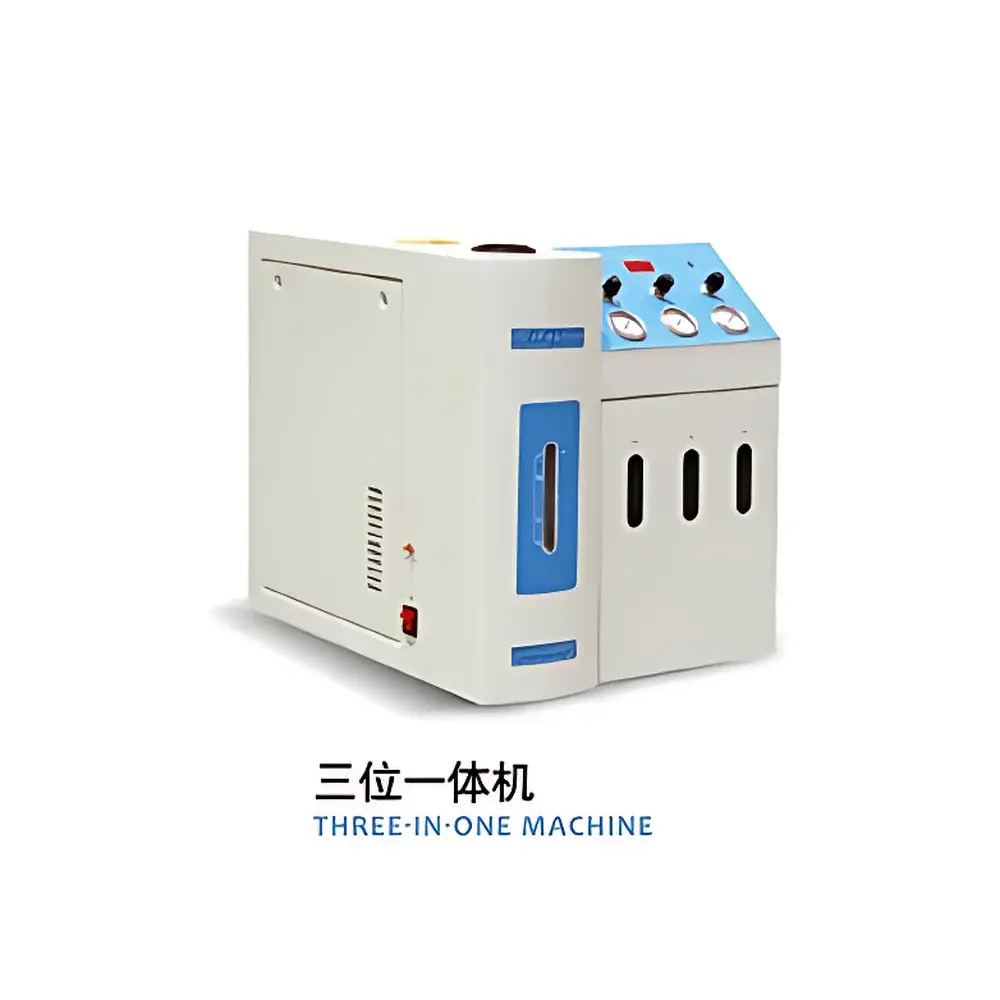
ZHONGKEHUIFEN HGN-HGH-HGA Tri-Gas Generator System
| Brand | ZHONGKEHUIFEN |
|---|---|
| Origin | Beijing, China |
| Manufacturer Type | Authorized Distributor |
| Country of Origin | China |
| Model | Tri-Gas Generator System |
| Nitrogen Purity | 99.999% (O₂ < 1 ppm) |
| Hydrogen Purity | 99.999% (O₂ < 1 ppm) |
| Air Purity | Oil-free, Class 1 compressed air per ISO 8573-1:2010 |
| Nitrogen Output Pressure | 0.4 MPa |
| Hydrogen Output Pressure | 0.3 MPa |
| Air Output Pressure | 0.4 MPa |
| Nitrogen Flow Rate | 0–300 mL/min |
| Hydrogen Flow Rate | 0–300 mL/min |
| Air Flow Rate | 0–2 L/min |
| Input Power | AC 220 V, 50 Hz |
| Operating Temperature | 0–40 °C |
| Relative Humidity | <85% RH (non-condensing) |
Overview
The ZHONGKEHUIFEN HGN-HGH-HGA Tri-Gas Generator System is an integrated laboratory gas supply platform engineered for precision chromatography and analytical instrumentation requiring concurrent, stable delivery of high-purity nitrogen, hydrogen, and zero-air. Unlike conventional cylinder-based gas sourcing, this system employs three independent electrochemical and catalytic purification modules operating in parallel—each optimized for its respective gas stream using established physical separation principles. Nitrogen generation relies on pressure-swing adsorption (PSA) with dual-bed zeolite molecular sieves and a proprietary secondary catalytic polishing stage to achieve residual oxygen ≤1 ppm. Hydrogen is produced via alkaline electrolysis in a high-efficiency tubular electrolytic cell featuring large active surface area, low-temperature operation (<45 °C), and continuous in-situ oxygen venting—eliminating the need for external gas-liquid separation. Compressed air is conditioned through a triple-stage filtration train (particulate → activated carbon → desiccant) followed by dual-stage pressure regulation and overpressure/overtemperature safety interlocks. The architecture supports uninterrupted, on-demand gas delivery without storage bottlenecks or logistical dependency on bulk cylinders.
Key Features
- Triple independent gas generation modules housed in a single compact chassis (W×D×H: 560×480×320 mm), minimizing lab footprint and cross-contamination risk.
- Nitrogen module incorporates复式提纯 (dual-stage purification): primary PSA separation followed by palladium-catalyzed deoxygenation, delivering consistent 99.999% N₂ with O₂ ≤1 ppm across full flow range.
- Hydrogen module utilizes a vertically oriented high-capacity tubular electrolyzer—superior thermal management and electrode utilization versus planar plate-type cells, resulting in lower operational temperature, extended membrane life, and higher long-term purity stability.
- Air module integrates ISO 8573-1:2010 Class 1 oil-free air certification via coalescing, carbon adsorption, and desiccant drying stages; includes redundant pressure regulation and real-time dew point monitoring.
- Microprocessor-controlled interface with digital flow/pressure readouts, programmable setpoints, and system-wide fault diagnostics (e.g., electrolyte level, catalyst saturation, filter service alerts).
- Compliance-ready design: meets CE marking requirements; supports GLP/GMP documentation protocols via optional audit trail logging and user-access control tiers.
Sample Compatibility & Compliance
The Tri-Gas Generator System is validated for direct integration with gas chromatography (GC), gas chromatography–mass spectrometry (GC–MS), flame ionization detectors (FID), thermal conductivity detectors (TCD), electron capture detectors (ECD), and nitrogen-phosphorus detectors (NPD). Its output specifications align with ASTM D6299 (precision and bias of GC calibration), ISO/IEC 17025 method validation requirements for carrier and fuel gases, and USP guidelines for chromatographic system suitability. All gas streams comply with ICH Q2(R2) recommendations for impurity profiling—particularly critical for trace-level volatile organic compound (VOC) analysis where hydrocarbon or moisture contamination would compromise detection limits. The system’s zero-oil air output satisfies ISO 8573-1:2010 Class 1 (0.1 µm particulates, ≤0.01 mg/m³ oil aerosol, dew point ≤−40 °C) for sensitive detector applications.
Software & Data Management
The embedded controller provides local status monitoring via a 4.3-inch TFT LCD with touch interface, displaying real-time parameters including flow rates (mL/min), outlet pressures (MPa), internal temperatures (°C), and consumable service intervals. Optional RS-485/Modbus RTU or Ethernet TCP/IP connectivity enables remote supervision through third-party laboratory information management systems (LIMS) or building automation platforms. Audit-trail functionality—when enabled—records operator actions, parameter changes, alarm events, and maintenance logs with timestamp, user ID, and IP address, satisfying FDA 21 CFR Part 11 electronic record and signature requirements. Data export is supported in CSV format for trend analysis and preventive maintenance scheduling.
Applications
- Carrier gas supply for capillary GC columns requiring ultra-high-purity nitrogen (e.g., polyacrylonitrile or fused silica stationary phases).
- Fuel gas source for FID and TCD detectors, where hydrogen purity directly influences baseline noise and linear dynamic range.
- Make-up and combustion air for ECD and NPD, where hydrocarbon-free air prevents false positives and signal drift.
- Mobile and field-deployable labs where cylinder logistics are impractical—enabling continuous 24/7 operation under ambient conditions (0–40 °C, <85% RH).
- Pharmaceutical QC laboratories performing residual solvent testing per USP , where gas purity impacts method specificity and quantitation accuracy.
FAQ
What is the expected lifetime of the electrolytic cell in the hydrogen module?
Under normal operating conditions (≤300 mL/min, 8 h/day), the tubular alkaline electrolyzer demonstrates ≥5 years of functional service life before scheduled refurbishment—verified via periodic polarization curve measurement and gas purity trending.
Does the system require deionized water feed for hydrogen generation?
Yes. Continuous supply of Type II deionized water (resistivity ≥1 MΩ·cm, silica <50 ppb) is mandatory to prevent electrode scaling and maintain 99.999% H₂ purity.
Can nitrogen and hydrogen outputs be used simultaneously at maximum flow?
Yes. The system is thermally and electrically rated for concurrent full-load operation across all three gas streams without derating or thermal throttling.
Is third-party calibration certification available?
ZHONGKEHUIFEN provides factory calibration certificates traceable to NIM (National Institute of Metrology, China); accredited third-party calibration (e.g., CNAS-certified labs) is available upon request.
How often must the air filtration cartridges be replaced?
Under typical lab air quality (ISO 8573-2 Class 4 particulates), the three-stage filter set requires replacement every 6,000 operating hours or 12 months—whichever occurs first—with automated change reminders triggered by differential pressure sensors.
Related Products