
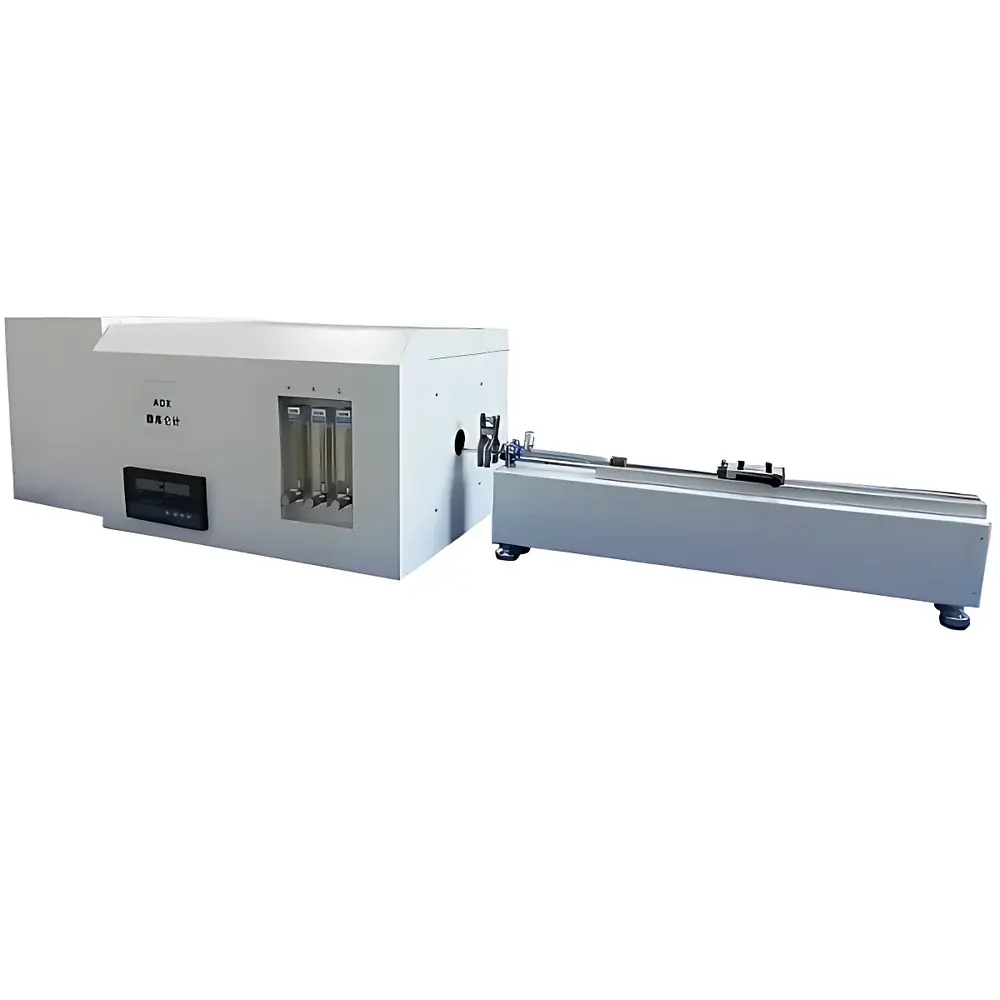
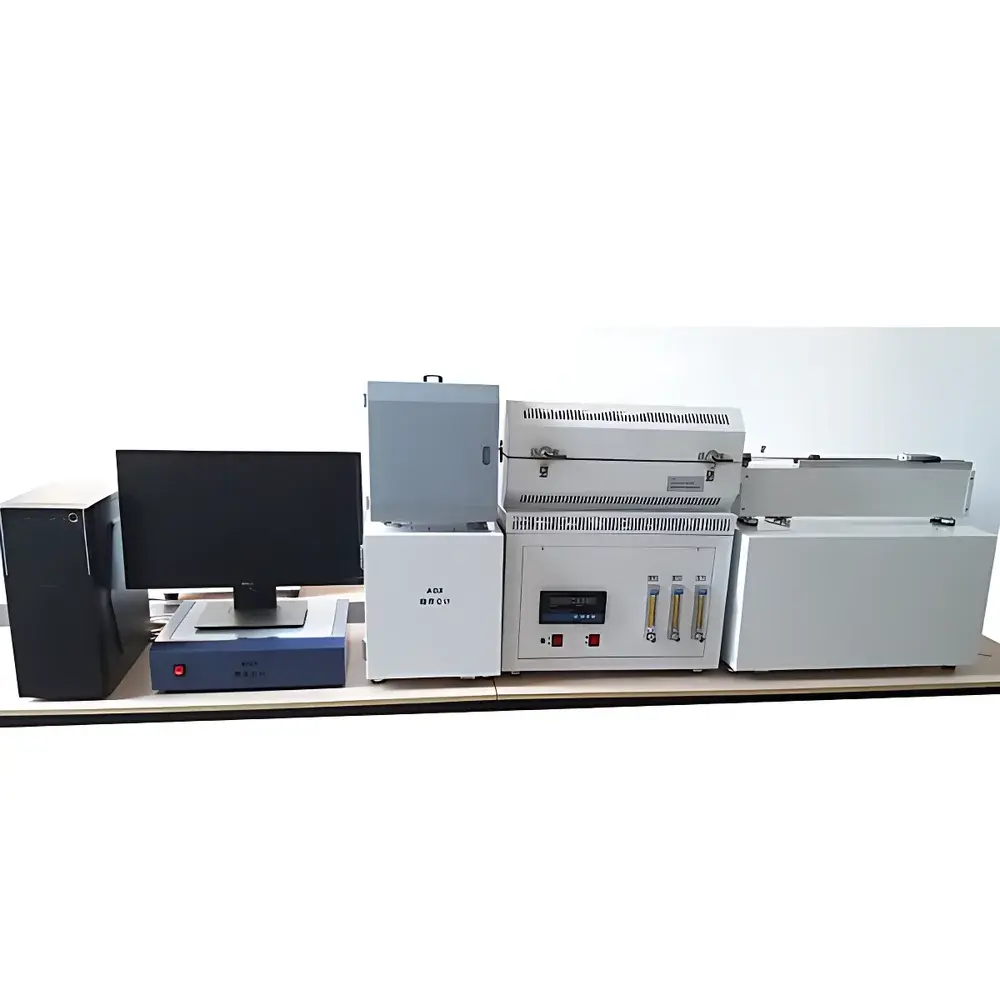
Zhuochi AOX-WK Microcoulometric Analyzer for Adsorbable Organic Halides (AOX) Determination in Tissue Paper and Aqueous Matrices
| Brand | Zhuochi |
|---|---|
| Model | AOX-WK |
| Detection Principle | Microcoulometric Titration after High-Temperature Combustion |
| Measurement Range | Cl: 0.5–5000 mg/L |
| C | 0.2–50000 mg/L |
| N | 0.5–5000 mg/L |
| Temperature Control | 500–1000 °C, ±1% ±5 °C |
| Repeatability | ≤5% (≥10 mg/L), ≤10% (1–10 mg/L), ≤50% (<1 mg/L) |
| Generator Current | ±2 mA |
| Amplifier Output Voltage | ±30 V |
| Bias Voltage Range | 0–500 mV (continuously adjustable) |
| Power Supply | AC 220 V ±10%, 50 Hz, 3000 W |
Overview
The Zhuochi AOX-WK Microcoulometric Analyzer is a dedicated instrumental system engineered for the quantitative determination of Adsorbable Organic Halides (AOX) in complex low-concentration matrices—particularly tissue paper, hygiene products, wastewater, and process water used in pulp and paper manufacturing. It operates on the internationally standardized microcoulometric titration principle (ISO 9562, EPA Method 1650, DIN EN ISO 9562), wherein halogenated organic compounds are thermally decomposed in an oxygen-rich quartz combustion furnace at precisely controlled high temperatures (500–1000 °C). The released halide ions (primarily Cl⁻, Br⁻, I⁻) are absorbed into an electrolyte solution and quantified via coulometric back-titration using silver ions generated electrochemically at a constant current. This method delivers trace-level sensitivity, high specificity for total adsorbable halogens, and robustness against matrix interferences common in recycled fiber-based consumer tissue products.
Key Features
- Integrated dual-zone temperature-controlled combustion system with real-time thermal monitoring and ±1% ±5 °C stability across the 500–1000 °C operating range—ensuring complete oxidative mineralization of refractory organohalogens.
- High-precision microcoulometric detection cell featuring Ag/Ag⁺ reference and working electrodes, optimized for low-noise signal acquisition and sub-mg/L detection capability.
- Dedicated Windows-based control software with intuitive GUI, enabling full instrument parameterization (bias voltage, generator current, integration time), real-time signal visualization, and automated endpoint recognition per ASTM D5808 and ISO 9562 protocols.
- Modular hardware architecture: detachable high-efficiency quartz combustion tube, corrosion-resistant titration cell, magnetic stirrer with speed regulation, and programmable sample introduction module compatible with solid (paper extract) and liquid (filtered aqueous) samples.
- Compliance-ready data handling: all analytical parameters, raw coulograms, calibration curves, and final AOX concentrations are timestamped, digitally signed, and stored in encrypted binary format—supporting retrospective audit trails required under GLP and ISO/IEC 17025 environments.
Sample Compatibility & Compliance
The AOX-WK accommodates both solid and liquid sample formats relevant to tissue product quality assurance. For life-use paper, samples are first extracted using activated carbon adsorption per ISO 9562 Annex A, followed by acidification and desorption prior to injection. Liquid samples—including effluents from deinking lines or bleach plant discharges—are filtered (0.45 µm) and directly introduced. The system meets the performance criteria defined in ISO 9562:2022, EPA Method 1650 Rev. 0, and DIN EN ISO 9562 for recovery (>85%), precision (RSD ≤10% at 10 mg/L Cl⁻), and limit of quantification (LOQ = 0.5 mg/L as Cl). Its design aligns with regulatory expectations for routine environmental compliance testing under EU Directive 2013/39/EU and China’s HJ 966-2018 standard for AOX in industrial wastewater.
Software & Data Management
The embedded Windows application provides full lifecycle data governance: method templates pre-configured for tissue paper extraction workflows; automated calibration verification using KCl standards; dynamic baseline correction; and export of results in CSV, PDF, or XML formats compliant with LIMS integration. Audit trail functionality logs every user action—including method edits, calibration events, and result approvals—with immutable timestamps and operator IDs. Data integrity safeguards include password-protected access levels, electronic signatures per FDA 21 CFR Part 11 requirements, and optional network backup to NAS or cloud repositories configured for HIPAA/GDPR-compliant storage.
Applications
- Quantification of residual chlorinated compounds (e.g., chloroform, chlorophenols, AOX precursors) in finished tissue, towel, and napkin products to verify chlorine-free bleaching process efficacy.
- Monitoring AOX accumulation in closed-loop water circuits of tissue mills to support ISO 14001 environmental management systems.
- Verification of activated carbon adsorption efficiency during wastewater treatment prior to discharge or reuse.
- Supporting Ecolabel certification (e.g., EU Ecolabel, Nordic Swan) by delivering auditable, standardized AOX data packages for third-party review.
- Research applications in pulp chemistry, including comparative studies of elemental chlorine-free (ECF) versus totally chlorine-free (TCF) bleaching sequences.
FAQ
What sample preparation is required for tissue paper analysis?
Solid tissue samples must be homogenized, extracted with NaOH-methanol per ISO 9562 Annex A, adsorbed onto activated carbon, washed, and eluted with nitric acid prior to injection.
Can the AOX-WK measure bromine- or iodine-containing compounds?
Yes—the system detects total adsorbable halogens (Cl, Br, I) collectively; speciation requires complementary techniques such as IC-MS or HR-GC/MS.
Is external computer hardware included with the system?
No—the AOX-WK requires a user-supplied Windows PC with RS-232 port and minimum i5 CPU / 8 GB RAM; no proprietary OS licenses are bundled.
How often must the titration cell electrolyte be replaced?
Typical replacement interval is every 40–60 analyses under routine use; frequency increases with high-AOX or high-salt content samples.
Does the system support multi-point calibration and QC check standards?
Yes—software enables up to 12-point calibration curves with automatic linearity validation (r² ≥ 0.999), plus scheduled QC injections with acceptance criteria configurable per ISO/IEC 17025.







