
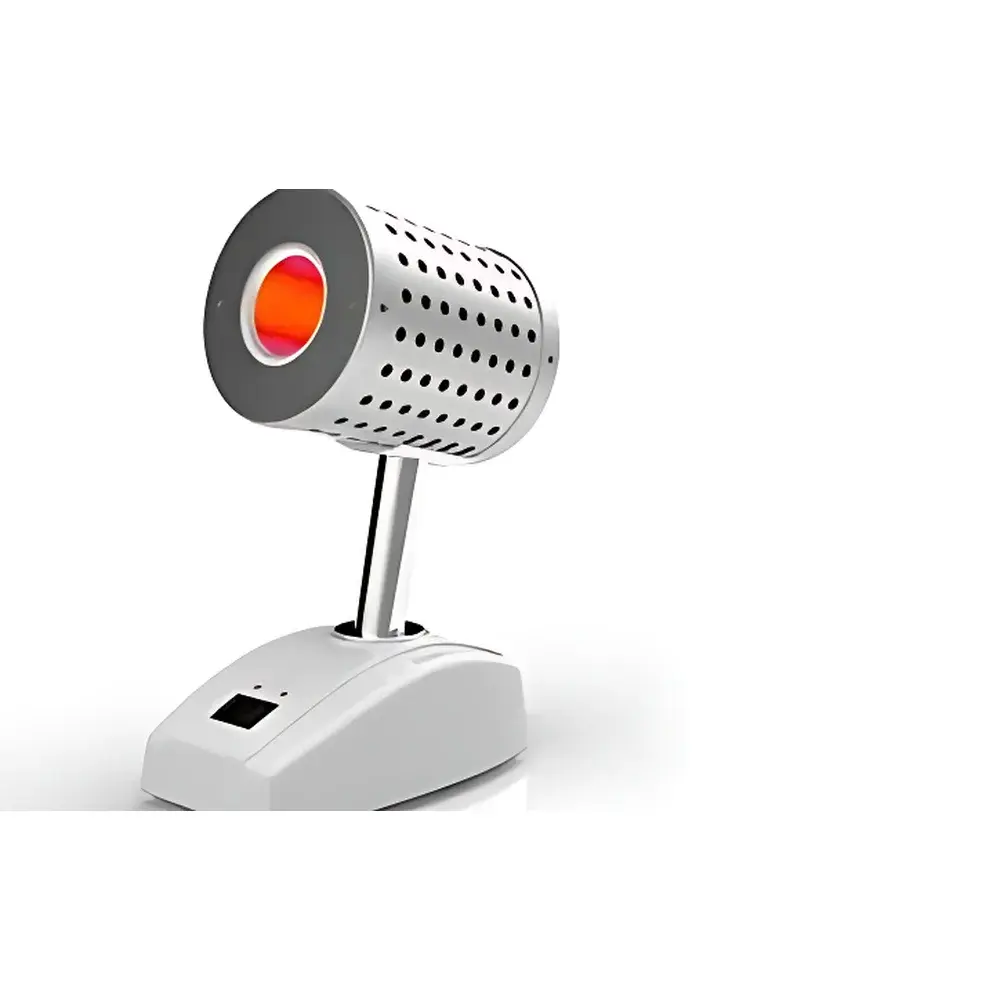
ZiQi IS-800S & IS-800L Infrared Inoculation Loop Sterilizers
| Brand | ZiQi |
|---|---|
| Origin | Shanghai, China |
| Manufacturer Type | Direct Manufacturer |
| Product Origin | Domestic (China) |
| Models | IS-800S, IS-800L |
| Convection Method | Natural Convection |
| Operating Temperature Range | 825 °C ± 50 °C |
| Temperature Control Accuracy | ±50 °C |
| Temperature Uniformity Across Heating Zone | ±50 °C |
| Heating Power | 200 W (IS-800S), 400 W (IS-800L) |
| Internal Chamber Dimensions (D × L) | φ14 mm × 150 mm (IS-800S), φ35 mm × 100 mm (IS-800L) |
| Standby Holding Temperature | 480 °C |
| Tilt Angle | 21° |
| Net Weight | 1.3 kg (IS-800S), 1.4 kg (IS-800L) |
| External Dimensions (W × D × H) | 152 × 105 × 200 mm (IS-800S), 140 × 105 × 200 mm (IS-800L) |
Overview
The ZiQi IS-800S and IS-800L Infrared Inoculation Loop Sterilizers are compact, benchtop dry-heat sterilization devices engineered for rapid, flameless decontamination of microbiological tools in controlled laboratory environments. Unlike conventional open-flame methods such as alcohol burners, these units utilize high-intensity infrared radiation emitted from a ceramic heating element to achieve localized thermal sterilization via resistive heating. The core principle relies on radiant heat transfer—where infrared energy is absorbed directly by metallic or conductive surfaces (e.g., platinum loops, stainless steel needles, forceps, scalpel blades), rapidly elevating surface temperatures beyond the thermal inactivation threshold for vegetative bacteria, spores, and viruses (>800 °C). With a maximum center-zone temperature of 825 °C ± 50 °C and a fixed 21° tilt angle optimized for ergonomic insertion and consistent exposure geometry, both models deliver reproducible sterilization in 5–7 seconds per instrument—meeting the time–temperature criteria outlined in ISO 15189 and CLSI M22-A3 for routine biosafety-level 1 and 2 (BSL-1/2) microbiological workflows.
Key Features
- Flameless, open-air operation—eliminates fire hazard, ethanol vapor risk, and draft sensitivity; suitable for use inside biosafety cabinets (Class II A2/B2), laminar flow hoods, anaerobic chambers, and mobile lab carts.
- Dual-model configuration: IS-800S (φ14 mm × 150 mm chamber) for narrow-diameter tools (loops, micro-pipette tips, fine needles); IS-800L (φ35 mm × 100 mm chamber) accommodates wider items including bottle necks, test tube rims, spatulas, and small surgical instruments.
- Ceramic-lined heating tunnel ensures uniform radiant flux distribution and minimizes organic residue accumulation; deep-tunnel design promotes complete carbonization of biological debris, reducing aerosolized particulate generation and cross-contamination risk.
- Energy-efficient 200 W (IS-800S) / 400 W (IS-800L) power draw with passive natural convection cooling—no fans or moving parts, enhancing long-term reliability and acoustic quietness in shared lab spaces.
- Auto-shutdown after extended idle periods (configurable via internal timer logic) prevents unnecessary thermal stress on components and extends heater lifespan without compromising readiness.
- Stainless steel housing with smooth, non-porous finish enables rapid wipe-down disinfection using EPA-registered sporicidal agents (e.g., 0.5% sodium hypochlorite, hydrogen peroxide-based formulations), supporting GLP-compliant cleaning validation protocols.
Sample Compatibility & Compliance
These sterilizers are validated for repeated thermal decontamination of reusable metal instruments commonly employed in clinical microbiology, pharmaceutical QC, academic research, and biomanufacturing settings. Compatible items include but are not limited to: platinum or nickel-chrome inoculation loops and needles, stainless steel forceps, scissors, tweezers, wire loops, glass spreaders (with metal handles), and the outer surfaces of glassware necks (e.g., Erlenmeyer flasks, culture tubes). The devices comply with general safety requirements under IEC 61010-1:2010 for electrical equipment used in laboratory environments. While not certified to EN 13060 or ISO 17665 for steam sterilization, their performance aligns with dry-heat validation benchmarks referenced in USP Sterility Assurance and FDA Guidance for Industry on Sterile Drug Products Produced by Aseptic Processing (2004). Routine verification may be performed using biological indicators (e.g., Bacillus atrophaeus spore strips) placed at the deepest point of the heating zone.
Software & Data Management
The IS-800S and IS-800L operate as standalone hardware units with no embedded microprocessor, firmware, or digital interface. Temperature regulation is achieved via analog bimetallic thermostatic control, ensuring intrinsic electromagnetic compatibility (EMC) and immunity to software failure modes. This architecture eliminates data logging, network connectivity, or electronic audit trails—making the devices inherently compliant with environments where IT infrastructure restrictions apply (e.g., classified labs, GMP cleanrooms with air-gapped networks). For laboratories requiring traceability, manual log entries (date/time/tool ID/operator ID) can be maintained in paper or LIMS-integrated electronic records per ISO/IEC 17025 clause 7.5.2. No 21 CFR Part 11 compliance is claimed or required due to absence of electronic records generation.
Applications
- Routine sterilization of inoculation tools during bacterial isolation, colony purification, and streak plate techniques in teaching and diagnostic microbiology labs.
- Aseptic handling support in BSL-2 containment suites—particularly where alcohol flame use is prohibited near HEPA-filtered airflow paths.
- Pre-sterilization of sampling devices prior to environmental monitoring in pharmaceutical manufacturing cleanrooms (ISO Class 5–8).
- Field-deployable decontamination in mobile biosurveillance units or veterinary outreach clinics lacking gas supply infrastructure.
- Validation studies involving thermal resistance profiling of microbial contaminants on metallic substrates.
FAQ
What is the recommended sterilization dwell time for full microbial kill?
A minimum dwell time of 5 seconds is sufficient for complete inactivation of vegetative bacteria and fungal spores when instruments are fully inserted to the base of the heating zone. For highly resistant endospores (e.g., Geobacillus stearothermophilus), 7 seconds is advised.
Can plastic or coated instruments be sterilized in this unit?
No. Only heat-resistant metallic instruments should be used. Plastics, rubber, silicone, or polymer-coated tools will melt, degrade, or emit toxic fumes at operating temperatures exceeding 800 °C.
Is calibration required before first use or periodically?
While no user-accessible calibration is provided, initial verification using a calibrated infrared thermometer (traceable to NIST standards) is recommended. Re-verification every 6 months or after physical impact is advised per ISO/IEC 17025 Section 6.4.
How does the IS-800L differ functionally from the IS-800S beyond chamber size?
The IS-800L features higher rated power (400 W vs. 200 W), enabling faster thermal recovery between successive cycles when processing larger or thermally massive tools—but maintains identical temperature specifications and control tolerances.
Does the unit meet UL or CE safety certification requirements?
The devices are manufactured to meet basic electrical safety principles per IEC 61010-1:2010. Formal UL listing or CE marking is not currently held; users are advised to verify local regulatory acceptance prior to installation in regulated facilities.



