
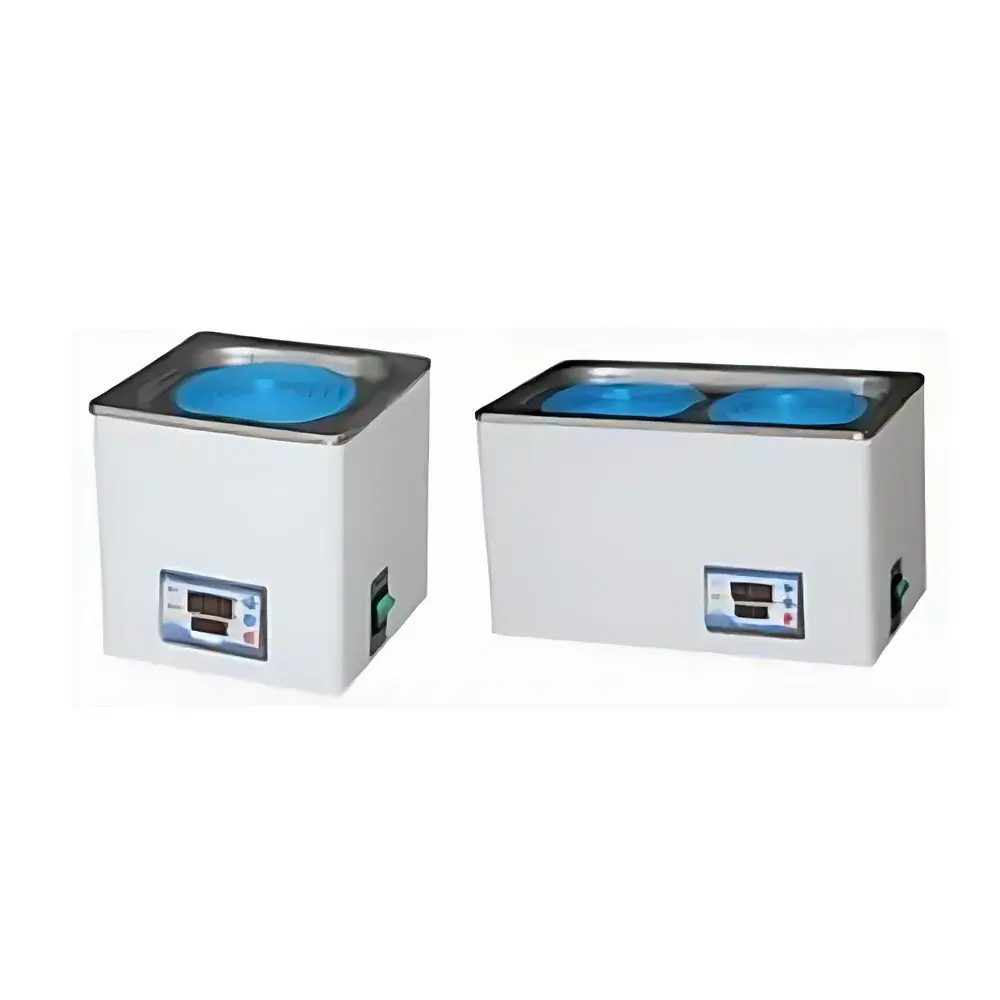
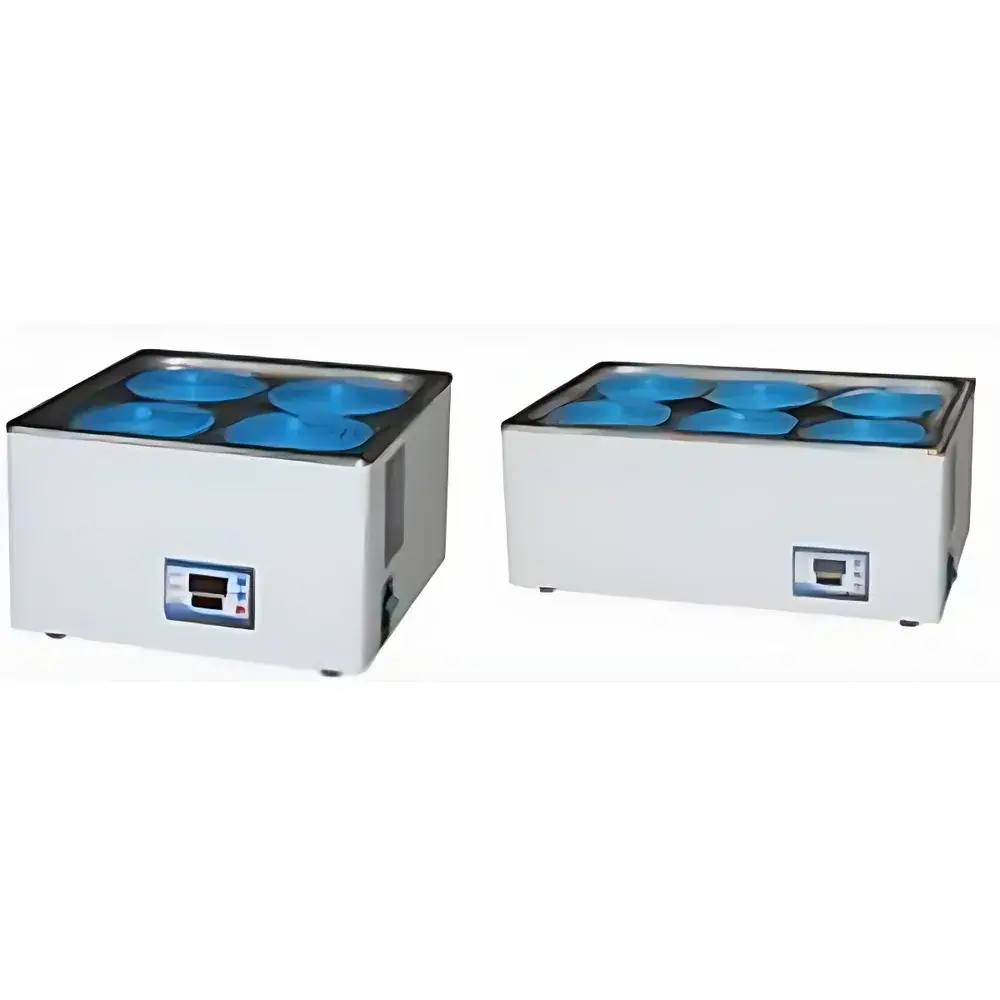
ZiQi HH-Series Digital Constant-Temperature Water Bath
| Brand | ZiQi |
|---|---|
| Origin | Shanghai, China |
| Manufacturer Type | Direct Manufacturer |
| Product Category | Domestic |
| Models | HH-S11, HH-S12, HH-S24, HH-S26, HH-S28 |
| Temperature Range | Ambient +5°C to 100°C |
| Temperature Control Accuracy | ±0.5°C |
| Heating Power | 300W–1800W (model-dependent) |
| External Dimensions (W×D×H) | 205×205×230 mm to 345×660×230 mm |
| Inner Chamber Material | 304 Stainless Steel, One-Piece Drawn Construction |
| Safety Features | Dry-run protection (P-series only) |
| Power Supply | 220 V / 50 Hz |
Overview
The ZiQi HH-Series Digital Constant-Temperature Water Bath is an engineered solution for precise, stable, and reproducible thermal control in routine laboratory applications. Utilizing resistive heating elements immersed in a water-filled stainless-steel chamber, the system maintains uniform temperature distribution through optimized fluid dynamics and geometric design—specifically, arc-shaped corners and a rounded bottom that eliminate thermal dead zones. Designed for continuous operation under standard ambient conditions, it delivers reliable performance across a wide operational range (ambient +5°C to 100°C), making it suitable for enzyme assays, cell culture preparation, sample warming, reagent equilibration, and dissolution testing in QC/QA environments.
Key Features
- One-piece drawn 304 stainless-steel inner chamber ensures superior corrosion resistance, structural integrity, and long-term leak-free operation—replacing traditional welded A3 steel construction.
- Microprocessor-based digital temperature controller with LED display enables intuitive setpoint entry, real-time monitoring, and automatic PID regulation for high repeatability (±0.5°C accuracy).
- Optimized thermal geometry: arc-shaped internal corners and base minimize convection stagnation, promoting uniform heat transfer across all wells—even during extended dwell periods.
- Robust cold-rolled steel outer housing with electrostatic powder coating provides mechanical durability, impact resistance, and ease of surface cleaning—critical for shared-lab or GMP-aligned facilities.
- Dry-run protection circuitry (standard on P-series models: HH-S11P, HH-S12P, HH-S24P, HH-S26P, HH-S28P) automatically deactivates heating when water level falls below safe operating threshold, preventing element damage and fire hazard.
- Modular well configurations—from single-well (HH-S11) to dual-row eight-well (HH-S28)—support scalable throughput without compromising thermal consistency between adjacent positions.
Sample Compatibility & Compliance
The HH-Series accommodates standard laboratory glassware including test tubes (10–25 mm OD), centrifuge tubes, beakers (up to 500 mL), and flasks—compatible with both aqueous and low-viscosity organic solvent baths (e.g., ethylene glycol/water mixtures for sub-ambient operation with external chillers). All models comply with IEC 61010-1:2010 safety standards for electrical equipment used in laboratory settings. The P-series models meet additional requirements for fault-condition response per Clause 8.3.2 (overtemperature and dry-run safeguards). While not certified for ISO/IEC 17025 calibration traceability out-of-box, the digital controller supports external probe verification using NIST-traceable reference thermometers—a common practice in GLP-regulated labs conducting method validation per USP or ASTM E2876.
Software & Data Management
The HH-Series operates as a standalone analog-digital hybrid instrument with no embedded data logging or PC interface. Temperature setpoints and real-time readings are displayed locally via a 4-digit LED screen. For laboratories requiring audit trails or electronic records, integration with external data acquisition systems (e.g., LabVIEW, MATLAB, or custom SCADA) is achievable via optional analog output modules (0–5 V or 4–20 mA, available upon request). All units support manual calibration offset adjustment per user-defined reference points—enabling alignment with lab-specific metrology protocols and facilitating compliance with internal SOPs governing equipment qualification (IQ/OQ/PQ).
Applications
- Biological sample incubation: DNA denaturation/annealing steps, antibody dilution equilibration, and serum inactivation at controlled 56°C.
- Pharmaceutical QC: Dissolution medium conditioning per USP , tablet disintegration testing, and viscosity standardization of liquid dosage forms.
- Chemical synthesis: Controlled hydrolysis reactions, crystallization seeding, and solvent reflux preheating.
- Food & beverage analysis: Fat extraction (Soxhlet pre-warming), microbial enrichment media preparation, and enzymatic activity assays (e.g., amylase, protease).
- Environmental testing: BOD incubator auxiliary warming, soil extract equilibration, and standard solution stabilization prior to ICP-OES or HPLC injection.
FAQ
What is the maximum recommended fill volume for each model?
Recommended water depth is 80–120 mm above the heater element; do not exceed 90% of inner chamber height to ensure proper circulation and avoid overflow during thermal expansion.
Can the HH-Series be used with non-aqueous bath fluids?
Yes—silicone oil or ethylene glycol/water mixtures may be used, provided flash point exceeds operating temperature by ≥30°C and fluid compatibility with 304 stainless steel is confirmed.
Is external calibration documentation provided?
No factory calibration certificate is included; however, the controller supports user-performed two-point calibration using traceable reference thermometers, consistent with ISO/IEC 17025 Section 6.5 requirements.
Are replacement parts available for long-term maintenance?
Heating elements, temperature sensors, and control boards are stocked and available under part numbers aligned with model suffixes (e.g., HH-S24P-HEATER-01); lead time is typically 5–7 business days from Shanghai warehouse.
Does the unit meet FDA 21 CFR Part 11 requirements?
No—this is a Class I stand-alone instrument without electronic record generation or user-accessible audit trail functionality. It may be deployed in Part 11 environments only when operated within paper-based or validated third-party data capture workflows.



