
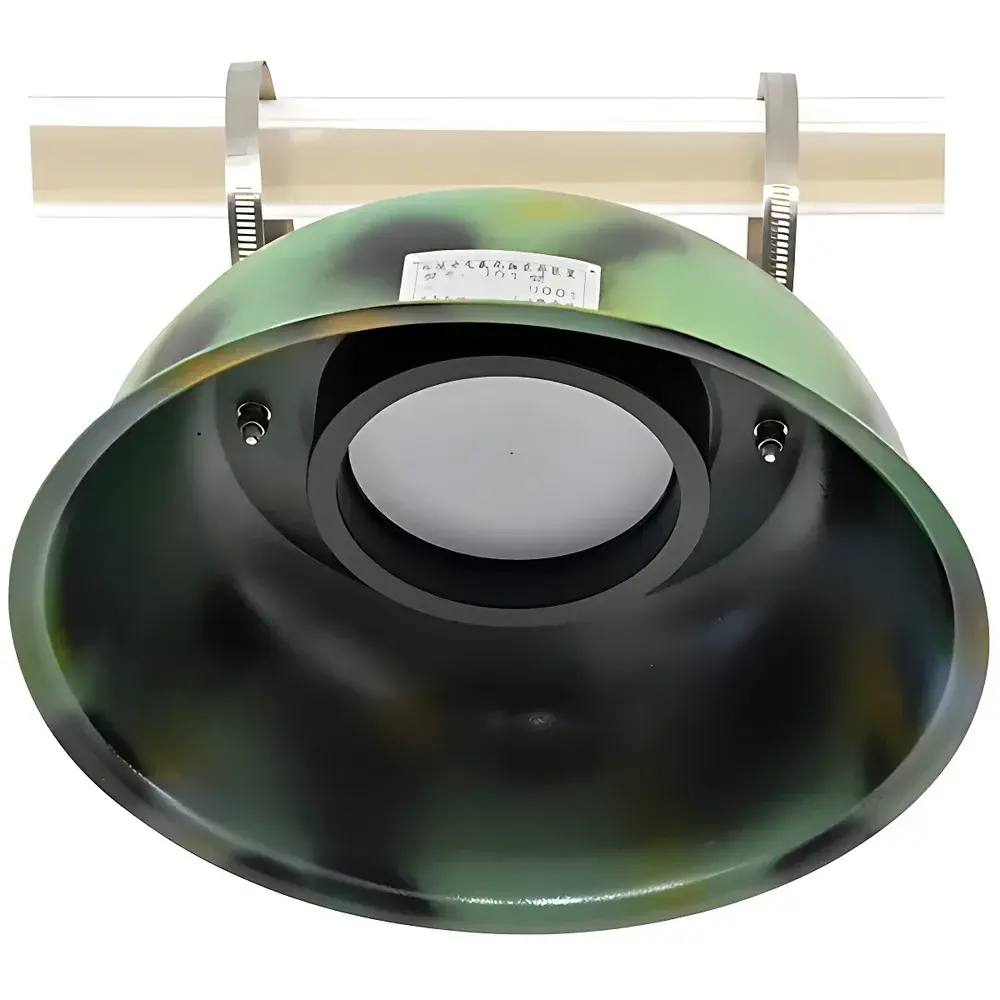
ZR-J01 Airborne Fluoride Passive Sampler by Junray
| Brand | Junray |
|---|---|
| Origin | Shandong, China |
| Manufacturer Type | Direct Manufacturer |
| Country of Origin | China |
| Model | ZR-J01 |
| Pricing | Upon Request |
Overview
The ZR-J01 Airborne Fluoride Passive Sampler is a field-deployable, diffusion-based passive monitoring device engineered for the quantitative collection and subsequent analysis of gaseous inorganic fluorides—including hydrogen fluoride (HF) and silicon tetrafluoride (SiF₄)—in ambient air. Unlike active sampling systems requiring pumps and power, the ZR-J01 operates on molecular diffusion principles: ambient air flows freely across a chemically impregnated filter medium without forced convection. Fluoride species diffuse through the boundary layer and react irreversibly with calcium hydroxide (Ca(OH)₂) pre-deposited on high-purity filter paper, forming stable calcium fluoride (CaF₂). This solid-phase retention enables robust, time-integrated measurement over extended deployment periods (typically 1–4 weeks), delivering representative average concentrations reflective of real-world exposure conditions. The device complies strictly with HJ 481–2009, the Chinese Environmental Protection Standard for Determination of Fluoride in Ambient Air Using Lime-Impregnated Filter Paper Sampling Coupled with Fluoride Ion-Selective Electrode (ISE) Analysis.
Key Features
- Passive diffusion design eliminates need for external power, vacuum pumps, or flow calibration—ideal for remote, long-term, or resource-constrained monitoring sites.
- Standardized lime-impregnated filter paper substrate ensures consistent reactivity with gaseous HF and SiF₄; each unit includes pre-weighed, batch-certified filter discs traceable to internal quality control protocols.
- Weather-resistant polycarbonate housing with UV-stabilized polymer components maintains structural integrity and sampling geometry under outdoor exposure (−20 °C to +50 °C operating range).
- Modular, tool-free assembly allows rapid filter exchange in the field; integrated desiccant chamber minimizes moisture interference during humid conditions.
- Designed for compatibility with standard laboratory workflows: collected filters are extracted using TISAB II buffer and analyzed via calibrated fluoride ion-selective electrode per HJ 481–2009 Section 7.
- No moving parts or electronics—maximizes operational reliability and reduces maintenance requirements across multi-site deployments.
Sample Compatibility & Compliance
The ZR-J01 is validated for sampling gaseous fluorides in non-occupational ambient environments, including urban background, industrial perimeters, agricultural zones, and near phosphate fertilizer production facilities. It is not intended for high-concentration stack emissions or particulate-bound fluoride (e.g., CaF₂ aerosols), which require complementary active filtration methods. All units conform to the geometric specifications, filter area (≥100 cm² effective exposure surface), and mounting interface requirements defined in HJ 481–2009. While the standard itself is nationally adopted, the underlying methodology aligns with internationally recognized passive sampling principles referenced in ISO 16000-25 (Indoor air — Part 25: Passive sampling of volatile compounds) and supports data comparability in multi-jurisdictional environmental health assessments. For GLP-compliant studies, full chain-of-custody documentation and blank filter certification are available upon request.
Software & Data Management
The ZR-J01 is a hardware-only passive sampler and does not incorporate embedded firmware, connectivity, or onboard data storage. Quantitative analysis relies entirely on post-collection laboratory procedures: filter extraction, ISE calibration (using NIST-traceable NaF standards), and concentration calculation per HJ 481–2009 equations. Laboratories may integrate results into LIMS platforms (e.g., Thermo Fisher SampleManager, LabWare LIMS) using standard CSV or ASTM E1384-compliant export formats. Junray provides optional Excel-based calculation templates—including uncertainty propagation per GUM (Guide to the Expression of Uncertainty in Measurement) Annex G—and technical notes supporting audit readiness for environmental monitoring programs subject to provincial EPA review or third-party verification.
Applications
- Ambient air quality monitoring networks assessing long-term fluoride trends near aluminum smelters, glass manufacturing plants, and fluorine chemical production facilities.
- Epidemiological exposure assessment in residential communities adjacent to industrial corridors where chronic low-level HF exposure is a public health concern.
- Baseline characterization prior to facility commissioning or expansion, satisfying regulatory requirements under China’s Environmental Impact Assessment (EIA) Regulation (Decree No. 682).
- Validation of dispersion model outputs (e.g., AERMOD, CALPUFF) by providing spatially distributed, time-integrated ground-truth measurements.
- Research applications in atmospheric chemistry investigating dry deposition fluxes and gas-particle partitioning behavior of reactive fluorine species.
FAQ
What is the recommended deployment duration for the ZR-J01 sampler?
Typical exposure periods range from 7 to 28 days, depending on expected ambient fluoride concentrations and desired detection sensitivity. Shorter durations (28 days) risk saturation or moisture-induced hydrolysis of CaF₂.
Does the ZR-J01 require pre- or post-sampling conditioning?
Yes. Filters must be equilibrated at 25 °C and 40–60% RH for ≥24 h before loading and sealing. Post-collection, filters should be stored desiccated and analyzed within 14 days to prevent fluoride leaching or carbonate interference.
Can the ZR-J01 be used indoors or in occupational settings?
No. It is designed exclusively for outdoor ambient air monitoring per HJ 481–2009. Indoor or workplace sampling requires active personal samplers meeting GBZ/T 160.35–2004 or ISO 7708 for inhalable fraction collection.
Is calibration of the sampler itself required?
No. The ZR-J01 has no adjustable parameters or drift-prone components. Calibration applies solely to the downstream ISE measurement system, which must be verified daily using at least three standard solutions spanning 0.01–1.0 mg/L F⁻.
How are field blanks handled in quality assurance?
Each monitoring campaign must include triplicate field blanks—filters carried to site and returned unexposed—to quantify procedural contamination. Blank values exceeding 0.5 µg F⁻ invalidate the corresponding batch and trigger root-cause investigation per HJ 481–2009 Section 9.3.
Related Products







