
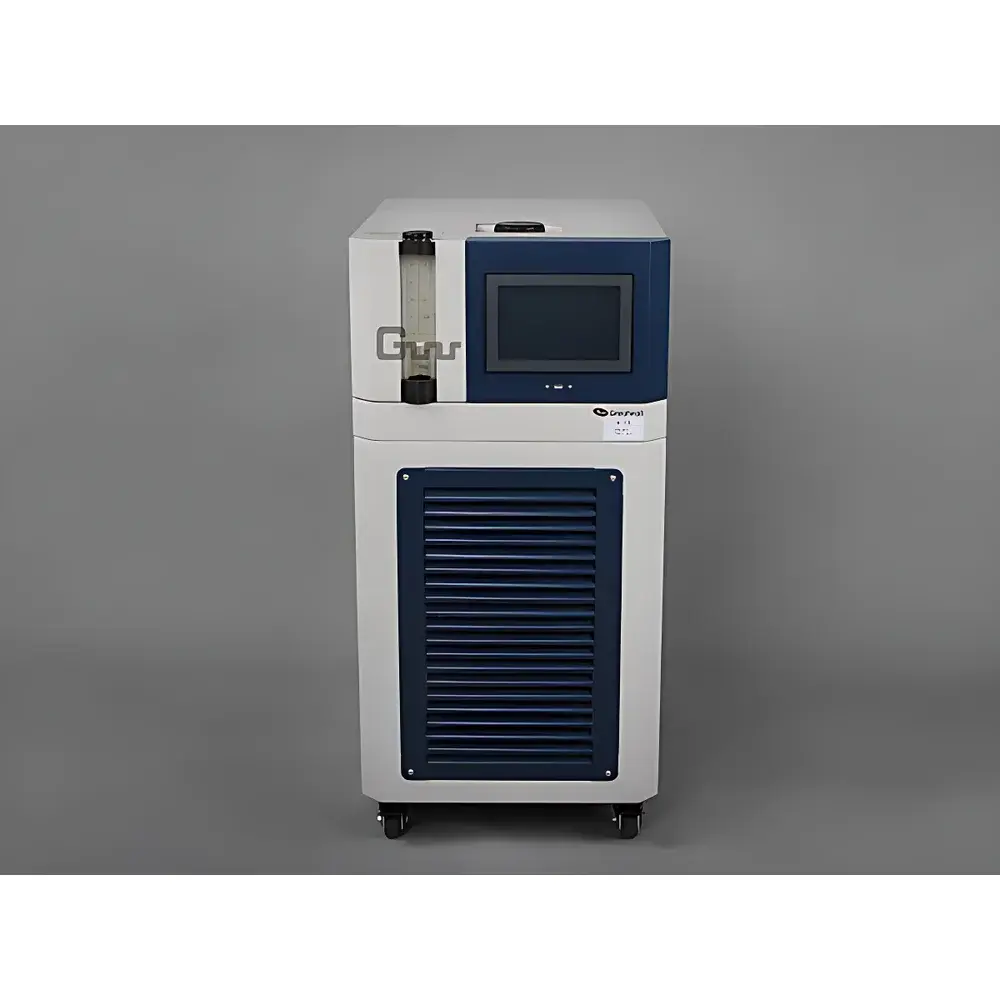
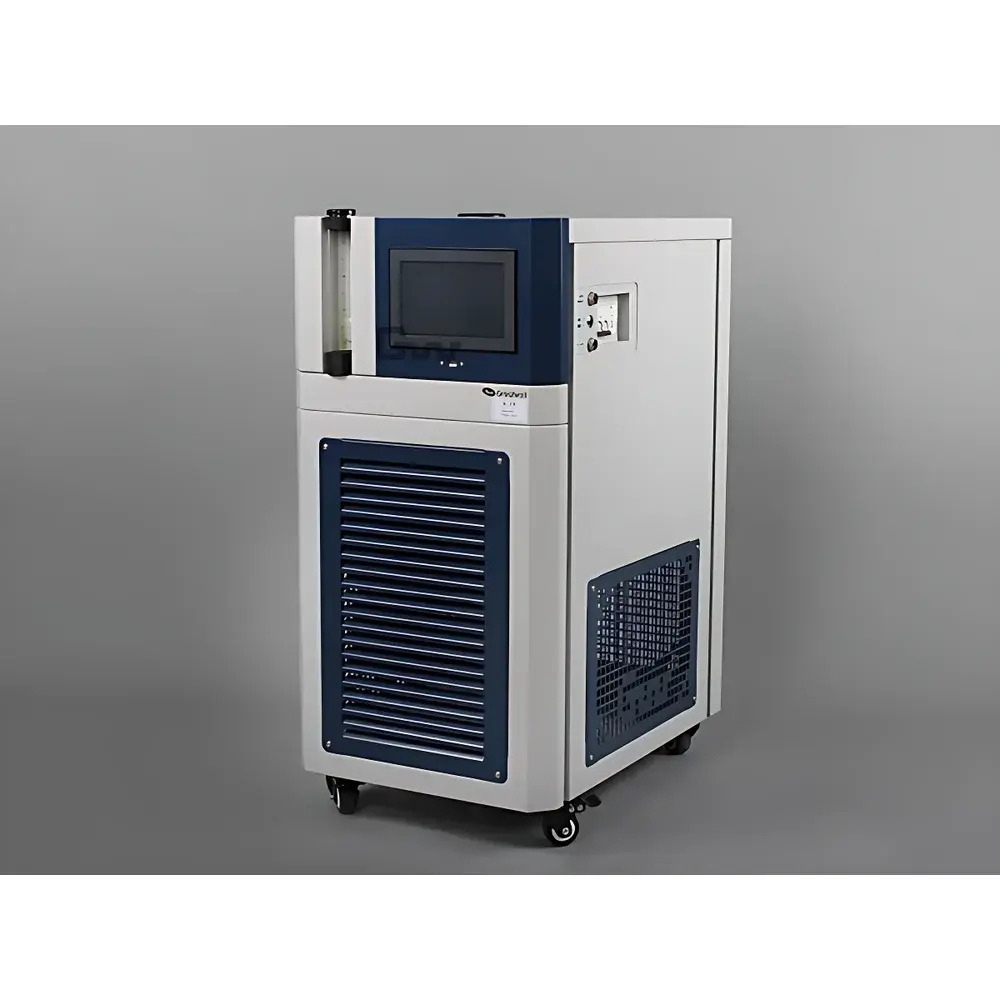
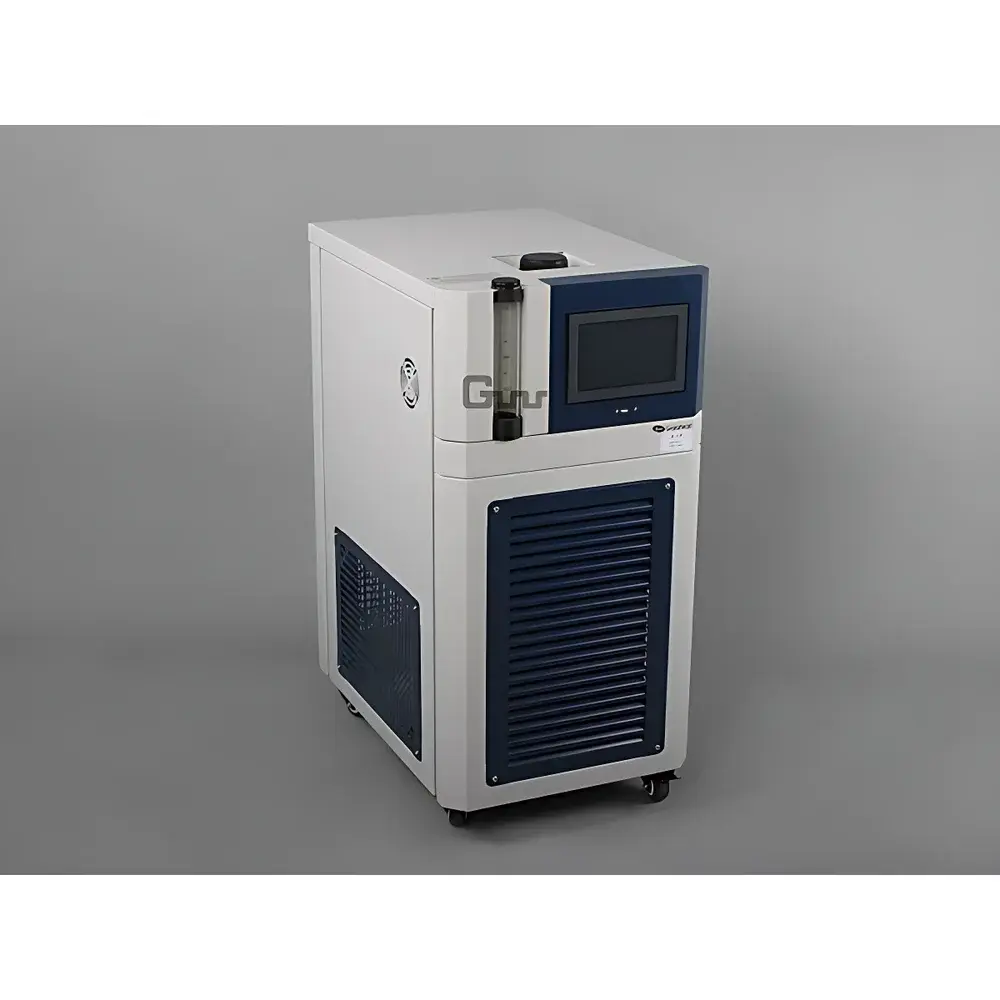
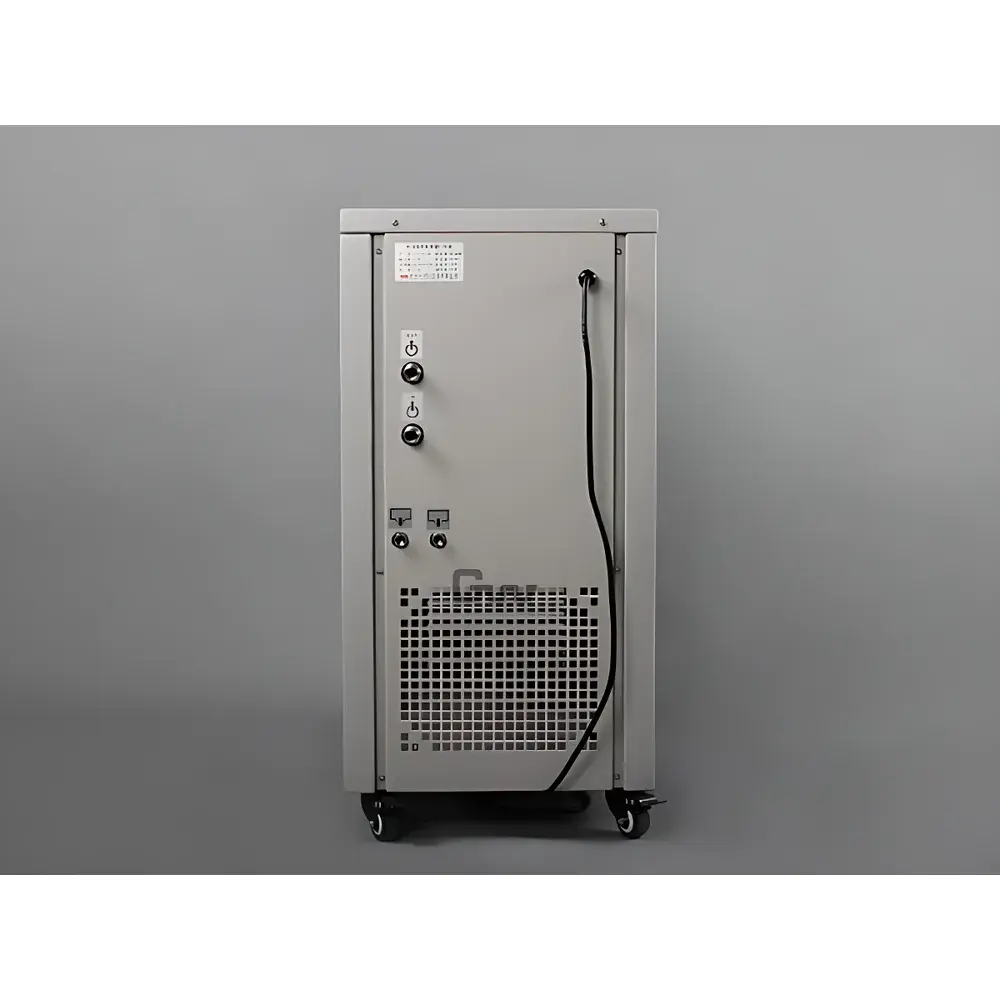
ZT-20-200-30H Closed-Loop Refrigerated & Heated Circulator by The Great Wall
| Brand | The Great Wall |
|---|---|
| Origin | Henan, China |
| Manufacturer Type | Direct Manufacturer |
| Model | ZT-20-200-80 |
| Temperature Range | −30 °C to 200 °C |
| Temperature Stability | ±0.5 °C |
| Power Supply | 220–240 V~, 50 Hz |
| Total Power | 4.7 kW |
| Cooling Capacity | 1.7 kW @ 200 °C, 2.6 kW @ 10 °C, 1.1 kW @ −10 °C, 0.7 kW @ −20 °C, 0.3 kW @ −30 °C |
| Refrigerant | R22 |
| Bath Fluid Volume | 10 L |
| Heating Power | 3 kW |
| Pump Flow Rate | 30 L/min |
| Pump Pressure | 1 bar |
| Dimensions (W×D×H) | 580 × 825 × 1370 mm |
| Weight | 172 kg |
Overview
The ZT-20-200-30H Closed-Loop Refrigerated & Heated Circulator is an integrated thermal management system engineered for precision temperature control in laboratory-scale chemical and biochemical processes. It operates on a dual-mode thermodynamic cycle—combining electric resistance heating with vapor-compression refrigeration—to deliver stable, programmable thermal energy across a wide operating range of −30 °C to +200 °C. Unlike open-bath thermostats or single-function chillers/heaters, this unit maintains consistent fluid temperature through a sealed, pressurized circulation loop, minimizing evaporation, oxidation, and contamination risks associated with external baths. Its design supports external heat exchange via flexible tubing connections to reactors, jacketed vessels, rotary evaporators, calorimeters, and analytical instrumentation requiring active thermal conditioning. The circulator’s architecture prioritizes operational safety, long-term reliability under cyclic thermal loading, and compatibility with common heat-transfer fluids—including silicone oils, glycol–water mixtures, and specialized low-temperature solvents.
Key Features
- Wide operational temperature span (−30 °C to 200 °C) enabled by optimized compressor staging and high-efficiency immersion heating elements
- High-precision temperature stability of ±0.5 °C at setpoint, achieved via PID-controlled feedback from dual Pt100 sensors (bath and outlet)
- Integrated high-flow, low-pulsation centrifugal pump delivering up to 30 L/min at 1 bar pressure—suitable for systems with moderate hydraulic resistance
- Hermetically sealed refrigeration circuit using R22 refrigerant, compliant with legacy industrial refrigeration standards and compatible with standard service infrastructure
- Robust stainless-steel reservoir and fluid path construction, resistant to corrosion from organic solvents and aqueous media
- Optional explosion-proof configuration available for use in Class I, Division 1 hazardous environments per IEC 60079-0 and GB 3836 standards
- Intuitive digital interface with real-time display of bath temperature, outlet temperature, pump status, and fault codes
Sample Compatibility & Compliance
The ZT-20-200-30H is designed for integration into diverse laboratory workflows involving glassware, metal-jacketed reactors, and modular process equipment. It accommodates standard 1/2″–3/4″ quick-connect fittings and supports both suction- and pressure-side external loops. Fluid compatibility includes water–glycol blends (up to 60% glycol), methyl silicone oil (e.g., DC200 series), and other non-aggressive heat-transfer media with viscosity < 50 cSt at operating temperature. While not certified to UL/CSA or CE for full medical device integration, the unit meets GB/T 20937–2007 (Chinese national standard for laboratory refrigerated circulators) and conforms to electromagnetic compatibility requirements per GB 17625.1. For GxP-regulated environments, optional data logging modules support audit-ready temperature traceability aligned with GLP documentation practices.
Software & Data Management
The base model features standalone operation via front-panel controls; however, optional RS485 (Modbus RTU) or analog 4–20 mA interfaces enable integration into centralized lab automation systems. Third-party SCADA platforms—including LabVIEW, DeltaV, and Ignition—can acquire real-time temperature, pump speed, and alarm status via standard protocols. When paired with The Great Wall’s optional TMS-Link software, users gain access to scheduled ramp/soak profiles, historical trend visualization, and CSV export for post-experiment analysis. All logged data includes timestamp, setpoint, actual temperature, and system state—supporting basic 21 CFR Part 11 compliance when deployed with validated user access controls and electronic signature workflows.
Applications
- Controlled-temperature synthesis in jacketed glass reactors for exothermic or cryogenic organic reactions
- Condenser cooling and solvent recovery optimization in rotary evaporation systems
- Thermal preconditioning and stability testing of pharmaceutical intermediates per ICH Q1A(R2)
- Temperature-dependent kinetic studies in enzymatic assays and protein folding experiments
- Calibration of temperature-sensitive detectors (e.g., IR cells, DSC reference pans) requiring stable thermal baselines
- Material testing under thermal cycling conditions (e.g., polymer crystallinity, phase-change behavior)
FAQ
What heat-transfer fluids are recommended for operation below −20 °C?
For sub-zero operation, we recommend silicone-based oils with pour points ≤ −40 °C (e.g., Dow Corning PMX-200 series) or specialized low-temperature glycol–ethanol blends. Water-only operation is strictly prohibited below 0 °C.
Can this unit be used with a 100-L reactor requiring 2.5 bar inlet pressure?
The standard pump delivers 1 bar maximum pressure. For higher backpressure applications, consult factory for optional high-pressure pump upgrade kits rated to 3 bar continuous duty.
Is R22 refrigerant still serviceable given global phaseout timelines?
R22 remains available for maintenance and recharge in China under current MOE regulations; however, The Great Wall offers R404A and R507 retrofit paths for new installations requiring future-proof refrigerant compliance.
Does the system include dry-run protection for the circulation pump?
Yes—integrated flow sensor and level switch trigger automatic shutdown if fluid volume falls below 3 L or flow drops below 5 L/min for >10 seconds.
How often should the refrigeration oil be replaced during continuous operation?
Under normal lab usage (≤8 hrs/day, ambient ≤30 °C), compressor oil service interval is 12,000 operating hours or 5 years—whichever occurs first—per OEM maintenance guidelines.



