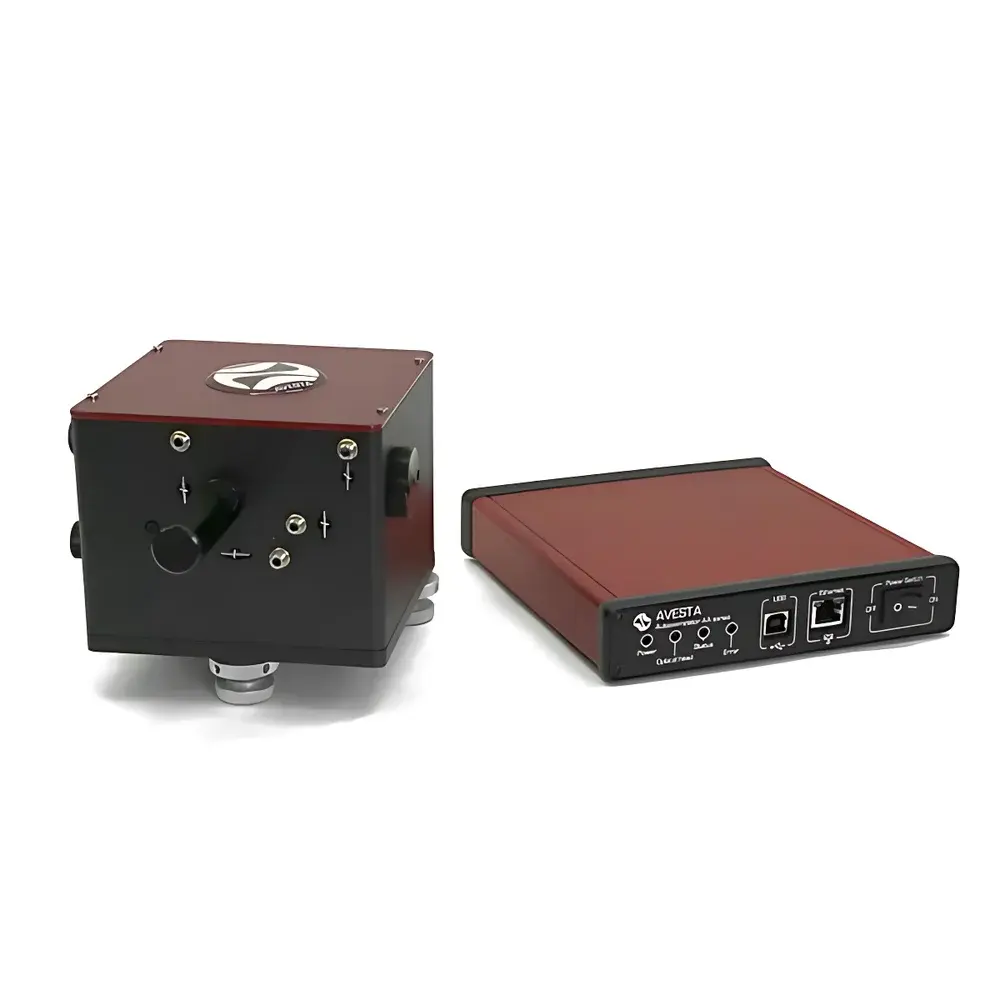
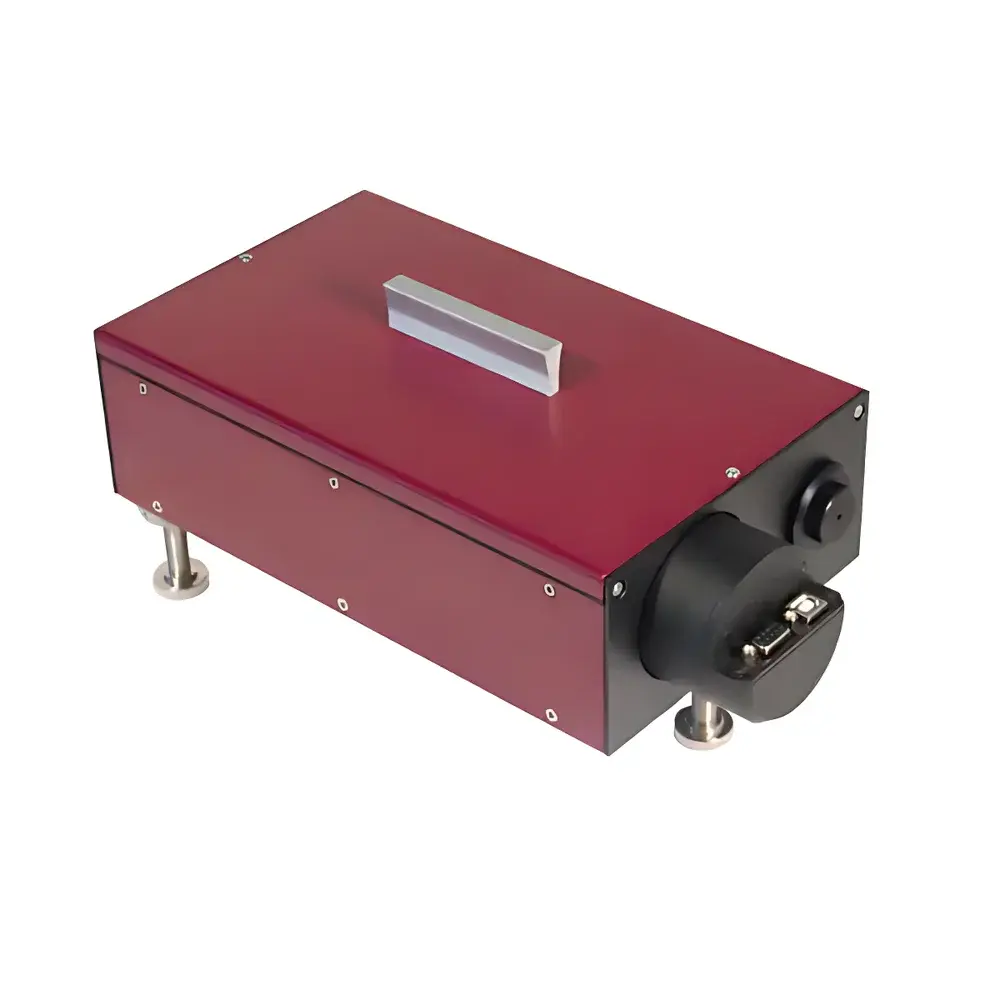
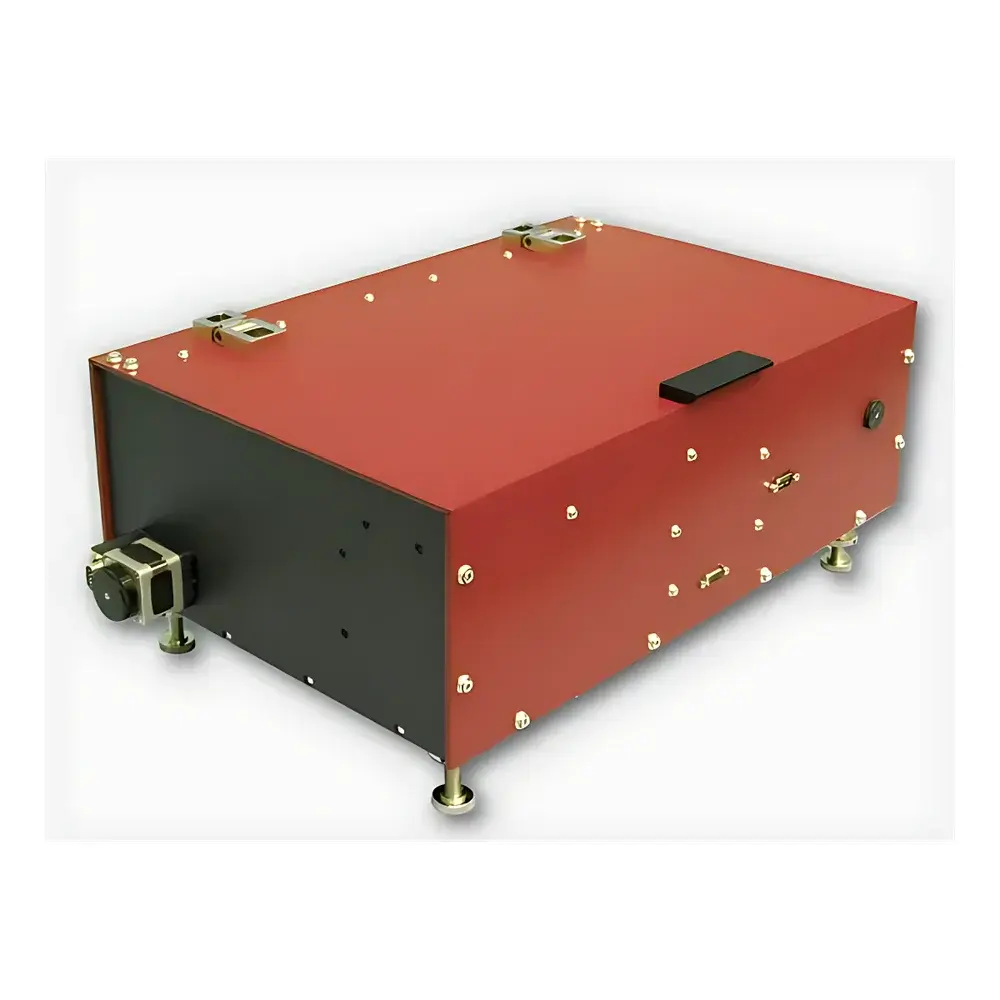
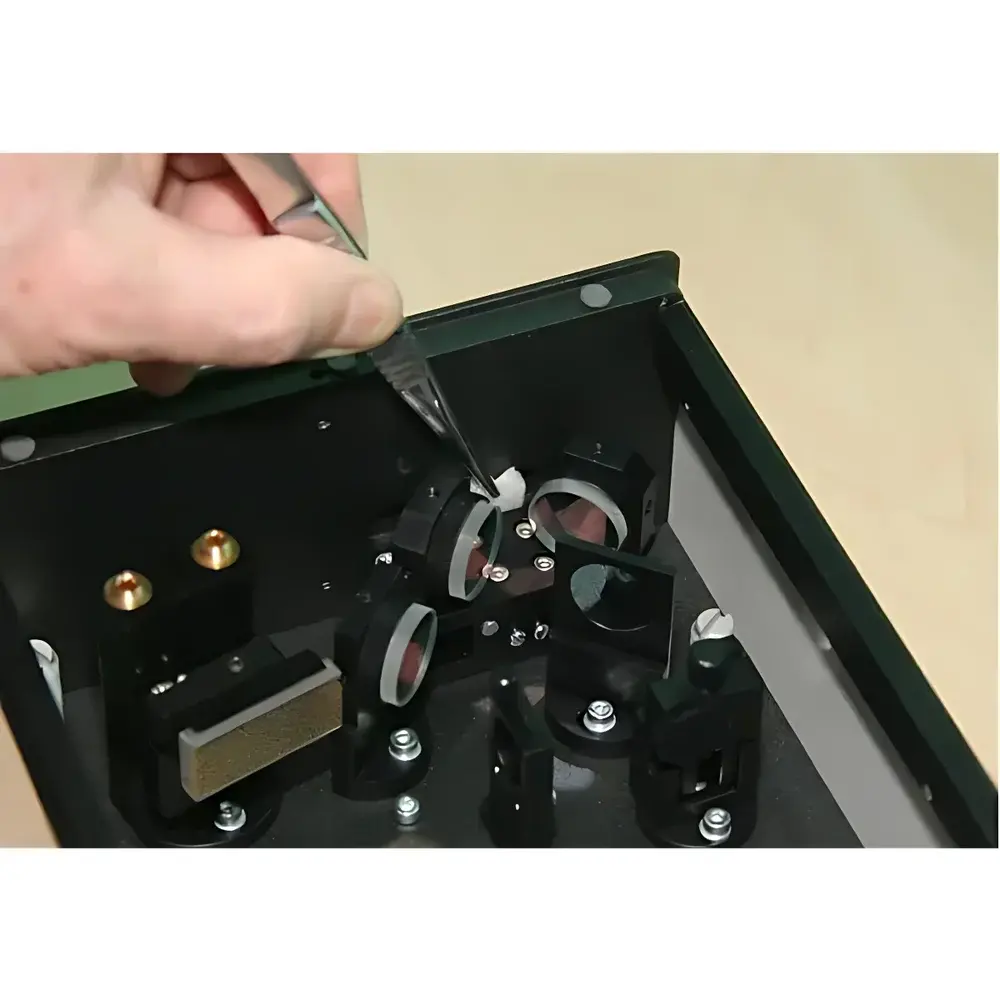
ATSEVA AA-20DD Scanning Autocorrelator
| Brand | ATSEVA |
|---|---|
| Origin | Russia |
| Model | AA-20DD |
| Pulse Duration Range | 20 fs – 6 ps |
| Wavelength Range | 450–3200 nm |
| Input Repetition Rate | >10 Hz |
| Sensitivity | ≥100 mW² |
| Time Resolution | 0.09–1.22 fs |
| Detector Options | Up to 3 interchangeable photodetectors |
| Input Configuration | Free-space and optional fiber-coupled |
| Compliance | Compatible with ISO/IEC 17025-aligned calibration workflows, supports GLP/GMP-relevant traceability via timestamped measurement logs |
Overview
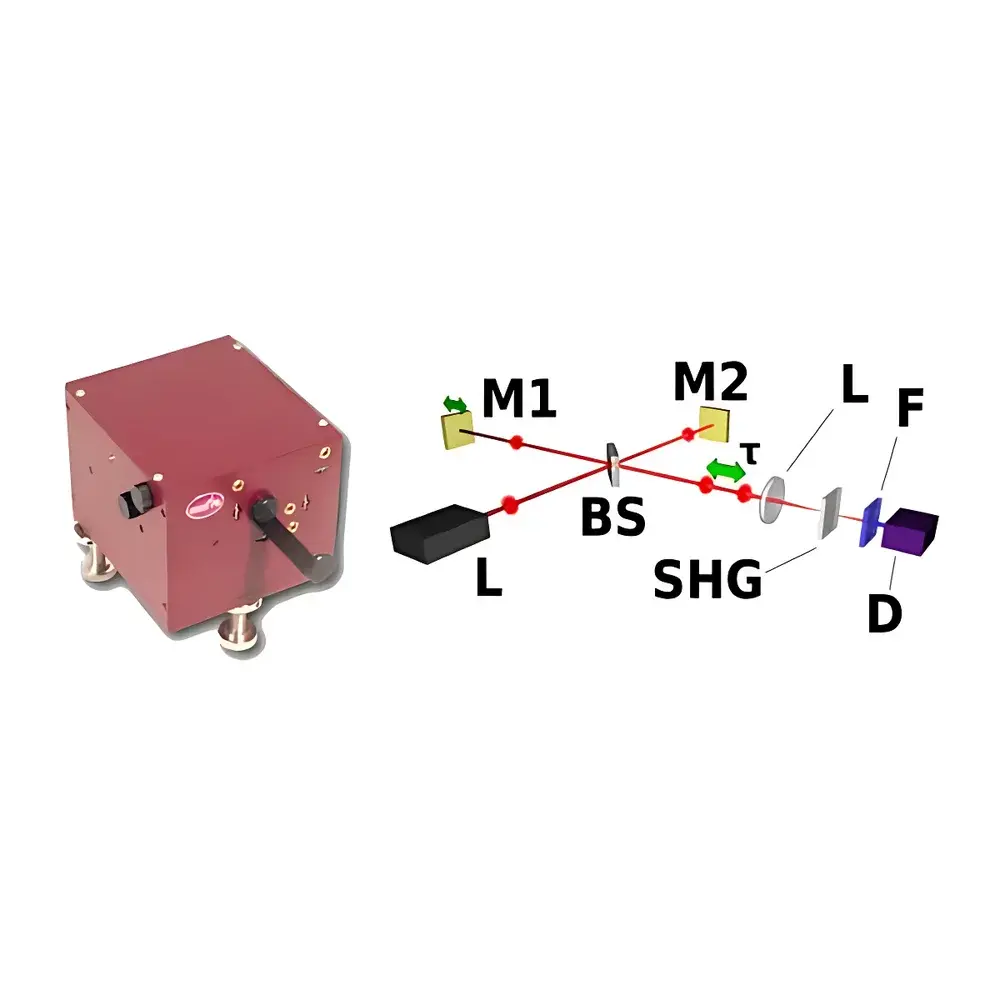
The ATSEVA AA-20DD is a high-stability scanning autocorrelator engineered for precise, real-time characterization of ultrashort optical pulses from mode-locked oscillators and amplifiers. It operates on the principle of intensity autocorrelation via second-harmonic generation (SHG) in a non-linear crystal—converting temporal pulse width into a spatial delay scan through a Michelson-type interferometric architecture. Unlike direct electronic detection—limited by photodetector bandwidth (<200 fs response)—this instrument enables reliable pulse duration measurements down to 20 fs by correlating two time-delayed replicas of the same pulse. The AA-20DD implements a motorized delay line with sub-femtosecond step resolution, ensuring high reproducibility across repeated scans. Its compact mechanical footprint (≤180 × 120 × 100 mm) allows seamless integration into space-constrained ultrafast labs, including vacuum chambers, pump-probe setups, and OEM laser platforms.
Key Features
- Real-time scanning operation with continuous waveform acquisition at up to 10 Hz scan repetition rate
- Three interchangeable detector modules supporting extended spectral coverage: UV–NIR (450–1100 nm), SWIR (1100–2000 nm), and MIR (2000–3200 nm)
- Fiber-coupled input option preserves free-space alignment capability—enabling rapid switching between delivery modalities without recalibration
- Motorized delay stage with closed-loop position feedback and <100 fs absolute timing accuracy
- Integrated beam diagnostics: built-in power monitoring and alignment verification port for co-propagating visible pilot beam
- Thermally stabilized optical baseplate minimizing drift during long-duration measurements (e.g., amplifier optimization or environmental stability tests)
Sample Compatibility & Compliance
The AA-20DD accommodates free-space collimated beams (1–5 mm diameter) and FC/PC or SMA-terminated single-mode fibers (SMF-28, PM980). It accepts pulse energies from 10 nJ to 100 µJ per shot and average powers up to 100 mW—compatible with Ti:sapphire oscillators, Yb-fiber lasers, Cr:forsterite systems, and optical parametric amplifiers (OPAs). All optical components—including BBO, BiBO, and GaSe crystals—are selected per ISO 10110 surface quality standards. Measurement data files include embedded metadata compliant with ASTM E2916-22 (Standard Guide for Validation of Software Used in Computerized Systems) and support audit trails required under FDA 21 CFR Part 11 when used in regulated R&D environments. Calibration certificates are traceable to PTB (Physikalisch-Technische Bundesanstalt) reference autocorrelators.
Software & Data Management
Bundled Windows-based acquisition software provides real-time FFT-based deconvolution (assuming sech² or Gaussian pulse shape), full-width-at-half-maximum (FWHM) extraction, and background-subtracted autocorrelation trace fitting. Raw interferograms are saved in HDF5 format with embedded timestamps, detector gain settings, and environmental sensor logs (temperature, humidity). The SDK includes LabVIEW-compatible DLLs and Python bindings (via ctypes), enabling synchronization with external triggers (TTL, LVDS), motor controllers, and spectrometers in multi-instrument experiments. Export options include CSV, MATLAB .mat, and industry-standard SDF (Scientific Data Format) for third-party analysis in Igor Pro, Origin, or custom MATLAB toolchains.
Applications
- Commissioning and daily monitoring of femtosecond Ti:sapphire and Yb-doped fiber oscillators
- Pulse compression validation in chirped-pulse amplification (CPA) and OPCPA systems
- Nonlinear crystal characterization (e.g., phase-matching bandwidth verification)
- Long-term stability assessment of ultrafast laser sources under thermal or mechanical stress
- Education and training in ultrafast optics laboratories—integrated with standard undergraduate photonics curricula
- Pre-calibration step prior to SPIDER or FROG measurements where autocorrelation serves as initial pulse estimate
FAQ
What pulse energy range is supported in scanning mode?
The AA-20DD operates reliably from ≥100 nJ (with SHG crystal) to ≤100 µJ (with TPA detector option); optimal signal-to-noise is achieved between 1–10 µJ for most 80-MHz oscillators.
Can the AA-20DD measure pulses shorter than 20 fs?
No—the specified lower limit of 20 fs reflects system-limited temporal resolution governed by crystal group velocity mismatch and delay stage quantization; sub-20-fs characterization requires FROG or SPIDER techniques.
Is USB 3.0 required for full functionality?
Yes—USB 3.0 is mandatory for real-time frame streaming (>30 fps) and synchronized multi-channel acquisition; USB 2.0 fallback mode supports static trace capture only.
Does the instrument support vacuum-compatible operation?
The base unit is rated for ambient operation only; however, the optical head can be mounted inside vacuum chambers (≤10⁻³ mbar) using optional CF-flanged kinematic mounts—electronic modules remain external.
How often does the system require recalibration?
Under stable lab conditions (±0.5°C, no mechanical shock), annual calibration is recommended; NIST-traceable verification kits are available separately for in-house interval checks.
Related Products