
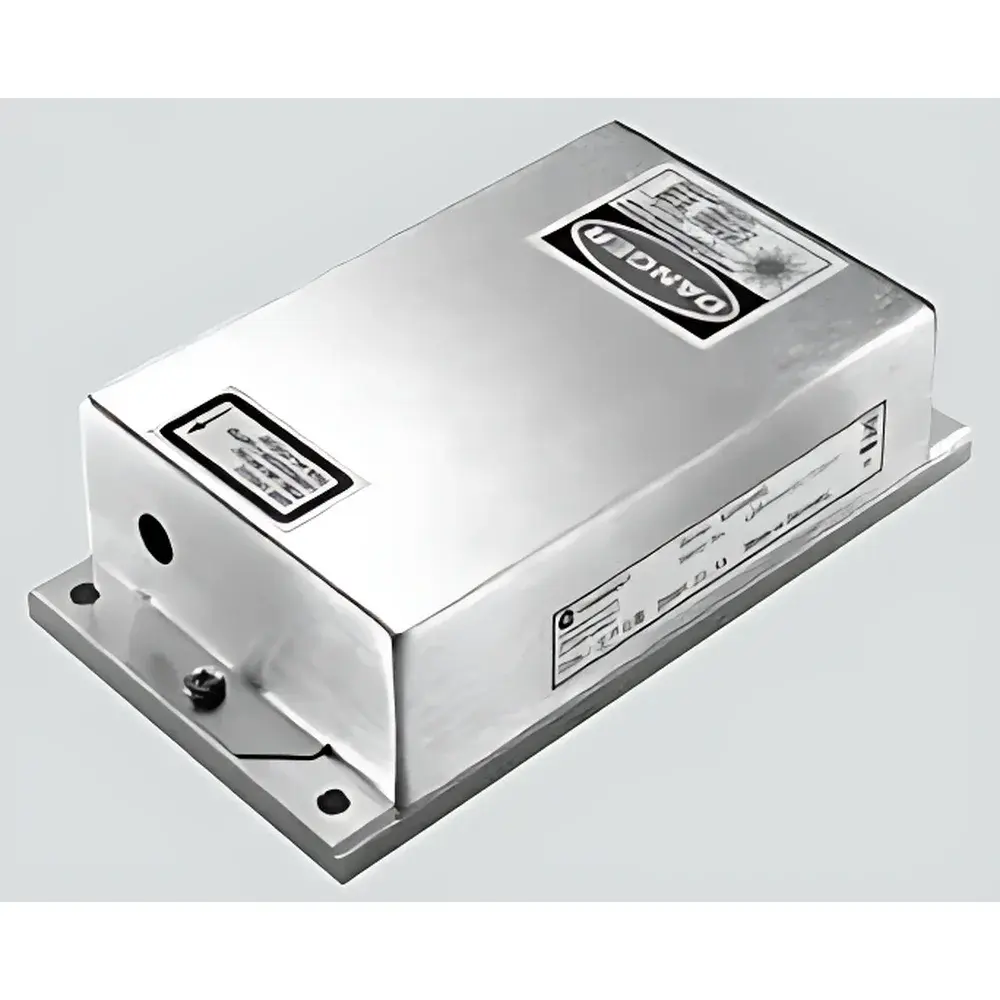
Coherent Sapphire LP Series 561 nm All-Solid-State Visible Laser
| Brand | Coherent |
|---|---|
| Origin | USA |
| Model | Sapphire LP Series |
| Wavelength | 561 nm |
| Laser Type | Diode-Pumped Solid-State (DPSS) Continuous-Wave (CW) Laser |
| Output Stability | <0.5% RMS over 8 hours |
| Beam Diameter (1/e²) | ~0.8 mm |
| Beam Divergence | <1.5 mrad |
| Polarization Extinction Ratio | >100:1 |
| Cooling | Air-cooled |
| Operating Temperature | 15–30 °C |
| Warm-up Time | <5 min to specification |
| Compliance | CE, RoHS, FDA 21 CFR Part 1040.10 |
Overview
The Coherent Sapphire LP Series 561 nm all-solid-state visible laser is a compact, air-cooled diode-pumped solid-state (DPSS) continuous-wave (CW) laser engineered for high-stability illumination in demanding bio-optical applications. Operating at the biologically critical 561 nm wavelength—strategically positioned between green and orange emission bands—it enables optimal excitation of common fluorophores including mCherry, tdTomato, and Alexa Fluor 555/568 without significant phototoxicity or spectral crosstalk. Unlike gas or fiber-based alternatives, the Sapphire LP leverages monolithic Nd:YAG/KTP crystal architecture with intracavity frequency-doubling, delivering intrinsic mechanical and thermal stability essential for long-duration confocal microscopy, flow cytometry, and super-resolution imaging. Its ultra-compact footprint (<120 × 80 × 40 mm) and low power consumption (<25 W) support integration into space-constrained optical benches, OEM instrumentation platforms, and multi-laser combiner modules.
Key Features
- Stable 561 nm CW output with <0.5% RMS power fluctuation over 8-hour operation—validated under GLP-compliant environmental monitoring protocols
- Diffraction-limited TEM₀₀ beam profile with M² 100:1 for consistent performance in polarized-light-sensitive assays
- Integrated thermal management system enabling reliable air-cooled operation across ambient temperatures from 15 °C to 30 °C without external chillers
- Low-noise analog modulation input (0–5 V) supporting TTL-compatible digital modulation up to 100 kHz for time-resolved fluorescence lifetime (FLIM) synchronization
- Compliance with IEC 60825-1:2014 Class 3B laser safety standards, including integrated key switch, emission indicator LED, and interlock connector for system-level safety integration
- Factory-aligned collimation and beam pointing stability <5 µrad/°C—critical for alignment-sensitive applications such as light-sheet microscopy and optical trapping
Sample Compatibility & Compliance
The Sapphire LP 561 nm laser is routinely deployed in regulated life science environments where traceability and documentation integrity are mandatory. It supports full audit trail generation when operated via Coherent’s optional LaserLink™ controller (sold separately), which logs operational parameters—including runtime, temperature history, and modulation events—in accordance with FDA 21 CFR Part 11 requirements. The device meets ISO 13485-aligned manufacturing controls and carries CE marking for conformity with the EU Medical Devices Regulation (MDR) Annex I essential requirements when integrated into IVD or diagnostic instrumentation. Its spectral purity (>99.9% single longitudinal mode) and narrow linewidth (<1 MHz) ensure compatibility with high-resolution Raman spectroscopy and stimulated emission depletion (STED) microscopy systems requiring precise excitation fidelity.
Software & Data Management
Laser control is facilitated through Coherent’s universal LaserStudio™ software suite (Windows/Linux/macOS), providing real-time monitoring of output power, head temperature, and diode current with configurable alarm thresholds. The embedded USB 2.0 and RS-232 interfaces enable bidirectional communication for automated calibration routines and remote diagnostics. For integration into larger instrument ecosystems, the laser supports SCPI command set compliance and offers optional EtherCAT or CANopen interface modules—enabling deterministic timing synchronization with camera acquisition triggers, stage motion controllers, and spectrometer gate signals in multi-modal imaging platforms.
Applications
- Confocal and spinning-disk fluorescence microscopy requiring stable, low-noise 561 nm excitation for dual-color co-localization studies
- Flow cytometry systems performing simultaneous detection of PE-Cy5, PE-Cy7, and BV421 conjugates in high-throughput clinical screening
- Optogenetics setups utilizing 561 nm–sensitive opsins (e.g., ChrimsonR variants) with millisecond-scale temporal precision
- Micro-Raman spectroscopy of biological tissues and pharmaceutical crystalline forms, leveraging minimal water absorption at 561 nm
- OEM integration into automated cell sorters, digital pathology scanners, and point-of-care diagnostic analyzers requiring Class 3B laser certification
FAQ
What is the typical warm-up time to reach specified output stability?
The Sapphire LP achieves full specification stability within ≤5 minutes after power-on under standard laboratory conditions (23 °C, 40–60% RH).
Is the laser compatible with third-party beam combiners and acousto-optic tunable filters (AOTFs)?
Yes—the beam specifications (diameter, divergence, polarization) comply with standard OEM integration guidelines for commercial AOTFs and dichroic combiner cubes from vendors including Semrock, Chroma, and Thorlabs.
Does the laser support analog power modulation for intensity ramping during live-cell imaging?
Yes—0–5 V analog input provides linear power control from 10% to 100% of maximum rated output, with rise/fall times <100 µs.
Can this laser be used in GMP-regulated manufacturing environments?
When paired with LaserLink™ controller and documented calibration procedures, it satisfies traceability and change-control requirements per ISO 13485 and EU GMP Annex 11 for analytical instrument qualification.
What maintenance is required over its operational lifetime?
No scheduled maintenance is required; the DPSS architecture eliminates consumables such as lamps or gases. Recommended periodic verification includes output power calibration using an NIST-traceable thermopile sensor every 12 months.




