
Yamashita Optics TFPE High-Resistivity Silicon Terahertz Fabry–Pérot Etalon
| Origin | Russia |
|---|---|
| Manufacturer Type | Authorized Distributor |
| Origin Category | Imported |
| Model | TFPE |
| Pricing | Available Upon Request |
Overview
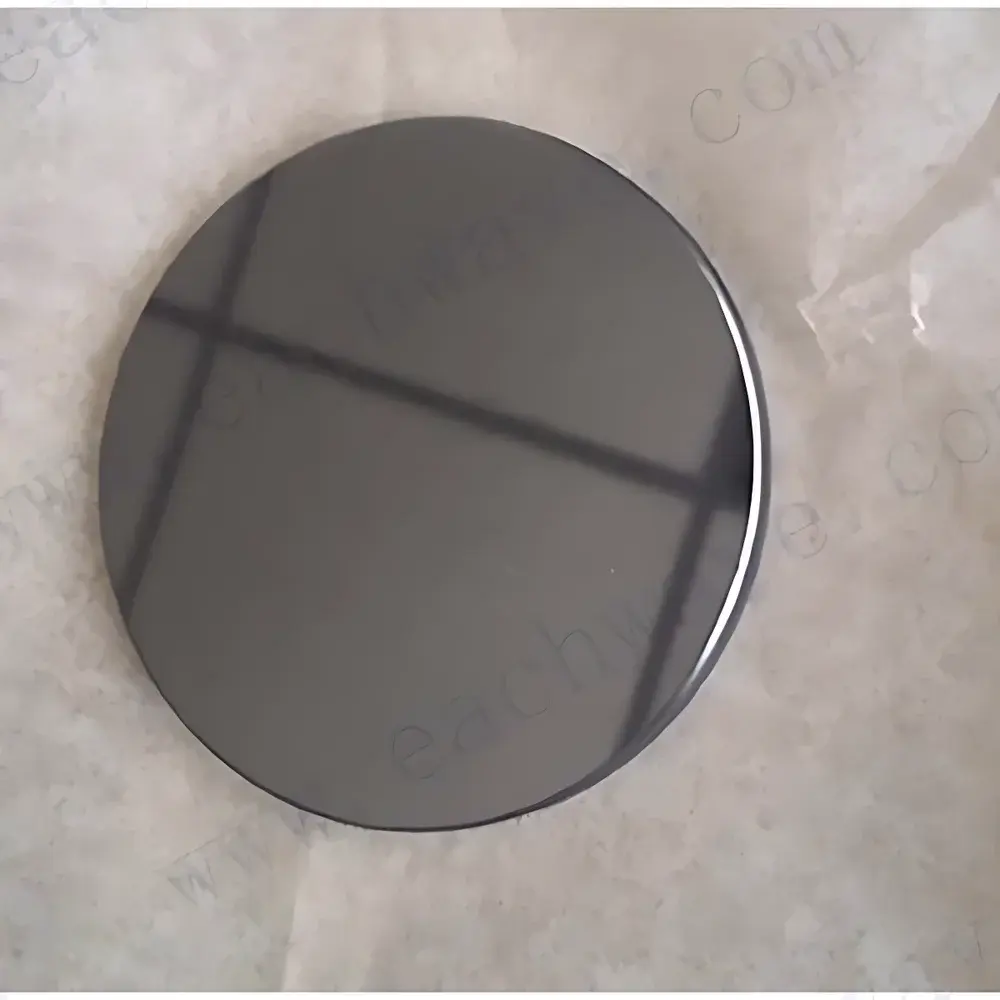
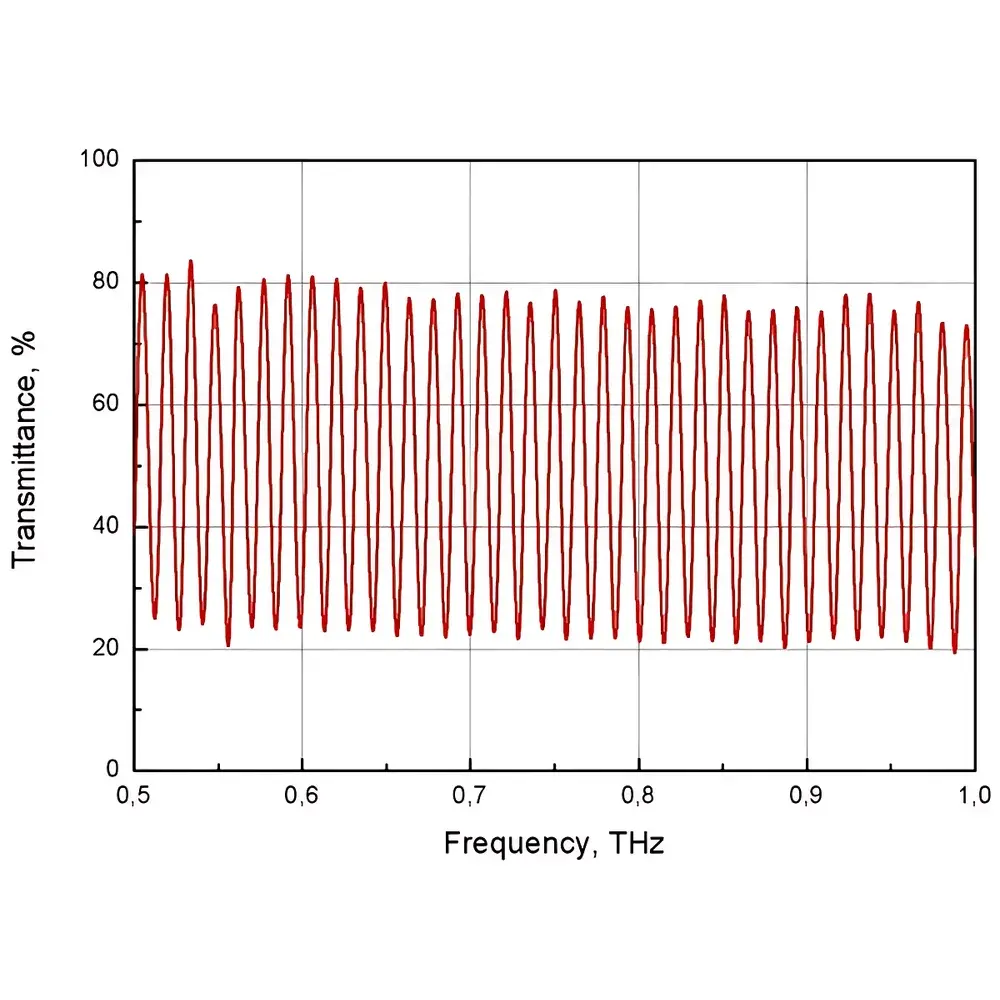
The Yamashita Optics TFPE High-Resistivity Silicon Terahertz Fabry–Pérot Etalon is a precision optical reference standard engineered for calibration, thickness metrology, and spectral stabilization in terahertz time-domain spectroscopy (THz-TDS) systems. Fabricated from ultra-pure, high-resistivity float-zone silicon (HRFZ-Si), the etalon operates on the principle of multiple-beam interference within a parallel-plane cavity. Its precisely controlled physical thickness defines discrete transmission peaks governed by the Fabry–Pérot condition: mλ = 2nd cosθ, where m is the interference order, λ the wavelength, n the refractive index (~3.416 at 0.5–1 THz), d the cavity thickness, and θ the angle of incidence. This deterministic spectral response enables traceable frequency referencing, system alignment verification, and non-contact thickness measurement of dielectric materials in the 0.5–1 THz band.
Key Features
- Monolithic HRFZ-Si substrate with surface flatness < λ/20 @ 10.6 µm and parallelism < 3 arcsec — critical for high-finesse interference performance
- Calibrated physical thickness certified to ±1 µm accuracy via mechanical interferometry and verified by THz-TDS spectral analysis
- Optimized for broadband operation across 0.5–1 THz with >90% clear aperture transmission
- Free Spectral Range (FSR) and finesse values provided per unit (e.g., TFPE-HRFZ-Si-D25.4-T3: FSR = 14.4 GHz, bandwidth = 5.5 GHz, finesse = 2.61)
- Low dispersion and minimal absorption loss in the target band — essential for phase-sensitive THz-TDS applications
- Available in diameters from 25.4 mm to 150 mm to accommodate collimated beam requirements in commercial and research-grade THz platforms
Sample Compatibility & Compliance
The TFPE is compatible with all standard THz-TDS configurations utilizing photoconductive antennas or electro-optic sampling. Its HRFZ-Si composition ensures negligible free-carrier absorption below 2 THz and thermal stability under ambient laboratory conditions. While not a regulated medical or safety device, the etalon supports GLP-compliant calibration workflows when integrated into validated THz measurement systems. Its use aligns with ASTM E2971–22 (Standard Practice for Calibration of Terahertz Time-Domain Spectrometers) and ISO/IEC 17025–2017 requirements for reference material traceability, provided users maintain documented calibration records linking measured FSR to certified thickness and refractive index.
Software & Data Management
The TFPE does not include embedded firmware or proprietary software. However, its spectral signature is fully interpretable using open-source or vendor-supplied THz analysis packages (e.g., TeraView’s TeraGauge, Menlo Systems’ TeraScan, or Python-based libraries such as terapy or thztools). Users extract peak positions from transmission spectra to compute effective optical path length (nd) and validate system timing jitter, dispersion compensation algorithms, and delay-stage linearity. For audit-ready environments, raw THz waveforms and fitted FSR values may be archived alongside instrument metadata to satisfy FDA 21 CFR Part 11 requirements for electronic records — provided the host acquisition software implements appropriate audit trails and user access controls.
Applications
- Primary calibration standard for THz-TDS system alignment and temporal zero-point verification
- Reference for absolute thickness measurement of polymer films, pharmaceutical tablets, and semiconductor wafers via time-of-flight analysis
- Spectral filter for narrowing bandwidth of broadband THz sources (e.g., photoconductive emitters or optical rectification crystals)
- Validation tool for dispersion correction models in layered material characterization
- Benchmarking reference in inter-laboratory comparison studies targeting THz metrology reproducibility
FAQ
How is the actual thickness of the TFPE determined?
Thickness is measured mechanically using a calibrated gauge interferometer with sub-micron resolution and cross-validated via THz-TDS transmission spectrum fitting using the known HRFZ-Si refractive index (n = 3.416 ± 0.002 at 0.75 THz).
Can the TFPE be used outside the 0.5–1 THz range?
Transmission peaks remain resolvable up to ~1.8 THz, but finesse degrades due to increasing silicon absorption; optimal performance is specified for 0.5–1 THz.
Is anti-reflection coating available?
No — AR coatings are omitted to preserve absolute reflectivity consistency required for finesse calculation and FSR traceability.
What environmental conditions affect TFPE performance?
Temperature fluctuations > ±1°C induce measurable thermal expansion shifts in FSR; operation at stable room temperature (20–25°C) is recommended for metrological applications.
How does the TFPE support compliance with ISO/IEC 17025?
When used with documented uncertainty budgets (including thickness calibration certificate, refractive index tolerance, and spectrometer resolution), it serves as a secondary reference material meeting clause 6.6.2 for traceable calibration in accredited testing laboratories.







