
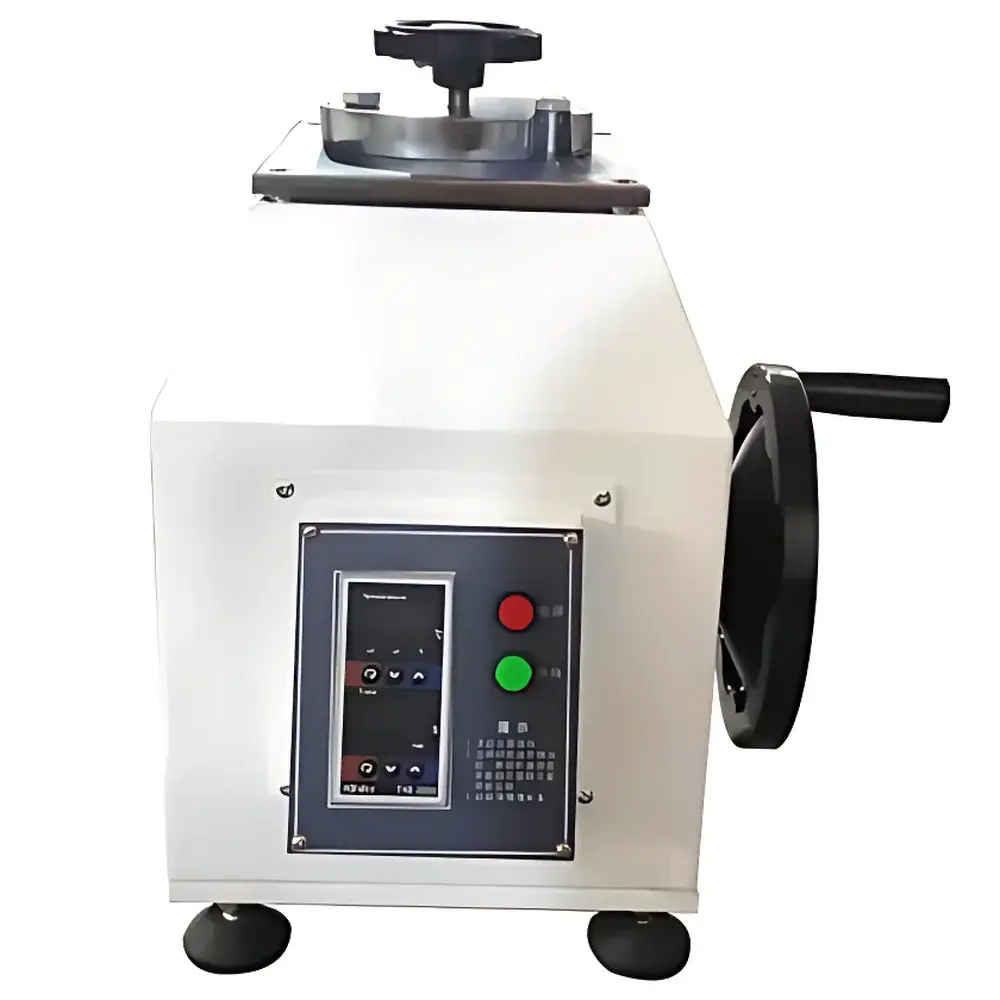
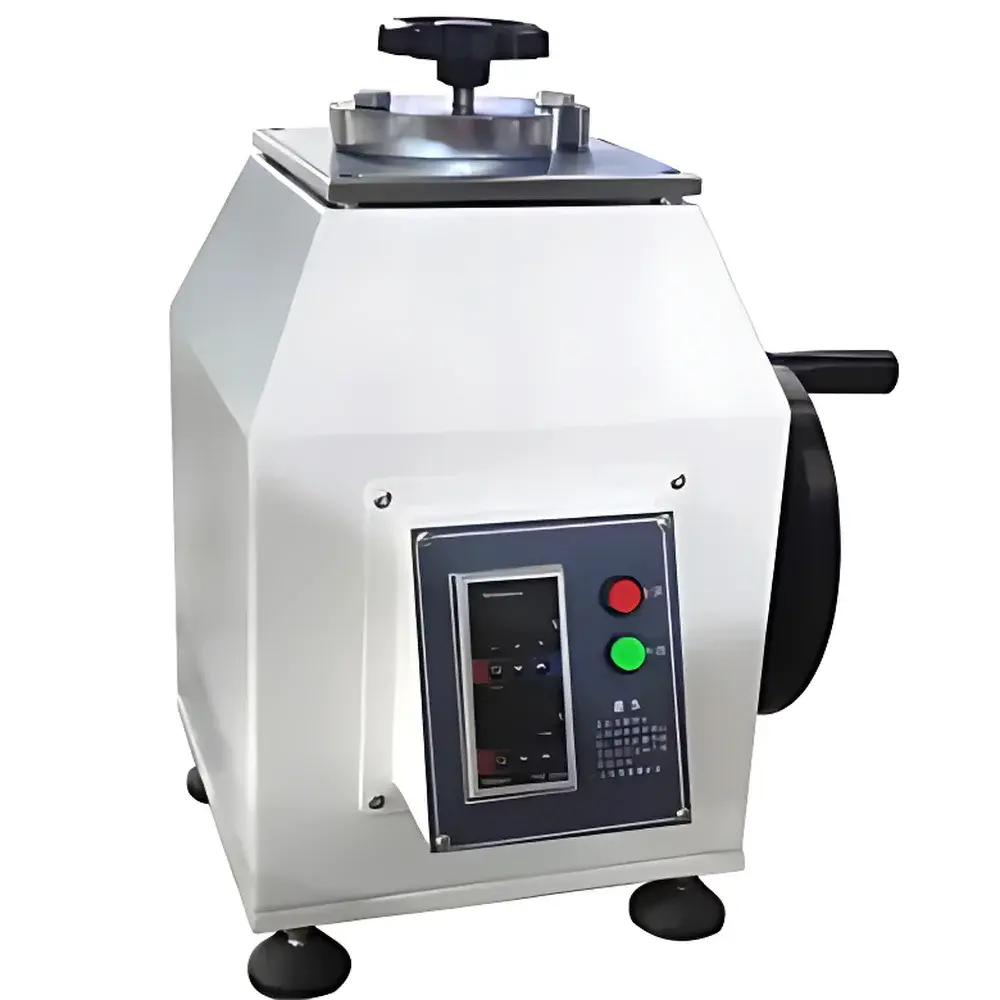
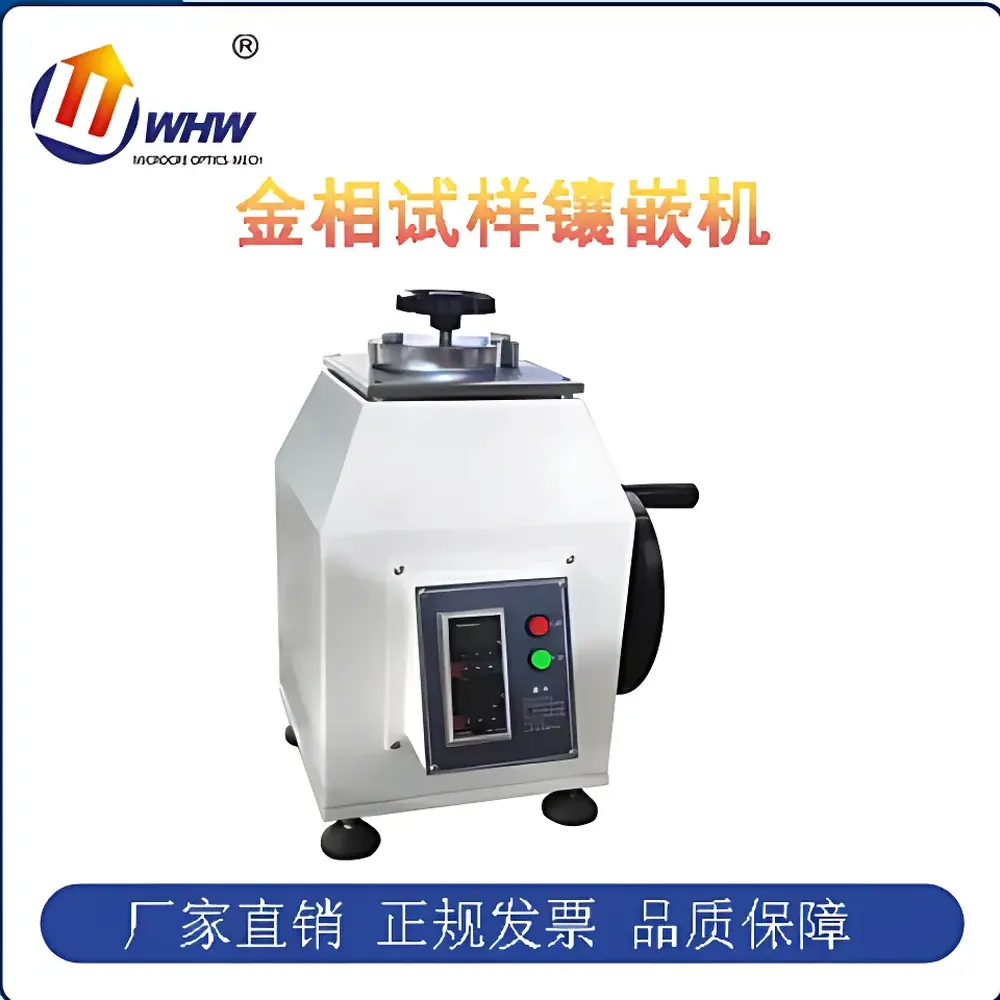
YANRUN XQ-2B Hot Mounting Press for Metallographic Sample Preparation
| Brand | YANRUN |
|---|---|
| Origin | Shanghai, China |
| Manufacturer Type | Direct Manufacturer |
| Instrument Type | Hot Mounting Press |
| Model | XQ-2B |
| Heating Power | 800 W |
| Temperature Range | 0–200 °C |
| Specimen Diameter Capacity | Φ25 mm, Φ30 mm, Φ40 mm |
| Curing Time Setting Range | 0–99 minutes |
| Control System | Digital PID Temperature Controller with Dual Display (Setpoint & Actual) |
| Alarm | Audible Beeper Alert on Cycle Completion or Over-Temperature Event |
| Standard Accessories | Main Unit, Steel Mold Set (Integrated), Thermosetting Resin Bottle (1 pc), Power Cord (1 pc) |
Overview
The YANRUN XQ-2B Hot Mounting Press is a precision-engineered laboratory instrument designed for the reproducible encapsulation of irregular, fragile, or dimensionally unstable metallographic specimens in thermosetting resins. Operating on the principle of heat-activated compression molding, the XQ-2B applies controlled thermal energy and mechanical pressure to cure phenolic, epoxy, or acrylic mounting media—transforming loose or delicate samples into dimensionally stable, cylindrical test blocks compatible with subsequent grinding, polishing, microstructural analysis, hardness testing, and automated image acquisition. Unlike cold-mounting systems, hot mounting ensures minimal void formation, superior edge retention, and enhanced interfacial adhesion between specimen and resin—critical for high-magnification optical microscopy (ISO 4527, ASTM E3) and quantitative metallography (ASTM E1245). The press is engineered for routine use in QC laboratories, failure analysis centers, and academic metallurgy facilities where batch consistency, operator safety, and compliance-ready documentation are essential.
Key Features
- Dual-display digital PID temperature controller with ±1 °C accuracy across 0–200 °C range—enabling precise replication of resin-specific curing profiles (e.g., 165 °C for standard phenolic resin, 180 °C for fast-cure epoxies)
- Adjustable hydraulic or mechanical pressure system optimized for consistent densification without specimen distortion or resin flash
- Programmable timer (0–99 min) with audible beeper alert upon cycle completion—supporting unattended operation and preventing over-curing
- Integrated steel mold set accommodating three standard specimen diameters (Φ25 mm, Φ30 mm, Φ40 mm), each with interchangeable inserts for varying height requirements
- Thermally insulated heating chamber with rapid cool-down capability and surface temperature shielding—meeting IEC 61000-6-2 electromagnetic compatibility standards and reducing operator exposure risk
- Robust cast-aluminum frame with reinforced column design ensuring long-term dimensional stability under repeated thermal cycling
Sample Compatibility & Compliance
The XQ-2B accommodates a broad spectrum of conductive and non-conductive materials—including ferrous and non-ferrous alloys, ceramics, composites, sintered powders, and coated substrates—provided they withstand short-term exposure to 200 °C. It supports common thermosetting resins compliant with ISO 15510 (metallographic mounting materials) and ASTM E3-22 (preparation of metallographic specimens). The unit’s construction adheres to CE marking requirements for electrical safety (EN 61000-6-3) and carries factory calibration documentation traceable to NIM (National Institute of Metrology, China). While not intrinsically certified for hazardous location use, its enclosed heating zone and automatic shutdown logic align with general laboratory safety protocols per OSHA 1910.1200 and ANSI Z535.4 hazard communication guidelines.
Software & Data Management
As a standalone benchtop press, the XQ-2B does not incorporate embedded software or network connectivity. However, its digital interface provides auditable operational records through manual logbook entries: temperature setpoint, actual peak temperature, applied pressure duration, and cycle timestamp. For GLP/GMP-regulated environments, users may integrate external data loggers (e.g., calibrated thermocouple-based recorders meeting ASTM E74 or ISO/IEC 17025) to generate time-stamped, tamper-evident curing profiles. All control parameters remain manually configurable without firmware dependencies—ensuring long-term maintainability and eliminating obsolescence risks associated with proprietary software ecosystems.
Applications
- Routine preparation of cross-sections from wire, foil, solder joints, and additive-manufactured parts prior to SEM-EDS or EBSD analysis
- Stabilization of porous or brittle samples (e.g., cast iron graphite nodules, thermal spray coatings) for planar grinding without pull-out artifacts
- Mounting of multi-material interfaces (e.g., brazed joints, diffusion bonds) to preserve interfacial integrity during polishing
- High-volume sample throughput in incoming material inspection labs operating under ISO/IEC 17025 accreditation
- Teaching laboratories requiring robust, low-maintenance equipment for undergraduate metallurgy curricula (ASTM E3 pedagogical modules)
FAQ
What types of mounting resins are compatible with the XQ-2B?
Phenolic, epoxy, and acrylic thermosetting resins—both standard and fast-cure formulations—are supported. Resin selection must align with specimen thermal tolerance and required final hardness (e.g., phenolics for high-temperature alloys; epoxies for low-shrinkage applications).
Does the XQ-2B support vacuum-assisted impregnation?
No. The XQ-2B is a compression-only hot press. Vacuum infiltration requires separate vacuum mounting stations and is not integrated into this model.
Can the machine be used for cold mounting?
No. The XQ-2B lacks ambient-temperature curing capability and is strictly configured for thermally activated resin polymerization.
Is calibration certification included with purchase?
A factory calibration report covering temperature sensor linearity and timer accuracy is supplied. Full ISO/IEC 17025-accredited calibration requires third-party service.
What maintenance is required for long-term reliability?
Biannual cleaning of mold cavities and heating platen surfaces with non-abrasive solvents; annual verification of thermocouple drift using NIST-traceable reference sources; periodic inspection of pressure seal integrity.



