
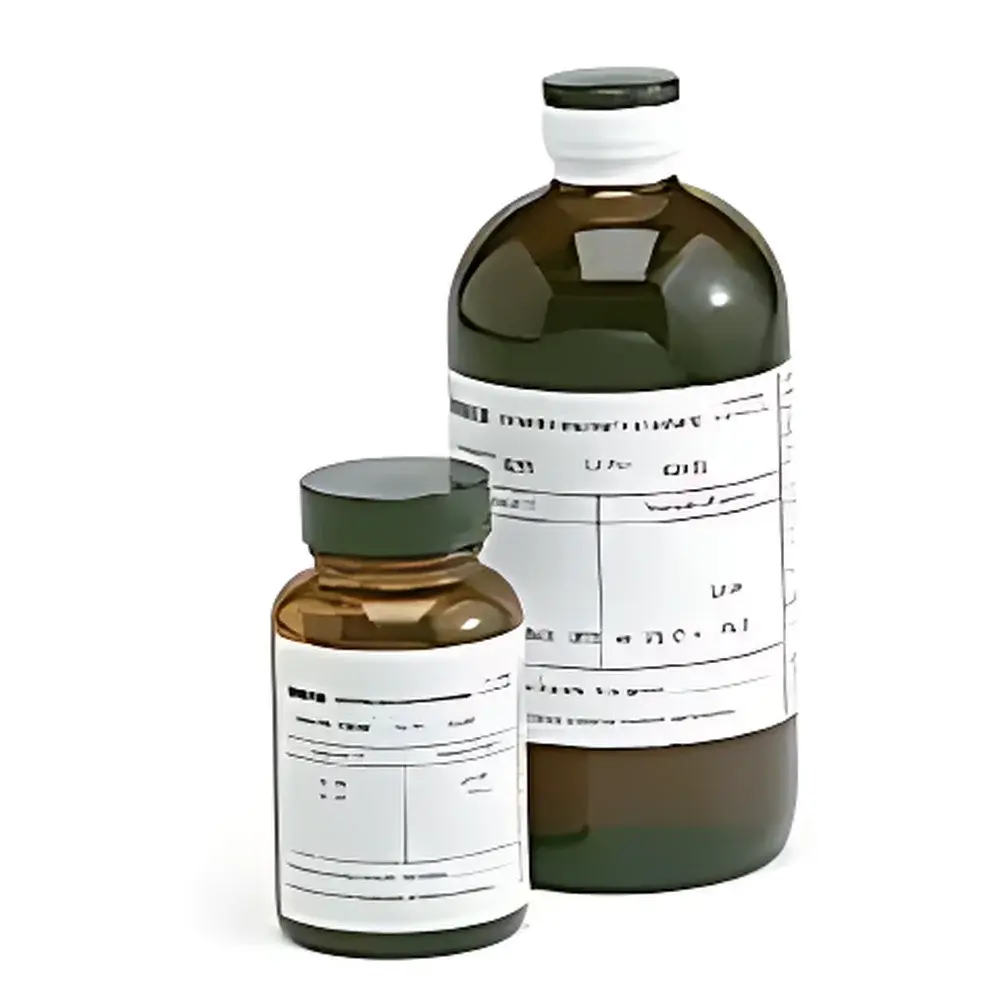
Brookfield Generic Oil-Based Viscosity Standards
| Brand | Brookfield |
|---|---|
| Origin | USA |
| Manufacturer Type | Authorized Distributor |
| Origin Category | Imported |
| Model | Generic Oil-Based Viscosity Standards |
| Pricing | Available Upon Request |
| Certified Accuracy | ±1% of Nominal Value (NIST-Traceable) |
| Volume Options | 500 mL (1 pt) or 150 mL (4 oz) |
| Base Fluids | Mineral Oil & Polybutene (Hydrocarbon-Based) |
| Recommended Shear Rate | >500 s⁻¹ |
| Suitable For | Cone/Plate Viscometers, Rotational Rheometers, Krebs Stormer Instruments |
| Calibration Compliance | ASTM D1200, ISO 2555, USP <911>, FDA 21 CFR Part 11 (when used with compliant software systems) |
Overview
Brookfield Generic Oil-Based Viscosity Standards are precision-engineered reference fluids designed for routine calibration verification and performance validation of rotational viscometers and rheometers. These standards operate on the fundamental principle of Newtonian fluid behavior under controlled shear conditions—ensuring consistent, reproducible viscosity output across defined temperature and shear rate regimes. Each fluid is formulated to exhibit minimal temperature sensitivity and negligible time-dependent structural change, making them ideal for daily instrument checks, inter-laboratory comparisons, and audit-ready calibration protocols. Manufactured in the United States under strict quality control, all batches are certified against NIST-traceable reference materials and accompanied by individual Certificate of Calibration documenting nominal viscosity, uncertainty budget, measurement temperature (25 °C), and traceability path. Their hydrocarbon composition—either highly refined mineral oil or polybutene—ensures chemical compatibility with stainless steel, aluminum, and anodized aluminum geometries commonly found in Brookfield, Anton Paar, Thermo Fisher, and TA Instruments platforms.
Key Features
- NIST-traceable accuracy of ±1% of nominal viscosity value at 25 °C, validated per ISO/IEC 17025-accredited procedures
- Stable Newtonian response above 500 s⁻¹ shear rate—optimized for cone/plate (CP), cylindrical (SC4, LV/U/LV-UL), and Krebs Stormer geometries
- Two standard packaging formats: 500 mL (1 pint) for laboratory-wide use and 150 mL (4 oz) CAP vials for portable or field-based verification
- Temperature-controlled specification: viscosity values certified exclusively at 25 °C (±0.1 °C bath stability required during verification)
- Chemically inert hydrocarbon base—non-toxic, non-corrosive, and compatible with common viscometer spindle materials including chrome-plated steel and anodized aluminum
- Batch-specific Certificate of Calibration included with every unit, listing measured value, expanded uncertainty (k=2), reference standard ID, and expiration date
Sample Compatibility & Compliance
These standards are validated for use with all Brookfield rotational instruments (DVNext, DV2T, RV/DV3T series) and third-party systems employing cone/plate, concentric cylinder, or Krebs geometry—including ASTM D1200-compliant Stormer viscometers. They meet the minimum viscosity threshold (>5000 cP) recommended for reliable CP geometry operation and satisfy ISO 2555 requirements for kinematic viscosity reference fluids. When integrated into GLP/GMP workflows, their documented traceability supports compliance with FDA 21 CFR Part 11 (electronic records/signatures) when paired with audit-trail-enabled software such as Brookfield Rheo3000 or PC-based RheoVision. No solvent dilution or pre-conditioning is required; fluids are ready-to-use upon opening.
Software & Data Management
While the standards themselves are physical reference materials, their integration into digital calibration workflows is supported through Brookfield’s proprietary software ecosystem. RheoVision allows users to define multi-point calibration sequences using these oils, automatically logging verification events with timestamp, operator ID, instrument serial number, and deviation from nominal value. All entries are stored with immutable audit trails meeting ALCOA+ principles (Attributable, Legible, Contemporaneous, Original, Accurate, Complete, Consistent, Enduring, Available). Exportable CSV reports facilitate internal QA review and external regulatory submissions (e.g., ISO 9001 surveillance audits or pharmaceutical process validation dossiers).
Applications
- Daily verification of zero point and full-scale response prior to QC/QA testing of paints, coatings, adhesives, and polymer melts
- Inter-instrument correlation studies across multiple labs or production sites using identical nominal viscosity points (e.g., B1060, B2000, B10200)
- Validation of temperature control performance in Peltier-equipped rheometers via sequential measurements at 25 °C and 40 °C (using optional secondary calibration sets)
- Training new technicians on proper spindle immersion depth, gap setting, and data acquisition parameters
- Supporting method transfer documentation in regulated environments where ASTM D2196 or USP compliance is mandated
FAQ
Are these standards suitable for capillary or falling-ball viscometers?
No—these are specifically formulated and certified for rotational viscometry and rheometry. Capillary methods require different reference fluid classes (e.g., silicone oils per ASTM D445).
Can I use a single standard oil for full-range verification?
Not recommended. A two-point verification strategy—spanning low- and high-viscosity ranges (e.g., B200 + B10200)—is required to assess linearity and torque sensor fidelity across the instrument’s operational envelope.
Do the certificates expire?
Yes. Certificates are valid for 24 months from date of manufacture, assuming unopened storage at ambient conditions (15–30 °C) and protection from UV exposure.
Is lot-to-lot variability controlled?
Yes. Every batch undergoes inter-laboratory round-robin testing against primary NIST SRM 2490c and 2491b, with release only after statistical agreement within ±0.8% of target value.
Can I request custom viscosity values outside the standard catalog?
Yes—Brookfield offers custom formulation services for OEMs and contract laboratories requiring non-standard nominal values, subject to minimum order quantities and extended lead times.
Related Products



