
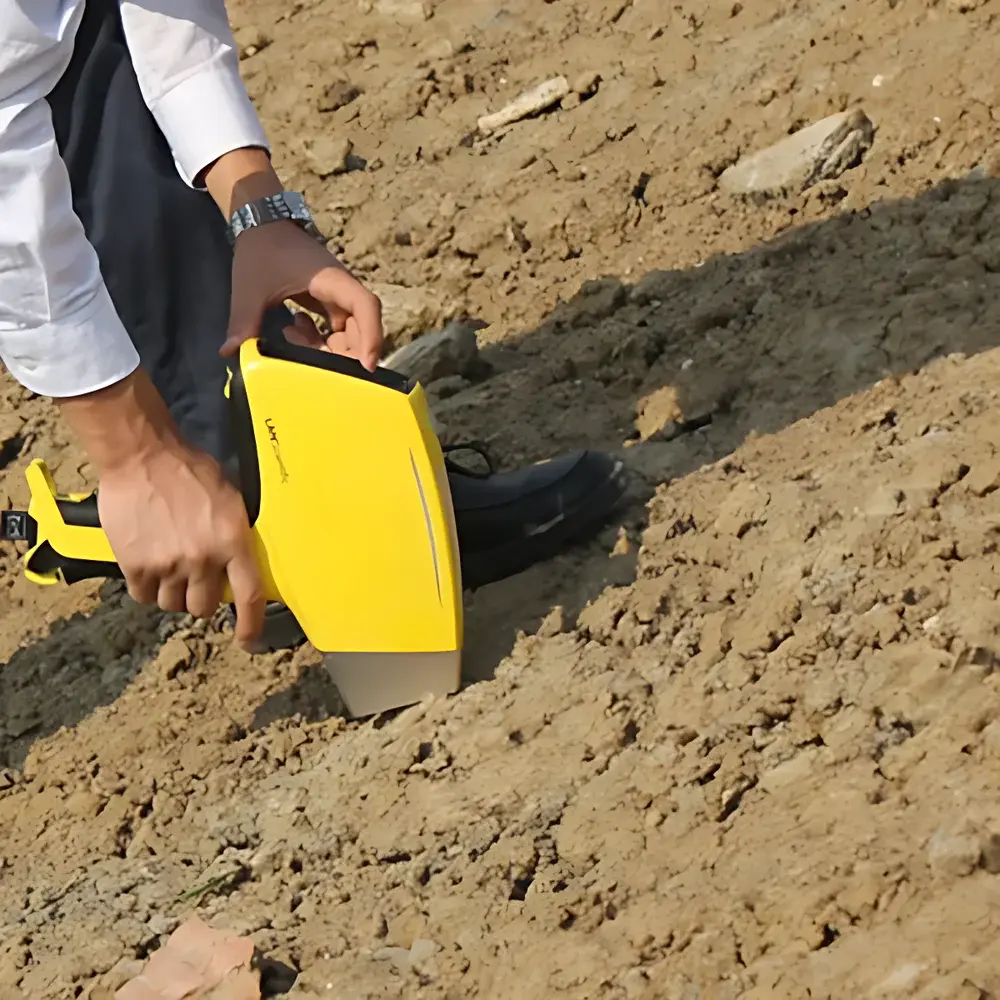
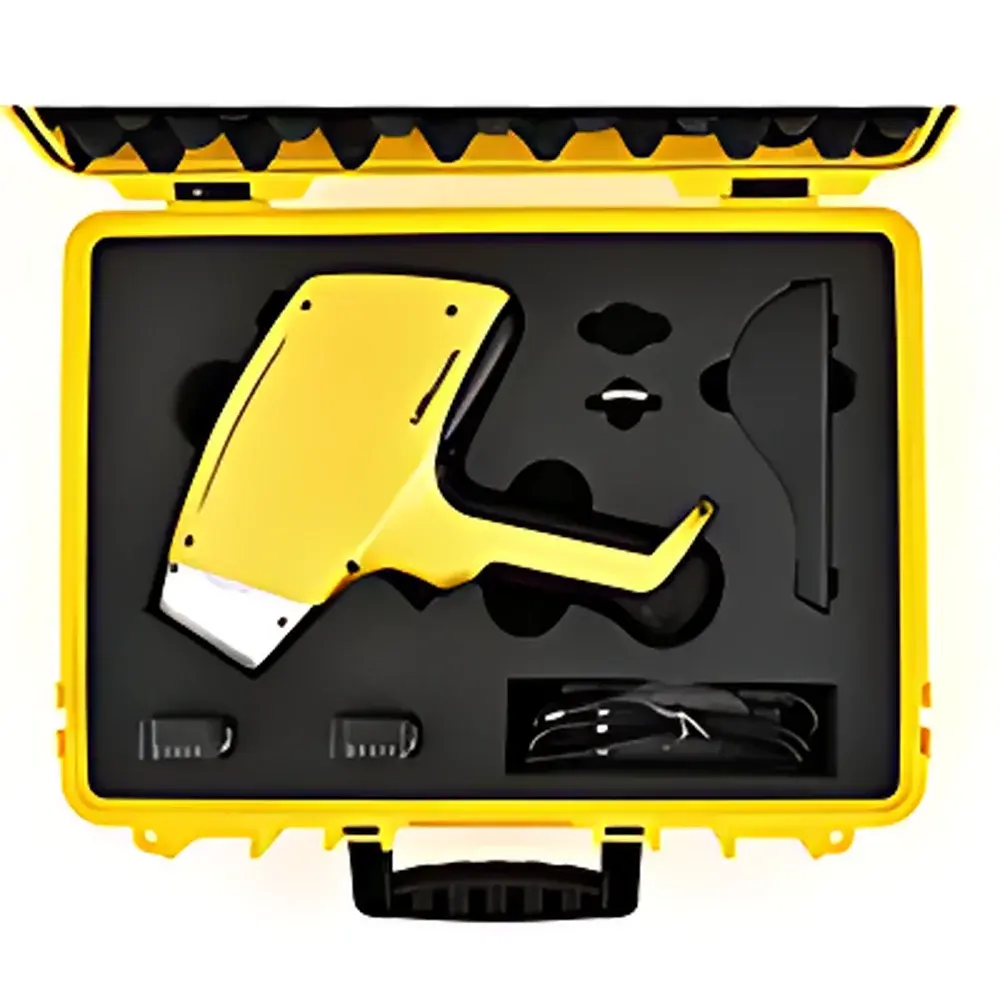
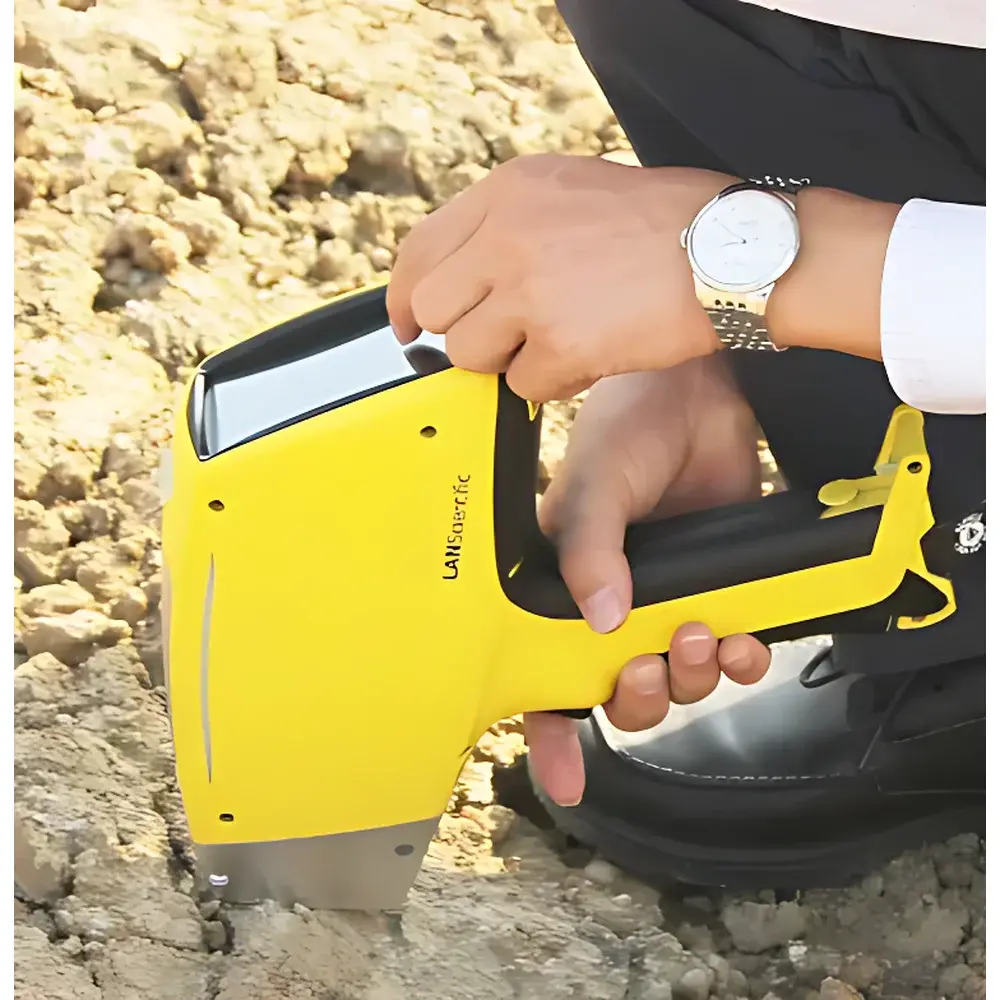
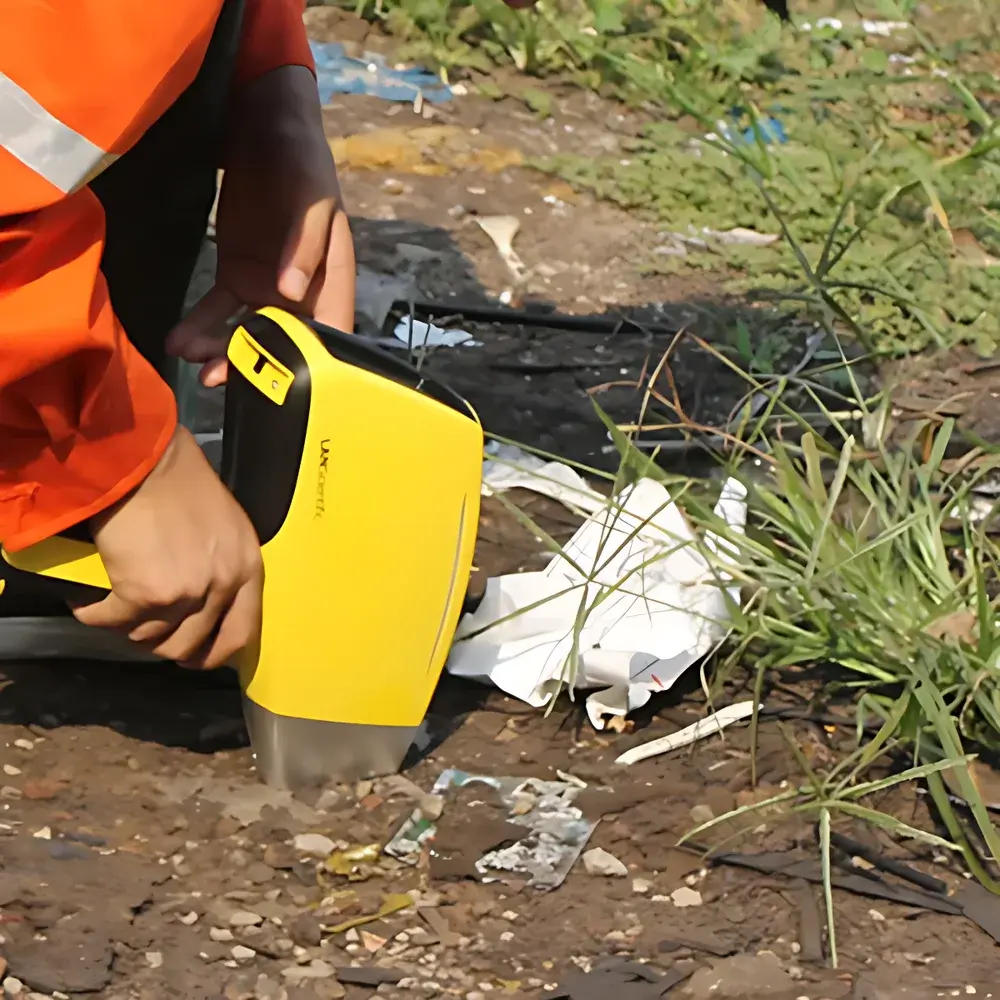
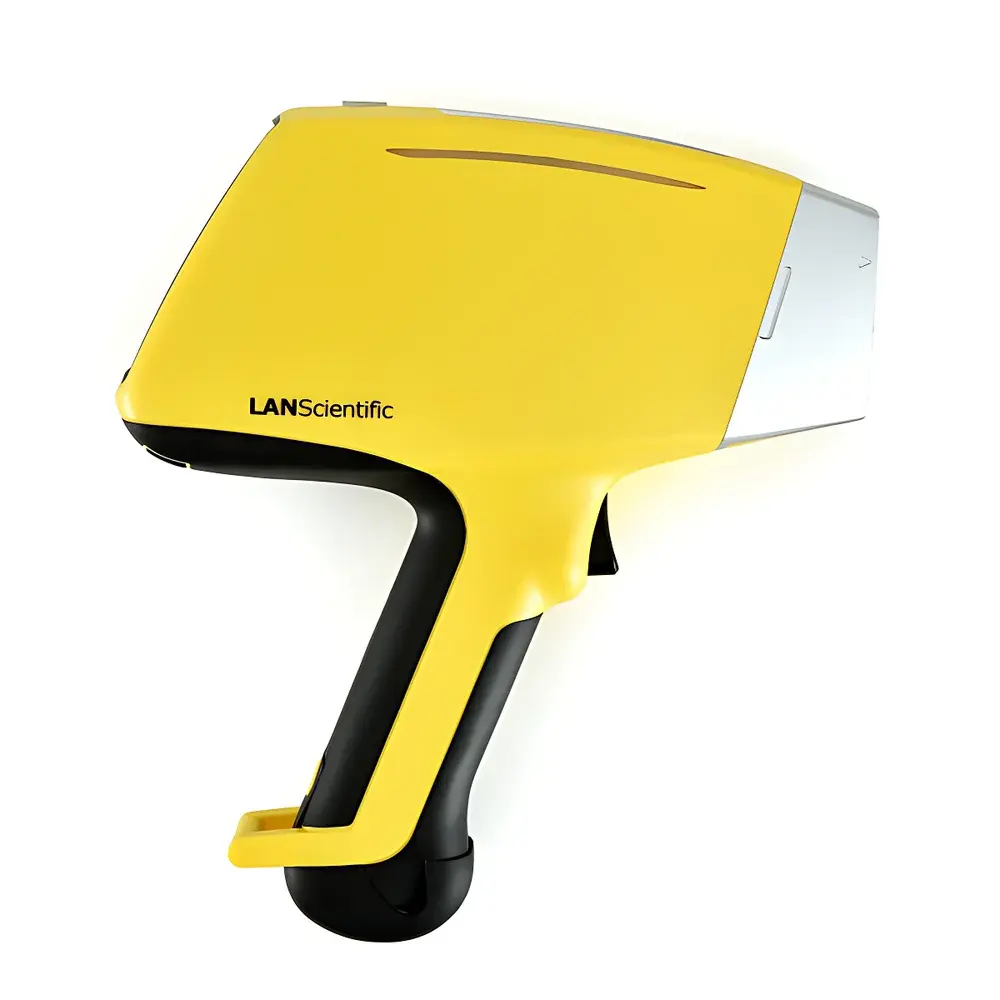
LANScientific TrueX 700 Portable Energy Dispersive X-Ray Fluorescence (EDXRF) Spectrometer
| Brand | LANScientific |
|---|---|
| Origin | Jiangsu, China |
| Manufacturer Type | Direct Manufacturer |
| Regional Classification | Domestic (China) |
| Model | TrueX 700 |
| Application | Handheld / Portable |
| Instrument Type | General-Purpose EDXRF |
| Industry-Specific Use | Soil & Atmospheric Environmental Monitoring |
| Elemental Analysis Range | Sodium (Na, Z=11) to Uranium (U, Z=92) |
Overview
The LANScientific TrueX 700 is a handheld energy dispersive X-ray fluorescence (EDXRF) spectrometer engineered for field-deployable, non-destructive elemental analysis of heterogeneous environmental matrices. Based on the fundamental principle of X-ray fluorescence—where primary X-rays excite inner-shell electrons in sample atoms, inducing characteristic secondary (fluorescent) X-ray emission—the instrument quantifies elemental composition by measuring energy and intensity of emitted photons via a high-resolution silicon drift detector (SDD). Designed specifically for rapid in-situ screening of soils, sediments, dusts, sludges, and particulate matter, the TrueX 700 delivers laboratory-comparable precision without sample digestion or vacuum requirements. Its compact form factor (weight <1.5 kg), integrated battery (≥8 h operation), and ruggedized IP54-rated enclosure enable reliable performance under variable outdoor conditions—including high humidity, ambient temperature fluctuations, and low-light environments.
Key Features
- True portable architecture: Integrated X-ray tube (Ag anode, 40 kV/100 µA max), SDD detector with <145 eV Mn Kα resolution, and real-time pulse processing electronics.
- One-touch analysis workflow: Pre-optimized calibrations for soil, sediment, and airborne particulate matrices; measurement time configurable from 1–60 s per spot.
- Non-destructive testing (NDT): No sample preparation required—direct analysis of solids, powders, filter membranes, slurries (after filtration), and thin layers.
- Dual-display elemental reporting: Simultaneous display of mass fraction (%) to three decimal places and concentration in ppm (mg/kg), traceable to NIST SRM reference materials.
- Onboard spectral library and peak deconvolution: Automatic interference correction for overlapping lines (e.g., Pb Lα/As Kα, Zn Kβ/Cu Kα) using fundamental parameter (FP) and empirical calibration hybrid algorithms.
- Rugged industrial design: MIL-STD-810G compliant shock resistance, rubberized grip, and sealed optical path to prevent dust/moisture ingress during extended field use.
Sample Compatibility & Compliance
The TrueX 700 accommodates diverse physical forms common in environmental field sampling: bulk soil cores, dried sediment cakes, air filter substrates (e.g., PVC, Teflon), powdered composites, and surface-contaminated concrete or asphalt fragments. It complies with ISO 12847:2017 (soil analysis by EDXRF), ASTM D7213–22 (determination of metals in solid waste by portable XRF), and EPA Method 6200 (field screening of metals in soils and sediments). While not intended for regulatory compliance reporting without lab verification, its results meet data quality objectives (DQOs) for Tier 1 site characterization and RCRA-related preliminary assessment per U.S. EPA guidance. All measurements adhere to ALARA principles and include built-in dose monitoring with real-time exposure logging.
Software & Data Management
The LANScientific Professional Analysis Suite supports secure, audit-ready data handling. It enables role-based user authentication with encrypted password protection, customizable report templates (including company logo, address, sample ID, analyst name, and timestamp), and export to CSV, Excel (.xlsx), PDF, and spectral .rtd formats. The software implements full 21 CFR Part 11–compatible electronic signatures, audit trails (recording all calibration changes, method edits, and result modifications), and remote firmware updates via HTTPS. Users may access advanced functions including custom calibration curve development, matrix-matched standardization, detector energy calibration (using Co-57 or Cd-109 sources), and automated diagnostic self-tests. Cloud synchronization (optional) allows centralized instrument fleet management across multi-site operations.
Applications
- Field screening of priority pollutants under RCRA: As, Cd, Cr, Cu, Hg, Ni, Pb, Se, and Zn in contaminated land and dredged sediments.
- Rapid triage of brownfield sites prior to costly lab submission—reducing analytical turnaround from days to seconds.
- Monitoring of remediation effectiveness: Pre- and post-treatment soil metal mapping with GPS-tagged measurement points.
- Air quality control: Quantification of heavy metals (e.g., Pb, Mn, V) collected on PM10/PM2.5 filters during industrial stack testing or urban ambient monitoring.
- Regulatory support for EU REACH, China GB 15618–2018 (Soil Environmental Quality Risk Control Standard), and Japan JIS Z 3217 (waste metal screening).
- Academic research: In-field geochemical profiling, anthropogenic metal dispersion studies, and pedological survey validation.
FAQ
Does the TrueX 700 require annual third-party calibration certification?
No—users may perform energy calibration and sensitivity verification in-house using supplied check standards (e.g., Fe/Ni/Cu/Zn alloy disk); however, ISO/IEC 17025-accredited labs may issue optional traceability certificates upon request.
Can it detect light elements below sodium (Z<11)?
No—due to atmospheric absorption and detector window limitations, detection is optimized for Z ≥ 11 (Na). Light element analysis (e.g., Mg, Al, Si) requires helium purge or vacuum operation, which this handheld platform does not support.
Is spectral data export compatible with third-party chemometric tools?
Yes—raw spectra (.rtd) and processed quantitation files (.csv) are structured for import into Unscrambler®, MATLAB®, or Python-based libraries (e.g., scikit-learn) for multivariate modeling and outlier detection.
What safety certifications does the instrument hold?
It carries CE marking per EU Directive 2014/30/EU (EMC) and 2014/53/EU (RED), IEC 61010-1:2010 (safety), and complies with IEC 62495:2010 for radiation safety in portable XRF devices.
How is measurement reproducibility verified across operators?
The onboard QC mode runs daily stability checks using internal reference sources; inter-operator variability is minimized through standardized measurement geometry (fixed 10 mm working distance) and automated beam collimation.
Related Products





