
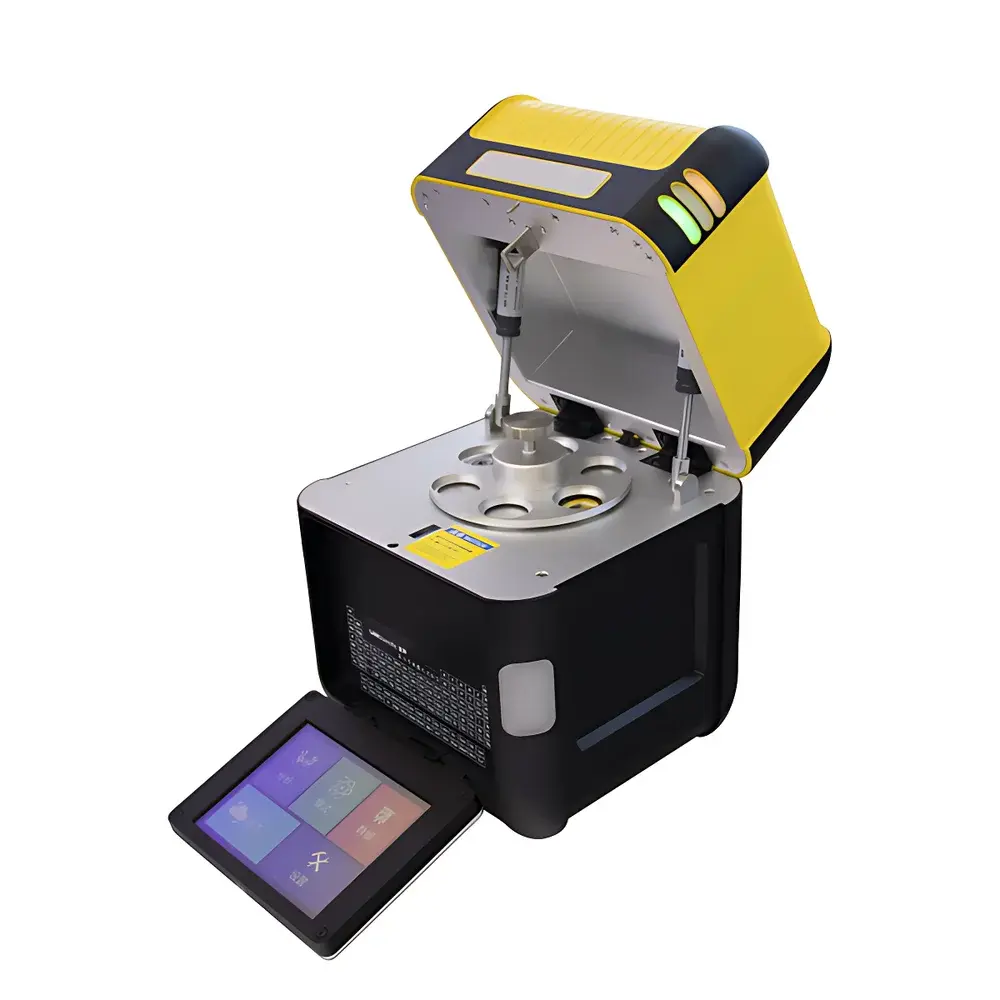
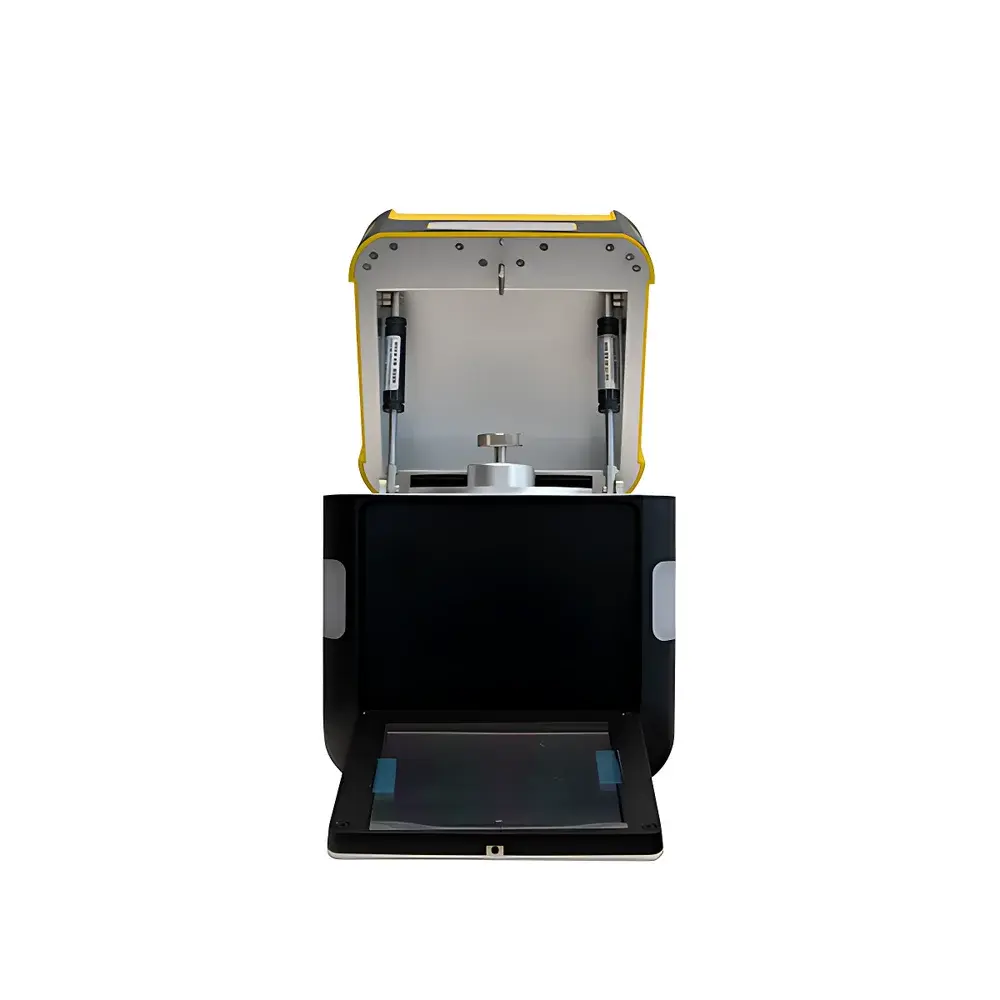
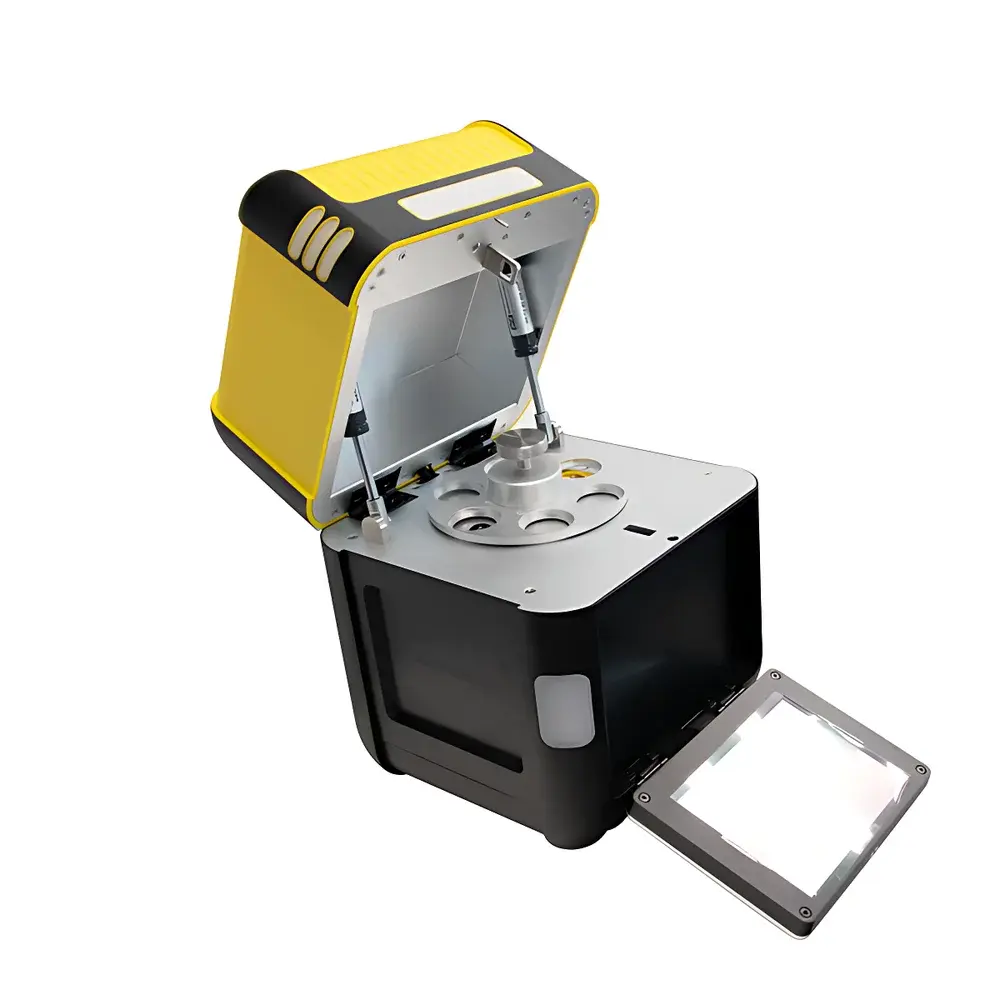
LANScientific PeDX RAMAN Portable Raman-XRF Hybrid Analyzer
| Brand | LANScientific |
|---|---|
| Origin | Jiangsu, China |
| Manufacturer Type | Manufacturer |
| Country of Origin | Domestic (China) |
| Model | PeDX RAMAN |
| Application | Handheld / Portable |
| Instrument Type | Conventional |
| Industry Use | General Purpose |
| Elemental Analysis Range | Mg–U |
| Quantitative Range | 1 ppm – 99.99% |
| Energy Resolution | 145 eV |
| Repeatability | 0.1% |
| Detector | High-Performance Silicon Drift Detector (SDD) with Peltier cooling |
| Dual-Mode Capability | Simultaneous Raman Spectroscopy & Energy-Dispersive X-ray Fluorescence (ED-XRF) |
Overview
The LANScientific PeDX RAMAN is an engineered field-deployable hybrid spectrometer integrating confocal micro-Raman spectroscopy and energy-dispersive X-ray fluorescence (ED-XRF) in a single, ruggedized portable platform. Unlike conventional handheld analyzers limited to either molecular or elemental analysis, the PeDX RAMAN operates on two complementary physical principles: Raman scattering—based on inelastic photon–molecular vibrational interactions—and X-ray fluorescence—governed by inner-shell electron excitation and characteristic X-ray emission. This dual-mode architecture enables concurrent acquisition of molecular fingerprinting (via Raman peak positions, intensities, and bandwidths) and quantitative elemental composition (via Kα/Kβ line intensities and spectral deconvolution), delivering orthogonal data streams for unambiguous material identification. Designed for regulatory enforcement, quality control, and rapid forensic screening, the instrument complies with IEC 62471 (photobiological safety), ISO 18115-1 (Raman terminology), and ASTM E1318 (XRF performance standards). Its sealed sample chamber, interlocked radiation shielding, and real-time dose monitoring ensure full compliance with occupational radiation safety requirements per IAEA Safety Standards Series No. GSR Part 3.
Key Features
- Integrated dual-spectroscopy engine: Co-registered Raman (785 nm diode laser, 10 mW output, thermoelectrically stabilized) and ED-XRF (miniature Rh-target X-ray tube, 40 kV/100 µA max) within a single optical path
- Fixed-focus sample interface: Eliminates operator-induced alignment drift; maintains consistent laser spot size (≤50 µm) and X-ray beam geometry across repeated measurements
- 6-position automated sample carousel: Enables unattended sequential analysis of solid, powder, or tablet samples without manual repositioning
- Industrial-grade capacitive touchscreen (7″, IP65-rated): Optimized for glove operation, sunlight-readable brightness (1000 cd/m²), and anti-reflective coating
- Hermetically sealed measurement chamber: Blocks ambient light and fluorescence interference; improves Raman signal-to-background ratio by >3× compared to open-beam configurations
- Onboard 5G module with TLS 1.3 encryption: Supports real-time data synchronization to cloud-based LIMS via RESTful API; compatible with FDA 21 CFR Part 11–compliant audit trail logging
Sample Compatibility & Compliance
The PeDX RAMAN accepts heterogeneous solid samples—including tablets, capsules, powders, coatings, polymers, and packaged consumer goods—without digestion, dilution, or pelletization. Sample presentation requires no consumables or calibration standards beyond factory-certified reference materials (NIST SRM 2243, NIST SRM 1926). For pharmaceutical applications, the system supports USP (Raman validation) and USP (elemental impurities) workflows. All XRF quantification adheres to ISO 12885 (XRF calibration protocols) and ISO 21043 (field-portable analyzer performance criteria). Radiation safety conforms to GBZ 188-2014 (Chinese occupational exposure limits) and EU Directive 2013/59/Euratom, verified by third-party type testing (CNAS-accredited laboratory report #LS-PeDX-RAD-2023-087).
Software & Data Management
The embedded firmware runs on a real-time Linux kernel with deterministic latency for spectral acquisition. The analytical software suite includes: (1) RamanPeak™—a chemometric engine supporting PCA, PLS-DA, and library matching against >12,000 reference spectra (PharmaID, CosmeID, ToxID databases); (2) XRFQuant™—applying fundamental parameter (FP) and empirical calibration models with matrix correction for complex organometallics; and (3) CrossCorr™—a proprietary algorithm that correlates Raman band shifts (e.g., C=O stretch at 1700 cm⁻¹) with trace metal concentrations (e.g., Cr⁶⁺ in pigments) to detect adulteration signatures. Data export supports ASTM E1967 (spectral data exchange format), CSV, and PDF reports with embedded digital signatures. Cloud integration enables role-based access control, versioned method storage, and GLP-compliant electronic lab notebook (ELN) linkage.
Applications
The PeDX RAMAN is validated for regulatory use cases requiring orthogonal verification: counterfeit pharmaceutical authentication (e.g., distinguishing genuine vs. fentanyl-adulterated oxycodone via Raman ν(C–O) shift + XRF Cl/Na ratio); pesticide residue screening in fruits (Raman carbamate bands + XRF As/Cu detection); heavy metal profiling in cosmetics (Pb/Cd/Hg quantification + polymer binder ID); sulfur speciation in fuels (Raman S–S vibrational modes + XRF total S); and illicit drug precursor identification (Raman nitro group signatures + XRF P/Ni catalyst traces). It meets operational requirements for China’s SAMR “Blue Sky” campaign, EU RAPEX rapid alert submissions, and WHO Prequalification field audits.
FAQ
Does the PeDX RAMAN require external calibration standards for routine field use?
No—factory-calibrated using NIST-traceable reference materials; optional user calibration kits available for method-specific validation.
Can the instrument differentiate between crystalline and amorphous forms of the same compound?
Yes—Raman spectral bandwidth and peak splitting (e.g., polymorphic shifts in paracetamol at 1205 cm⁻¹) are resolved with ≤2 cm⁻¹ wavenumber accuracy.
Is spectral data export compliant with FDA 21 CFR Part 11?
Yes—audit trails, electronic signatures, and secure data archiving are enabled via the optional CloudLIMS Pro license.
What is the typical measurement time per sample in dual-mode acquisition?
15–45 seconds depending on required LOD; XRF mode achieves 1 ppm detection for Pb in soil matrices within 30 s at 40 kV.
How is radiation exposure managed during operation?
The instrument features triple-layer tungsten–copper shielding, beam-stop interlock, and real-time dosimeter feedback—ensuring <0.1 µSv/h at 5 cm distance (well below ICNIRP public exposure limit of 1 µSv/h).





