
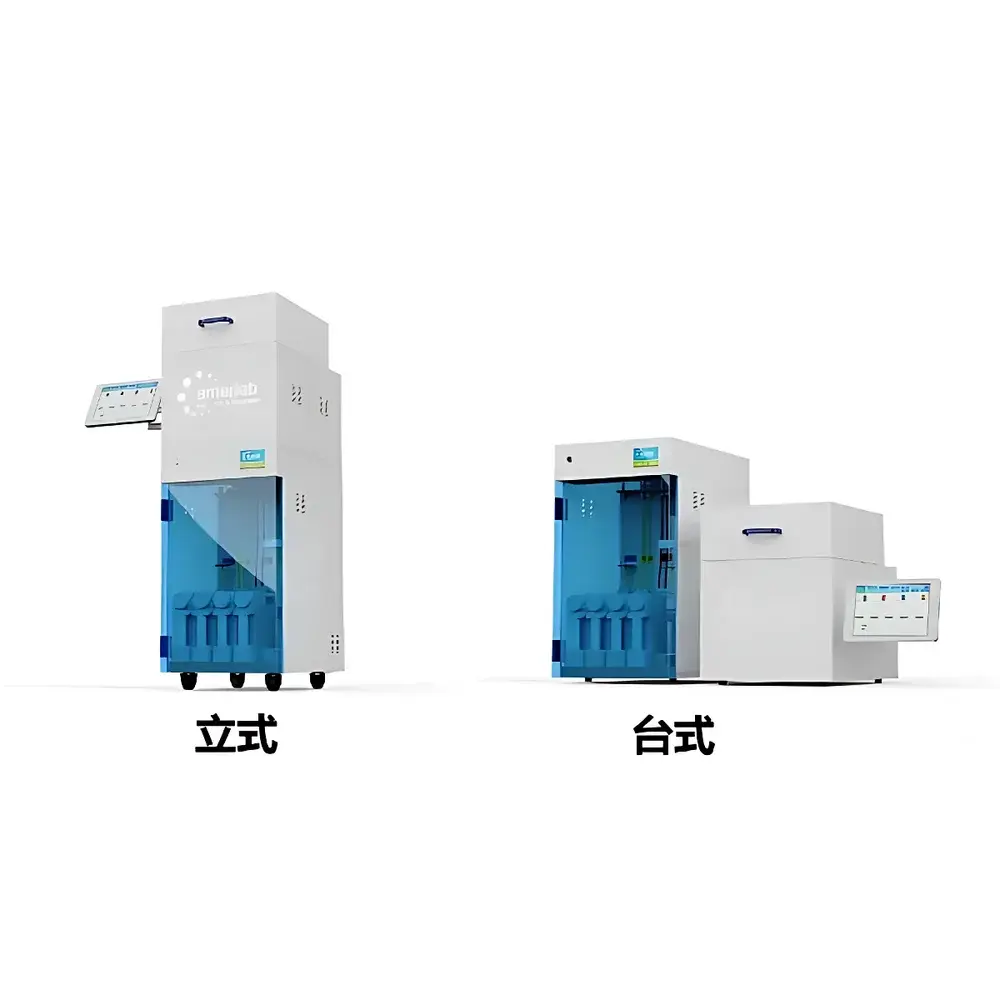
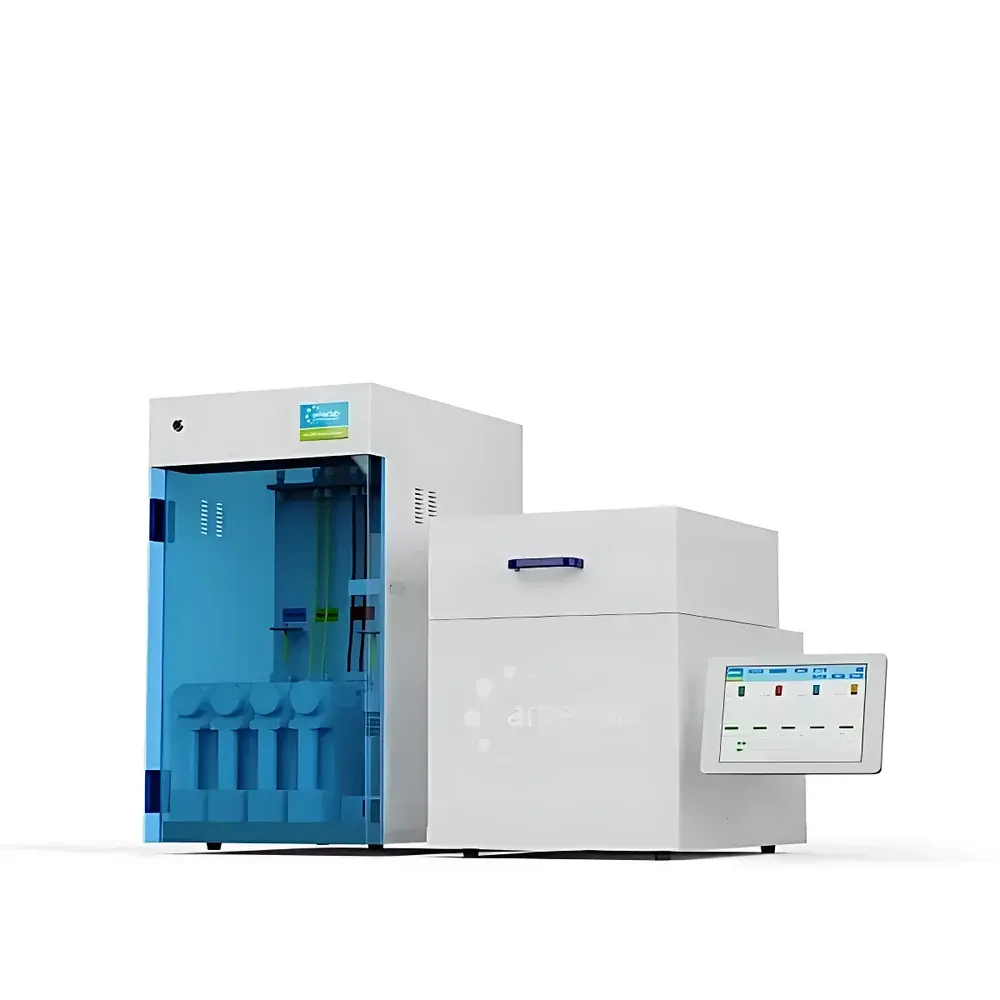
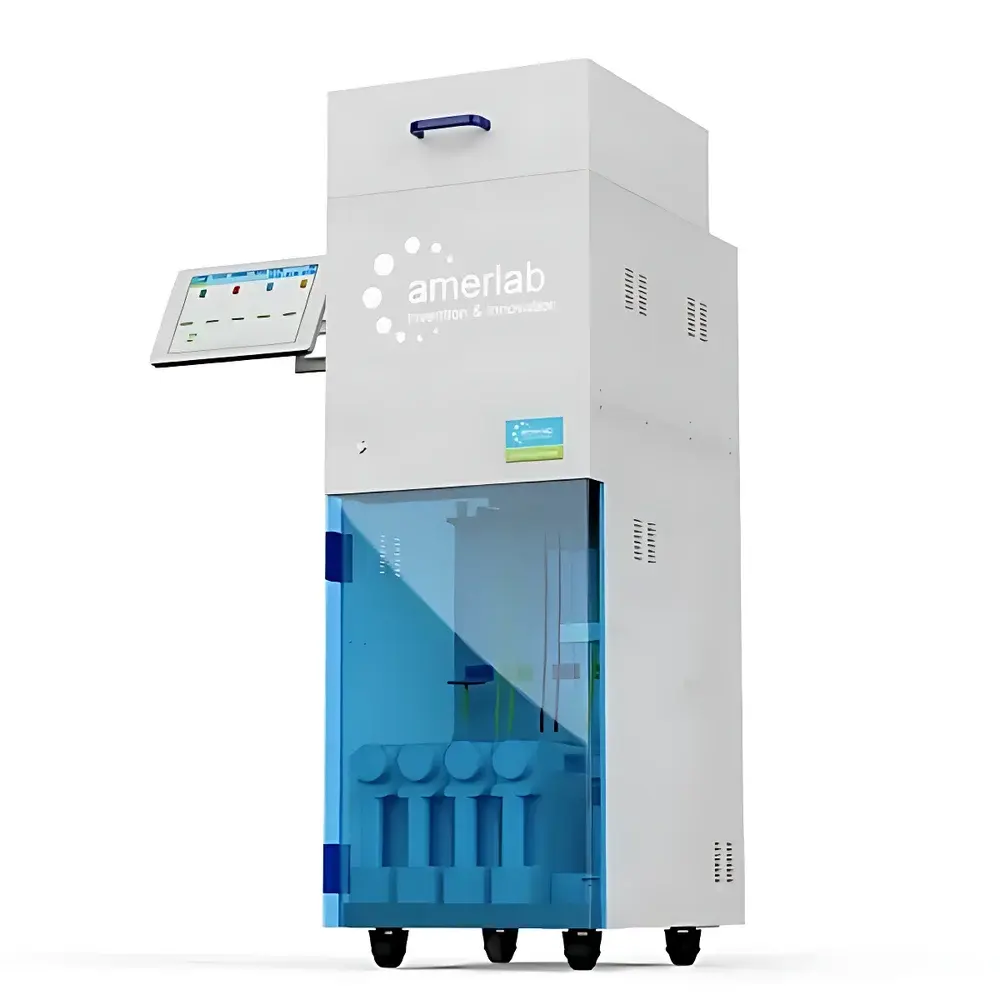
Amerlab AC360 Fully Automated Sub-Boiling Acid Vapor and Counterflow Cleaner
| Brand | Amerlab |
|---|---|
| Model | AC360 |
| Origin | Guangdong, China |
| Manufacturer Type | Direct Manufacturer |
| Automation Level | Fully Automated |
| Cleanliness Level | ppt-level residue removal |
| Cycle Time | < 8 hours |
| Construction Materials | Full PTFE/PFA fluid path, PP chassis |
| Safety Features | Multi-point interlocks (temperature, pressure, liquid level, pH) |
| Regulatory Compliance | Designed for GLP/GMP environments |
Overview
The Amerlab AC360 Fully Automated Sub-Boiling Acid Vapor and Counterflow Cleaner is a sixth-generation laboratory cleaning system engineered for trace-metal analysis workflows requiring ppt-level contamination control. It integrates two complementary cleaning modalities—sub-boiling acid vapor generation and counterflow acid rinsing—within a single, fully enclosed, chemically inert platform. Unlike conventional ultrasonic or manual acid cleaning methods, the AC360 operates on principles of controlled thermal vapor-phase delivery and laminar counter-current acid flow, ensuring uniform exposure of sample vessels to high-purity reagents without mechanical agitation or operator intervention. This dual-mode architecture significantly reduces carryover risk, eliminates airborne aerosol generation, and maintains consistent cleaning efficacy across heterogeneous vessel geometries—including microwave digestion vessels (e.g., Milestone ETHOS, CEM Mars), open-vessel PTFE/Teflon™ digestion tubes, volumetric flasks, borosilicate glassware, and quartz cuvettes. The system is purpose-built for laboratories performing ICP-MS, HR-ICP-MS, and GF-AAS analyses where blank levels directly govern detection limit integrity.
Key Features
- Fully automated operation: Pre-programmed sequences for acid vapor generation, counterflow rinse, deionized water final rinse, and nitrogen-assisted drying—executed without manual reagent handling or timing adjustments.
- Sub-boiling acid vapor module: Heats HNO₃, HCl, or HF (up to 120 °C) below boiling point to generate ultra-low aerosol, high-purity vapor; minimizes acid consumption and metal leaching from heating elements.
- Counterflow acid circulation system: Delivers fresh, temperature-controlled acid solution in opposing direction to vessel orientation, enhancing boundary layer disruption and particulate removal efficiency.
- Chemically inert fluid path: Entire reagent delivery, vapor chamber, and rinse manifold constructed from PTFE and PFA—zero metallic components contact process fluids.
- Integrated safety interlock suite: Real-time monitoring of chamber temperature, internal pressure, liquid level in reservoirs, and effluent pH; automatic shutdown and alarm activation upon threshold deviation.
- Compact footprint & ventilation-free operation: No external fume hood required; designed for benchtop deployment in ISO Class 5–7 cleanrooms or regulated QC/QA labs.
- Modular rack compatibility: Supports >30 standardized cleaning racks (including 4×4, 6×6, and custom configurations) for vessels up to 100 mL capacity.
Sample Compatibility & Compliance
The AC360 accommodates a broad range of trace-analysis consumables: closed-vessel microwave digestion rotors (CEM, Anton Paar, Milestone), open-tube PTFE digestion vessels (15–100 mL), volumetric flasks (10–1000 mL), graduated cylinders, NIST-traceable pipette tips, and quartz ICP sample introduction components. All cleaning protocols are developed in alignment with ASTM D5686 (Standard Practice for Cleaning Laboratory Glassware), ISO 17025:2017 Clause 7.2.2 (method validation for sample preparation), and USP (water for pharmaceutical analysis). When operated with validated SOPs and paired with compliant LIMS or ELN systems, the AC360 supports full auditability under FDA 21 CFR Part 11 and EU Annex 11 requirements—including electronic signatures, change control logs, and user-access-tiered permissions.
Software & Data Management
The AC360 runs on embedded firmware with a 7-inch capacitive touchscreen interface supporting multilingual operation (English, German, Japanese, Chinese). Each cleaning cycle generates a timestamped digital log containing start/stop time, acid type and concentration, temperature profile, pressure readings, pH drift data, and interlock status flags. Logs export via USB or Ethernet to CSV or XML formats compatible with laboratory informatics platforms (e.g., LabWare LIMS, Thermo Fisher SampleManager). Optional IQ/OQ/PQ documentation packages are available for GxP-regulated installations, including calibration certificates for all embedded sensors (PT100 RTDs, piezoresistive pressure transducers, optical liquid level detectors) and protocol-specific performance verification reports.
Applications
- Pre-cleaning of microwave digestion vessels prior to multi-element ICP-MS analysis of environmental water, soil, and biological tissues.
- Routine decontamination of high-value quartz ICP torch injectors and nebulizers in clinical toxicology labs.
- Blank reduction in geochemical laboratories performing Lu-Hf or U-Pb isotope ratio analysis by MC-ICP-MS.
- Regulatory compliance support for pharmaceutical QC labs validating elemental impurity testing per ICH Q3D guidelines.
- Research core facilities serving multiple users—enabling standardized, operator-independent cleaning with documented reproducibility (RSD < 3.2% across 50 consecutive cycles).
FAQ
What acid types are compatible with the AC360?
The system is validated for nitric acid (HNO₃), hydrochloric acid (HCl), hydrofluoric acid (HF), and aqua regia. All concentrations must be ≤ 15% v/v for HF and ≤ 70% v/v for HNO₃/HCl. PFA-lined reagent bottles and vapor chambers prevent degradation.
Does the AC360 require connection to a building exhaust system?
No. Its sealed vapor condensation loop and catalytic acid mist scrubber eliminate need for external ducting or fume hood integration.
Can cleaning protocols be customized or validated internally?
Yes. Users may define new cycles via parameter adjustment (vapor dwell time, rinse volume, temperature ramp rate) and save them as named methods. Full validation templates (IQ/OQ/PQ) are provided for GxP environments.
What maintenance intervals are recommended?
Quarterly inspection of PTFE gaskets and O-rings; annual recalibration of temperature and pressure sensors; biannual replacement of the activated carbon scrubber cartridge.
Is remote monitoring supported?
Via optional Ethernet module: real-time cycle status, historical log retrieval, and alarm notifications via SMTP or SNMP protocols.



