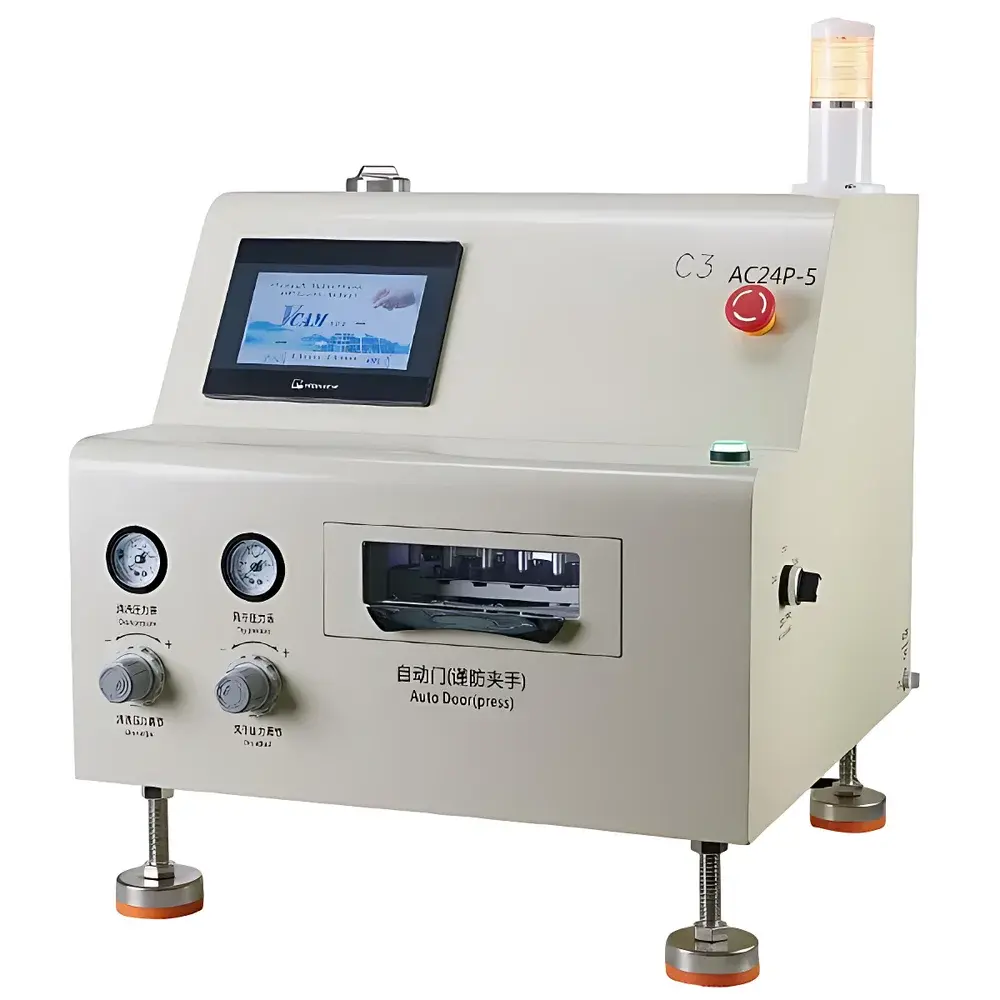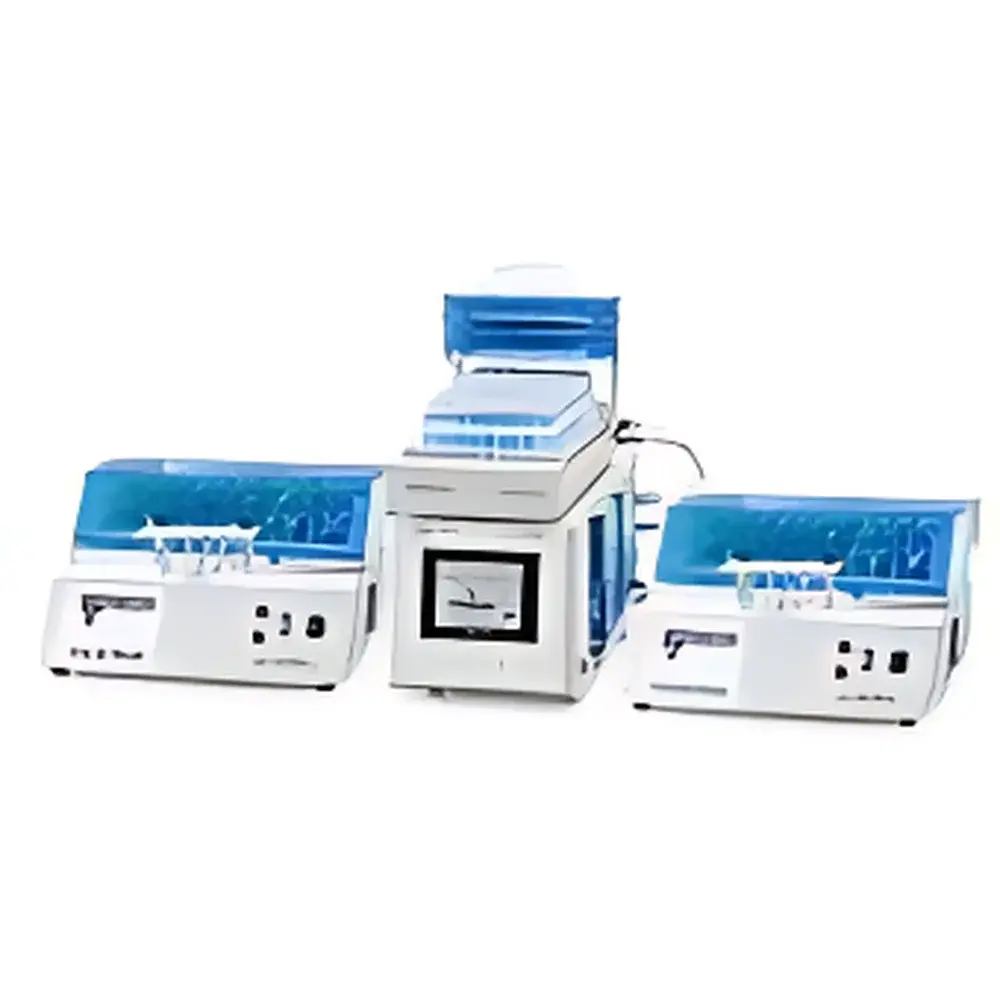
LOGAN SYSTEM 913A-12 Automated Transdermal Diffusion System with Water-Jacketed Chambers
| Brand | LOGAN |
|---|---|
| Origin | USA |
| Model | SYSTEM 913A-12 |
| Configuration | Dual-FDC-6TA + SCR-DL + SYP-12L-10mL + DSC-800 Controller |
| Sample Capacity | 12 stations |
| Temperature Control | Dual-zone water-jacketed heating |
| Compliance | FDA 21 CFR Part 11 (audit trail, 3-tier user permissions) |
| Automation | Auto-degassing interface optional |
| Sampling | Programmable syringe pump (10 mL), auto-bubble purge, timed sequential sampling |
Overview
The LOGAN SYSTEM 913A-12 is a fully automated, modular transdermal diffusion testing platform engineered for regulatory-grade in vitro permeation and release studies. It operates on the Franz diffusion cell principle—utilizing static or flow-through configurations with donor and receptor compartments separated by a synthetic or biological membrane—to quantitatively assess drug flux, cumulative permeation, and release kinetics across skin-mimetic barriers. Designed to meet ICH Q5A, USP , and Ph. Eur. 2.9.17 requirements, the system integrates precise thermal regulation, programmable fluid handling, and electronic auditability into a single validated architecture. Its water-jacketed chamber design ensures ±0.2 °C temperature stability across all 12 test positions—critical for replicating physiological skin surface conditions (typically 32 °C) and minimizing thermal gradient-induced variability in diffusion coefficients.
Key Features
- Modular dual-FDC-6TA configuration: Two independent 6-position vertical Franz diffusion units, each supporting standard 1.5–5.0 cm² diffusion areas and compatible with both excised human/animal skin and synthetic membranes (e.g., Strat-M®, Solvay PAMPA, Cellulose acetate).
- Dual-zone temperature control: Independent PID-regulated water circulation for two groups of three cells each—enabling parallel testing under differential thermal conditions (e.g., 32 °C for epidermal mimicry vs. 37 °C for full-thickness models) without cross-interference.
- Automated sampling & bubble management: SYP-12L-10mL high-precision syringe pump delivers ±1.5% volumetric accuracy per aspiration cycle; integrated auto-purge sequence evacuates air from sampling lines prior to each withdrawal, eliminating bubble-induced volume error and ensuring reproducible receptor phase integrity.
- SCR-DL sample collector: Refrigerated (4 °C) 96-well plate-compatible receiver with position-synchronized indexing—retains sample stability during extended runs (up to 72 h) and supports direct HPLC/UPLC vial loading.
- Comprehensive data governance: DSC-800 controller enforces FDA 21 CFR Part 11 compliance via electronic signatures, immutable audit trails, role-based access (Administrator/Operator/Reviewer), and automatic timestamping of all method changes, sample events, and calibration logs.
- Light-attenuating, insulated lid: Reduces photodegradation of light-sensitive actives (e.g., retinoids, avobenzone) while maintaining thermal homogeneity; silicone gasket seals prevent evaporation-related concentration drift over multi-day assays.
Sample Compatibility & Compliance
The SYSTEM 913A-12 accommodates a broad spectrum of semi-solid and topical dosage forms—including ointments, gels, creams, emulsions, sprays, patches, masks, and sunscreen formulations—without requiring formulation-specific hardware modification. Pre-cut silicone gaskets (0.5–3.0 mm thickness, 1.0–3.5 cm diameter) enable precise dose volume control and consistent donor layer geometry. All wetted components comply with USP Class VI biocompatibility standards; stainless-steel and borosilicate glass construction ensures chemical resistance to organic solvents (e.g., ethanol, propylene glycol, isopropyl myristate). The system is pre-validated for GLP and GMP environments and supports IQ/OQ/PQ documentation packages aligned with ISO/IEC 17025 and ASTM E2864-22 guidelines for transdermal device characterization.
Software & Data Management
Control and analysis are executed via LOGAN’s proprietary WinDAS™ software (v5.2+), a 64-bit Windows application with real-time monitoring, dynamic method scheduling, and integrated curve-fitting algorithms (zero-order, first-order, Higuchi, Korsmeyer-Peppas). Raw data export supports CSV, XML, and SDTM-compliant formats for ingestion into LIMS or statistical platforms (e.g., JMP, SAS). Electronic records include full metadata: operator ID, environmental log (temperature/humidity), pump calibration history, and deviation flags for out-of-spec sampling intervals. Audit trail files are digitally signed and archived in encrypted AES-256 containers, meeting long-term retention mandates under 21 CFR Part 11 Subpart B.
Applications
- In vitro permeation testing (IVPT) for generic topical product bioequivalence per FDA Draft Guidance (2023)
- Formulation screening of penetration enhancers (e.g., terpenes, fatty acids) and barrier-modifying excipients
- Stability-indicating release profiling under accelerated aging conditions (40 °C/75% RH)
- Photostability assessment of UV filters using synchronized irradiation modules (optional add-on)
- Regulatory submission support for ANDA, NDA, and MAA dossiers requiring USP or Ph. Eur. 2.9.17 data packages
- Cosmetic ingredient safety evaluation per SCCS Notes of Guidance (2021)
FAQ
Does the SYSTEM 913A-12 support flow-through diffusion cell configurations?
Yes—when paired with optional FDC-6FT flow-through modules and peristaltic pump integration, it complies with USP for enhanced sink condition maintenance.
Can the system be networked for centralized lab-wide data aggregation?
Yes—WinDAS™ supports OPC UA server mode and SQL database mirroring for enterprise-level data synchronization across multiple instruments.
Is validation documentation provided for IQ/OQ/PQ execution?
LOGAN supplies complete vendor-qualified protocols, traceable calibration certificates (NIST-traceable thermistors and pipettes), and blank test reports compliant with ASTM E2500-13.
What membrane types are validated for use with this system?
Strat-M® (Merck), Epiderm™ (MatTek), and excised porcine ear skin are routinely qualified; custom membrane mounting fixtures available upon request.
How is solvent degassing handled in the optional online degassing module?
The integrated vacuum-assisted degasser (model DG-12) removes dissolved O₂ and CO₂ from receptor medium in real time, reducing oxidative degradation of labile compounds by >95% versus offline sonication.