
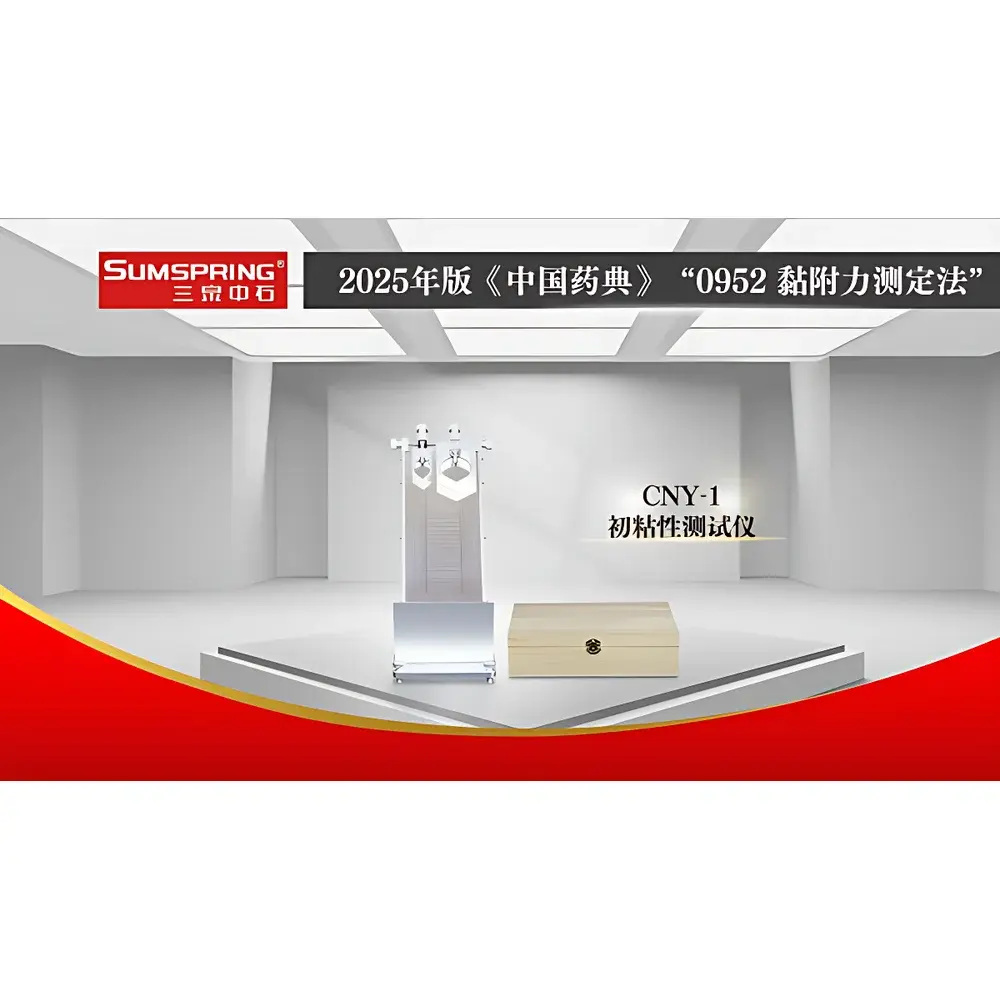

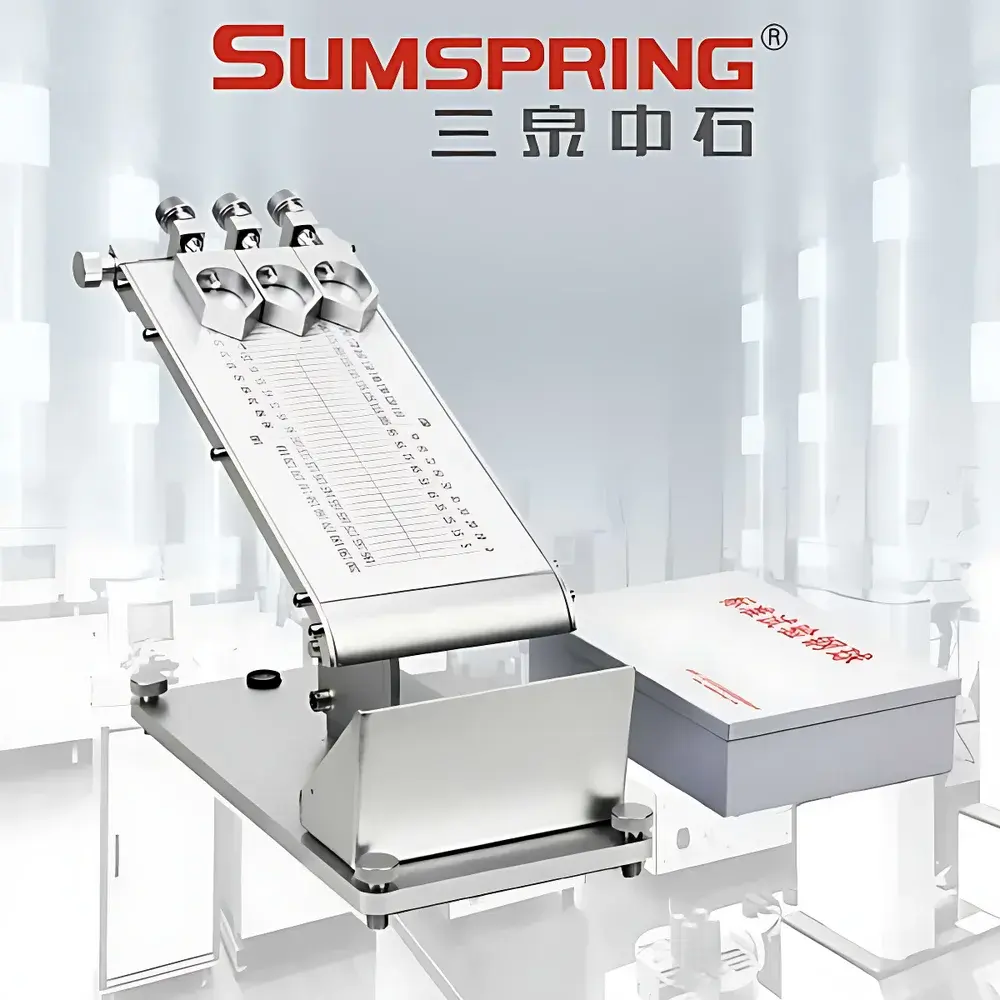

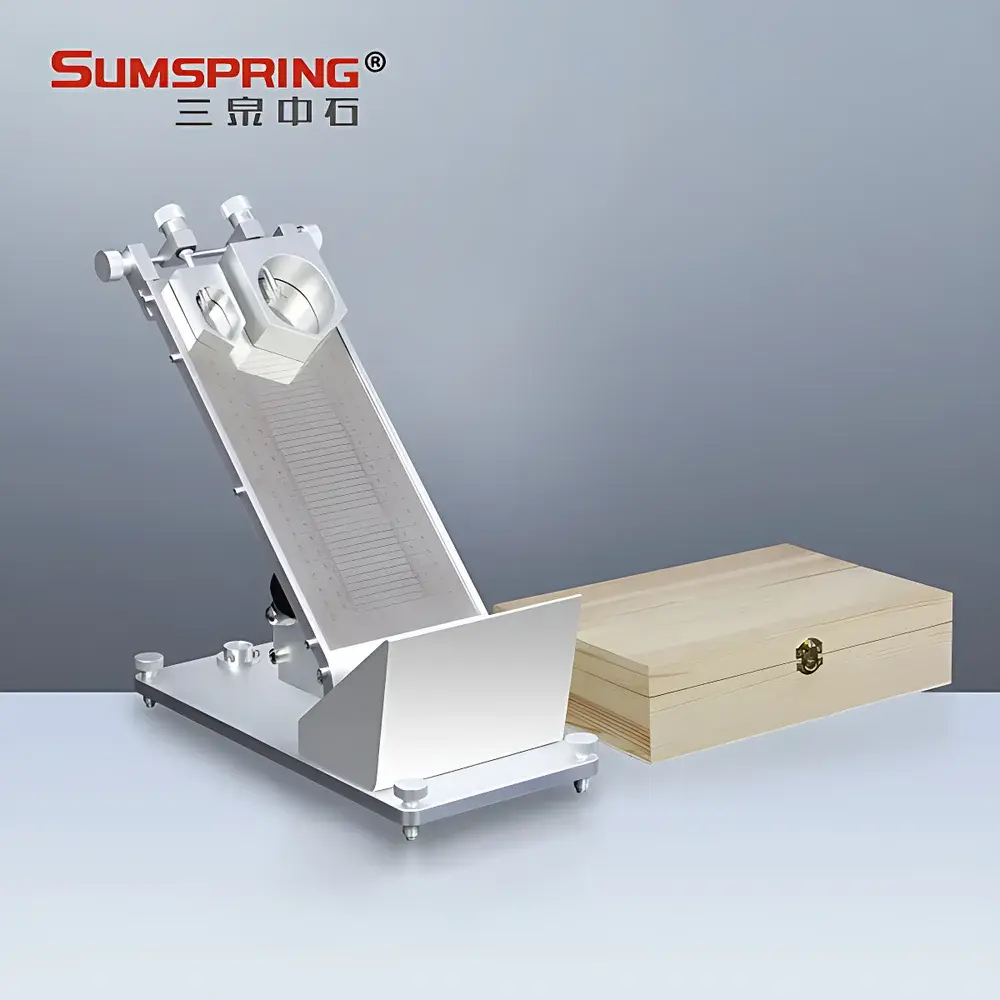
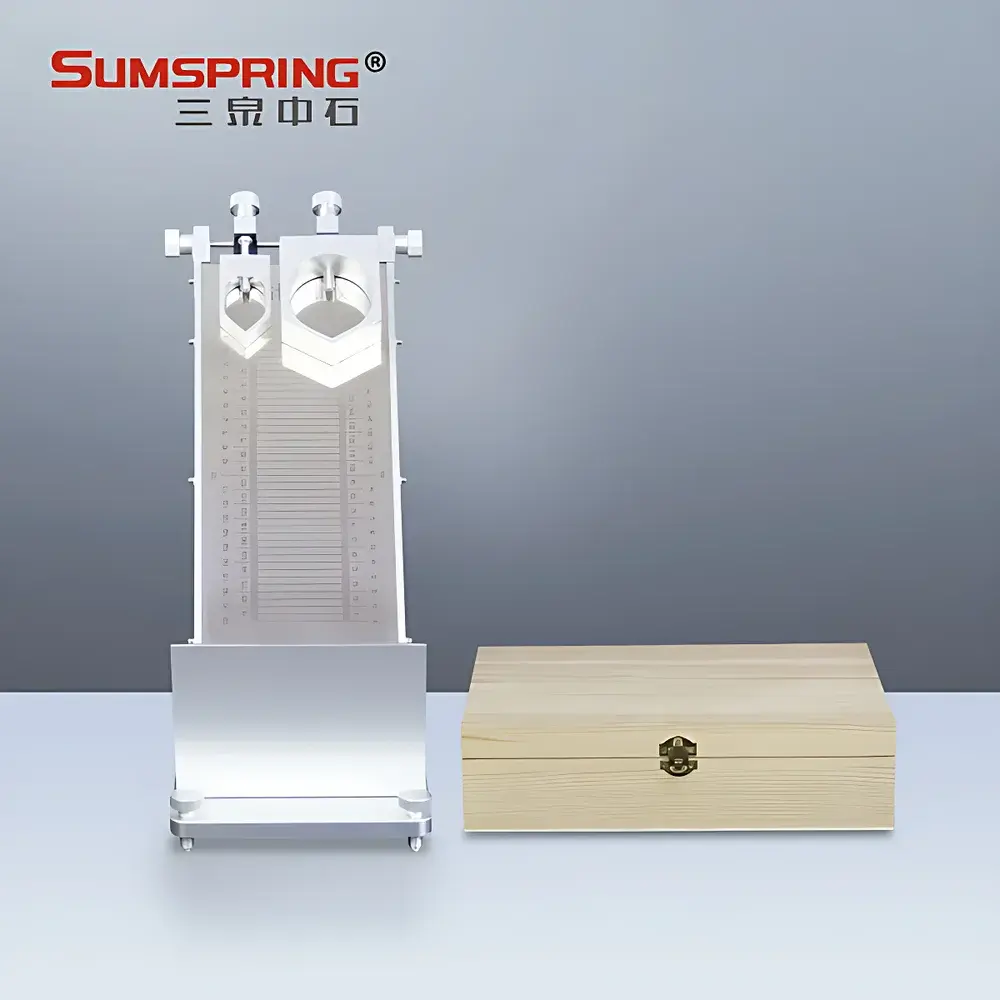
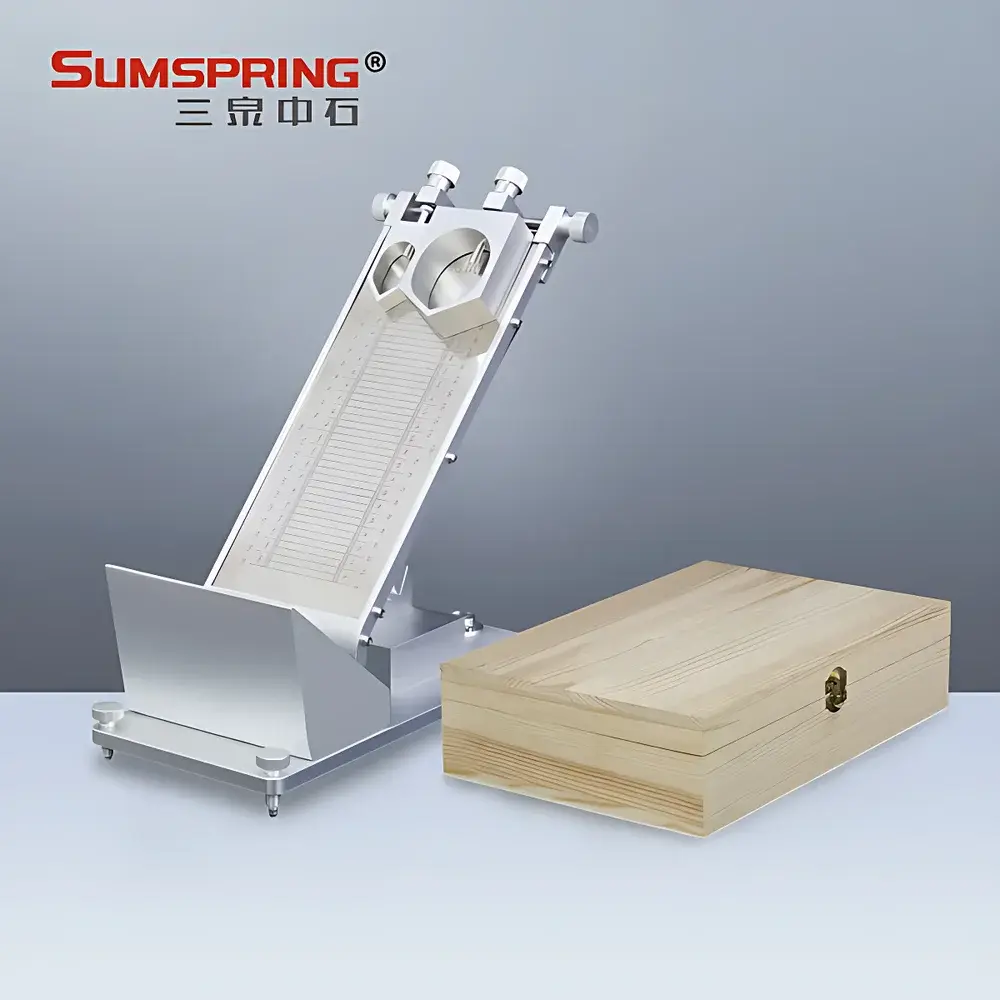
SumSpring CNY-1 Medical Transdermal Patch Initial Adhesion Tester
| Brand | SumSpring |
|---|---|
| Model | CNY-1 |
| Origin | Shandong, China |
| Manufacturer Type | Direct Manufacturer |
| Instrument Category | Initial Adhesion Tester (Rolling Ball Method) |
| Adjustable Incline Angle | 0–60° |
| Test Stations | 3 |
| Test Zone Width | 80 mm |
| Tabletop Width | 120 mm |
| Standard Steel Balls | 1/32″ to 1″ (0.794 mm to 25.4 mm) |
| Dimensions (L×W×H) | 430 × 160 × 170 mm |
| Weight | 7 kg |
| Operating Temperature | 15–50 °C |
| Relative Humidity | ≤80% RH, non-condensing |
| Compliance | GB/T 4852–2002, Chinese Pharmacopoeia 2015 & 2025 Editions |
Overview
The SumSpring CNY-1 Medical Transdermal Patch Initial Adhesion Tester is an engineered solution for quantifying the initial tack—defined as the instantaneous adhesive force generated upon brief, light contact—of pressure-sensitive adhesive (PSA) formulations used in transdermal drug delivery systems. It operates on the standardized rolling ball method per GB/T 4852 and aligns with pharmacopoeial requirements for topical patch evaluation, including plasters, hydrogel patches, cataplasms, and buccal/bandage-type adhesive dressings. The instrument utilizes calibrated steel spheres of defined diameter and mass (ranging from 1/32″ to 1″) that roll down an inclined plane onto a horizontally mounted adhesive specimen. The largest ball that adheres to the sample surface—without rebound or lateral deviation—provides a discrete, repeatable index of initial adhesion performance. This principle reflects interfacial energy dynamics and viscoelastic surface response under low-load, short-duration contact conditions typical of clinical application.
Key Features
- Triple-station configuration enables parallel testing of three specimens per cycle, improving throughput for QC laboratories processing high-volume batches.
- Precision-machined incline stage with fine-thread adjustment mechanism allows continuous angular control from 0° to 60°, supporting method development across diverse PSA chemistries (e.g., acrylic, silicone, rubber-based).
- Conformance to GB/T 4852–2002 specifications ensures traceability to national metrological standards; all supplied steel balls are certified per ISO 3290-1 for dimensional tolerance and surface roughness (Ra ≤ 0.025 µm).
- Rigid aluminum alloy frame with anti-vibration base minimizes mechanical drift during ball release, contributing to measurement reproducibility (RSD ≤ 3.2% across five replicate runs on identical samples).
- Modular design facilitates field calibration verification using NIST-traceable angle gauges and certified reference steel spheres.
Sample Compatibility & Compliance
The CNY-1 accommodates flat, flexible substrates up to 120 mm wide and 170 mm long, including backing films, release liners, and finished medical patches. It supports testing of both solvent-based and water-dispersed PSAs, as well as hydrophilic hydrogels and thermoplastic elastomer matrices. Regulatory alignment includes full compliance with the “Adhesive Strength” chapter of the Chinese Pharmacopoeia (2015 and 2025 editions), which mandates rolling-ball assessment for transdermal patches prior to stability and bioavailability studies. While not directly aligned with ASTM D3121 or ISO 8510-1 (which specify loop tack and probe tack methods), the CNY-1 provides a validated, pharmacopoeia-referenced alternative for initial tack screening where regulatory submissions require GB/T 4852 conformance.
Software & Data Management
The CNY-1 is a manually operated mechanical tester with no embedded firmware or digital interface. All test parameters—including incline angle, ball size selected, pass/fail outcome per station, and environmental conditions—are recorded in paper-based or LIMS-integrated lab notebooks. To support GLP/GMP documentation integrity, users are advised to implement standardized operating procedures (SOPs) that include: (i) daily verification of incline angle using a calibrated digital inclinometer; (ii) quarterly validation of steel ball dimensions via optical profilometry; and (iii) retention of raw observation logs with analyst signature and date stamp. For laboratories requiring electronic audit trails, integration with compliant ELN platforms (e.g., LabArchives, Benchling) is achievable through manual data entry following 21 CFR Part 11–compliant SOPs.
Applications
- Initial tack screening of transdermal matrix patches during formulation development and excipient selection.
- Batch release testing of commercial plaster products against pharmacopoeial acceptance criteria (e.g., ≤ 7/16″ ball adherence for Class II adhesives).
- Stability monitoring of adhesive performance under accelerated aging (40 °C / 75% RH) per ICH Q1A(R2).
- Comparative evaluation of surface-modified backing films and silicone-coated release liners.
- Supporting root cause analysis for delamination events observed during peel strength or shear hold-time testing.
FAQ
Is the CNY-1 compliant with international pharmacopoeias such as USP or EP?
The CNY-1 conforms specifically to GB/T 4852 and the Chinese Pharmacopoeia. It is not validated for USP General Chapter <1207> or Ph. Eur. 2.9.28, which emphasize probe tack and loop tack methodologies. Users requiring multi-pharmacopoeia alignment should supplement rolling-ball data with orthogonal methods.
Can the instrument be used for non-medical PSA applications like labels or protective films?
Yes—its mechanical design and steel ball set are suitable for industrial pressure-sensitive materials. However, final interpretation must reference relevant industry standards (e.g., FINAT FTM 1 for labels) rather than pharmacopoeial limits.
What maintenance is required to ensure long-term accuracy?
Monthly cleaning of the incline track with isopropyl alcohol; annual recalibration of the angular scale using a certified inclinometer; biannual verification of ball sphericity and surface finish per ISO 3290-1 Annex B.



