
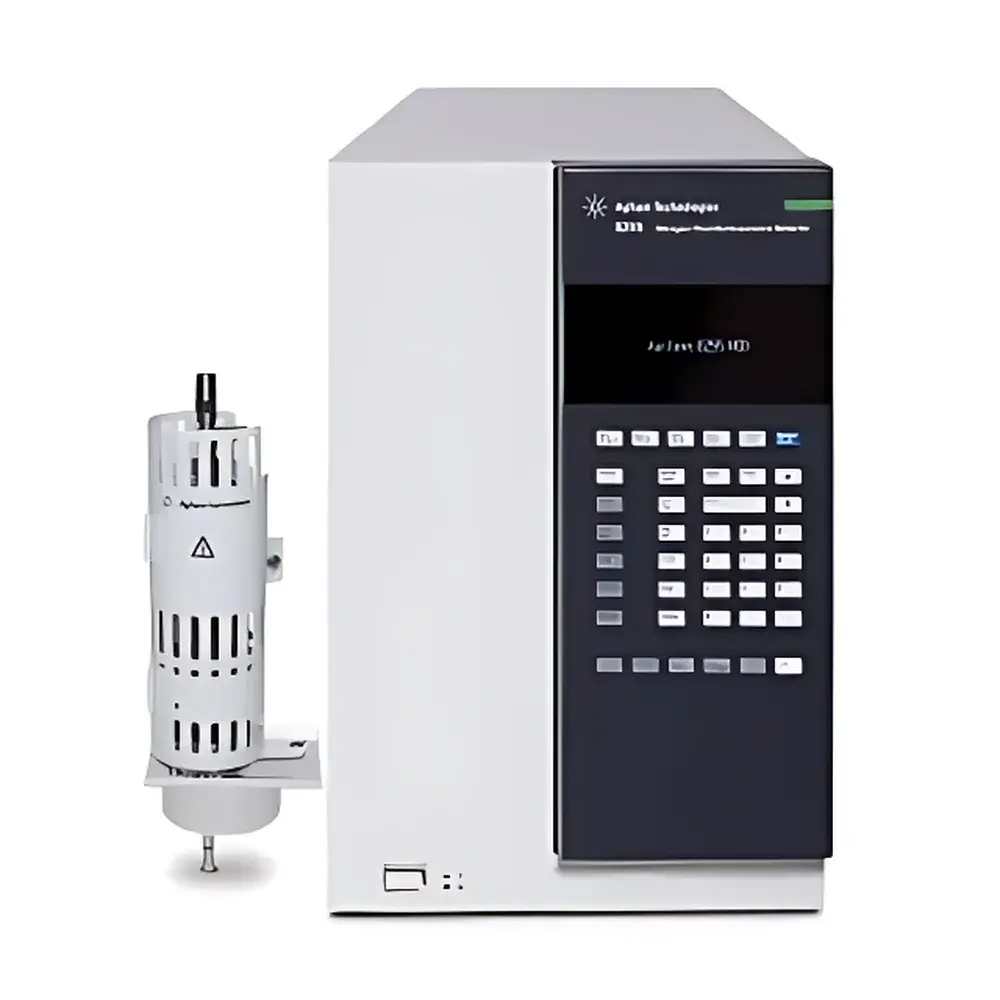
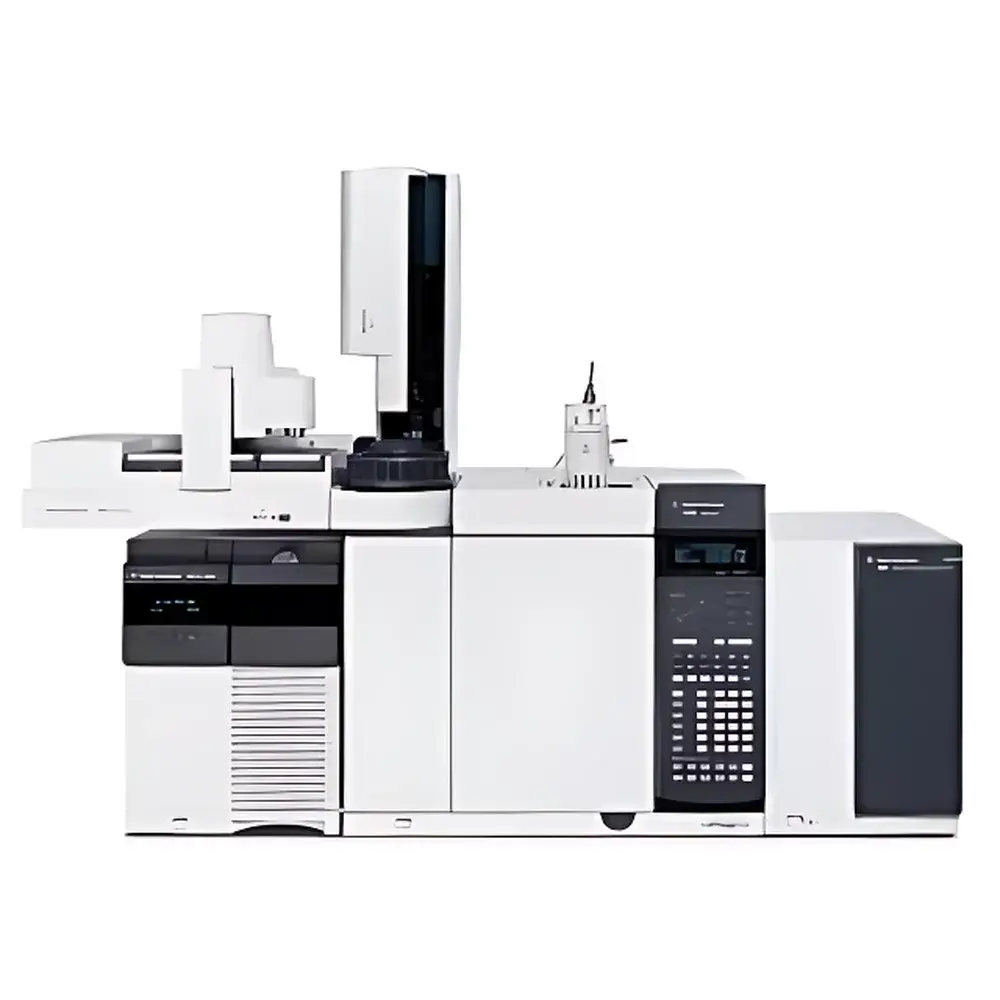
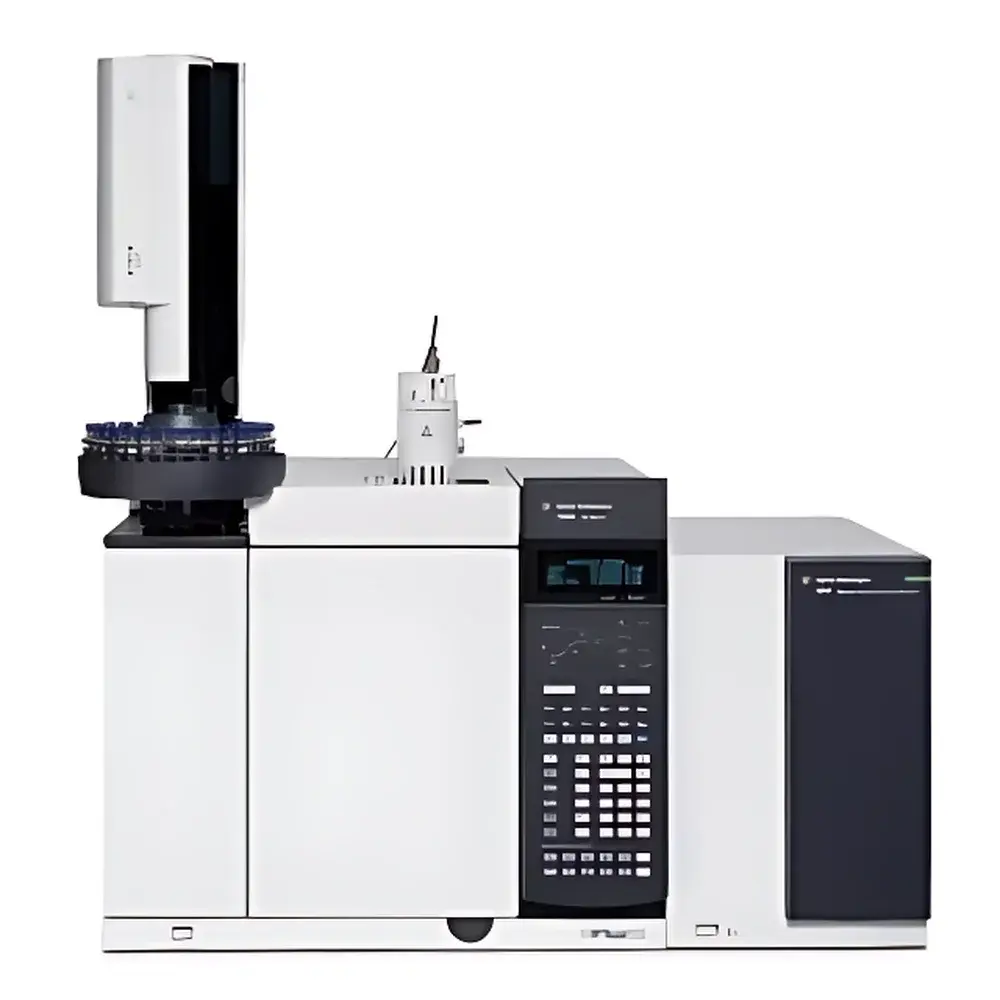
Agilent 8255 Nitrogen Chemiluminescence Detector (NCD)
| Brand | Agilent Technologies |
|---|---|
| Origin | Shanghai, China |
| Manufacturer Type | Original Equipment Manufacturer (OEM) |
| Product Category | Domestic Instrument |
| Model | 8255 NCD |
| Pricing | Available Upon Request |
| Compatible Instrument | Gas Chromatograph (GC) |
| Detector Type | Selective Nitrogen-Specific Detector |
Overview
The Agilent 8255 Nitrogen Chemiluminescence Detector (NCD) is a high-sensitivity, selective detector engineered for quantitative analysis of nitrogen-containing compounds in gas chromatography (GC) systems. It operates on the principle of high-temperature combustion followed by chemiluminescent detection: analytes are pyrolyzed in a stainless-steel combustion chamber at ~1000 °C, converting organic and inorganic nitrogen species quantitatively to nitric oxide (NO). The NO effluent is then mixed with ozone (O₃) in a reaction chamber, generating excited nitrogen dioxide (NO₂*) that emits photons at ~600–3000 nm upon relaxation. This light is measured by a low-noise photomultiplier tube (PMT), delivering a signal directly proportional to the molar amount of nitrogen atoms introduced—regardless of molecular structure. This stoichiometric response enables true molar quantification without compound-specific calibration, distinguishing the 8255 NCD from non-selective detectors such as FID or ECD.
Key Features
- Nitrogen-specific detection with picogram-level detection limits (typically <5 pg N on-column for nitrobenzene under optimized GC-NCD conditions)
- True molar response: linear across >10⁴ dynamic range; signal intensity depends solely on total nitrogen content, not carbon backbone or functional group
- No hydrocarbon quenching: unlike thermal energy analyzers (TEA), the chemiluminescence reaction is unaffected by co-eluting hydrocarbons or CO₂
- Robust stainless-steel combustion head with redesigned geometry for improved conversion efficiency and reduced carbon buildup
- Optional sub-ppb-level configuration for nitrosamine analysis (e.g., NDMA, NDEA), including enhanced ozone generation stability and flow-controlled reaction zone
- Integrated temperature and flow monitoring with real-time diagnostics for combustion gas (O₂), carrier gas (He or H₂), and ozone generator output
Sample Compatibility & Compliance
The 8255 NCD is compatible with all standard GC configurations using packed, capillary, or microbore columns. It responds to a broad spectrum of nitrogenous analytes—including amines, amides, nitrates, nitrites, nitroaromatics, heterocycles (e.g., pyridine, quinoline), hydrazines, cyanides, ammonia, and nitrogen oxides (NO, NO₂)—provided they survive GC injection and elute within the thermal stability window of the column. The detector meets essential performance criteria outlined in ASTM D5291 (for fuel nitrogen analysis), USP (chromatographic system suitability), and EPA Method 1694 (pharmaceuticals and personal care products in environmental matrices). Its architecture supports GLP/GMP environments through hardware-level event logging and optional 21 CFR Part 11-compliant software integration via Agilent OpenLab CDS.
Software & Data Management
The 8255 NCD interfaces seamlessly with Agilent OpenLab CDS (ChemStation Edition and OpenLab ECM) for full instrument control, data acquisition, and audit-trail-enabled reporting. Real-time signal processing includes baseline correction, peak integration using valley-to-valley or tangent skim algorithms, and nitrogen mass balance calculation per injection. Raw detector voltage output is digitized at ≥10 Hz with 16-bit resolution. All operational parameters—including combustion temperature setpoint, ozone flow rate, PMT high-voltage setting, and zero/gain calibration history—are stored with timestamped metadata. Export formats include .D (Agilent native), .CDF, and CSV for third-party statistical or regulatory review.
Applications
This detector is routinely deployed in regulated and research laboratories for: nitrogen impurity profiling in pharmaceutical intermediates and APIs (per ICH Q3A/Q3B); nitrosamine screening in drug products (aligned with FDA/EMA guidance); speciation and quantification of nitrogen compounds in petrochemical streams (e.g., diesel, jet fuel per ASTM D4294); environmental monitoring of nitrogenous pesticides and metabolites in soil/water extracts; and forensic toxicology analysis of amphetamines, alkaloids, and nitrogen-based toxins. Its selectivity eliminates need for extensive sample cleanup when analyzing complex biological or industrial matrices.
FAQ
What nitrogen species does the 8255 NCD detect?
It detects any compound that yields NO upon high-temperature oxidative pyrolysis—including organic amines, nitro compounds, nitrates, nitrites, heterocycles, hydrazines, ammonia, and inorganic NOx. Non-volatile or thermally labile nitrogen (e.g., some metal nitrides) may require derivatization or alternative digestion.
Is calibration required for each nitrogen compound?
No—calibration is performed using a single nitrogen standard (e.g., nitromethane or nicotine), as response is inherently molar and compound-independent.
Can the 8255 NCD be used with hydrogen carrier gas?
Yes; it supports helium, hydrogen, and nitrogen carrier gases. Hydrogen offers faster analysis and sharper peaks but requires careful optimization of combustion air/oxygen ratio to avoid flame instability.
How is ozone generated and controlled?
Ozone is produced onboard via UV irradiation of oxygen; flow and concentration are stabilized by feedback-controlled mass flow controllers and monitored via integrated ozone sensor diagnostics.
Does the detector support automated system suitability testing?
Yes—OpenLab CDS allows scripting of sequence-based tests including noise, drift, sensitivity (S/N ≥ 3 at 10 pg N), and linearity verification per USP/ICH requirements.




