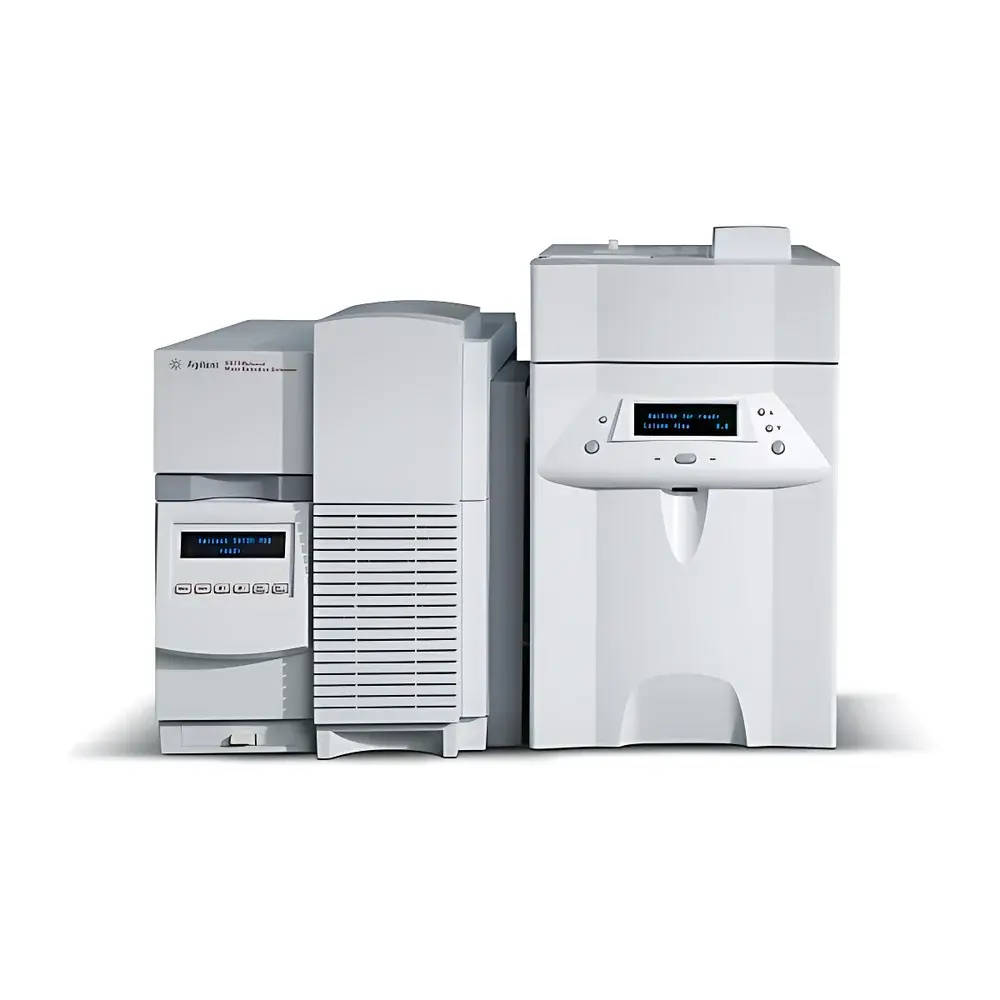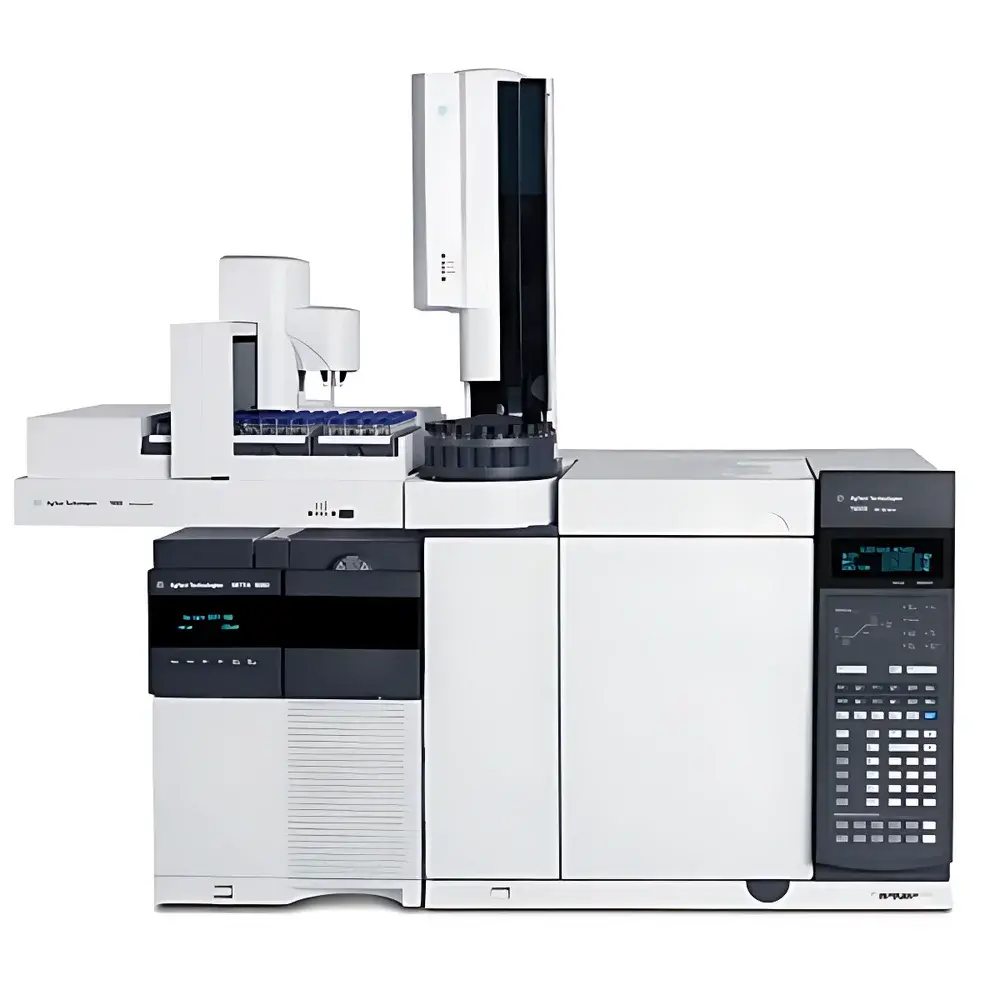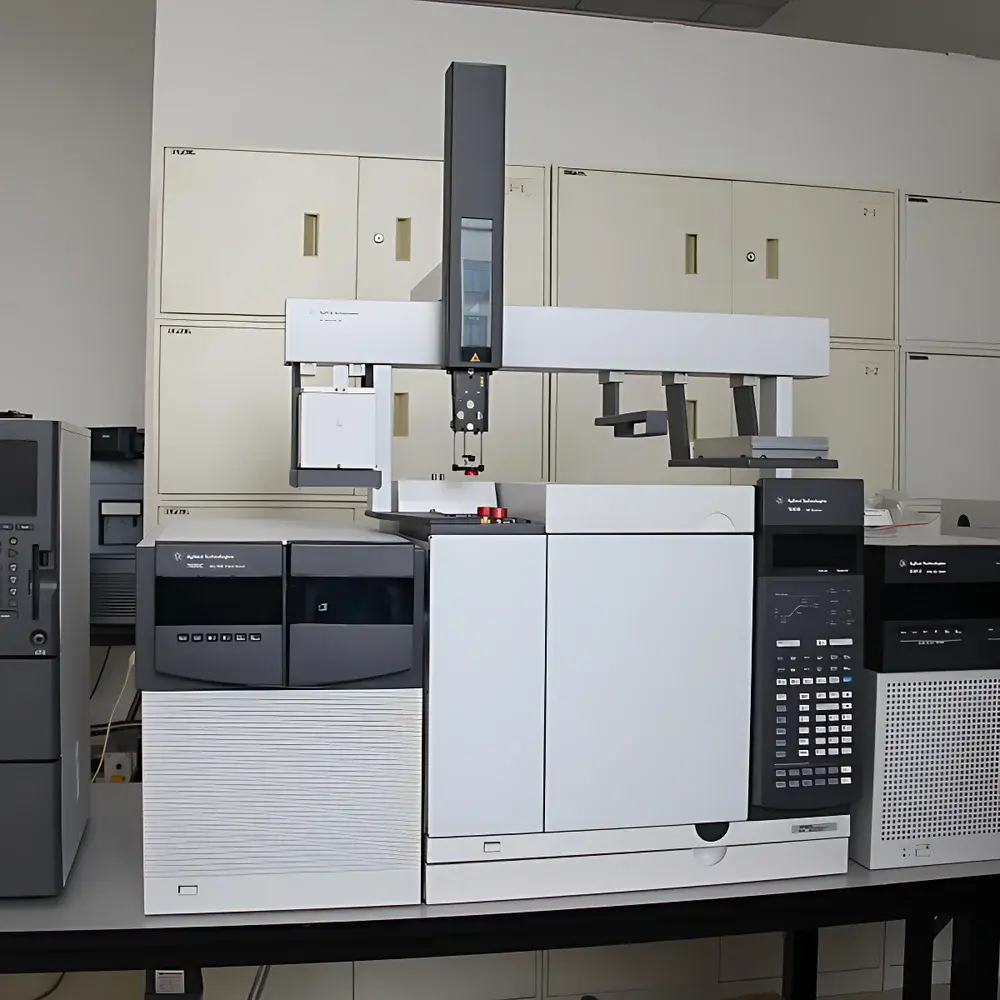
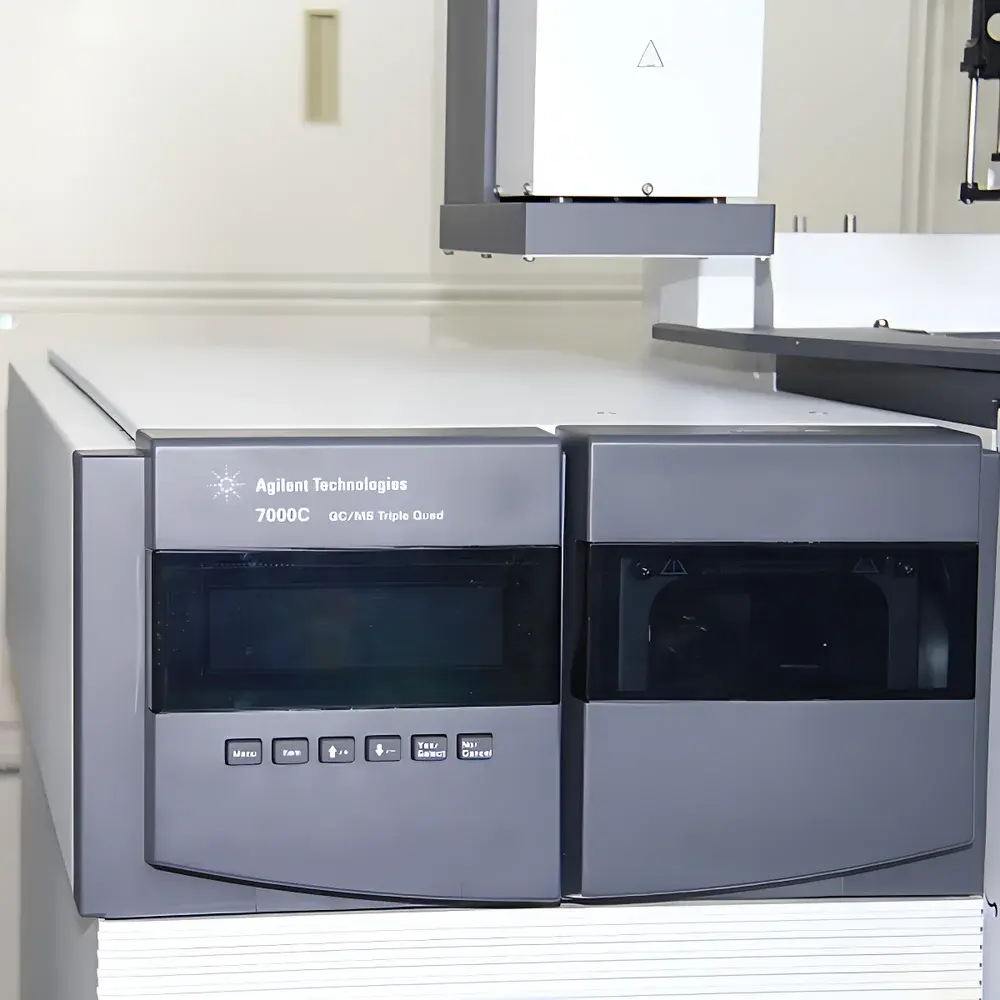
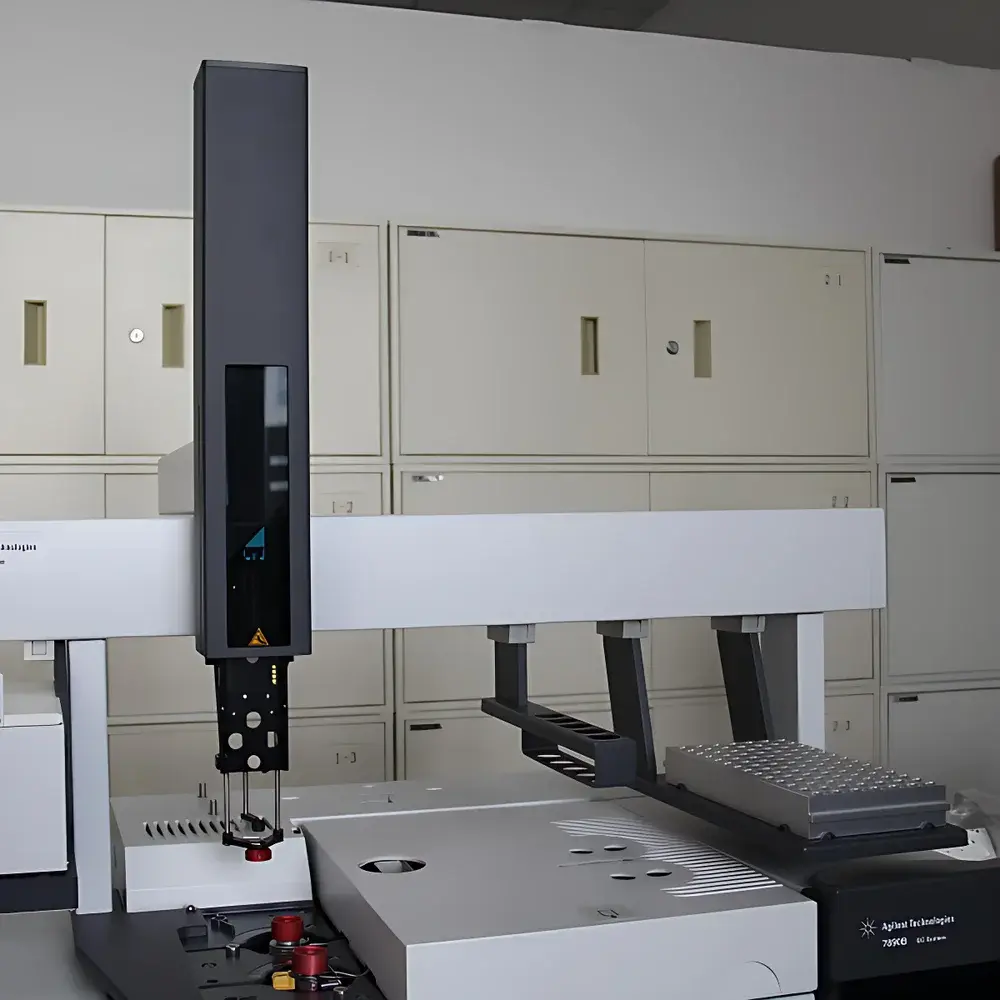
Agilent 7000C Triple Quadrupole Gas Chromatography-Mass Spectrometer
| Brand | Agilent Technologies |
|---|---|
| Origin | USA |
| Instrument Type | Triple Quadrupole GC-MS |
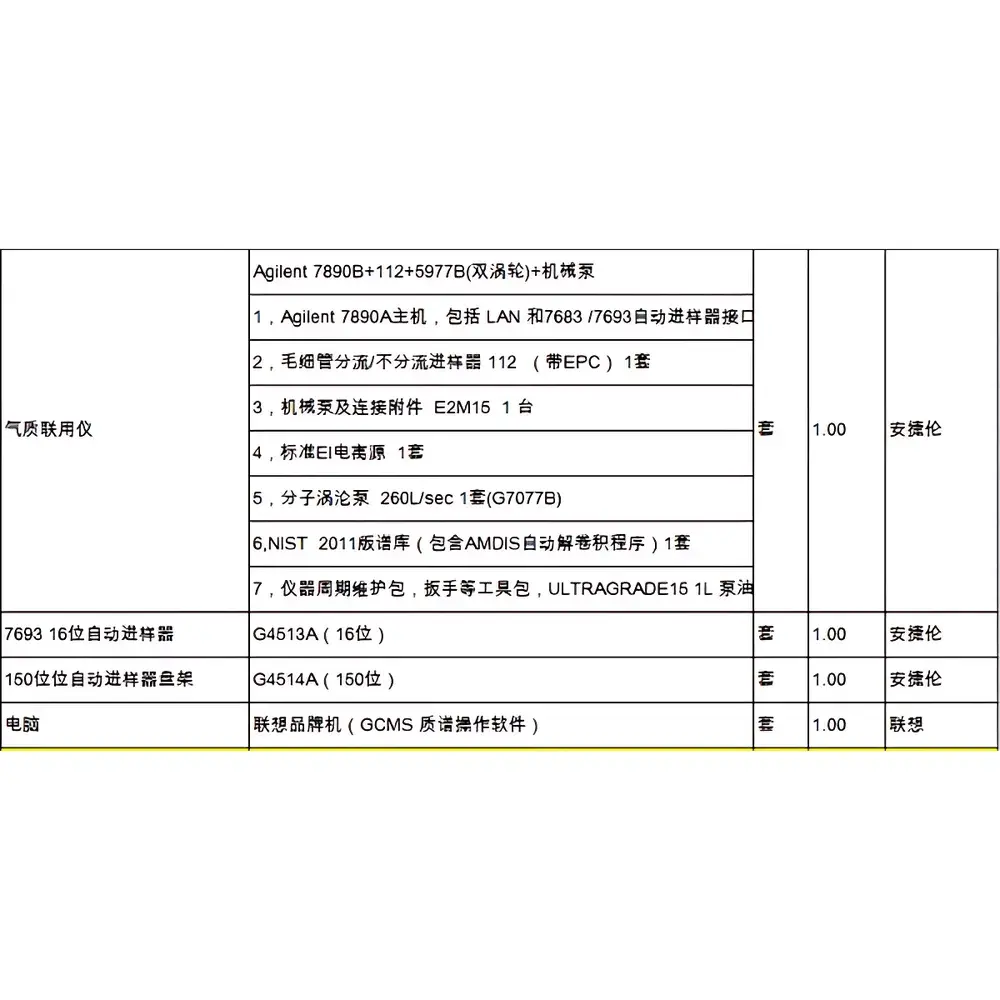
| Configuration | Standalone Mass Spectrometer (requires compatible Agilent GC, e.g., 7890B/7820A) |
| Detection Principle | Electron Ionization (EI) and Chemical Ionization (CI) |
| Mass Range | 10–1000 m/z |
| Scan Speed | Up to 20,000 Da/sec in MRM mode |
| Sensitivity | <10 fg OFN (octafluoronaphthalene) in EI MRM mode |
| Mass Resolution | Unit mass resolution (0.7 Da at peak apex) |
| Vacuum System | Dual-stage turbomolecular pump (≥260 L/s for MS region) |
| Interface Temperature | Up to 350 °C |
| Data System Compatibility | Agilent MassHunter Workstation (vB.08.00 or later) |
Overview
The Agilent 7000C is a high-performance triple quadrupole gas chromatography–mass spectrometer (GC-MS/MS) engineered for targeted quantitative analysis in regulated and research environments. It operates on the principle of tandem mass spectrometry: the first quadrupole (Q1) selects a precursor ion, the second (q2) acts as a collision cell for controlled fragmentation via nitrogen or argon gas, and the third (Q3) analyzes specific product ions. This configuration delivers exceptional selectivity, sensitivity, and reproducibility—critical for trace-level quantitation in complex matrices such as environmental extracts, food residues, clinical biofluids, and pharmaceutical impurity profiling. Designed as a modular component, the 7000C integrates seamlessly with Agilent’s 7890B or 7820A gas chromatographs via a standard transfer line interface, supporting both electron ionization (EI) and chemical ionization (CI) sources. Its robust vacuum architecture—featuring dual-stage turbomolecular pumping—ensures stable operation over extended acquisition periods and supports rapid pump-down after maintenance.
Key Features
- Triple quadrupole architecture optimized for multiple reaction monitoring (MRM), enabling sub-pg/mL detection limits in validated workflows.
- Dual ion source capability: interchangeable EI/CI source assembly with auto-tuning and real-time source diagnostics.
- High-speed scanning: up to 20,000 Da/sec in MRM mode, allowing >100 MRM transitions per second without sacrificing dwell time accuracy.
- Advanced electronics with digital signal processing for improved signal-to-noise ratio and reduced chemical noise in low-abundance analyte detection.
- Intelligent source design with heated transfer line (up to 350 °C), active emission current control, and filament current regulation for extended source lifetime.
- Modular detector system with high-gain electron multiplier and optional extended-dynamic-range (EDR) mode for linear response across six orders of magnitude.
Sample Compatibility & Compliance
The Agilent 7000C accommodates a broad range of volatile and semi-volatile organic compounds separable by capillary GC, including pesticides, PAHs, PCBs, steroids, fatty acid methyl esters (FAMEs), and small-molecule metabolites. It complies with instrumental requirements outlined in ASTM D5845 (determination of oxygenates in gasoline), EPA Method 8270D (semivolatile organics), and USP <621> for residual solvent analysis. When operated with Agilent MassHunter software under configured audit trail and electronic signature settings, the system supports 21 CFR Part 11 compliance for data integrity in GLP and GMP-regulated laboratories. Routine performance verification includes tuning with perfluorotributylamine (PFTBA) and daily autotune validation per manufacturer-recommended protocols.
Software & Data Management
Controlled exclusively via Agilent MassHunter Workstation software (minimum version B.08.00), the 7000C supports method development, acquisition, qualitative analysis (library search), and quantitative reporting in a unified interface. The software provides full instrument diagnostics, automated calibration, sequence scheduling, and integrated reporting templates compliant with ISO/IEC 17025 documentation standards. Raw data files (.D format) are stored with embedded metadata—including acquisition parameters, instrument configuration logs, and user-defined annotations—ensuring full traceability. Optional modules include Quantitative Analysis, Qualitative Analysis, and MassHunter Productivity Suite for enhanced workflow automation and report generation.
Applications
- Environmental monitoring: quantification of priority pollutants in soil, water, and air samples per EPA SW-846 methods.
- Food safety: multi-residue pesticide screening and confirmation in fruits, vegetables, and animal tissues.
- Pharmaceutical QC: residual solvent testing, extractables/leachables profiling, and genotoxic impurity verification.
- Clinical toxicology: targeted quantitation of drugs of abuse, endogenous steroids, and vitamin D metabolites in serum or urine.
- Forensic chemistry: confirmatory analysis of controlled substances using library-matched spectra and retention index alignment.
FAQ
Is the Agilent 7000C compatible with non-Agilent gas chromatographs?
Yes—provided the GC features a standard 1/8-inch or 1/16-inch transfer line port and temperature-controlled oven interface; however, full hardware synchronization and automated method transfer require Agilent GC systems (e.g., 7890B).
What maintenance intervals are recommended for optimal performance?
Ion source cleaning every 2–4 weeks (depending on sample load), turbomolecular pump oil replacement every 12 months, and annual mass calibration using PFTBA are standard practices per Agilent Technical Note 5991-4543EN.
Does the system support isotopic dilution assays (IDAs)?
Yes—the 7000C fully supports stable isotope-labeled internal standards in MRM mode, with configurable retention time windows and co-elution tolerance for precise ratio-based quantitation.
Can raw data be exported to third-party processing platforms?
MassHunter .D files can be converted to open formats (e.g., mzML) using ProteoWizard or Agilent’s Data Analysis Export Utility, enabling compatibility with Skyline, OpenMS, or commercial CDS platforms.
Related Products