
Agilent 1100/1200/1360 Series HPLC Systems – IQ/OQ/PQ Qualification Services
| Brand | Agilent Technologies |
|---|---|
| Origin | USA |
| Manufacturer Type | Authorized Third-Party Service Provider |
| Product Category | Imported Instrumentation |
| Model | Agilent 1100/1200/1360 HPLC 3Q Qualification Package |
| Price Range | USD 11,000–20,500 (FOB) |
| Instrument Type | Conventional High-Performance Liquid Chromatograph |
| Application Scope | General-Purpose Analytical Use |
| Flow Rate Range | 0.001–10 mL/min |
| Maximum Operating Pressure | 40 MPa |
| Flow Accuracy | < ±0.1% RSD |
| Injection Volume Range | 1–50 µL |
| Autosampler Tray Capacity | 100 positions |
| Column Oven Temperature Range | 10–60 °C |
| UV-Vis Detector Wavelength Range | 190–700 nm |
| Data Acquisition Rate | 100 Hz |
Overview
This qualification service package is engineered specifically for the Agilent 1100, 1200, and 1360 Series high-performance liquid chromatography (HPLC) systems. It delivers full lifecycle compliance support through a rigorously structured three-stage validation framework: Installation Qualification (IQ), Operational Qualification (OQ), and Performance Qualification (PQ). The service ensures that each instrument meets its original equipment manufacturer (OEM) specifications and adheres to internationally recognized regulatory expectations—including those defined in FDA 21 CFR Part 11, ISO/IEC 17025, ASTM E2500, and ICH Q2(R2) guidelines for analytical method validation. Unlike generic calibration or maintenance offerings, this qualification protocol addresses traceable system-level performance across all critical subsystems: quaternary solvent delivery, thermostatted column compartment, autosampler precision, UV-Vis detection linearity and noise characteristics, and integrated data acquisition integrity.
Key Features
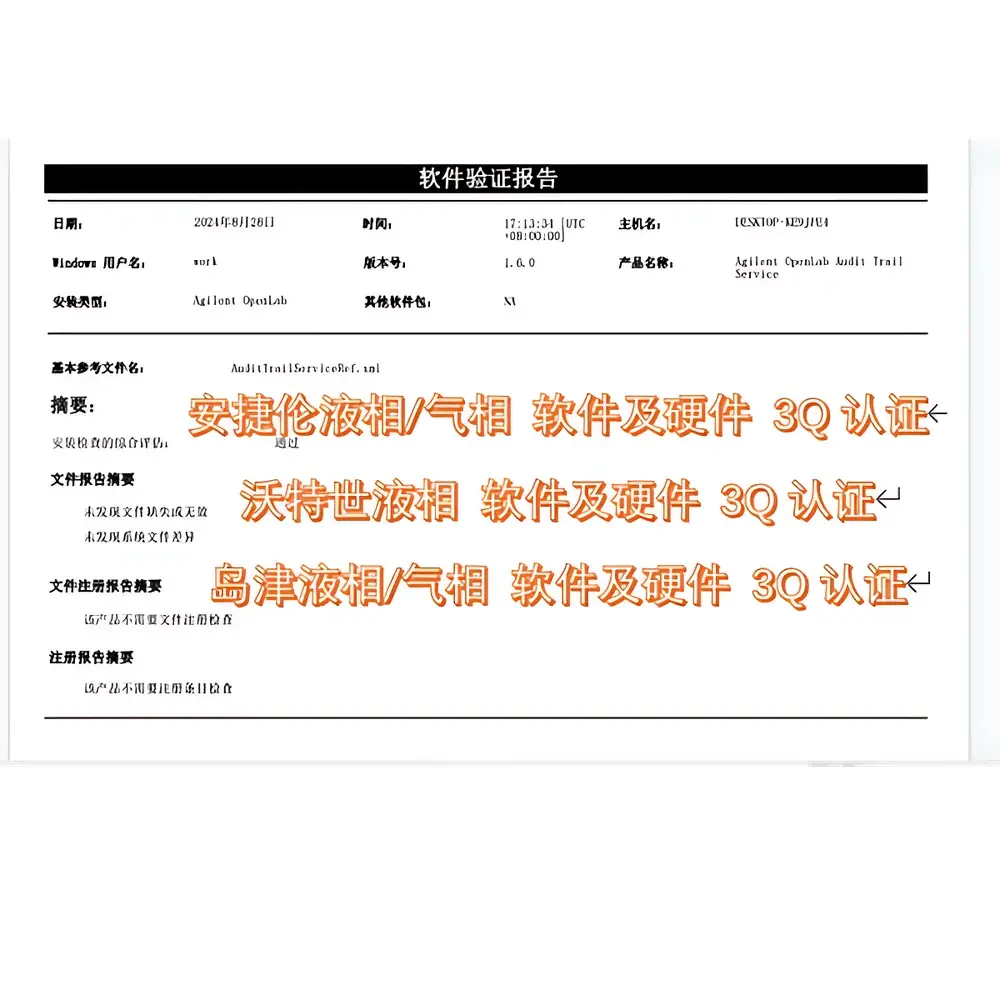
- Comprehensive IQ documentation covering hardware configuration, software version verification, environmental condition logging (temperature, humidity, power stability), and firmware audit trails.
- OQ protocols executed under controlled laboratory conditions to verify operational boundaries—e.g., flow rate accuracy at 0.1, 1.0, and 5.0 mL/min; gradient composition fidelity across 5–95% B; dwell volume measurement per USP <621>; and temperature uniformity mapping within the column oven.
- PQ testing performed using certified reference standards (e.g., caffeine, uracil, naphthalene) to assess retention time reproducibility (<0.2% RSD over 6 injections), peak area precision (<1.0% RSD), and detector response linearity (r² ≥ 0.999 over 3 orders of magnitude).
- Full electronic record generation compliant with ALCOA+ principles (Attributable, Legible, Contemporaneous, Original, Accurate, Complete, Consistent, Enduring, Available), including timestamped digital signatures and immutable PDF reports.
- Customizable scope alignment with client-specific SOPs, internal quality management systems (QMS), and regulatory submission requirements (e.g., IND, NDA, ANDA dossiers).
Sample Compatibility & Compliance
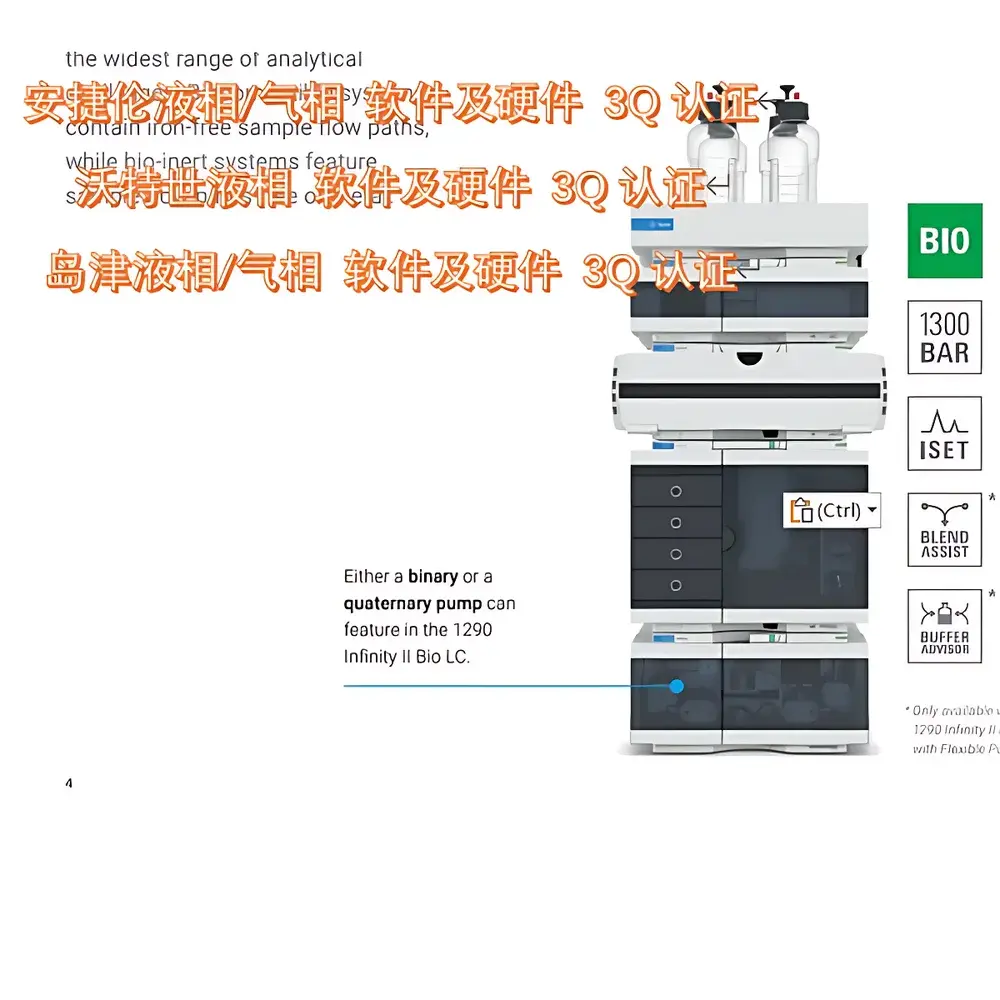
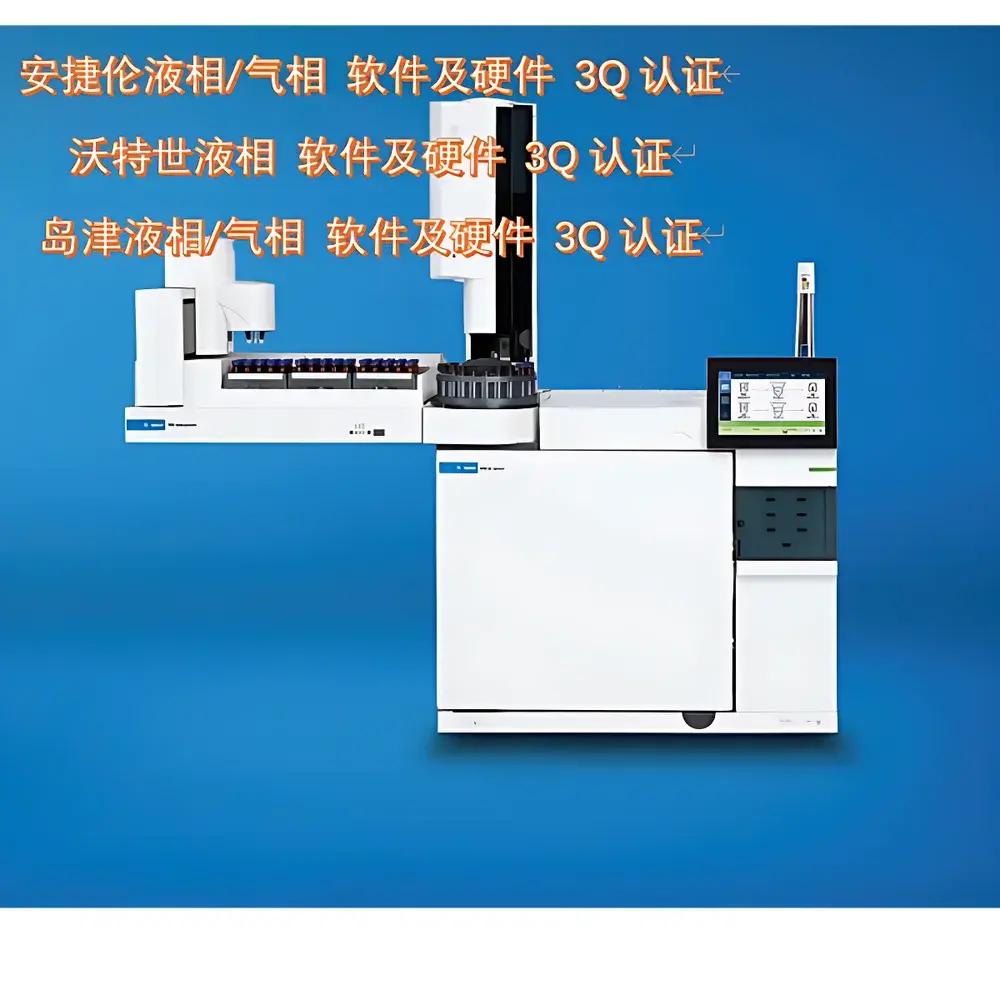
The qualification methodology is fully compatible with all standard Agilent 1100/1200/1360 configurations—including G1311A/B/C quaternary pumps, G1313A autosamplers, G1316A column ovens, and G1314F/G variable-wavelength detectors. All test procedures are aligned with current Good Manufacturing Practice (cGMP) expectations for pharmaceutical QC laboratories and GLP-compliant contract research organizations (CROs). Documentation includes formal risk assessments per ISO 14971, deviation handling logs, and change control records where applicable. Final deliverables meet audit readiness criteria for FDA, EMA, PMDA, and Health Canada inspections.
Software & Data Management
Qualification activities integrate seamlessly with Agilent OpenLab CDS (ChemStation Edition and OpenLab ECM versions), ensuring full traceability from raw signal acquisition to final report generation. All generated data files (.ch, .seq, .mtd) are archived with hash-verified integrity checks. Electronic signatures comply with 21 CFR Part 11 Annex 11 requirements, including role-based access controls, audit trail activation, and secure user authentication. Optional integration with LIMS platforms (e.g., LabVantage, Thermo SampleManager) supports automated metadata exchange and long-term data retention strategies aligned with ISO 15189 and CAP accreditation standards.
Applications
- Initial commissioning of newly installed Agilent HPLC systems in regulated environments (pharmaceutical manufacturing, biologics release testing, clinical trial bioanalysis).
- Requalification following major hardware upgrades (e.g., pump replacement, detector retrofit), software version migrations, or relocation events.
- Periodic revalidation required by internal quality policies or external auditors (e.g., annual PQ refresh, post-maintenance OQ reinstatement).
- Support for technology transfer projects between development labs and commercial manufacturing sites.
- Documentation package preparation for regulatory submissions requiring evidence of analytical instrument control and reliability.
FAQ
Does this service include on-site execution?
Yes—qualified field engineers perform IQ/OQ/PQ at the client’s facility, unless remote verification of certain OQ elements (e.g., software configuration checks) is pre-approved under validated remote support protocols.
Can qualification be extended to coupled systems such as HPLC-MS?
This package covers standalone HPLC modules only. For hybrid configurations, a separate MS-specific IQ/OQ/PQ addendum is available upon request.
What documentation is delivered upon completion?
A complete bound report containing signed protocols, raw data printouts, summary tables, non-conformance records (if any), and a formal Certificate of Qualification bearing authorized signatory stamps and unique report ID.
Is requalification required after routine preventive maintenance?
Routine PM does not necessitate full requalification; however, an abbreviated OQ subset—focused on flow accuracy, injection precision, and detector baseline stability—is recommended and can be scheduled separately.
How long is the qualification valid?
Validity is determined by the client’s quality policy; typical intervals range from 12 to 24 months, contingent upon usage intensity, criticality of application, and historical performance trending data.





