
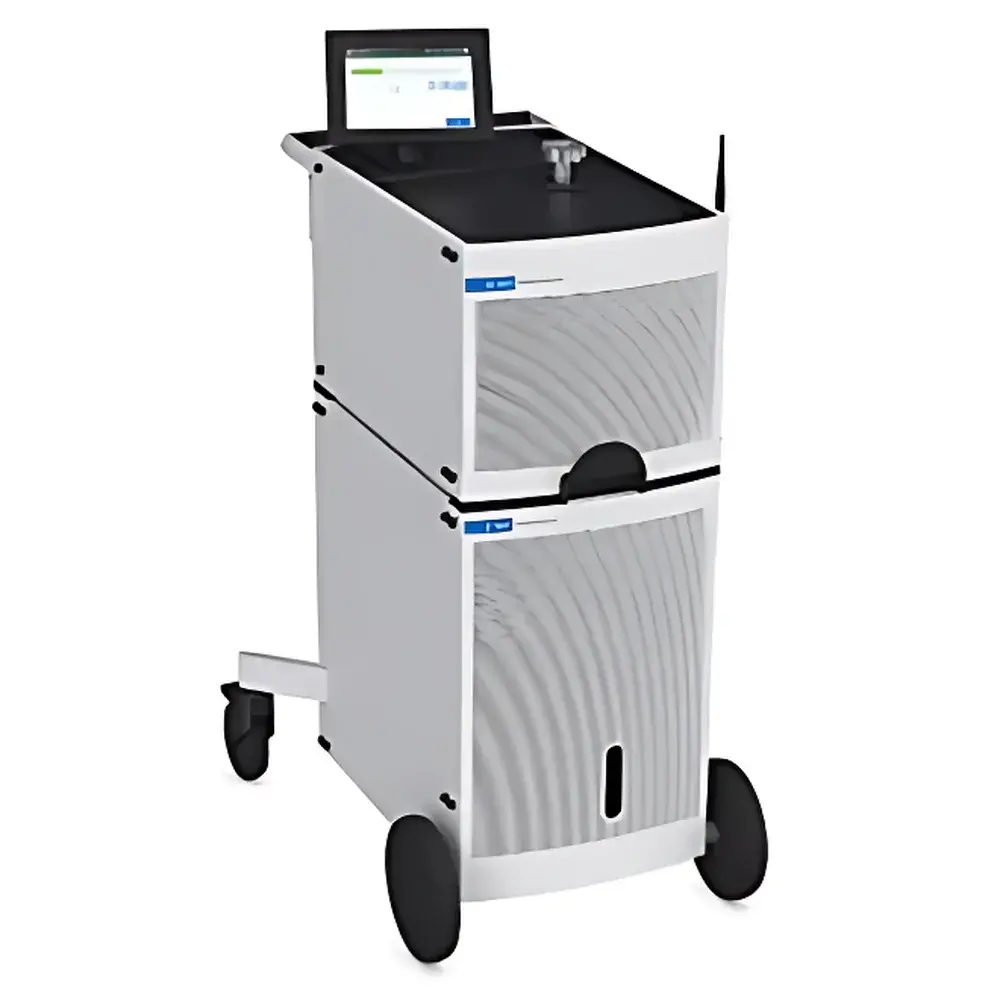
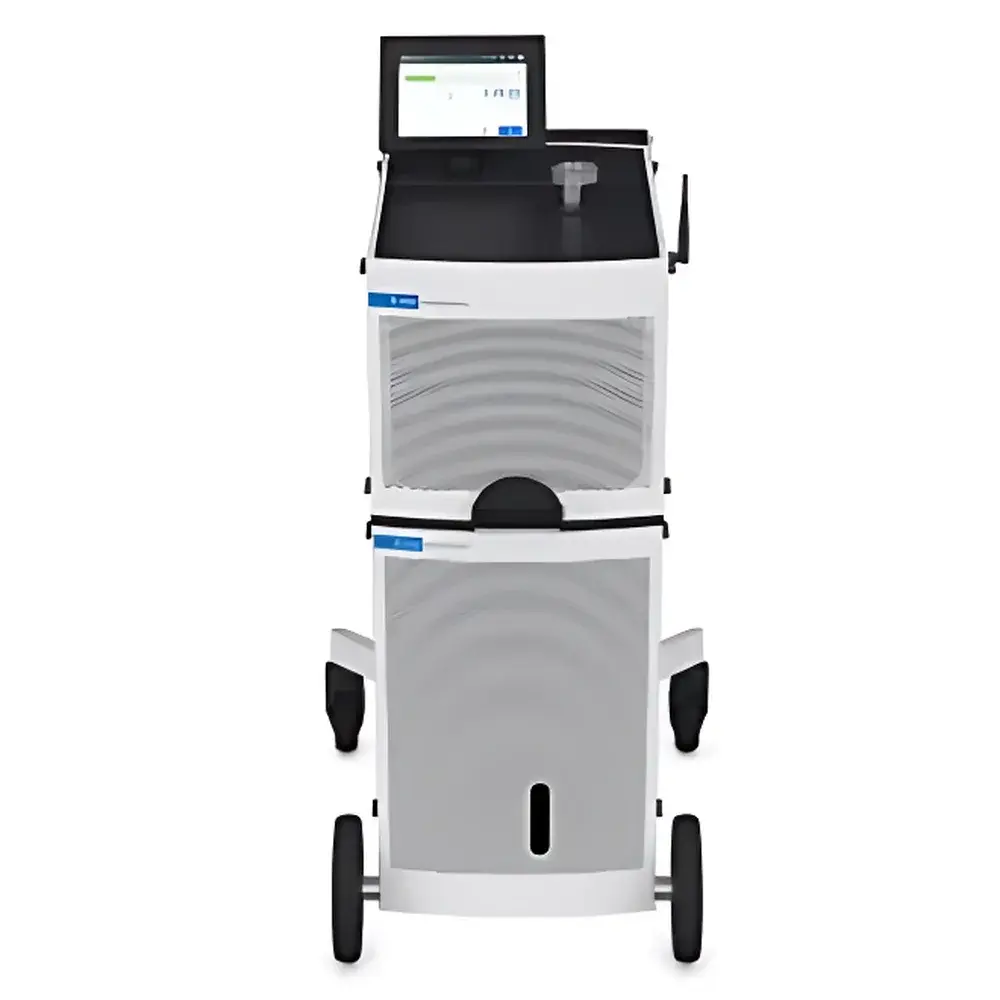
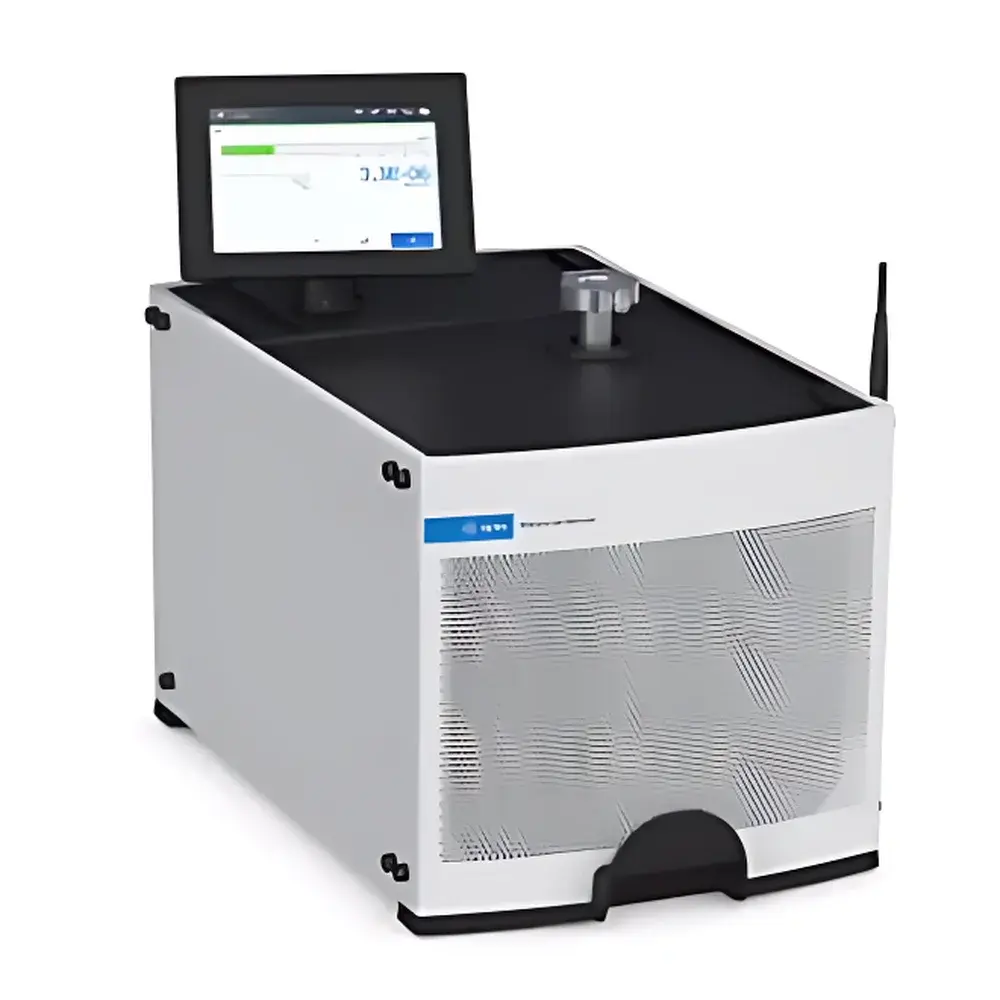
Agilent HLD MD15 Mobile Dry Helium Mass Spectrometer Leak Detector
| Brand | Agilent Technologies |
|---|---|
| Origin | USA |
| Manufacturer Type | Original Equipment Manufacturer (OEM) |
| Import Status | Imported |
| Model | HLD MD15 |
| Pricing | Upon Request |
Overview
The Agilent HLD MD15 Mobile Dry Helium Mass Spectrometer Leak Detector is a high-performance, field-deployable instrument engineered for quantitative and qualitative detection of minute leaks in vacuum-tight systems using helium as a tracer gas. It employs a dedicated quadrupole mass spectrometer tuned to the m/z = 4 atomic mass unit (amu) peak—corresponding to helium-4—with optimized ion optics and detector gain to deliver high sensitivity and low background noise. Unlike conventional oil-lubricated leak detectors, the HLD MD15 integrates a fully dry vacuum architecture, eliminating hydrocarbon contamination risks and enabling clean, repeatable measurements in semiconductor fabrication, pharmaceutical packaging, aerospace component testing, and ultra-high-vacuum (UHV) system validation. Its mobile platform—featuring integrated casters, ergonomic handle, and compact footprint—is designed for seamless integration into production line environments, cleanrooms (ISO Class 5–7), and maintenance bays where spatial constraints and contamination control are critical.
Key Features
- Dry vacuum system powered by the Agilent IDP-15 scroll pump (pumping speed: 15 m³/h), delivering oil-free, low-vibration, and near-silent operation—ideal for sensitive environments requiring zero hydrocarbon outgassing.
- 180° rotatable industrial-grade capacitive touchscreen with glare-resistant surface, supporting glove-compatible operation and intuitive navigation via flat, hierarchical menu structure.
- Six preconfigured application wizards—covering vacuum chamber leak check, sniffer-mode localization, pressure-rise testing, HVAC coil inspection, sealed package integrity verification, and high-throughput component screening—automatically optimize MS gain, emission current, and scan parameters per use case.
- Enhanced data visualization suite including real-time logarithmic leakage rate vs. time plots, color-coded threshold markers (e.g., red/yellow/green bands aligned with ASTM E493 or ISO 10648-2 Class 1–3 limits), pinch-to-zoom waveform analysis, and dual-axis pressure/leak-rate trending.
- Extended vacuum hold capability: improved shutdown sequence maintains turbomolecular pump rotor at standby speed and sustains base pressure in the mass spectrometer chamber (<5×10⁻⁷ mbar), minimizing pump-down time between sequential tests.
- Expanded work surface (≥450 mm × 350 mm) with non-marring elastomeric edge trim, accommodating large flanges, wafer carriers, or multi-port test fixtures without external staging.
Sample Compatibility & Compliance
The HLD MD15 supports both vacuum-mode (inside-out) and sniffing-mode (outside-in) leak detection protocols across metallic, ceramic, glass, and polymer-based enclosures—including hermetic IC packages, stainless-steel bioreactors, aluminum heat exchangers, and laminated blister packs. It complies with international standards governing leak testing methodology and reporting, including ASTM E493 (Standard Practice for Leakage Detection Using Helium Mass Spectrometer), ISO 10648-2 (Classification of leak rates), and IEC 61000-4-3 (EMC immunity for industrial equipment). When operated under documented SOPs with audit-trail-enabled software (see Software & Data Management), it meets GLP and GMP requirements for regulated industries, including FDA 21 CFR Part 11 compliance for electronic records and signatures when paired with Agilent’s optional SecureLog module.
Software & Data Management
Firmware v3.2+ provides native support for CSV export, timestamped test logs (including ambient temperature, chamber pressure, helium background level, and integrated leak integral), and configurable pass/fail criteria per test step. Optional Agilent LeakSuite™ PC software enables centralized fleet management, automated report generation (PDF/Excel), trend analysis across multiple instruments, and integration with LIMS platforms via OPC UA or RESTful API. All data events—including parameter changes, calibration triggers, and user login/logout—are recorded with immutable timestamps and operator IDs, satisfying traceability requirements for ISO 9001:2015 and AS9100D audits.
Applications
- Semiconductor manufacturing: Wafer prober chuck integrity verification, vacuum load-lock leak mapping, and ALD/CVD tool chamber qualification.
- Pharmaceutical packaging: Inspection of cold-form blisters, vial stopper seals, and lyophilization trays per USP guidelines.
- Aerospace & defense: Fuel system manifold testing, satellite propulsion module certification, and composite pressure vessel acceptance.
- Energy sector: Heat exchanger tube sheet scanning, nuclear coolant loop component validation, and hydrogen infrastructure piping integrity assessment.
- R&D laboratories: Development and benchmarking of novel sealing technologies, MEMS device encapsulation evaluation, and microfluidic chip bonding verification.
FAQ
What vacuum level must be achieved before initiating a helium leak test?
The HLD MD15 achieves optimal signal-to-noise ratio when the mass spectrometer chamber operates below 1×10⁻⁶ mbar; typical pump-down from atmosphere requires ≤45 seconds with the IDP-15 scroll pump and turbomolecular pump combination.
Can the HLD MD15 detect leaks smaller than 1×10⁻¹² mbar·L/s?
Yes—under ideal conditions (low background helium, stable thermal environment, and proper sniffer probe positioning), the instrument demonstrates minimum detectable leak rates down to 5×10⁻¹³ mbar·L/s in vacuum mode per ASTM E493 Annex A1.
Is external calibration required between tests?
No routine recalibration is needed; the system performs automatic gain normalization and background helium subtraction prior to each measurement cycle. Annual verification using NIST-traceable helium standards is recommended for ISO/IEC 17025-accredited labs.
Does the dry pump require scheduled maintenance?
The IDP-15 scroll pump is designed for >20,000 hours of continuous operation with no oil changes; periodic inspection of inlet filter and scroll wear indicators (via built-in diagnostic codes) is sufficient for preventive maintenance.
How does the HLD MD15 handle high-humidity or particulate-laden environments?
Integrated HEPA-grade inlet filtration (0.3 µm efficiency ≥99.97%) and condensate trap prevent moisture ingress and particulate accumulation in the foreline; operating humidity range is 20–80% RH non-condensing.






