
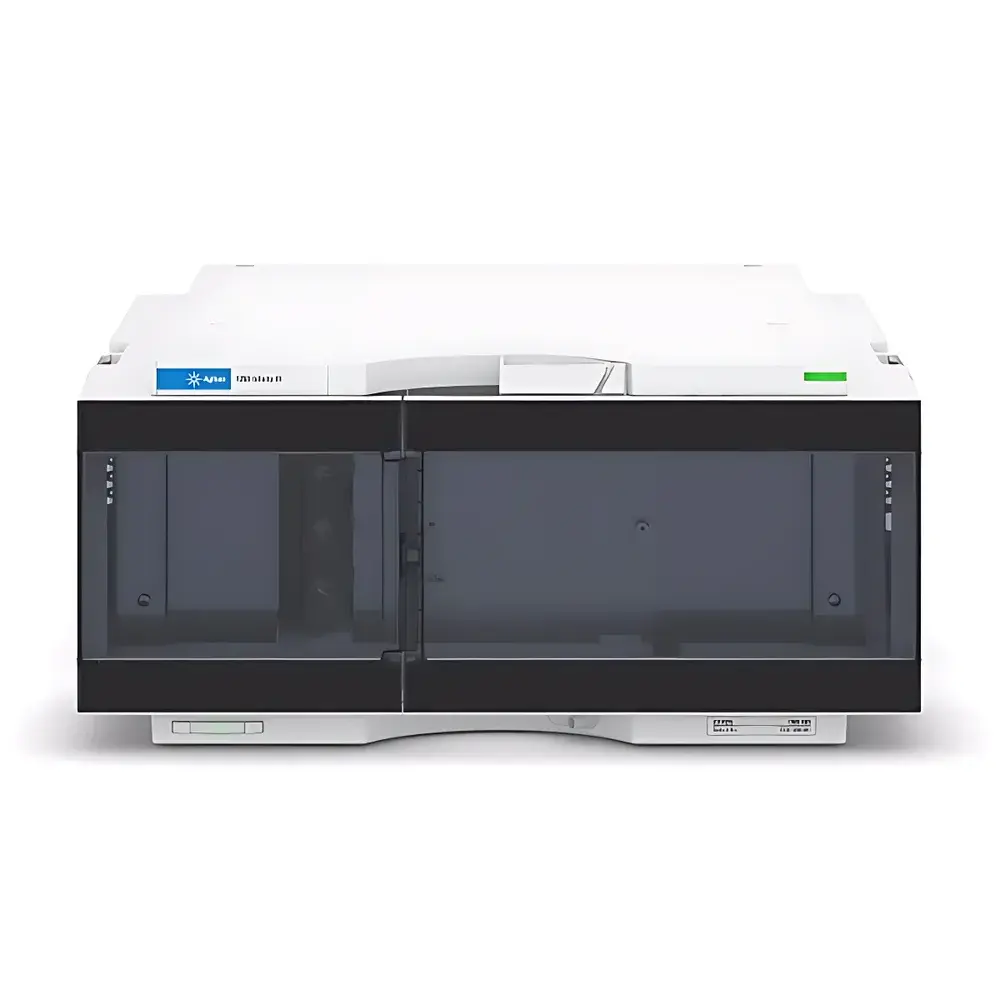
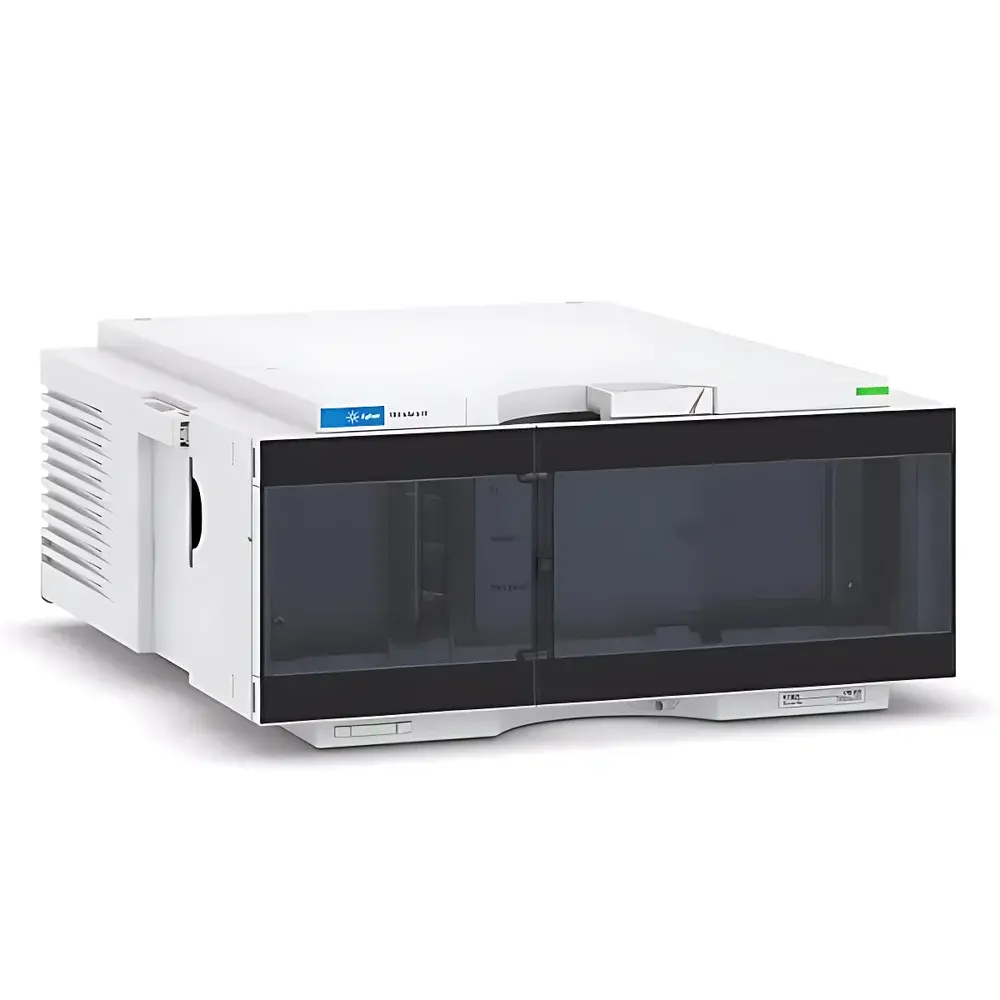
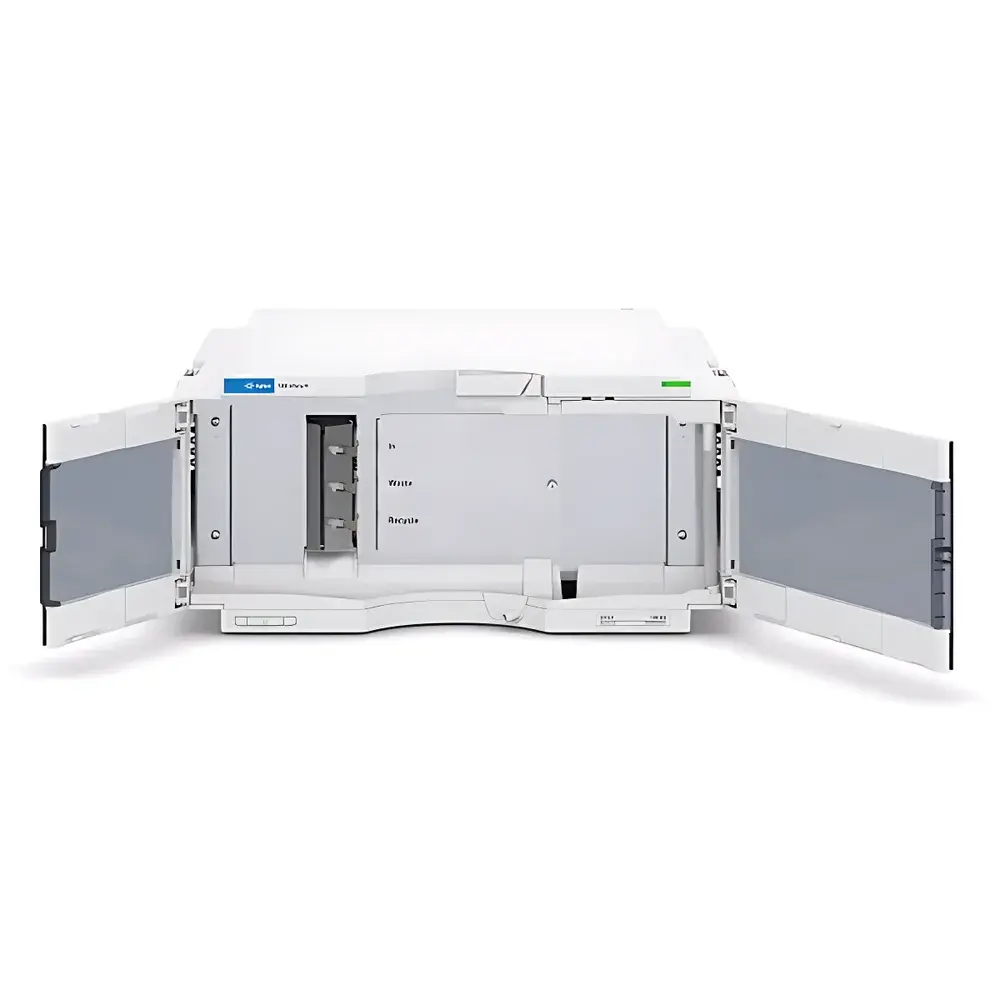
Agilent 1260 Infinity III Refractive Index Detector
| Brand | Agilent Technologies |
|---|---|
| Origin | Germany |
| Manufacturer Type | Original Equipment Manufacturer (OEM) |
| Origin Category | Imported Instrument |
| Model | 1260 Infinity III RID |
| Detection Principle | Differential Refractometry |
| Compatible Systems | Agilent 1200/1260/1290 Series HPLC & UHPLC Platforms |
| Detection Mode | Dual-Flow, Solvent-Compensated RI |
| Data Acquisition Rate | 74 Hz |
| Baseline Noise | < 2.5 nRIU (typical, 1 sec time constant) |
| Temperature Control | Electronic Thermal Control (ETC), 5–55 °C, ±0.01 °C stability |
| Flow Cell Volume | 8 µL |
| Lamp Type | Tungsten-Halogen, Lifetime > 2000 h |
| Auto-Compensation | Dynamic light intensity adjustment for lamp aging and flow cell fouling |
| Maintenance Access | Front-panel serviceable fluidic path and valves |
| EMF Monitoring | Real-time tracking of purge duration, lamp operating hours, and system diagnostics |
| Software Integration | Fully compatible with OpenLab CDS (ChemStation Edition), compliant with FDA 21 CFR Part 11 audit trail requirements |
Overview
The Agilent 1260 Infinity III Refractive Index Detector (RID) is a high-stability, solvent-compensated differential refractometer engineered for universal detection in liquid chromatography applications where analytes lack chromophores or UV absorbance. Operating on the principle of Snell’s law, it measures minute changes in the refractive index of the eluent stream relative to a reference stream—enabling label-free, non-destructive quantification of carbohydrates, polymers, lipids, organic acids, excipients, and other optically transparent compounds. Designed as a core component of Agilent’s modular HPLC and entry-level UHPLC platforms, this detector delivers robust performance in both analytical and preparative-scale separations, particularly in gel permeation chromatography (GPC) and size-exclusion chromatography (SEC) workflows requiring absolute molecular weight distribution analysis.
Key Features
- 74 Hz real-time data acquisition ensures accurate integration of narrow peaks typical in high-efficiency SEC/GPC separations, minimizing peak distortion and improving resolution of closely eluting polymer fractions.
- Electronic Thermal Control (ETC) maintains optical path stability within ±0.01 °C across a 5–55 °C operational range, eliminating thermal drift-induced baseline drift—a critical requirement for long-duration GPC runs.
- Dynamic light intensity compensation automatically adjusts photodiode gain in response to tungsten-halogen lamp aging and flow cell surface contamination, preserving signal linearity over extended operational lifetimes (>2000 h lamp life).
- Integrated dual-flow solvent compensation architecture minimizes bulk solvent effect artifacts, delivering baseline stability <2.5 nRIU (1 sec time constant) under standard isocratic conditions.
- Front-accessible fluidic module enables rapid inspection and replacement of capillary tubing, check valves, and purge lines without disassembling the chassis—reducing mean time to repair (MTTR) and supporting GLP-compliant maintenance logs.
- Early Maintenance Feedback (EMF) continuously monitors and records lamp operating hours, purge cycle frequency, and system thermal history, generating traceable alerts aligned with ISO/IEC 17025 preventive maintenance schedules.
Sample Compatibility & Compliance
The 1260 Infinity III RID supports aqueous and organic mobile phases including THF, DMF, chloroform, and DMSO—making it suitable for SEC analysis of synthetic polymers (e.g., polystyrene, PMMA, PEO) and natural biopolymers (e.g., dextran, pullulan). It complies with ASTM D5296 (standard test method for molecular weight averages of polystyrene by SEC), ISO 16014-4 (plastics—determination of average molecular weights by SEC), and USP (chromatographic separation techniques). Its hardware and firmware architecture support full 21 CFR Part 11 compliance when deployed with Agilent OpenLab CDS, including electronic signatures, audit trails, and role-based access control.
Software & Data Management
Fully integrated with Agilent OpenLab CDS (ChemStation Edition), the detector supports method-controlled temperature ramping, automated flow cell purging sequences, and synchronized gradient delay calibration. All detector parameters—including ETC setpoint, data rate, analog output scaling, and auto-zero intervals—are programmable via instrument method files. Raw nRIU data streams are stored with embedded metadata (timestamp, temperature, lamp hours, EMF status), enabling retrospective root-cause analysis during regulatory audits. Batch processing tools allow simultaneous evaluation of multiple SEC runs against universal calibration standards, with automatic calculation of Mn, Mw, and dispersity (Đ).
Applications
- Gel Permeation Chromatography (GPC) and Size-Exclusion Chromatography (SEC) for polymer molecular weight characterization in R&D and QC laboratories.
- Carbohydrate profiling in food, beverage, and pharmaceutical excipient analysis—especially for sucrose, lactose, maltodextrins, and oligosaccharides.
- Quantitative analysis of glycerides, fatty acid esters, and lipid classes in nutraceutical and biodiesel research.
- Stability-indicating assays for non-UV-absorbing drug substances and formulation components under ICH Q5C guidelines.
- Process monitoring of fermentation broths and enzymatic hydrolysates where UV-inactive metabolites dominate.
FAQ
Is the 1260 Infinity III RID compatible with third-party HPLC systems?
Yes—when configured with analog voltage output (0–1 V) and TTL-compatible trigger signals, it can interface with non-Agilent chromatographic systems; however, full EMF logging, ETC synchronization, and OpenLab CDS integration require native Agilent platform connectivity.
What is the minimum detectable refractive index change?
Under optimized isocratic conditions (THF, 1 mL/min, 35 °C), the limit of detection is ≤5 ng of polystyrene on-column (8 µL flow cell, 74 Hz sampling), corresponding to ~1.2 nRIU signal amplitude.
Can the detector be used for gradient elution?
While primarily designed for isocratic SEC/GPC, it supports shallow gradients (<5% organic modifier change over 30 min) when paired with Agilent’s low-dwell-volume quaternary pumps and appropriate solvent-matching protocols.
Does it support temperature ramping during a run?
Yes—temperature setpoints can be programmed stepwise or linearly within OpenLab CDS methods, enabling temperature-modulated SEC (TM-SEC) for improved resolution of crystalline polymer fractions.
How is calibration performed?
Calibration is performed using certified polystyrene or pullulan standards traceable to NIST SRM 1475a; Agilent provides pre-configured calibration templates in OpenLab CDS for rapid generation of universal calibration curves per ISO 16014-2.





