
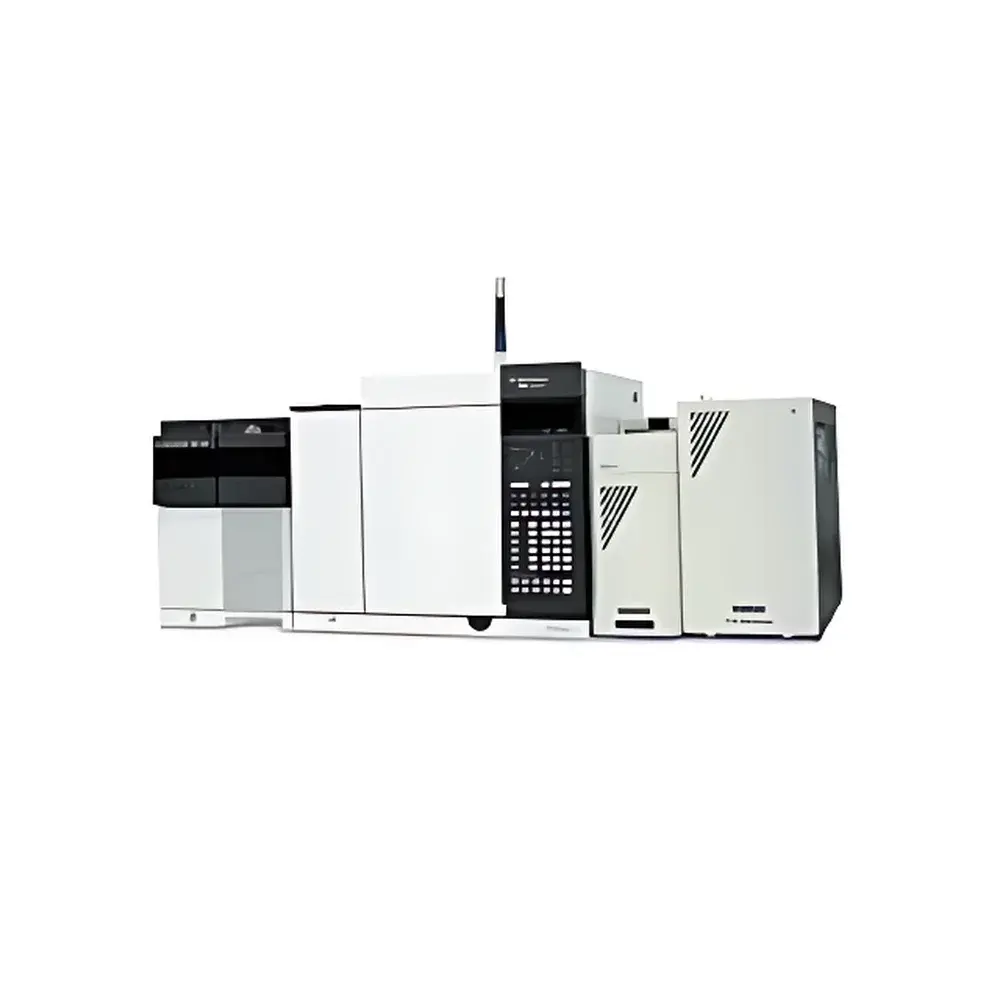
Agilent TD System for GC/GC-MS (Markes International Platform)
| Brand | Agilent Technologies |
|---|---|
| Origin | United Kingdom |
| Manufacturer | Markes International (OEM for Agilent) |
| Instrument Type | Thermal Desorption Autosampler for Gas Chromatography |
| Compatibility | Fully Integrated with Agilent GC and GC/MS Systems |
| Carrier Gases | Hydrogen, Helium, Nitrogen |
| Sample Capacity | Up to 100 Sorbent Tubes |
| Automation Mode | Stacked Tube Processing |
| Gas Configuration Options | 14-channel, 4-channel, or 3-channel online gas manifold |
Overview
The Agilent TD System—built upon Markes International’s industry-proven thermal desorption platform—is a fully automated, high-fidelity sample introduction solution engineered for gas chromatography (GC) and GC/mass spectrometry (GC/MS) analysis of volatile organic compounds (VOCs) and semi-volatile organic compounds (SVOCs). Operating on the principle of controlled thermal desorption, the system quantitatively releases analytes pre-concentrated on sorbent tubes into the GC inlet via precise, multi-stage heating profiles. Unlike solvent-based extraction techniques, this solvent-free approach eliminates hazardous reagent handling, reduces analytical blanks, and supports robust method validation under GLP and ISO/IEC 17025 frameworks. The system is designed as a seamless hardware and software extension of Agilent’s GC and GC/MS platforms, enabling end-to-end traceability from sampling through quantitation.
Key Features
- Multi-carrier gas compatibility (H₂, He, N₂) with hydrogen optimization for faster separations, reduced operational costs, and improved peak capacity without compromising resolution.
- 100-tube autosampling capacity with stacked-mode processing—enabling unattended overnight operation and high-throughput screening across environmental, occupational health, and product safety workflows.
- RFID-enabled sorbent tube tracking ensures full chain-of-custody compliance, supporting audit-ready data integrity per FDA 21 CFR Part 11 and EU Annex 11 requirements.
- Diffusion-locked mechanical interface minimizes analyte loss during transfer and guarantees reproducible tube sealing—critical for low-level VOC analysis where carryover or adsorption artifacts must be excluded.
- Ultra-inert valve architecture—fabricated from electropolished stainless steel with deactivated flow paths—enables reliable analysis of highly reactive species (e.g., mercaptans, aldehydes, chlorine-containing agents) alongside long-chain hydrocarbons up to n-C44.
- Electrically cooled focusing trap eliminates reliance on liquid cryogens, delivering stable sub-ambient trapping temperatures (down to –40 °C), rapid thermal ramping (>80 °C/s), and zero risk of ice formation in the cold zone.
- Electronic pressure control (EPC) applied directly to the desorption gas stream ensures retention time stability across split and splitless modes—even when multiple分流 paths are active—supporting method ruggedness in regulated laboratories.
Sample Compatibility & Compliance
The system accommodates diverse sample matrices via interchangeable collection media: certified reference sorbent tubes (e.g., Tenax TA, Carbopack™ series), SafeLok™ sealed tubes, inert-coated tubes (SilcoCan®-grade surfaces), canisters, Tedlar® bags, and direct online interfaces. It supports standardized methods including EPA TO-17, ASTM D6196, ISO 16017-1, and EN 14662. All hardware components comply with IEC 61000 electromagnetic compatibility standards and meet CE marking requirements for laboratory instrumentation. Data acquisition and method management conform to ALCOA+ principles (Attributable, Legible, Contemporaneous, Original, Accurate, Complete, Consistent, Enduring, Available), ensuring suitability for GMP-regulated environments.
Software & Data Management
Controlled via Agilent MassHunter or OpenLab CDS software, the TD module integrates bidirectionally with instrument methods and sequence tables. Automated calibration routines include tube blank assessment, breakthrough volume verification, and internal standard recovery tracking. Audit trails record all user actions, parameter changes, and instrument states with timestamped digital signatures. Raw data files (.D format) retain full metadata—including tube RFID IDs, desorption temperature ramps, carrier gas flows, and cold trap status—for retrospective reprocessing and regulatory submission.
Applications
This system is routinely deployed in environmental monitoring (indoor air, ambient air, soil headspace), industrial hygiene (workplace exposure assessment), materials testing (emissions from polymers, building products, automotive interiors), forensic toxicology (arson accelerants, chemical warfare agent degradation products), and natural product volatilomics (essential oils, fermentation headspace). Its ability to handle thermally labile, polar, and sulfur-containing compounds makes it especially valuable for odor profiling, flavor chemistry, and catalyst off-gas analysis.
FAQ
Is the TD system compatible with non-Agilent GC platforms?
Yes—via analog/digital I/O and RS-232 interfaces, though full EPC synchronization and method-level integration require Agilent GC firmware.
Can the system perform quantitative analysis without internal standards?
While possible for relative quantitation, regulatory-grade quantification (e.g., EPA, ISO) mandates internal standard addition—supported via automated spiking into blank/sample tubes or the cold trap.
What maintenance intervals are recommended for the focusing trap and valves?
Trap performance should be verified weekly using a certified VOC standard; valve cleaning is advised every 500 runs or per quarterly preventive maintenance schedule.
Does the system support dynamic dilution for high-concentration samples?
Yes—via programmable split ratios and secondary dilution loops integrated into the gas manifold configuration.
How is method transfer validated between different TD units?
Using certified reference tubes and inter-laboratory round-robin protocols aligned with ISO 5725 and ASTM E2655 guidelines.




