
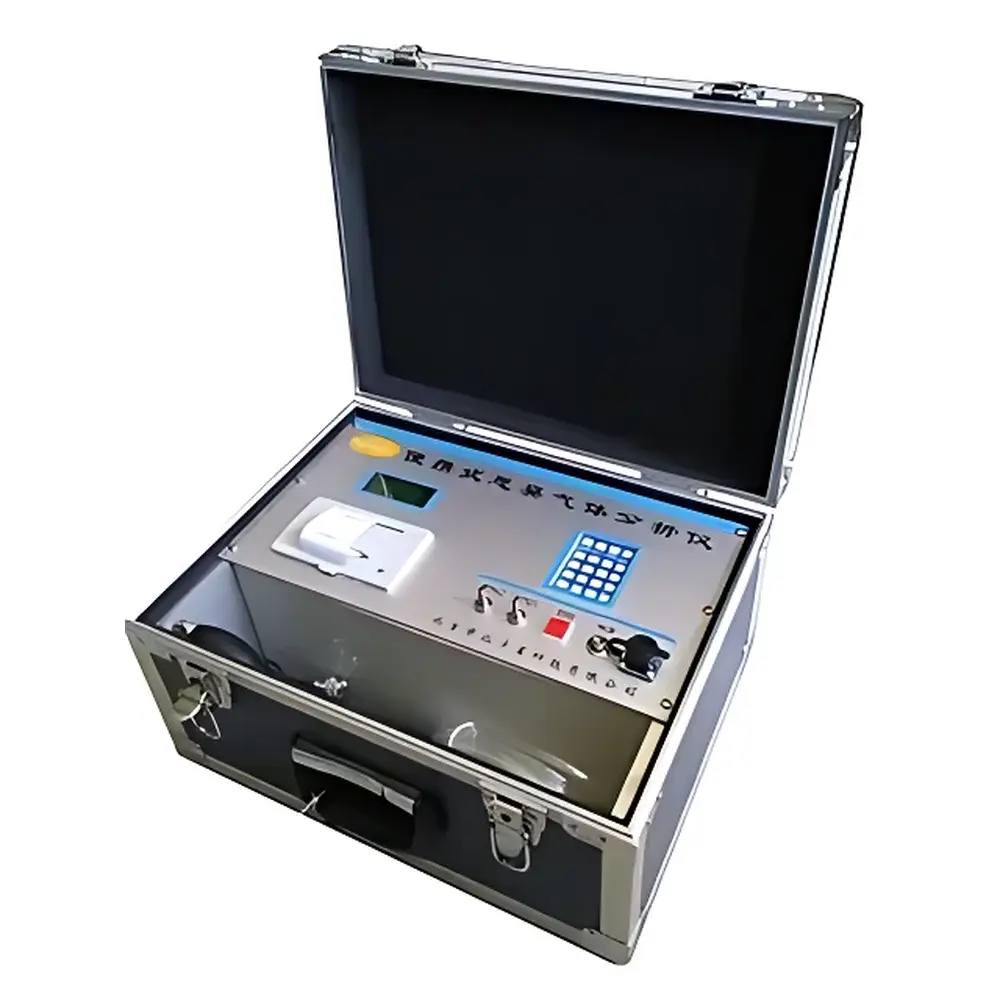
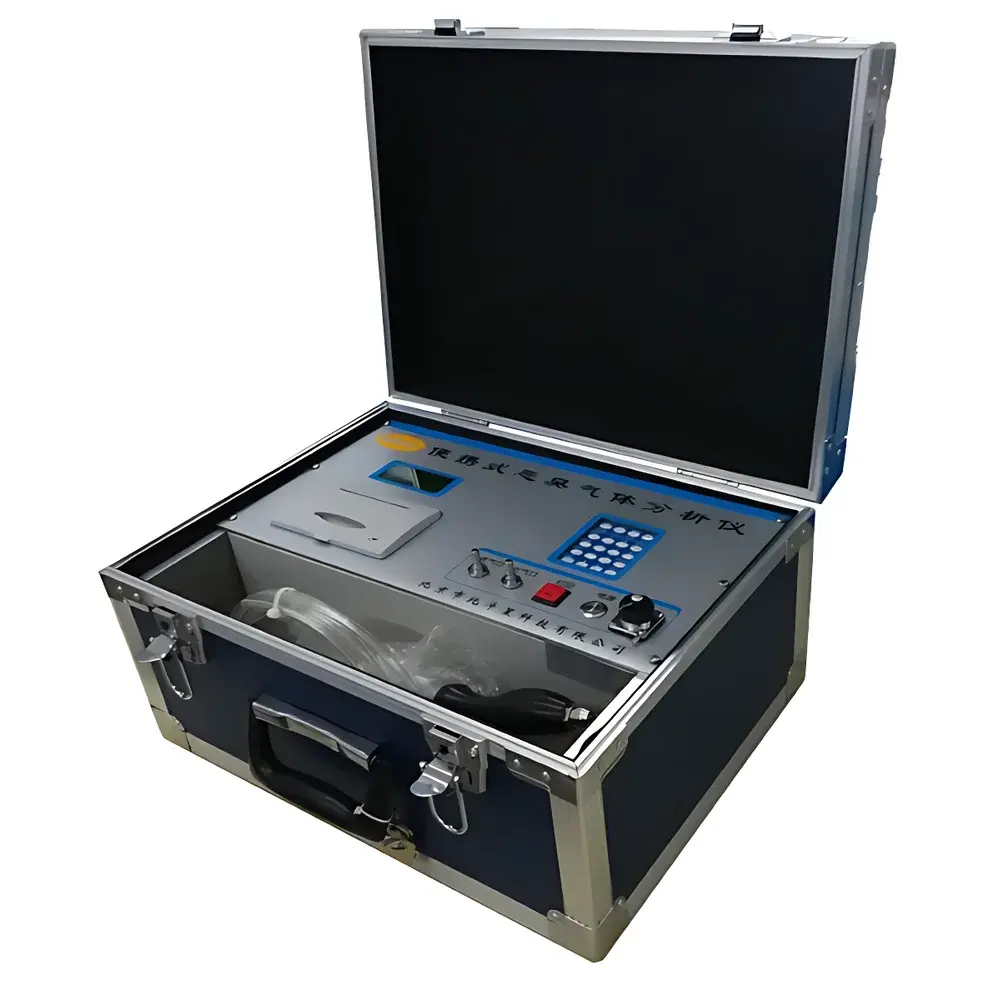
Bigdipper pAir2000_EFF Portable Odor Measurement Analyzer
| Brand | Bigdipper |
|---|---|
| Origin | Beijing, China |
| Manufacturer Type | Original Equipment Manufacturer (OEM) |
| Product Type | Portable |
| Detection Principle | Multi-sensor Fusion (Electrochemical, PID, NDIR, Catalytic Combustion, Semiconductor, Metal Oxide) |
| Accuracy | ±1–2% of reading (typ.) |
| Flow Rate | 0.1 L/min |
| Response Time | <1 min (T90) |
| Operating Temperature | −10 °C to +60 °C |
| Operating Humidity | 10–90% RH (non-condensing) |
| Dimensions | 400 × 300 × 200 mm |
| Weight | 4.5 kg |
| Power Supply | Rechargeable 12 V battery |
| Sensor Channels | Configurable from 4 to 23 gas-specific sensors |
| Compliance | Designed per GB 14554–1993 “Emission Standard of Odorous Pollutants” |
| Data Interface | RS232 / RS485 |
| Calibration | Dual-standard (DKA) and single-point inert gas zeroing |
| Cross-interference Compensation | Neural network-based real-time correction algorithm |
Overview
The Bigdipper pAir2000_EFF is a field-deployable, multi-parameter odor measurement analyzer engineered for regulatory-grade assessment of odorous emissions across municipal, industrial, and research environments. Unlike single-technology gas analyzers, the pAir2000_EFF implements a sensor fusion architecture—integrating electrochemical, photoionization (PID), non-dispersive infrared (NDIR), catalytic combustion, semiconductor, and metal oxide sensing modalities—to simultaneously quantify odorant compounds defined in national and regional emission standards. Its design aligns with the measurement philosophy of GB 14554–1993, which mandates detection of key odorants including hydrogen sulfide (H₂S), ammonia (NH₃), methyl mercaptan (CH₃SH), dimethyl sulfide ((CH₃)₂S), carbon disulfide (CS₂), styrene (C₈H₈), and trimethylamine ((CH₃)₃N), while also supporting odor concentration (ODU) estimation via correlation algorithms validated against dynamic olfactometry reference methods. The instrument operates on a flow-through sampling principle with integrated pump aspiration (0.1 L/min), enabling rapid (<60 s) in-situ quantification without pre-concentration or laboratory preprocessing.
Key Features
- Modular sensor architecture: Supports 4–23 independently calibrated, gas-specific sensors—configurable per application (e.g., wastewater treatment, landfill monitoring, pharmaceutical manufacturing).
- Neural network-based cross-interference compensation: Real-time correction for overlapping responses across sensor arrays, improving selectivity in complex gas matrices.
- Dual-calibration capability: Supports both DKA (dual standard gas calibration) and single-point inert gas zeroing—enabling traceable field recalibration without external gas standards.
- Environmental parameter integration: Simultaneous measurement of temperature (−40 °C to +100 °C), relative humidity (0–99% RH), and airflow velocity (0.01–20 m/s) for thermodynamic correction of sensor outputs.
- Rugged portable design: IP54-rated enclosure, 4.5 kg mass, 12 V rechargeable battery (≥8 h continuous operation), and LCD display (4×16 character) for field-readout of all active parameters.
- Regulatory-ready data handling: Timestamped readings with audit trail, RS232/RS485 serial interface for integration into SCADA or LIMS systems, and optional thermal printer support for on-site reporting.
Sample Compatibility & Compliance
The pAir2000_EFF is validated for direct sampling of ambient air, stack effluents (≤1.1 kgf/cm² pressure), and headspace gases from biological or chemical processes. It meets operational requirements specified in GB 14554–1993 and supports compliance verification under evolving provincial odor regulations—including those requiring expanded VOC speciation (e.g., benzene, toluene, xylene, formaldehyde) and inorganic toxics (Cl₂, HF, NO₂). While not certified to ISO 16000 or ASTM D6792 for olfactometric equivalence, its sensor response profiles are empirically correlated to odor intensity scales using multi-linear regression models trained on field-collected samples from over 120 emission sources. The instrument’s operating range (−10 °C to +60 °C; 10–90% RH non-condensing) ensures functionality across seasonal extremes encountered at landfills, WWTPs, and chemical production facilities.
Software & Data Management
Data acquisition and configuration are managed via embedded firmware supporting configurable logging intervals (1 s to 60 min), auto-zero cycles, and sensor health diagnostics. Raw sensor voltages, corrected concentrations, environmental metadata, and calibration logs are stored internally (≥10,000 records) and exportable via serial interface in CSV format. The firmware complies with GLP-aligned data integrity principles: all user actions (calibration, zeroing, configuration changes) are time-stamped and non-erasable. Optional PC software provides trend visualization, statistical summaries (min/max/avg/std dev), and report generation aligned with Chinese EPA reporting templates. No cloud connectivity or remote access features are implemented—ensuring full data sovereignty and compatibility with air-gapped industrial networks.
Applications
- Municipal wastewater treatment plants: Continuous monitoring of H₂S, NH₃, and ODU at influent channels, digesters, and sludge dewatering zones.
- Sanitary landfills: Quantification of H₂S, CH₄, VOCs, and reduced sulfur compounds in perimeter ambient air and leachate gas vents.
- Pharmaceutical and biotech facilities: Detection of process-specific odorants (e.g., ethyl acetate, isopropanol, dimethylformamide) during fermentation, solvent recovery, and API synthesis.
- Chemical manufacturing sites: Monitoring of Cl₂, CS₂, CH₃SH, and aromatic hydrocarbons at reactor vents, storage tank breathing lines, and loading docks.
- Urban air quality networks: Deployment in odor complaint hotspots for correlation analysis between measured odorants and citizen-reported events.
- Academic and regulatory laboratories: Use as a screening tool prior to dynamic olfactometry or GC-MS confirmation—reducing analytical cost and turnaround time.
FAQ
Does the pAir2000_EFF provide certified odor concentration (OU/m³) values?
No. It reports individual odorant concentrations (ppm or mg/m³) and estimates odor units (ODU) via empirical algorithms. For legally defensible ODU values, dynamic olfactometry per ISO 13301 remains the required reference method.
Can sensor modules be replaced in the field?
Yes. All sensor cartridges are hot-swappable and individually calibrated. Replacement requires only mechanical insertion and firmware registration—not hardware reconfiguration.
Is the instrument compliant with FDA 21 CFR Part 11 or EU Annex 11?
It does not implement electronic signature or role-based access control. However, its audit-trail logging and immutable event records meet baseline ALCOA+ principles for regulated environmental monitoring.
What maintenance is required beyond calibration?
Annual verification of pump flow rate, filter replacement (particulate and chemical scrubbers), and sensor baseline drift assessment using zero air. No optical alignment or detector cleaning is needed.
How is temperature and humidity compensation applied?
Each sensor’s output is corrected using real-time T/RH inputs and built-in polynomial coefficients derived from manufacturer characterization data across −10 °C to +60 °C and 10–90% RH.







