
Agilent MS120 Rotary Vane Vacuum Pump
| Brand | Agilent Technologies |
|---|---|
| Origin | USA |
| Manufacturer Type | Original Equipment Manufacturer (OEM) |
| Product Category | Imported |
| Model | MS120 Rotary Vane Pump |
| Instrument Type | Rotary Vane Vacuum Pump |
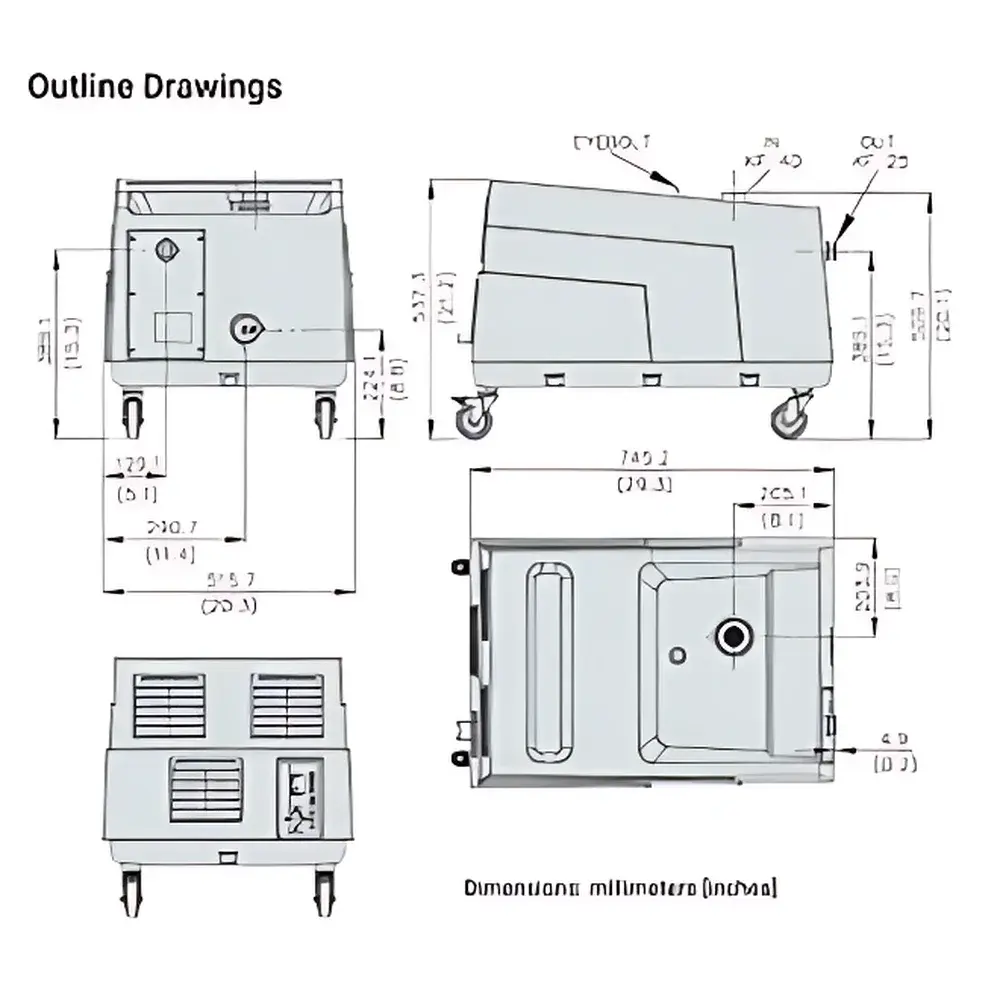
| External Dimensions | 516 mm × 539 mm × 750 mm (W × H × D) |
| Weight | 100 kg |
| Ultimate Total Pressure (with Gas Ballast) | ≤ 0.2 mbar |
| Ultimate Partial Pressure | ≤ 0.07 mbar |
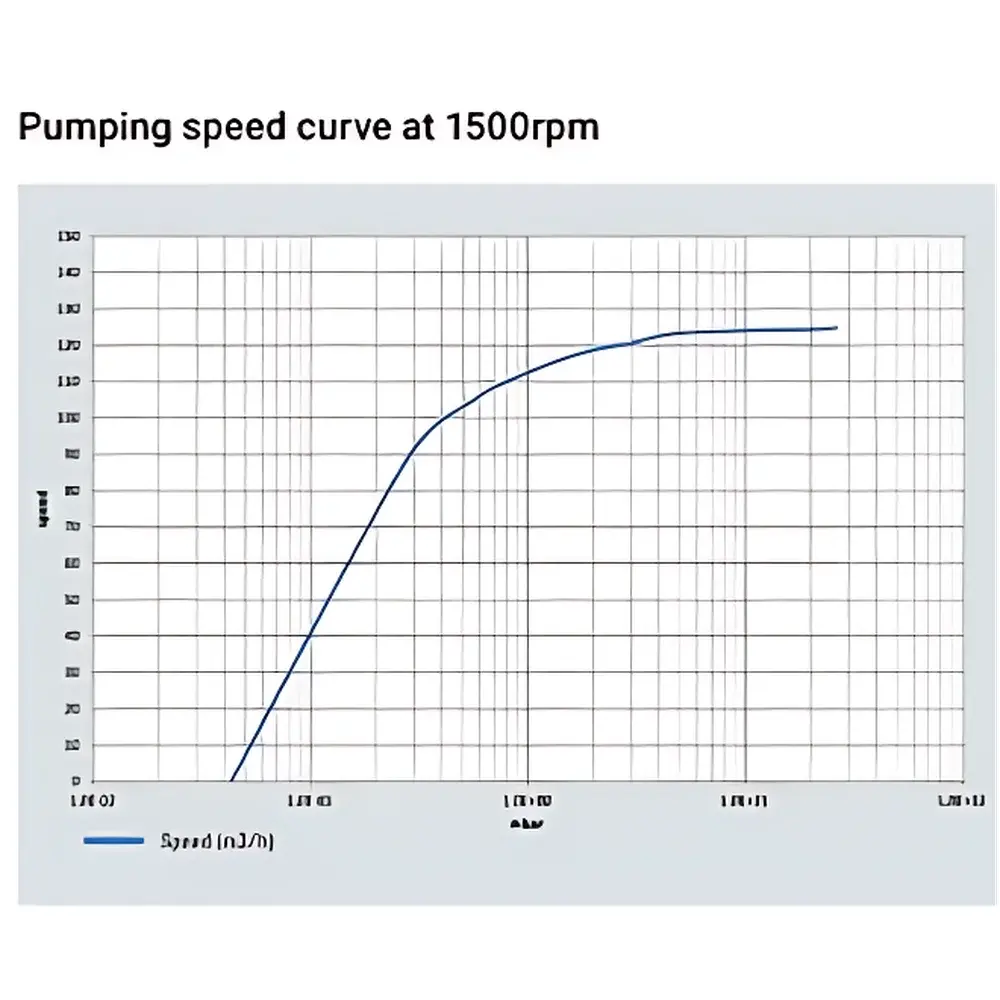
| Pumping Speed | Not specified in source data |
| Noise Level | 60 ± 1 dB(A) |
| Oil Capacity (Min/Max) | 1.8 L |
| Water Vapor Tolerance | 15 mbar |
| Water Vapor Handling Capacity | 1000 g/h |
| Inlet Connection | 40 KF DN |
| Exhaust Connection | 25 KF DN |
| Input Voltage | 200–240 V, 50/60 Hz |
| Continuous Duty Cycle | Up to 1 year without oil maintenance |
| Drive | Variable-Frequency Motor |
Overview
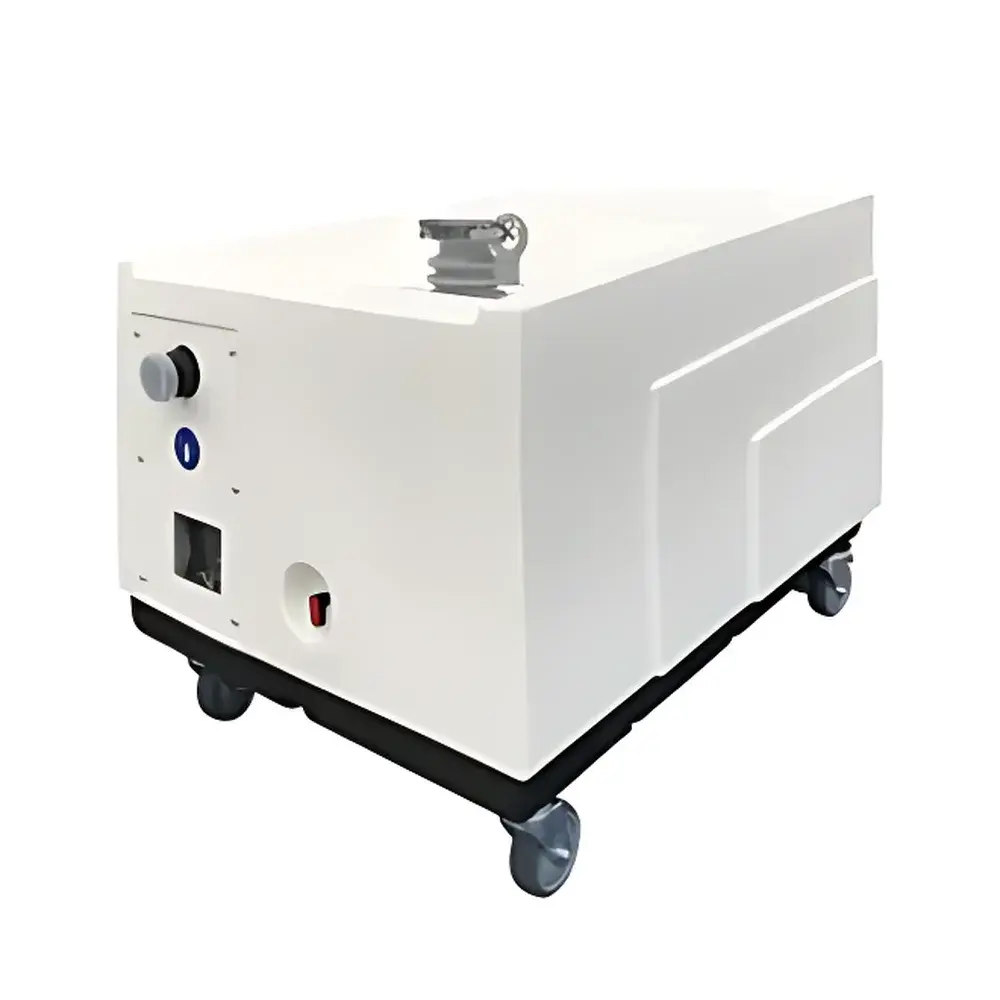
The Agilent MS120 Rotary Vane Vacuum Pump is an engineered front-stage vacuum solution designed specifically for high-performance liquid chromatography–mass spectrometry (LC/MS) systems. Operating on the principle of positive displacement via rotating vanes within an eccentrically mounted rotor chamber, the MS120 delivers stable, high-throughput rough vacuum generation in the 10−2 mbar range—critical for maintaining optimal ion source pressure and turbo-molecular pump backing efficiency. Its robust mechanical architecture integrates a variable-frequency drive motor, enabling precise control of rotational speed to match dynamic vacuum load requirements while minimizing energy consumption. Unlike legacy dual-pump configurations, the MS120’s optimized pumping speed and thermal management allow it to serve as a single, reliable front-end vacuum source for multiple LC/MS instruments or complex multi-stage vacuum architectures—reducing footprint, operational complexity, and total cost of ownership.
Key Features
- Single-pump replacement capability: Engineered to deliver equivalent or superior performance to two conventional oil-sealed rotary vane pumps, simplifying system integration and reducing redundancy.
- Integrated acoustic enclosure: A factory-installed, thermally optimized sound-dampening shroud reduces operational noise to 60 ± 1 dB(A) while enhancing convective cooling—eliminating the need for external enclosures or retrofitting.
- Variable-frequency motor drive: Enables real-time adjustment of pumping speed and ultimate pressure setpoints, improving process adaptability and lowering average power draw during low-load conditions.
- Extended maintenance interval: Certified for up to 12 months of continuous operation (24/7) without oil top-up or replacement under typical LC/MS duty cycles—validated per Agilent’s internal reliability testing protocol.
- Modular trolley-based platform: Pre-assembled on a rigid, height-adjustable mobile cart with locking casters, facilitating rapid deployment, alignment, and service access—ideal for shared-core facilities and reconfigurable lab environments.
Sample Compatibility & Compliance
The MS120 is compatible with all major LC/MS platforms requiring rough vacuum support in the 0.07–0.2 mbar range, including but not limited to Agilent 6400/6500/6600 series, Thermo Fisher Exactive/Orbitrap systems, and Waters Xevo/G2-XS platforms. It meets CE marking requirements under the EU Machinery Directive 2006/42/EC and Electromagnetic Compatibility Directive 2014/30/EU. The pump’s oil formulation complies with ISO 6743-4 Class DAA/DAB specifications for vacuum pump oils, ensuring chemical compatibility with common LC solvents and residual analytes. While not intrinsically rated for explosive atmospheres, its design conforms to IEC 61000-6-2 (immunity) and IEC 61000-6-4 (emissions) standards—supporting integration into GLP- and GMP-regulated laboratories where electromagnetic integrity is required for adjacent analytical instrumentation.
Software & Data Management
The MS120 operates as a standalone hardware component with no embedded firmware or digital interface; however, its variable-frequency drive accepts analog 0–10 V or 4–20 mA setpoint inputs from external process controllers or LC/MS system management software. This enables centralized vacuum setpoint scheduling, ramp profiling, and fault-state logging when integrated with laboratory information management systems (LIMS) or instrument control networks compliant with IEEE 802.3 Ethernet or Modbus TCP protocols. For audit-trail compliance in regulated environments (e.g., FDA 21 CFR Part 11), vacuum status, runtime hours, and motor current draw may be logged externally via programmable logic controllers (PLCs) or SCADA systems—ensuring traceability of pump operational history alongside analytical data.
Applications
- Front-stage backing for turbomolecular pumps in LC/MS, GC/MS, and ICP-MS systems.
- Rough vacuum generation for electron microscopy sample preparation chambers and coating systems.
- Continuous vacuum support in automated sample introduction modules requiring stable sub-mbar pressure control.
- Gas ballast-enabled operation for handling solvent-laden effluents from LC gradient elution—leveraging 1000 g/h water vapor capacity and 15 mbar tolerance to prevent oil emulsification.
- Shared-resource core facility deployment, where trolley-mounted mobility and plug-and-play KF connections minimize downtime during instrument reconfiguration.
FAQ
What is the recommended oil type and change interval for the MS120?
Agilent specifies ISO VG 68-grade DAA/DAB mineral oil (e.g., Agilent Part No. 5190-1421). Under standard LC/MS usage with gas ballast enabled, oil replacement is required only after 12 months or 8,760 operating hours—whichever occurs first.
Can the MS120 be operated in a vertical orientation?
No. The MS120 must be installed in its designated horizontal orientation on a level, vibration-damped surface to ensure proper oil distribution and vane lubrication.
Is the pump compatible with corrosive gases such as HCl or HF?
Not without modification. Standard MS120 units are not corrosion-resistant. For aggressive gas handling, consult Agilent for optional stainless-steel exhaust valves and fluorocarbon-sealed variants.
Does the integrated acoustic enclosure affect heat dissipation?
No—it is thermally engineered with directional airflow channels and finned heat sinks to maintain rotor and stator temperatures within ASME PTC 10 limits, even at full load.
What KF flange sizes are supported for inlet and exhaust ports?
Inlet: 40 KF DN (ISO-K); Exhaust: 25 KF DN (ISO-K). Adapters for NW, CF, or ISO-F法兰 are available as accessories.



