
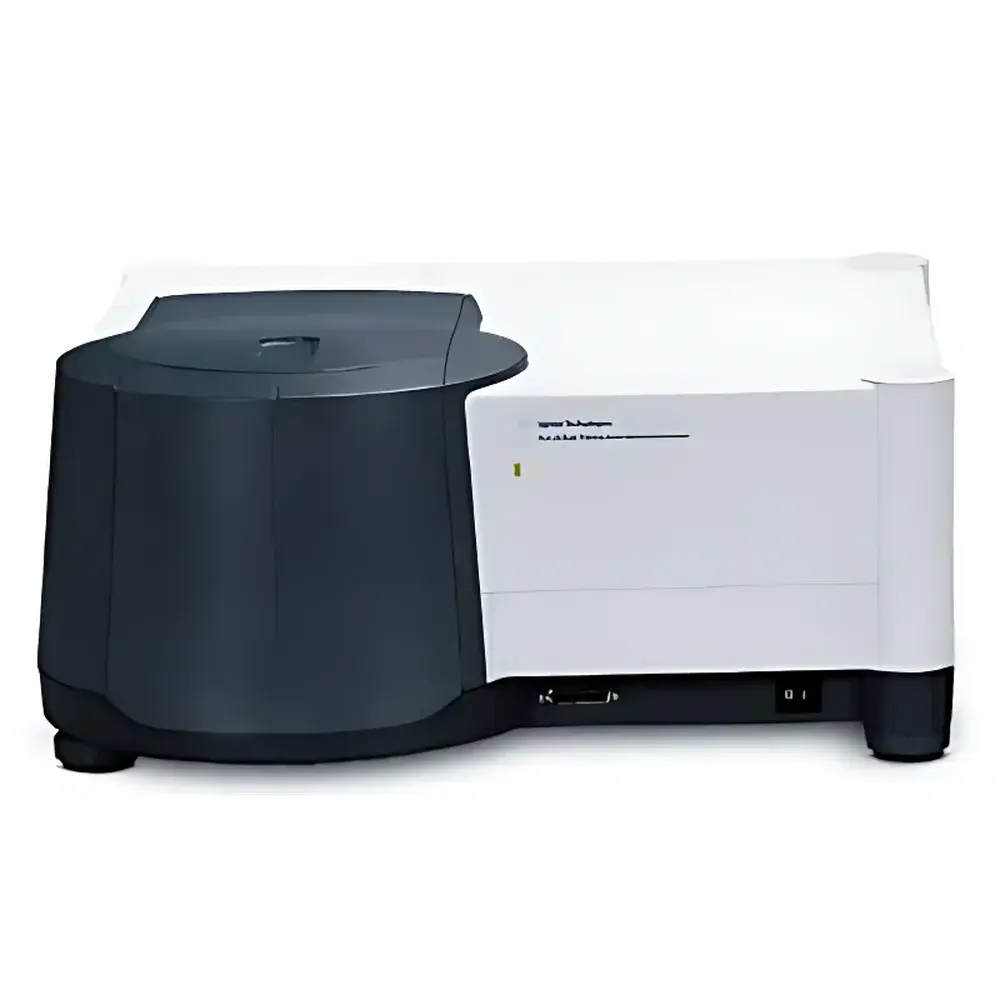
Agilent Cary Eclipse Molecular Fluorescence Spectrometer
| Brand | Agilent Technologies |
|---|---|
| Origin | Imported |
| Manufacturer Type | Original Equipment Manufacturer (OEM) |
| Excitation & Emission Wavelength Range | 200–900 nm |
| Wavelength Accuracy | ±1.5 nm |
| Spectral Bandwidth (Excitation/Emission) | 1.5, 2.5, 5, 10, 20 nm (including 10 nm round) |
| Light Source | Pulsed Xenon Lamp (80 Hz) |
| Detector | High-Sensitivity PMT |
| Scan Speed | Up to 24,000 nm/min |
| Data Acquisition Interval | As fast as 12.5 ms per point |
| Dimensions (W × D × H) | 608 × 644 × 271 mm |
| Weight | 30 kg |
| Power Requirement | 100–240 VAC, 50/60 Hz |
| Software | Cary WinFLR |
| Warranty | 10-year lamp lifetime guarantee (applies to new systems purchased from Agilent or authorized partners) |
Overview
The Agilent Cary Eclipse Molecular Fluorescence Spectrometer is a high-performance benchtop instrument engineered for quantitative and qualitative fluorescence analysis across life sciences, pharmaceutical development, materials chemistry, and environmental monitoring. It operates on the principle of photoluminescence spectroscopy—exciting molecular species with short-duration, high-intensity pulses from a xenon arc lamp and detecting emitted photons via a thermoelectrically cooled photomultiplier tube (PMT). Its pulsed excitation architecture (80 Hz repetition rate) enables time-resolved measurements—including phosphorescence and delayed fluorescence—without mechanical shuttering or external gating hardware. Unlike continuous-wave sources, the pulsed xenon lamp irradiates samples only during data acquisition, minimizing photobleaching and preserving labile biological specimens such as proteins, nucleic acids, and live-cell probes. The system’s optical design incorporates dual monochromators (excitation and emission), grating-based dispersion, and selectable slit widths to balance spectral resolution and signal-to-noise ratio. With a full wavelength coverage from 200 to 900 nm in both excitation and emission modes, the Cary Eclipse supports UV-Vis fluorescence applications ranging from intrinsic tryptophan emission to near-infrared quantum dot characterization.
Key Features
- Pulsed xenon lamp with guaranteed 10-year operational lifetime—eliminates routine lamp replacement, reduces hazardous waste generation, and lowers total cost of ownership.
- Room-light immunity: Enables open-sample compartment operation without signal degradation—critical for kinetic assays requiring reagent addition or large accessory integration (e.g., stopped-flow modules, thermostatted holders).
- Ultrafast scanning at up to 24,000 nm/min with zero peak shift, supported by real-time wavelength calibration and dynamic slit control.
- Multi-mode acquisition capability: Simultaneous support for fluorescence, phosphorescence, time-resolved phosphorescence, chemiluminescence, and bioluminescence—configured entirely within Cary WinFLR software without hardware reconfiguration.
- Integrated photostability protection: Sample illumination is strictly gated to data acquisition windows, reducing cumulative photon dose by >95% compared to CW instruments.
- Benchtop footprint (608 × 644 × 271 mm) with modular accessory interface—designed for seamless integration into GLP-compliant QC labs and automated high-throughput screening workflows.
Sample Compatibility & Compliance
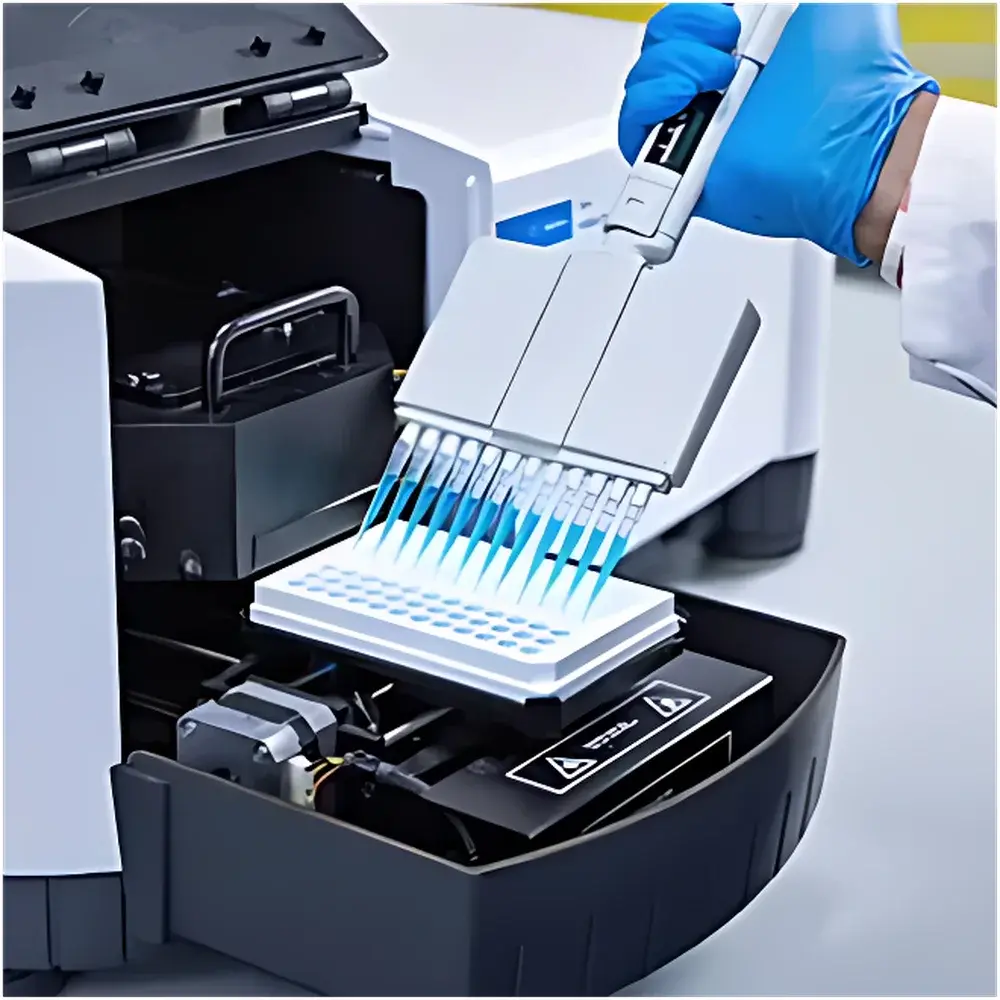
The Cary Eclipse accommodates liquid, solid, powder, and thin-film samples through a broad portfolio of ISO/IEC 17025-aligned accessories—including temperature-controlled cuvette holders (±0.1 °C stability), automated polarizers (for anisotropy and rotational correlation time analysis), microplate readers (96- and 384-well formats), fiber-optic probes (for remote or in-situ measurement), and solid-sample reflectance stages. Its optical architecture meets ASTM E1317 and ISO 17025 requirements for spectral bandwidth verification and wavelength accuracy validation. For regulated environments, Cary WinFLR supports 21 CFR Part 11-compliant audit trails, electronic signatures, and role-based access control—enabling full traceability in GMP, GLP, and FDA-submission-ready workflows.
Software & Data Management
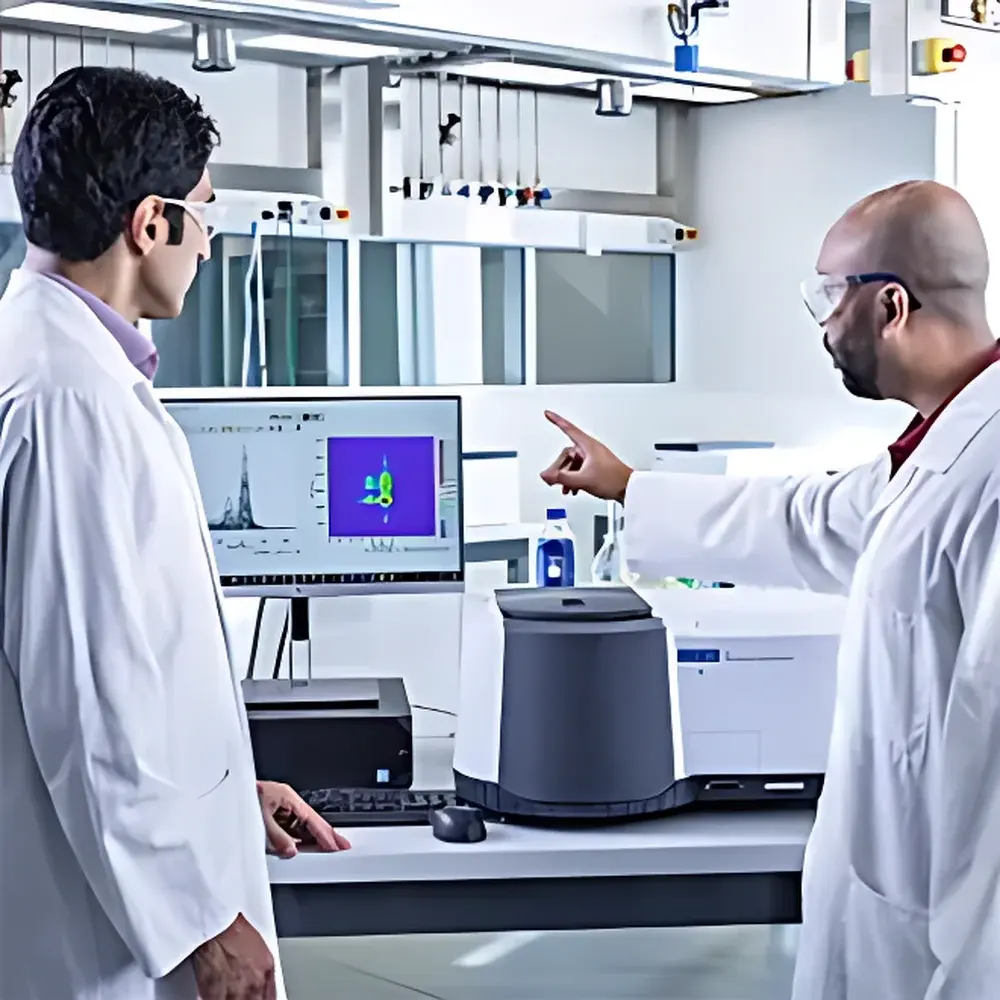
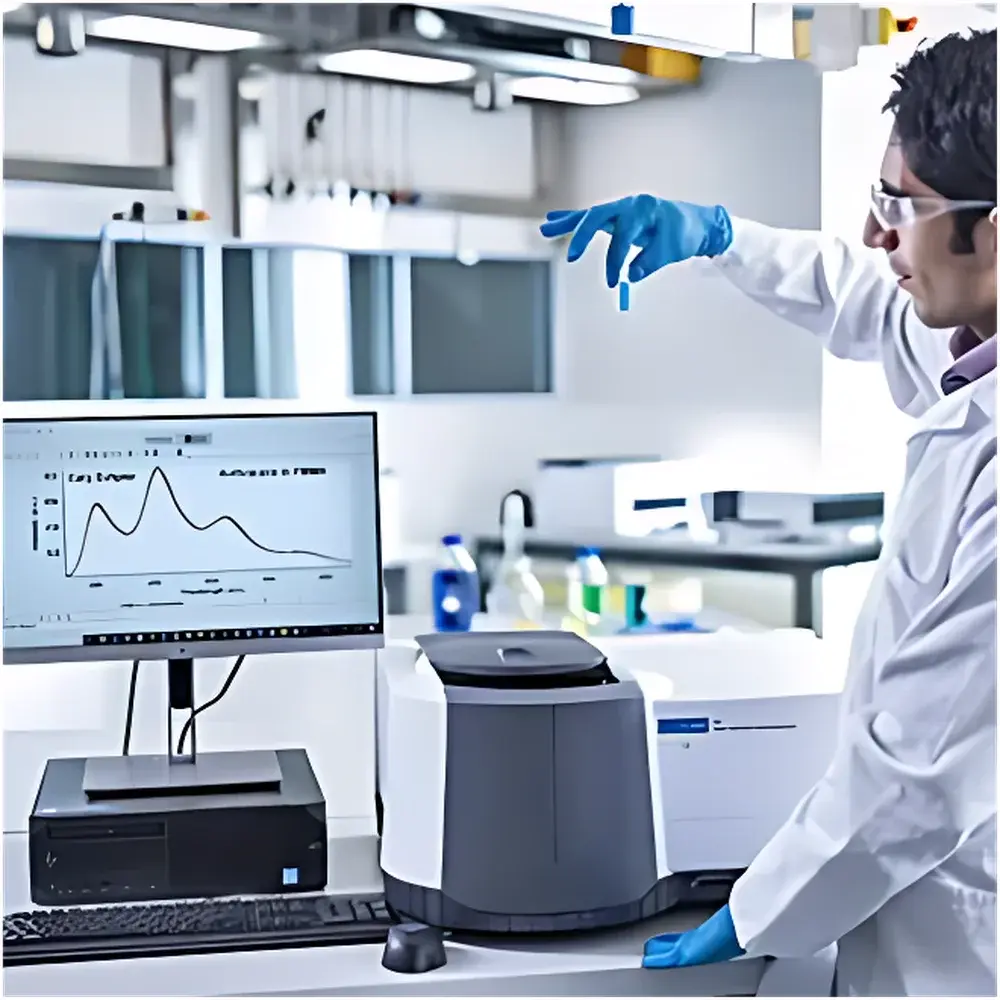
Cary WinFLR is a purpose-built, Windows-native application offering intuitive workflow-driven operation for both novice and expert users. It provides real-time spectral preview, automated baseline correction, multi-curve overlay, kinetic deconvolution, and built-in algorithms for FRET efficiency calculation, Stern-Volmer analysis, and lifetime decay fitting (single- and multi-exponential models). All raw and processed data are stored in vendor-neutral HDF5 format, ensuring long-term archival integrity and third-party interoperability. The software includes method templates compliant with USP , EP 2.2.25, and ICH Q5C guidelines for fluorescence-based protein stability assessment.
Applications
- Biopharmaceutical Development: Quantitative aggregation screening of monoclonal antibodies using intrinsic fluorescence and ANS binding assays; thermal denaturation profiling with temperature-controlled cell holders.
- Cellular & Molecular Biology: Real-time Ca2+ flux monitoring using ratiometric dyes (e.g., Fura-2); membrane fluidity studies via diphenylhexatriene (DPH) anisotropy; ROS detection with dichlorofluorescein derivatives.
- Materials Science: Characterization of conjugated polymers, carbon dots, and lanthanide-doped nanoparticles—leveraging wide spectral range and high sensitivity in NIR region.
- Environmental Analysis: Detection of polycyclic aromatic hydrocarbons (PAHs) in water matrices using solid-phase extraction coupled with fiber-optic probe measurement.
- Quality Control: Raw material identification and purity verification of fluorescent whitening agents in detergents and textiles via excitation-emission matrix (EEM) fingerprinting.
FAQ
Does the Cary Eclipse support time-resolved fluorescence measurements?
Yes—the pulsed xenon source (80 Hz) and synchronized detector gating enable direct acquisition of decay profiles with temporal resolution down to 12.5 ms per data point, suitable for nanosecond-scale lifetime analysis.
Is the instrument compatible with regulated laboratory environments?
Yes—Cary WinFLR implements 21 CFR Part 11 controls including electronic signatures, audit trails, and secure user authentication, supporting compliance with GMP, GLP, and ISO/IEC 17025 standards.
Can the Cary Eclipse measure solid samples without sample preparation?
Yes—optional reflectance accessories and fiber-optic probes allow direct surface interrogation of powders, films, and industrial materials without dissolution or dilution.
What is the significance of the 10-year lamp warranty?
The warranty covers functional performance of the xenon lamp under normal operating conditions, reflecting Agilent’s engineering validation of lamp longevity and eliminating scheduled maintenance downtime associated with lamp replacement.
How does room-light immunity improve experimental reliability?
By rejecting ambient light via time-gated detection synchronized to the lamp pulse, the system maintains signal fidelity even with the sample compartment fully open—reducing operator-induced errors during kinetic injections or large-sample handling.
Related Products






