
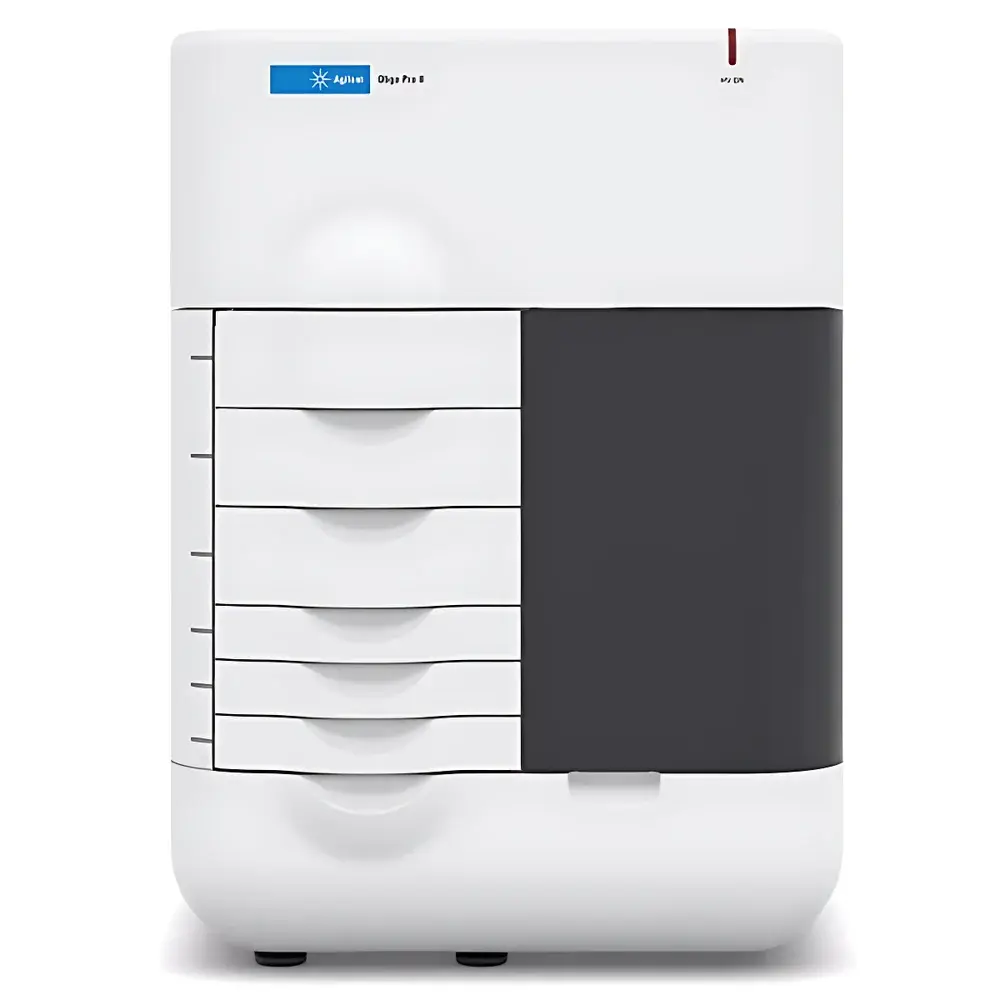
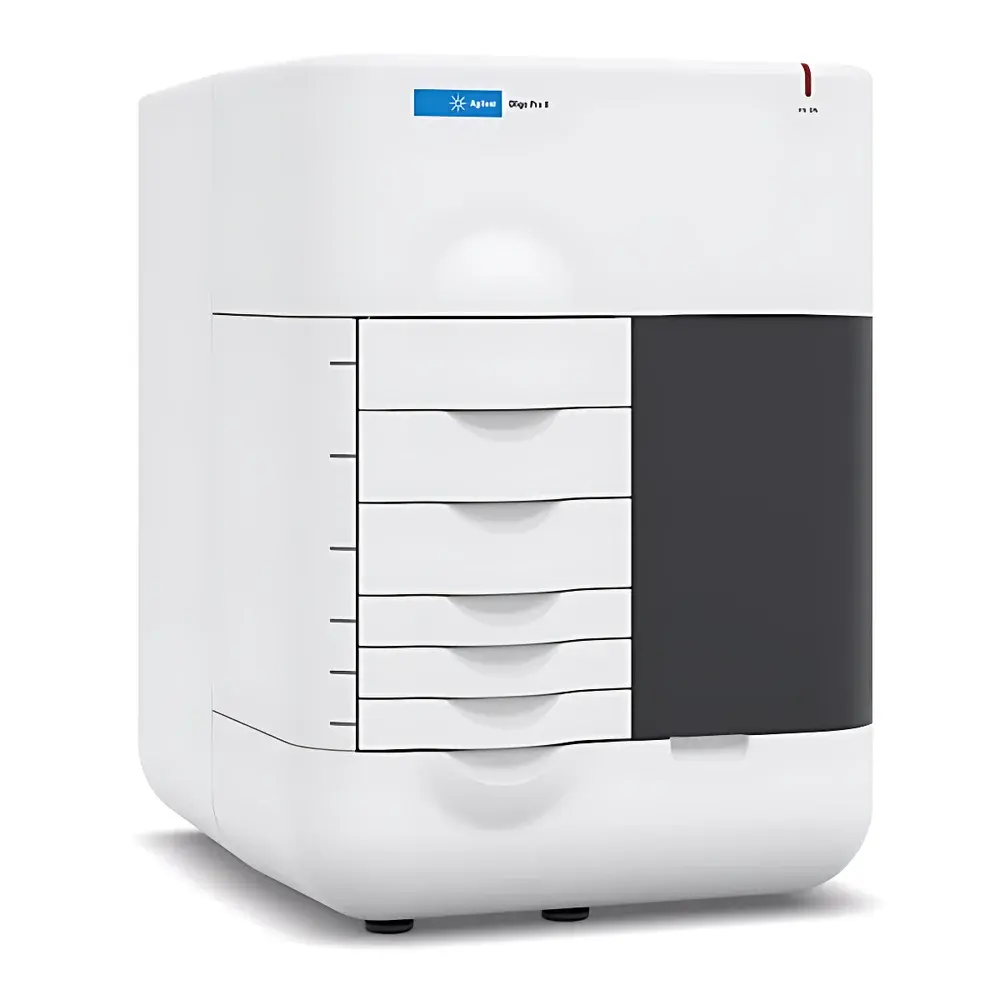
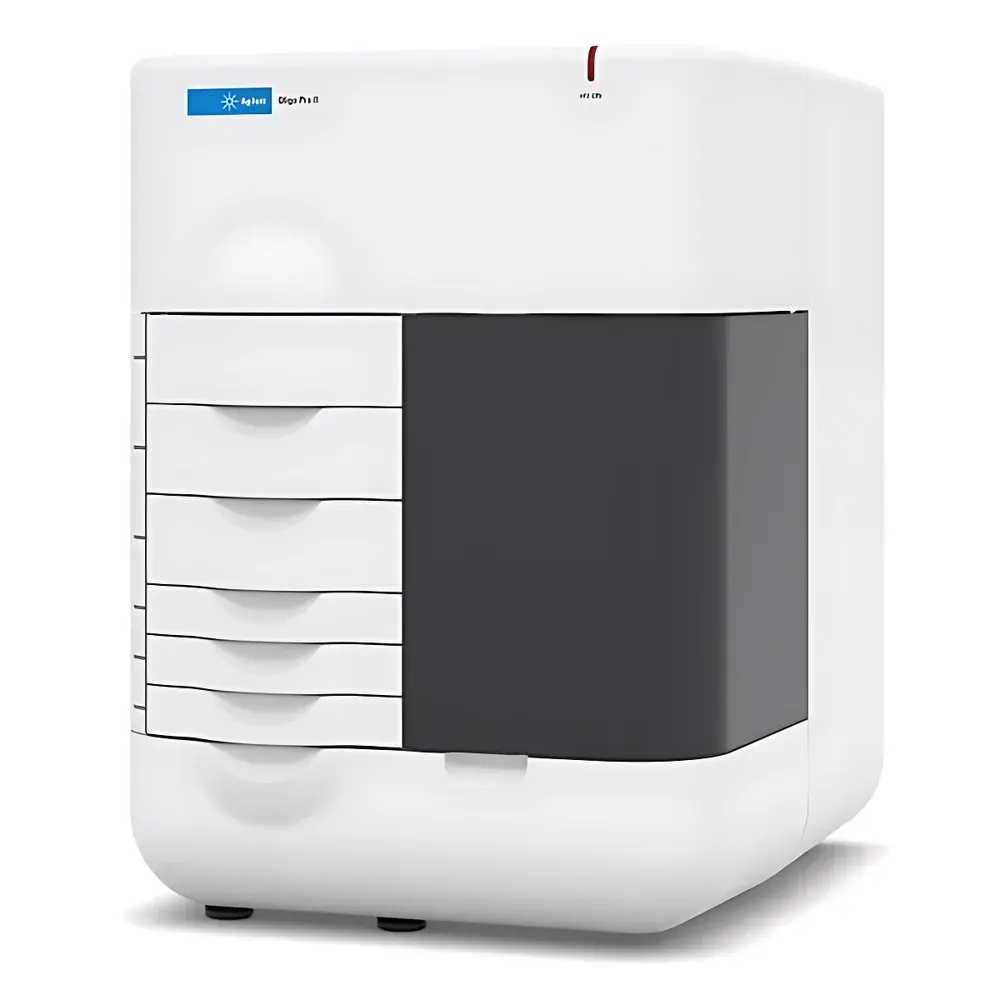
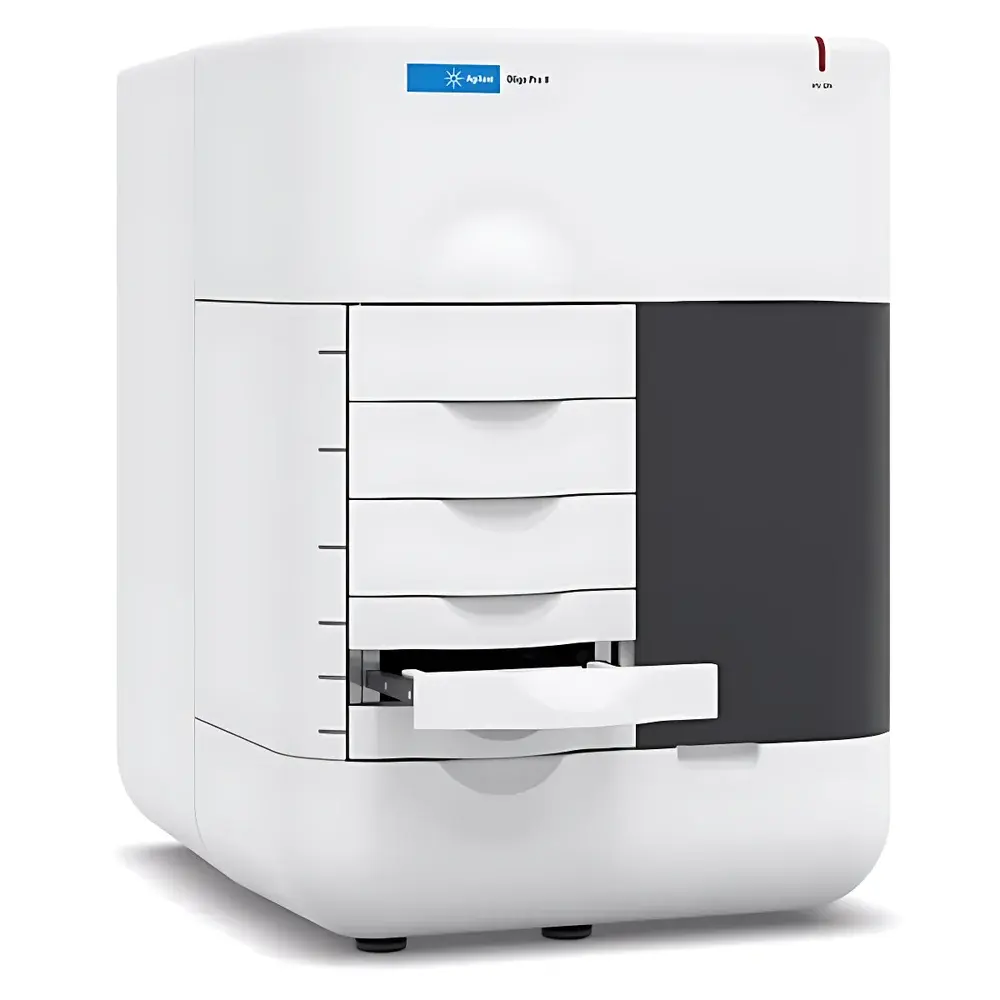
Agilent Oligo Pro II Automated Oligonucleotide Analyzer
| Brand | Agilent Technologies |
|---|---|
| Origin | Malaysia |
| Manufacturer | Agilent Technologies |
| Origin Category | Imported |
| Model | OLIGO PRO II |
| Instrument Type | Capillary Electrophoresis (CE) System |
| Sample Type | Organic Analysis (Single-Stranded DNA/RNA Oligonucleotides) |
| Voltage | 100–240 VAC, 47–63 Hz |
| Power Consumption | 150 VA |
| Operating Temperature | 20–23 °C |
| Relative Humidity | 20–60 % |
| Dimensions (W × D × H) | 49 cm × 58 cm × 67 cm |
| Weight | 56 kg |
| Molecular Weight Range | Up to 60-mer (single-base resolution) |
| Capillary Array Options | 12-, 24-, or 96-capillary configurations |
| Sample Throughput | Up to 96 samples per run |
| Detection Method | Direct UV absorbance (260 nm), dye-free |
| Resolution | n−1 for ssDNA/ssRNA ≤60 nt |
Overview
The Agilent Oligo Pro II Automated Oligonucleotide Analyzer is a dedicated capillary electrophoresis (CE)-based platform engineered for high-fidelity, label-free purity assessment of synthetic single-stranded DNA and RNA oligonucleotides. Unlike conventional gel-based or chromatographic methods requiring fluorescent labeling or post-run staining, the Oligo Pro II leverages direct UV absorbance detection at 260 nm to resolve sequence variants—including failure sequences (n−1, n−2), deletion products, and truncated species—with single-nucleotide resolution across the full range of therapeutic and research-grade oligos up to 60 nucleotides in length. Its CE separation mechanism operates under controlled electrokinetic conditions, delivering reproducible migration times and robust peak shape integrity essential for quantitative purity profiling in regulated environments.
Key Features
- Dye-free, direct UV detection: Eliminates labeling variability and inter-lot dye response drift; enables consistent quantification without chemical modification of analytes.
- Modular throughput architecture: Interchangeable 12-, 24-, and 96-capillary arrays allow laboratories to scale analytical capacity dynamically—without hardware reconfiguration or method redevelopment.
- Integrated sample handling: Three independent 96-well plate drawers support staggered loading, unattended overnight runs, and seamless integration into automated workflow pipelines.
- Single-base resolution for ≤60-mer oligos: Optimized sieving matrix and voltage ramping protocols ensure baseline separation of n−1 impurities, critical for antisense oligonucleotides (ASOs), siRNAs, and CRISPR guide RNAs.
- Robust thermal management: Precision-controlled capillary cartridge temperature (±0.1 °C) minimizes migration time drift and enhances inter-run reproducibility (RSD < 1.5% for migration time, < 3.0% for peak area).
- Low maintenance design: Disposable capillary cartridges eliminate cleaning cycles and cross-contamination risks; each cartridge is pre-validated for ≥200 injections under standard operating conditions.
Sample Compatibility & Compliance
The Oligo Pro II is validated for analysis of desalted, HPLC-purified, and PAGE-purified ssDNA and ssRNA oligonucleotides—including phosphorothioate-modified, 2′-O-methyl, and locked nucleic acid (LNA) variants. It supports aqueous buffers compatible with common synthesis deprotection protocols (e.g., ammonium hydroxide, methylamine). The system complies with key regulatory expectations for analytical instrumentation in pharmaceutical development: data integrity safeguards align with FDA 21 CFR Part 11 requirements (audit trail, electronic signatures, user access controls); raw data files are stored in vendor-neutral .agilent format with embedded metadata (method parameters, instrument logs, calibration history). All performance qualification (PQ) tests—including resolution verification, repeatability, and linearity—are documented per ICH Q2(R2) and supported by Agilent’s IQ/OQ/PQ documentation package for GLP/GMP environments.
Software & Data Management
Controlled via Agilent OpenLab CDS software (v3.4 or later), the Oligo Pro II provides an intuitive, wizard-driven interface for method setup, run scheduling, and real-time monitoring. Peak integration uses adaptive baseline algorithms optimized for CE electropherograms, with customizable thresholds for n−1/n−2 identification and automatic purity calculation (area %). Reports are exportable in PDF, CSV, and XML formats, including annotated electropherograms, summary tables, and batch-level trend charts. Audit trail functionality records all user actions—including parameter edits, reintegration events, and report generation—with timestamps and operator IDs. Raw data archives are automatically backed up to network locations with SHA-256 hash verification to ensure long-term integrity and traceability.
Applications
- Quality control release testing of synthetic oligonucleotides in biopharmaceutical manufacturing (e.g., ASO therapeutics, mRNA vaccine components).
- In-process monitoring of solid-phase oligonucleotide synthesis (SPOS) to optimize coupling efficiency and identify early-stage failure modes.
- Stability-indicating assay development per ICH Q5C for oligonucleotide drug substances exposed to thermal, acidic, or oxidative stress.
- Comparability studies during process changes (e.g., resin switch, deprotection chemistry update) supporting regulatory filings (IND, BLA, MAA).
- Research-grade purity screening for CRISPR gRNA libraries, aptamer selections, and diagnostic probe validation.
FAQ
Does the Oligo Pro II require fluorescent labeling of samples?
No. It performs label-free analysis using native UV absorbance at 260 nm, eliminating labeling artifacts and reducing sample preparation time by >50% compared to dye-based CE methods.
Can the system analyze modified oligonucleotides such as phosphorothioates or 2′-O-methyl RNA?
Yes. The method library includes validated protocols for common backbone and sugar modifications, with retention time alignment verified across multiple lots and suppliers.
What is the typical run time for a 96-sample batch?
Approximately 60 minutes for full-resolution analysis of 96 samples using the 96-capillary array, including injection, separation, and detection—excluding sample loading and data review.
Is the instrument compliant with FDA 21 CFR Part 11?
Yes. OpenLab CDS implements role-based access control, electronic signatures, immutable audit trails, and secure data archiving in accordance with Part 11 Annex A guidance.
How is system suitability verified prior to sample analysis?
Built-in system suitability tests include resolution check (n/n−1 peak separation ≥1.5), migration time precision (RSD ≤1.5%), and signal-to-noise ratio (>20:1 for 1 µM 20-mer standard), all automatically logged and reportable.






