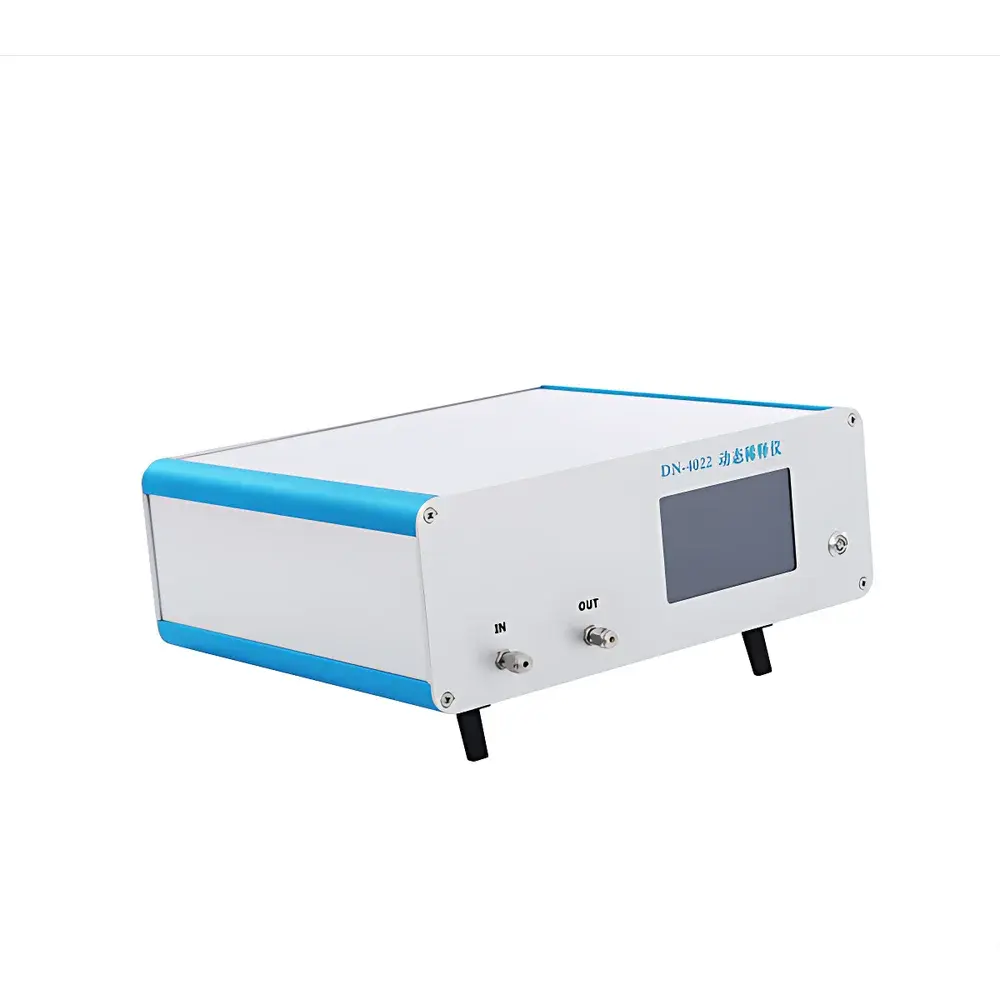
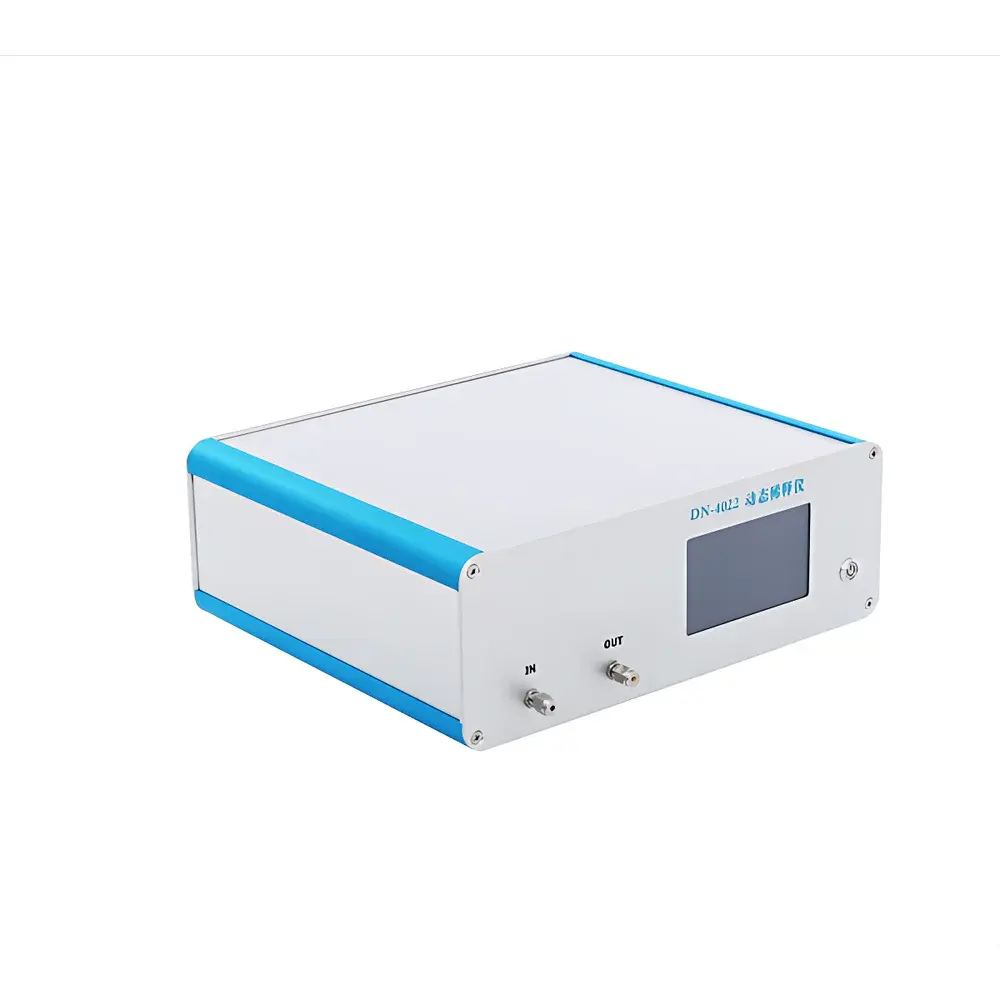
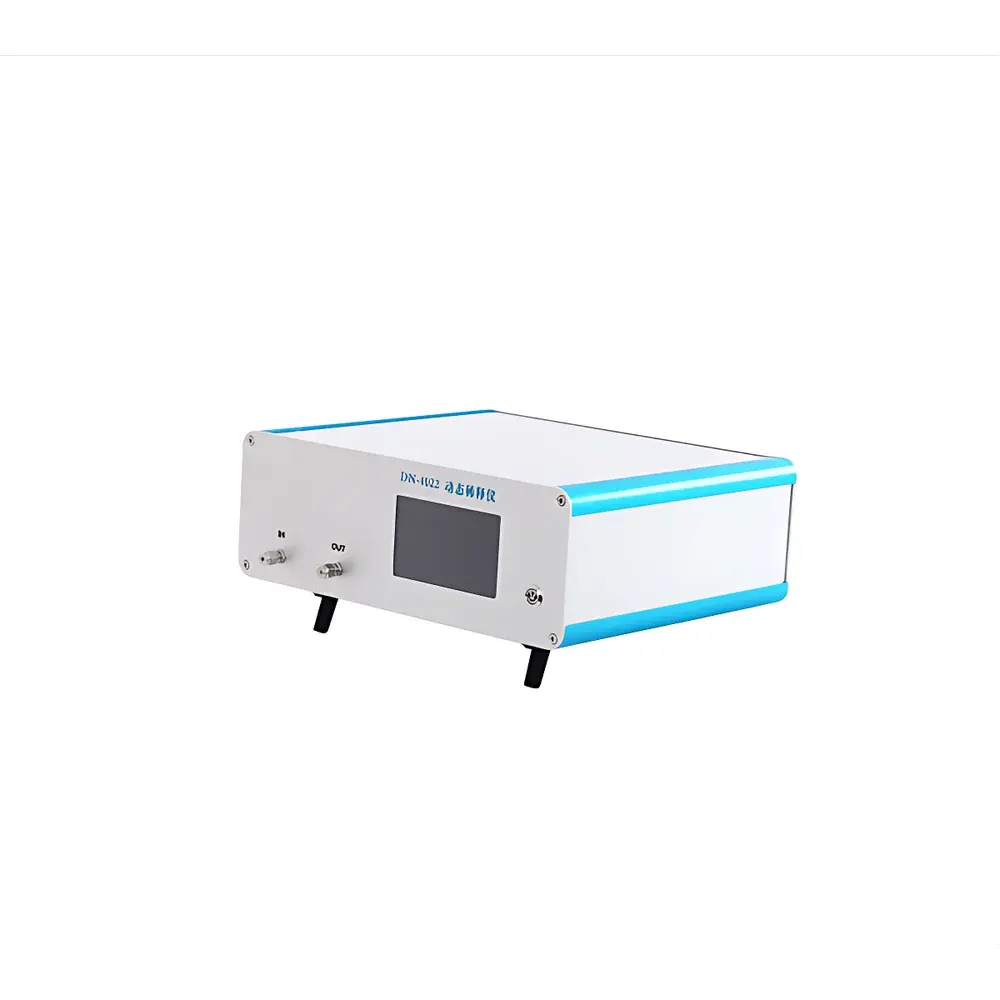
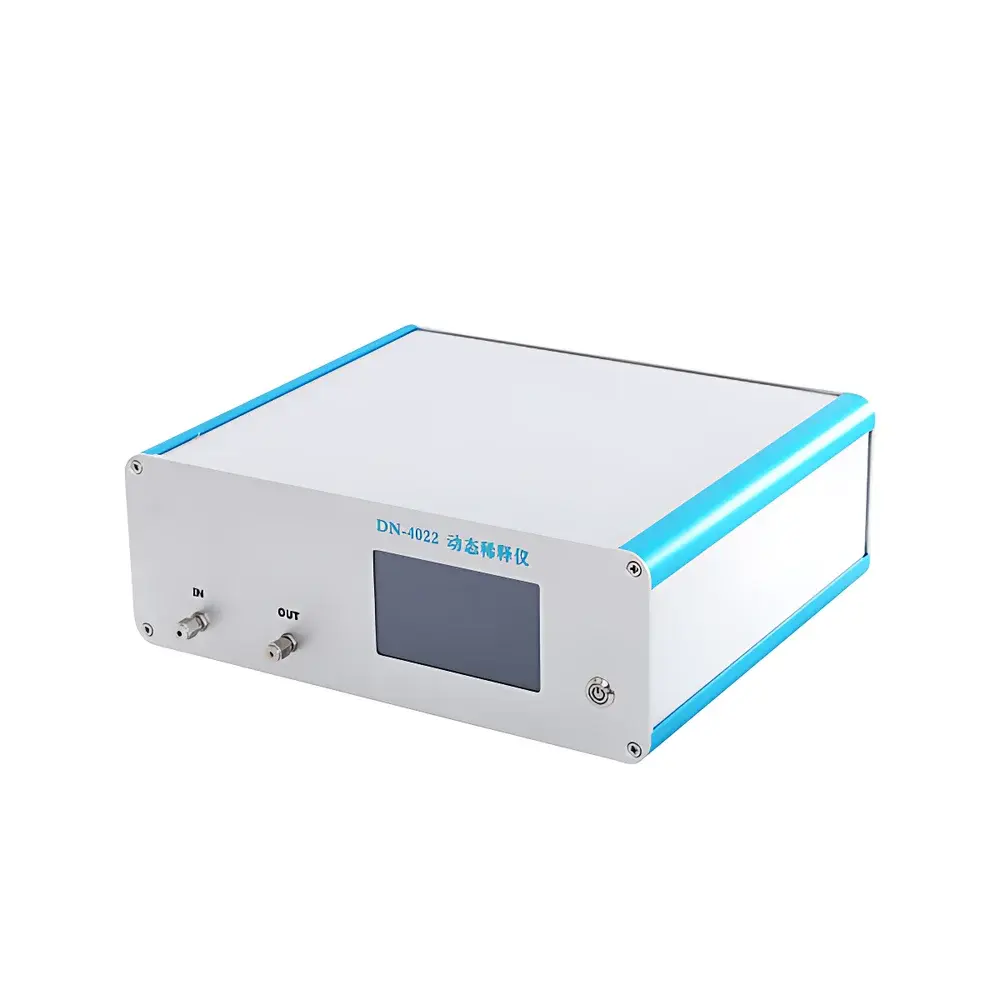
Annuo DN-4022 Dynamic Gas Dilution System
| Brand | Annuo |
|---|---|
| Origin | Henan, China |
| Manufacturer Type | Authorized Distributor |
| Country of Origin | China |
| Model | DN-4022 |
| Product Category | Orifice-Type Flowmeter |
| Operating Pressure Range | 0.1–0.6 MPa |
| Maximum Dilution Ratio | 1:200 |
| Gas Species Capacity | Up to 17 |
| Gas Path Material | Deactivated Stainless Steel & PTFE |
| Maximum Output Flow | 550 mL/min |
| Accuracy | ±5% FS |
| Display | 5-inch True-Color Touchscreen (480×800) |
| Control Interface | Analog/Digital Signal Remote Control |
| Calibration Standard Sequence Points | 8 |
| Dimensions (W×D×H) | 350 × 300 × 120 mm |
| Operating Temperature | −20 °C to +50 °C |
| Storage Temperature | −40 °C to +70 °C |
| Operating Humidity | 10–90% RH |
| Storage Humidity | 5–90% RH |
Overview
The Annuo DN-4022 Dynamic Gas Dilution System is a precision-engineered instrument designed for traceable, real-time generation of multi-component gas standards with programmable concentration ratios. Unlike static gas cylinders or fixed-ratio mixers, the DN-4022 employs a mass flow-controlled orifice-based dilution architecture—leveraging calibrated thermal mass flow controllers (MFCs) and pressure-regulated gas delivery paths—to achieve continuous, on-demand synthesis of reference gas mixtures. Its core operational principle relies on volumetric flow ratio control under laminar, isothermal conditions, enabling reproducible dilution across wide dynamic ranges without phase separation or adsorption artifacts. This system serves as a critical infrastructure component in laboratories requiring compliance-grade calibration gases for analytical instrumentation—including gas chromatographs (GC), Fourier-transform infrared (FTIR) spectrometers, photoionization detectors (PID), and electrochemical sensors—particularly where regulatory traceability, low-concentration accuracy (<1 ppmv), and matrix-matched standard preparation are essential.
Key Features
- Orifice-type flow measurement architecture compliant with ISO 5167-3 for differential pressure-based flow quantification, optimized for dry, non-corrosive, and low-particulate gas streams.
- Integrated dual-stage pressure regulation and deactivation-treated stainless steel/PTFE gas pathways to minimize surface adsorption, memory effects, and reactive species degradation—critical for VOC, NOx, SO2, NH3, and H2S applications.
- High-resolution 5-inch capacitive touchscreen interface (480 × 800 pixels) supporting intuitive configuration of dilution sequences, flow setpoints, dwell times, and alarm thresholds.
- Modular gas channel design accommodating up to 17 independent inlet gases; expandable via optional MFC modules and solenoid valve manifolds for custom multi-gas blending protocols.
- Signal reverse-control capability enables seamless integration with external GC autosamplers and LIMS platforms—allowing automated execution of 8-point calibration curves directly from instrument software.
- Ruggedized industrial enclosure rated for continuous operation across ambient temperatures from −20 °C to +50 °C and relative humidity up to 90% non-condensing.
Sample Compatibility & Compliance
The DN-4022 supports compatibility with certified reference materials (CRMs) traceable to NIST SRMs or equivalent national metrology institutes. It is routinely deployed in environments governed by EPA Method TO-14/TO-15, ISO 16000-6, EN 13649-2, and ASTM D6196 for indoor air quality and stack emission testing. While not intrinsically certified for hazardous area use (e.g., ATEX or IECEx), its gas path design conforms to ISO 8573-1 Class 2 particulate/oil/water purity specifications when used with appropriate upstream filtration. All firmware and hardware configurations adhere to GLP documentation requirements, including audit-trail-enabled parameter logging and user-access-controlled configuration locks.
Software & Data Management
The embedded firmware supports CSV export of full dilution logs—including timestamped flow values, pressure readings, sequence step execution status, and error flags—via USB host interface. No proprietary cloud platform is required; data files are structured for direct import into LabWare LIMS, Empower, or OpenLab CDS. Optional OPC UA server integration allows real-time telemetry to SCADA or MES systems. Firmware updates are delivered via signed binary packages with SHA-256 verification to ensure integrity—a prerequisite for FDA 21 CFR Part 11-compliant environments when paired with validated electronic signature workflows.
Applications
- Calibration of continuous emission monitoring systems (CEMS) in power plants and cement kilns.
- Preparation of multi-analyte standard gases for method validation per USP and EP 2.2.46 in pharmaceutical cleanroom air monitoring.
- Dynamic spiking of ambient air samples for ozone precursor reactivity studies (e.g., MIR, EKMA modeling).
- Generation of challenge gases for sensor drift assessment and lifetime testing in industrial safety devices.
- Supporting ISO/IEC 17025-accredited testing labs performing uncertainty-budgeted gas analysis per EURACHEM/CITAC Guide CG4.
FAQ
Is the DN-4022 suitable for use with corrosive or reactive gases such as Cl2, HF, or HBr?
No—standard configuration uses deactived 316L SS and PTFE wetted parts, which are incompatible with halogen acids or strong oxidizers. Custom Hastelloy-C276 or quartz-lined variants require engineering review and extended lead time.
Does the system support automatic leak checking prior to sequence execution?
Yes—integrated pressure hold test functionality verifies integrity of all active gas paths at user-defined setpoints (0.1–0.6 MPa) with pass/fail reporting logged to internal memory.
Can the 8-point calibration sequence be modified in-field without factory service?
Yes—users may define, save, and recall up to 16 unique dilution protocols via the touchscreen UI; no firmware modification or password override is needed.
What is the recommended maintenance interval for MFC recalibration?
Annuo recommends annual verification against NIST-traceable flow standards; field-adjustable zero/span compensation is accessible through service mode with authorized credentials.
Is remote monitoring supported over Ethernet or Wi-Fi?
Ethernet (RJ45) is available as an optional module; Wi-Fi is not supported due to electromagnetic interference risks in analytical lab environments.