
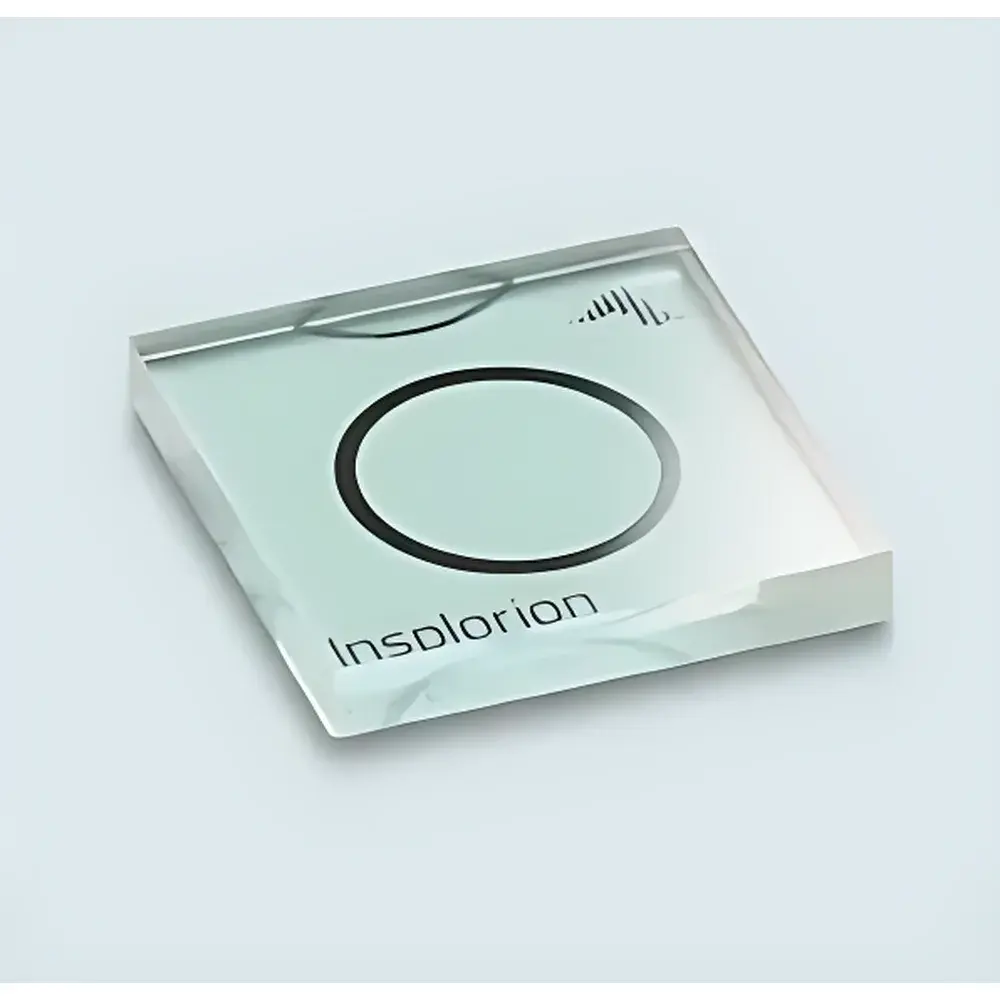
Insplorion NPS Series Nanoplasmonic Sensor Chips
| Brand | Insplorion AB |
|---|---|
| Origin | Sweden |
| Manufacturer Type | Authorized Distributor |
| Origin Category | Imported |
| Model | NPS Sensor Chip |
| Pricing | Upon Request |
Overview
The Insplorion NPS Series Nanoplasmonic Sensor Chips are engineered for label-free, real-time detection of refractive index (RI) changes within an evanescent field extending less than 30 nm from the sensor surface. This capability is rooted in localized surface plasmon resonance (LSPR) physics—where incident light couples with collective electron oscillations in nanoscale metallic structures, generating highly sensitive spectral shifts upon molecular adsorption or conformational change. Unlike conventional SPR systems relying on propagating surface plasmons at planar metal–dielectric interfaces, the NPS platform leverages precisely fabricated, sub-wavelength gold nanostructures to deliver enhanced spatial resolution, reduced bulk RI sensitivity, and superior signal-to-noise ratio for interfacial events. Designed specifically for fundamental and applied research in protein–ligand binding kinetics, membrane protein reconstitution, thin-film phase transitions, and surface-mediated biomolecular assembly, these chips serve as the core transduction element in Insplorion’s optical sensing platforms—including the X1 and Qsense systems.
Key Features
- Ultra-shallow evanescent field depth (<30 nm), enabling selective interrogation of near-surface molecular events while minimizing interference from bulk solution effects.
- Fabricated in ISO Class 5 cleanroom environments to ensure batch-to-batch reproducibility, structural uniformity, and controlled surface chemistry.
- Gold-based nanoplasmonic arrays covering the full active sensing area with quasi-random spatial distribution—optimized for homogeneous optical coupling and minimal diffraction artifacts.
- Configurable nanostructure geometry: diameter, height, aspect ratio, and curvature can be systematically varied (e.g., nanodisks, nanocups, nanoholes, truncated cones, faceted nanospheres) to modulate local electromagnetic field enhancement and surface topology effects.
- Flexible surface functionalization: native gold surfaces support thiol-based self-assembled monolayers (SAMs); optional thin dielectric capping layers (e.g., SiO₂, TiO₂, Al₂O₃) enable oxide-specific chemistries or enhanced stability under harsh conditions.
- Two standard mechanical configurations: surface-mounted disk format and flush-embedded disk format—both compatible with standard microfluidic cartridge holders and temperature-controlled flow cells.
Sample Compatibility & Compliance
The NPS sensor chips are compatible with aqueous buffers, organic solvents (e.g., ethanol, chloroform), and low-polarity media used in lipid bilayer formation or polymer film deposition. Surface-immobilized proteins, peptides, nucleic acids, glycans, synthetic polymers, and supported lipid bilayers have been successfully characterized using this platform. All chips comply with ISO 13485 design control principles for medical device–related R&D instrumentation. While not certified as IVD devices, their manufacturing traceability, material certification (ASTM F2623 for biomedical-grade gold), and documentation package support GLP-compliant workflows and FDA 21 CFR Part 11–aligned data integrity requirements when integrated into validated instrument systems.
Software & Data Management
When deployed with Insplorion’s X1 or Qsense instruments, NPS chips generate time-resolved LSPR spectra (typically 500–900 nm range) sampled at up to 10 Hz. Raw spectral data are processed using proprietary algorithms that extract peak wavelength shift (Δλ), full-width-at-half-maximum (FWHM), and scattering intensity metrics. Export formats include CSV, HDF5, and vendor-neutral JSON schemas supporting integration with MATLAB, Python (via insplorion-sdk), and commercial analysis suites such as OriginLab or GraphPad Prism. Audit trails, user authentication logs, and electronic signatures are maintained per instrument firmware configuration to meet GxP data governance expectations.
Applications
- Real-time monitoring of protein adsorption kinetics and conformational rearrangements on tailored surfaces.
- Investigation of curvature-dependent binding affinities using nanoscale topographies mimicking cellular membranes or extracellular matrix features.
- In situ characterization of stimuli-responsive hydrogel swelling/collapse and polymer brush hydration dynamics.
- Label-free detection of antibody–antigen interactions under low-concentration physiological conditions (pM–nM range).
- Surface chemistry screening for optimizing biosensor immobilization strategies, including orientation control via site-specific bioconjugation.
- Correlation of nanoscale structural parameters (e.g., tip radius, edge density) with catalytic activity or molecular recognition selectivity.
FAQ
What is the typical shelf life of unopened NPS sensor chips?
Unopened chips stored under inert atmosphere at room temperature retain full performance for ≥12 months from date of manufacture.
Can NPS chips be reused after regeneration?
Yes—under controlled conditions using mild stripping protocols (e.g., 10 mM NaOH, 0.1% SDS, or 10 mM glycine-HCl pH 2.5), provided no irreversible denaturation or surface contamination has occurred.
Are custom nanostructure geometries available beyond the standard catalog offerings?
Yes—Insplorion offers design-for-manufacturing consultation and small-batch fabrication of user-defined nanostructure layouts under NDA, subject to minimum order quantities and lead time agreement.
Do NPS chips require special optical alignment or calibration before use?
No—each chip is pre-characterized and assigned a unique spectral reference profile; automated baseline correction is performed during instrument initialization.
Is there compatibility with high-throughput microplate readers?
Not natively—the NPS platform requires collimated broadband illumination and high-resolution spectrometry; however, multi-channel flow cell adapters support parallel analysis of up to 4 chips per run.
Related Products



