
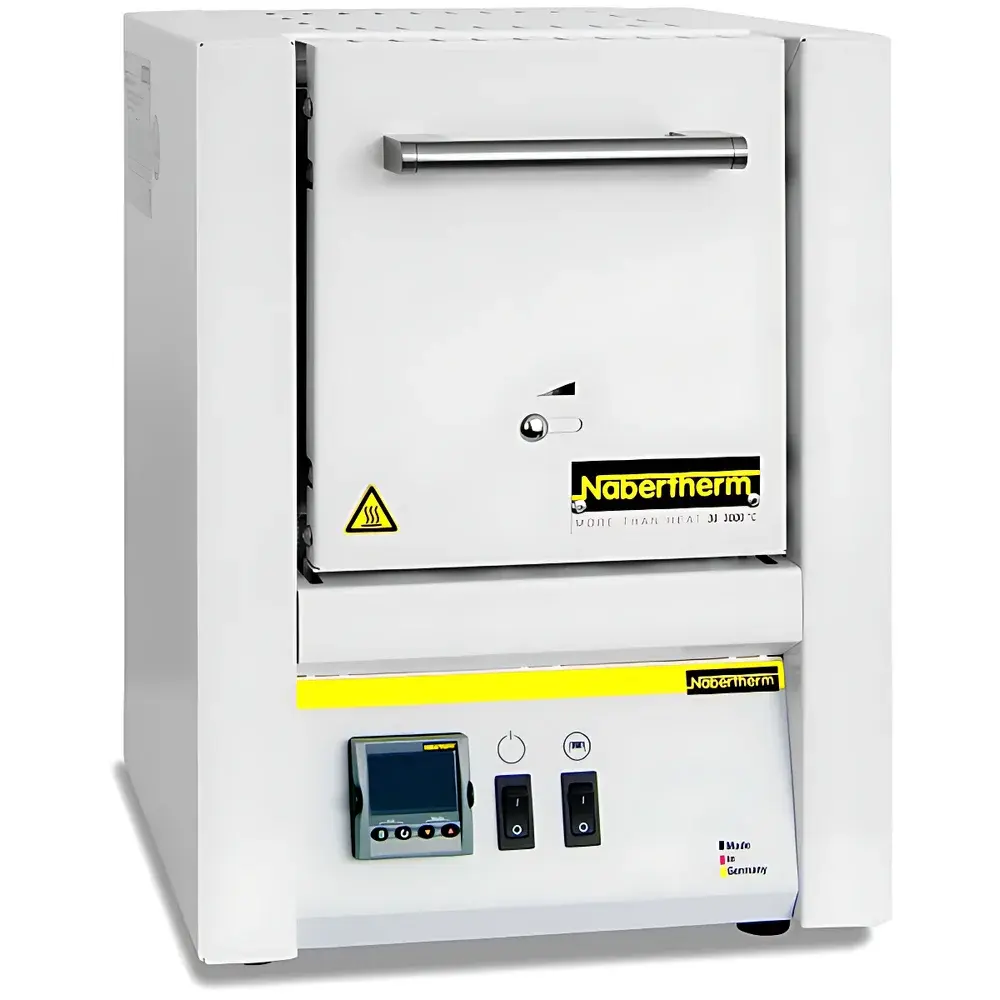
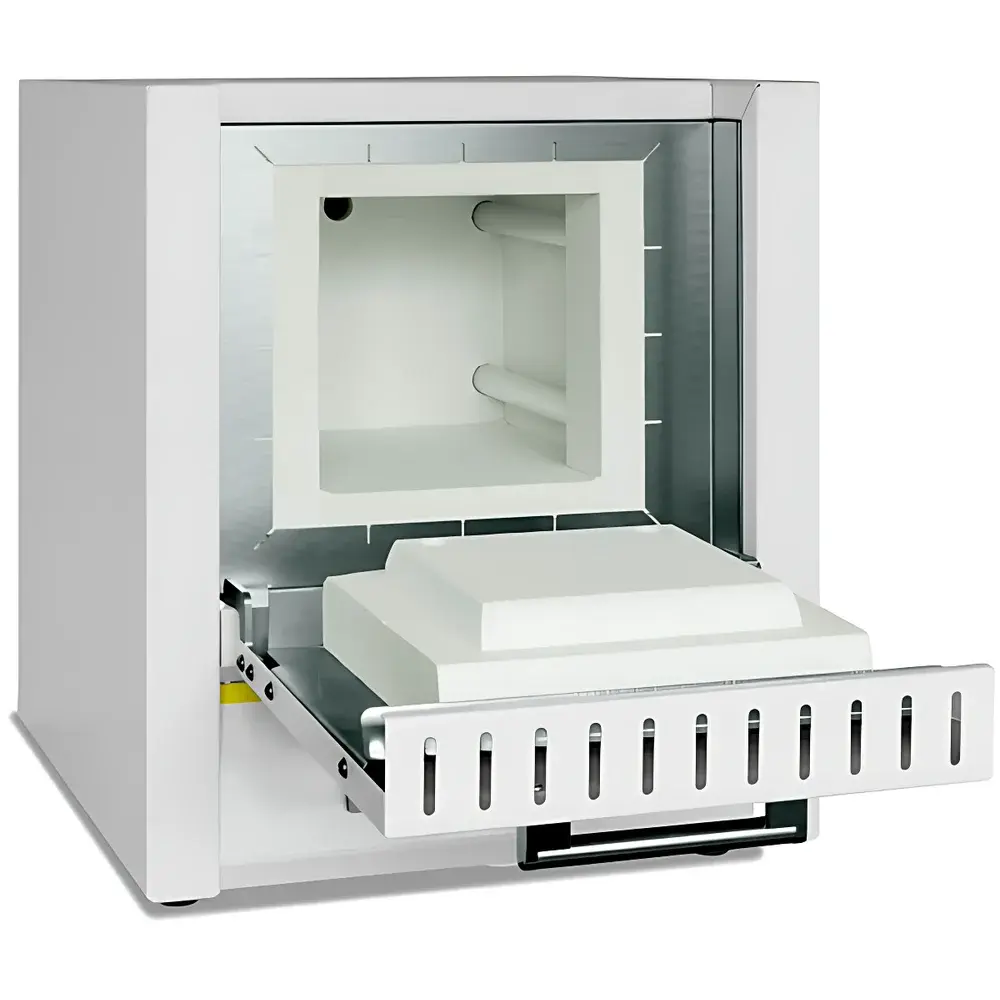
Nabertherm LE 14/11/R7 Laboratory Muffle Furnace
| Brand | Nabertherm |
|---|---|
| Origin | Germany |
| Model | LE 14/11/R7 |
| Instrument Type | Box-Type Muffle Furnace |
| Maximum Temperature | 1100 °C |
| Temperature Control Accuracy | ±1 °C |
| Rated Power | 2.9 kW |
| Heating Time to Max Temperature | 40 min |
| Heating Method | Resistance Wire (Encapsulated in Quartz Tubes) |
| Internal Dimensions | 220 × 300 × 220 mm (W × D × H) |
| External Dimensions | 440 × 535 × 540 mm (W × D × H) |
| Net Weight | 40 kg |
| Electrical Supply | Single-phase, 230 V, 50/60 Hz |
Overview
The Nabertherm LE 14/11/R7 is a precision-engineered laboratory muffle furnace designed for reliable, repeatable high-temperature thermal processing in research, quality control, and routine analytical laboratories. Operating on the principle of radiant and convective heat transfer via encapsulated resistance heating elements, it delivers uniform temperature distribution across its ceramic fiber-insulated chamber—critical for applications requiring strict thermal homogeneity and minimal thermal lag. With a maximum operating temperature of 1100 °C and a working temperature limit of 1050 °C, the furnace meets the thermal demands of ashing, calcination, heat treatment, sintering pre-tests, and gravimetric analysis per ASTM E1867, ISO 562, and USP . Its robust dual-layer stainless steel housing—featuring brushed finish and structural rigidity—ensures mechanical stability and surface temperatures below 55 °C during continuous operation at 1100 °C, complying with EN 60519-2 safety requirements for industrial electroheating equipment.
Key Features
- Two-sided heating configuration with high-purity resistance wires hermetically sealed inside quartz tubes—enhancing element longevity, minimizing oxidation, and simplifying replacement without compromising insulation integrity
- High-efficiency thermal insulation using non-combustible, low-conductivity ceramic fiber (Al₂O₃–SiO₂ based), rated for continuous use up to 1200 °C and certified to DIN 4102 Class A1 (non-flammable)
- Front-opening door with counterbalanced hinge mechanism and high-temperature resistant sealing gasket ensures safe sample loading/unloading and optimal chamber accessibility
- Integrated rear-mounted exhaust port (G1/4″ BSP thread) compatible with standard fume extraction systems, catalytic afterburners, or inert gas purge lines (e.g., N₂, Ar)
- Dual-stage overtemperature protection: independent mechanical limit switch (EN 60519-2, Thermal Protection Class 2) + digital controller-based cut-off setpoint—both configurable and independently certifiable
- Compact footprint (440 × 535 × 540 mm) and front-mounted microprocessor controller (below door) optimize benchtop space utilization in ISO 17025-accredited labs
- Low-noise operation enabled by solid-state relay (SSR) switching—eliminating contactor chatter and supporting GLP-compliant long-term thermal cycling protocols
Sample Compatibility & Compliance
The LE 14/11/R7 accommodates standard crucibles (alumina, platinum, silica), ceramic boats, and refractory trays within its 14.5 L internal volume. Its chamber geometry supports uniform heating of samples up to 200 mm in height and 280 mm in diagonal dimension. The furnace complies with key regulatory frameworks including EN 61000-6-3 (EMC emission limits), EN 61000-6-2 (immunity), and IEC 61010-1 (safety requirements for electrical equipment for measurement, control, and laboratory use). Optional accessories—including programmable gas dosing modules and data-logging-capable controllers—enable compliance with FDA 21 CFR Part 11 when paired with validated software environments and audit-trail-enabled firmware.
Software & Data Management
While the base LE 14/11/R7 operates with Nabertherm’s proprietary THERMOCOMFORT® microcontroller (4-button interface, 3-stage ramp-soak profile memory), optional upgrades include the THERMOCOMFORT® Touch controller with Ethernet/RS485 connectivity and integrated USB data export. This enables seamless integration into LIMS or ELN platforms via Modbus TCP or ASCII protocol. All temperature profiles, event logs (door open/close, overtemp triggers, SSR status), and calibration history are timestamped and stored with user ID attribution—supporting full traceability under GLP and GMP Annex 11 requirements. Firmware updates maintain backward compatibility with existing calibration certificates issued per DKD/DAkkS guidelines.
Applications
- Gravimetric determination of ash content in food, feed, pharmaceutical excipients, and environmental solids (AOAC 942.05, ISO 2171)
- Pre-treatment of catalyst supports and ceramic precursors prior to BET surface area analysis
- Thermal decomposition studies in materials science (TGA correlation reference heating stage)
- Residue-on-ignition testing for USP monographs (e.g., , )
- Calibration verification of thermocouples (Type S, R, B) and RTDs in metrology labs
- Controlled oxidative aging of polymer composites per ASTM D5510
FAQ
What is the recommended maintenance interval for the heating elements and insulation?
Heating elements require inspection every 200 operational hours at ≥1000 °C; ceramic fiber insulation should be assessed annually for compression or cracking—replacement advised if density falls below 120 kg/m³.
Can the furnace be operated under inert or reducing atmospheres?
Yes—via the rear G1/4″ threaded port; however, continuous operation above 900 °C under H₂ or CO requires optional quartz tube extension and dedicated gas flow monitoring per EN 746-2.
Is the temperature uniformity validated across the working zone?
Per Nabertherm factory certification, uniformity is ±3 °C at 1000 °C (measured at 5 points: center, corners, mid-walls) per DIN 17007-2.
Does the controller support multi-step programmable ramps?
Yes—the standard controller stores up to 3 independent programs with 16 segments each; upgrade to Touch version enables unlimited program storage and real-time remote monitoring.
What documentation is supplied for IQ/OQ validation?
Factory test report (including as-found/as-left calibration data), CE Declaration of Conformity, EN 61010-1 safety certificate, and optional 3Q validation kit (with protocol templates and blank forms) are provided upon request.



