
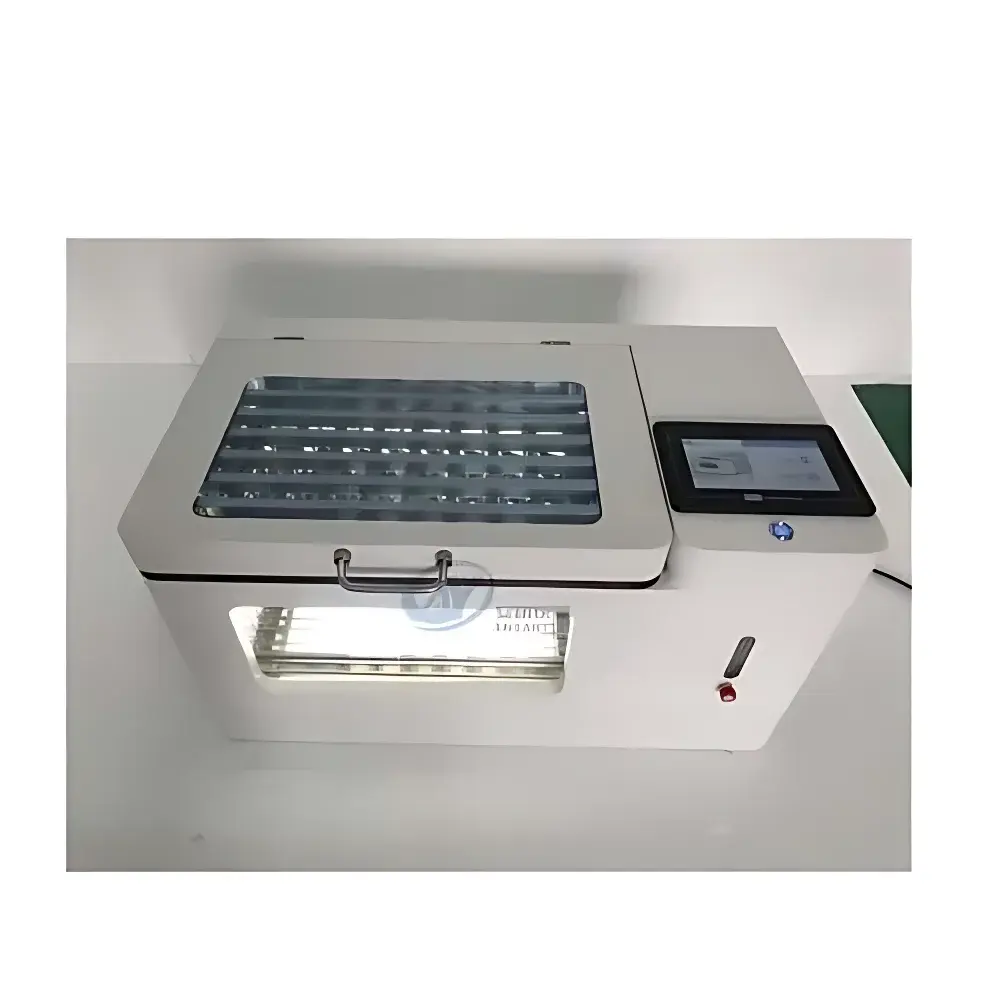
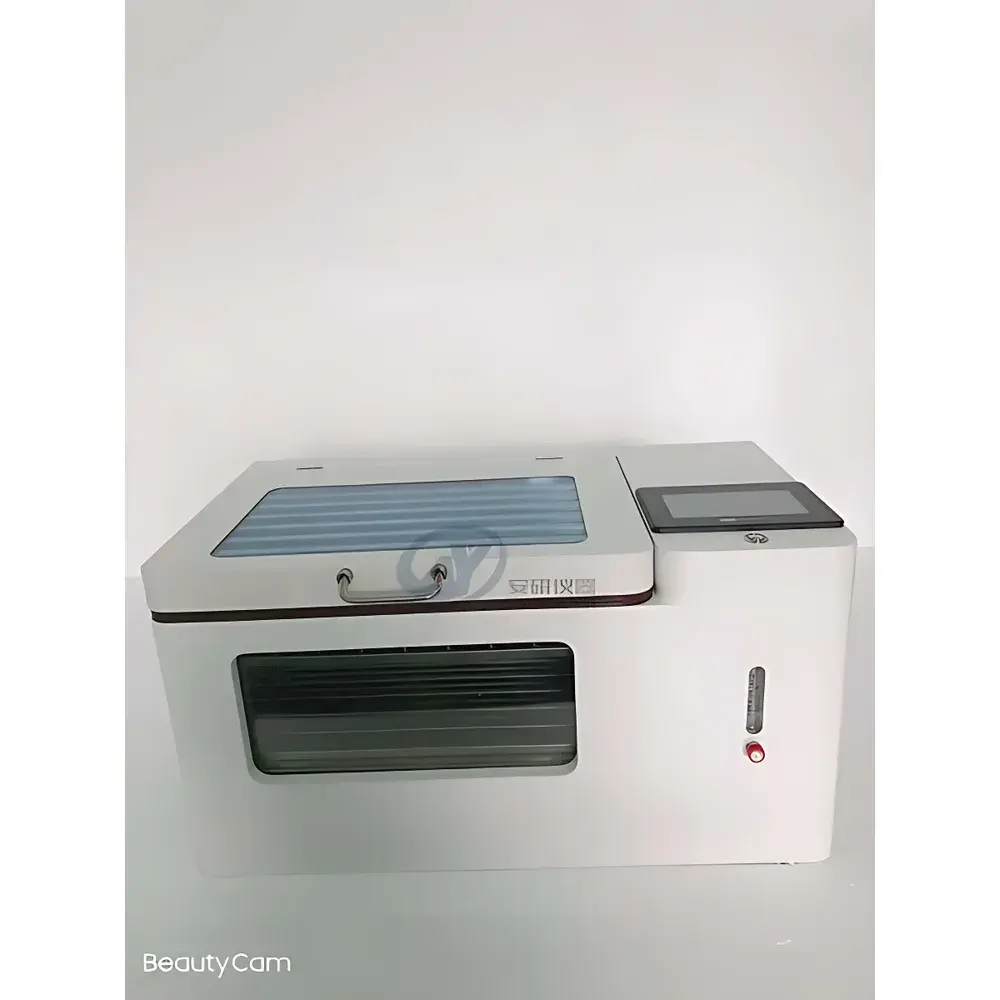
Anyan AYAN-DC36S High-Capacity Intelligent Water Bath Nitrogen Evaporator (36-Position)
| Brand | Anyan |
|---|---|
| Origin | Zhejiang, China |
| Model | AYAN-DC36S |
| Heating Method | Water Bath |
| Temperature Range | Ambient to 100 °C (±1 °C) |
| Temperature Uniformity | ±1 °C |
| Sample Capacity | 36 positions (also available in 48- and 60-position configurations) |
| Tube Diameter Compatibility | 16 mm (customizable) |
| Gas Flow Control | Independent electromagnetic valve per channel |
| Power Supply | 220 V, 50 Hz |
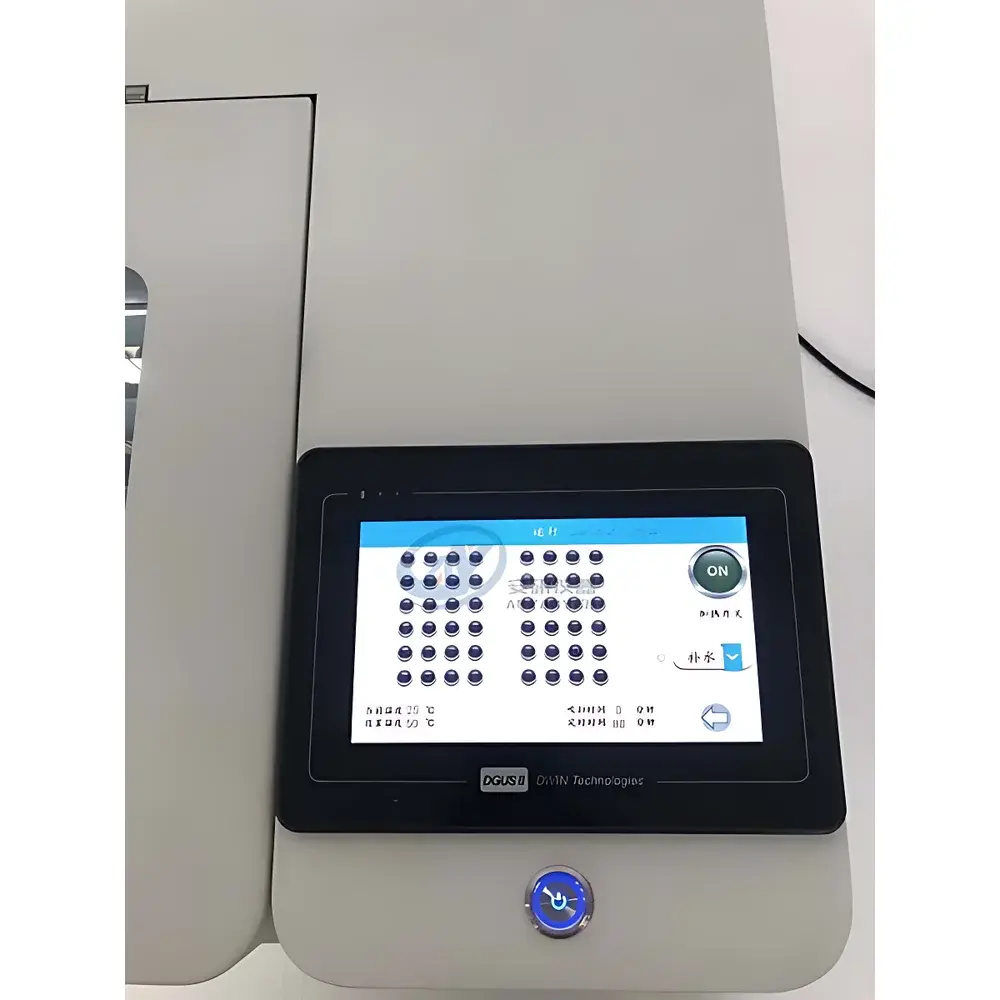
| Display | 7-inch capacitive touchscreen interface |
| Programmable Temperature Profiles | 50-segment ramp/soak |
| Timing Range | 0–999 min |
| Pressure Regulation Range | 0–0.8 MPa |
| Sealing System | Dual-glass door with internal recirculating fan |
| Ventilation Interface | Rear exhaust port (compatible with fume hood integration) |
Overview
The Anyan AYAN-DC36S is a high-capacity, intelligent water bath nitrogen evaporator engineered for reproducible, low-temperature solvent removal in analytical sample preparation workflows. It operates on the principle of gentle inert gas (nitrogen) sweeping across the surface of heated liquid samples—accelerating evaporation while minimizing thermal degradation, oxidation, or analyte loss. Unlike dry-block or air-heated systems, the water bath design ensures uniform thermal distribution and precise temperature control (±1 °C) across all 36 sample positions, making it especially suitable for thermally labile compounds encountered in pesticide residue analysis, pharmaceutical stability testing, environmental contaminant quantification, and clinical biomarker extraction.
Key Features
- 7-inch capacitive touchscreen interface supporting intuitive navigation, real-time parameter monitoring, and multi-language UI options (English default).
- 50-segment programmable temperature ramping and soaking profiles—enabling complex evaporation protocols such as gradient drying or stepwise concentration for multi-analyte matrices.
- Independent electromagnetic flow control per channel ensures consistent nitrogen delivery across all positions; eliminates cross-contamination risk and reduces total gas consumption by up to 40% compared to fixed-flow manifolds.
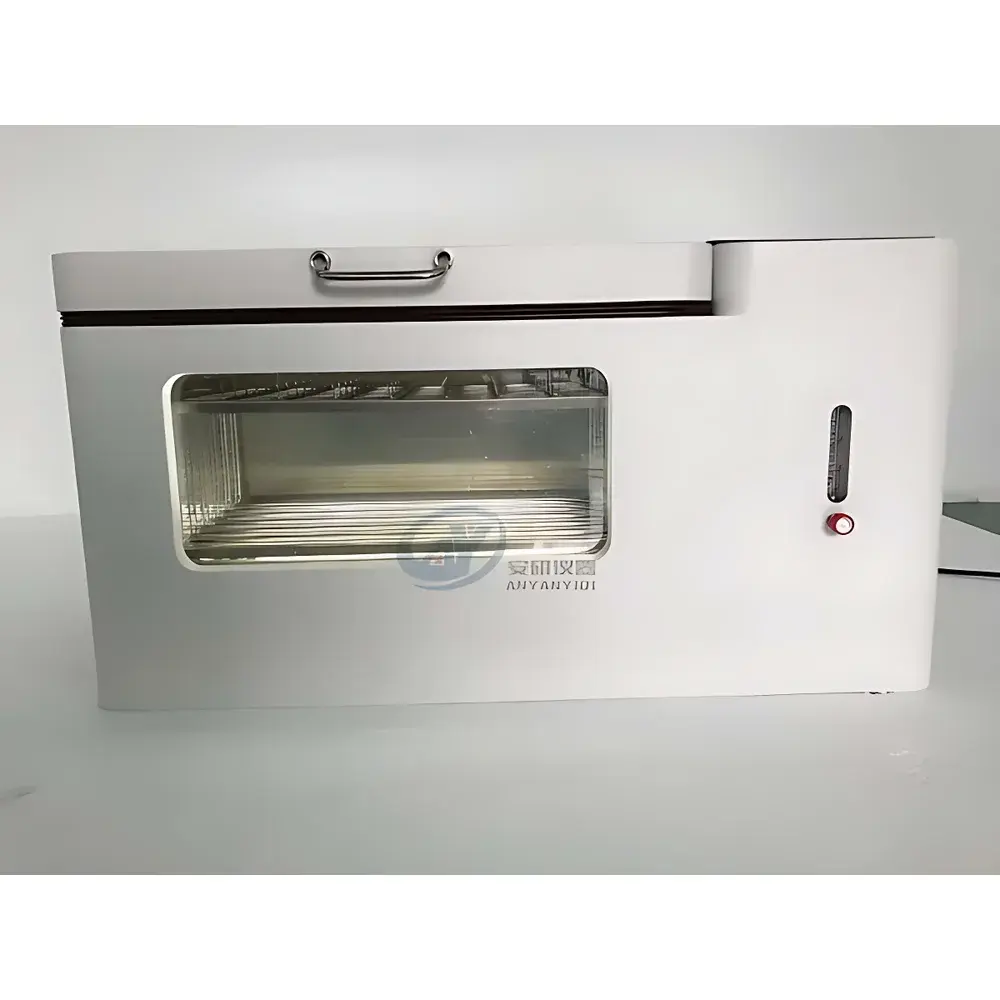
- Dual-sealed observation doors with anti-fog tempered glass and integrated recirculating fan system—maintains containment integrity without requiring external ducting unless mandated by local safety regulations.
- Full visual access via dual side-mounted transparent windows and top-down module visibility—facilitating real-time monitoring of solvent meniscus recession and endpoint determination.
- Auto-lift blow-down mechanism: Upon completion or manual pause, all needles retract synchronously to maximum height—preventing tube collision during sample retrieval.
- Internal data logging capability stores operational history including setpoints, actual temperatures, elapsed time, and alarm events—supporting GLP-compliant record retention.
Sample Compatibility & Compliance
The AYAN-DC36S accommodates standard 16 mm OD test tubes (e.g., 15 mL conical centrifuge tubes), with optional adapters available for 10 mm, 13 mm, and 20 mm formats. Its water bath chamber is constructed from 304 stainless steel with corrosion-resistant coating, compatible with aqueous, methanolic, acetonitrile, and ethyl acetate-based extracts. The unit meets CE marking requirements for electrical safety (EN 61010-1) and electromagnetic compatibility (EN 61326-1). While not certified under FDA 21 CFR Part 11 out-of-the-box, its audit-trail-capable data storage and password-protected configuration menus support validation efforts for ISO/IEC 17025-accredited laboratories and GxP-regulated environments when deployed with documented SOPs.
Software & Data Management
No proprietary PC software is required for basic operation; all settings are configured locally via the embedded HMI. However, USB export functionality allows transfer of logged session data (CSV format) for offline review in LIMS or statistical analysis platforms. Timestamped records include start/stop times, average and peak bath temperature, total runtime, and any triggered warnings (e.g., low-water detection, overtemperature). Optional RS-485 Modbus RTU output enables integration into centralized lab automation systems for remote status polling and event-driven workflow triggering.
Applications
- Pesticide multiresidue analysis (AOAC 2007.01, EN 15662): Concentration of QuEChERS extracts prior to GC-MS/MS or LC-MS/MS injection.
- Pharmaceutical impurity profiling: Gentle removal of volatile organic solvents from API intermediates without inducing epimerization or decomposition.
- Environmental water testing (EPA Method 525.3): Pre-concentration of trace-level PAHs, PCBs, and organochlorine pesticides from large-volume SPE eluates.
- Clinical toxicology: Parallel processing of urine or plasma hydrolysates for opiate, benzodiazepine, or stimulant screening assays.
- Food safety surveillance: Reduction of matrix volume in fatty acid methyl ester (FAME) preparations prior to capillary GC-FID analysis.
FAQ
What is the maximum recommended nitrogen inlet pressure?
The system is rated for inlet pressures up to 0.8 MPa, but optimal performance and needle longevity are achieved at ≤0.3 MPa—consistent with standard laboratory nitrogen generators and cylinder regulators.
Can the water bath be used with non-aqueous heat transfer fluids?
No. Only deionized or distilled water is approved for use; silicone oil or glycol mixtures may damage seals and compromise temperature sensor accuracy.
Is the unit compatible with automated liquid handlers?
While not natively robotic-arm-integrated, the standardized 36-position spacing (center-to-center: 25 mm) and modular tray design allow third-party gripper adaptation for semi-automated loading/unloading sequences.
How often should the water level sensor be calibrated?
The capacitive water level switch requires no periodic calibration; however, quarterly visual inspection for mineral deposit buildup on the sensor probe is advised in hard-water regions.
Does the device support external temperature probes for sample-specific monitoring?
No. Bath temperature is measured via a calibrated PT100 sensor embedded in the stainless-steel reservoir; direct sample temperature measurement is not supported due to immersion constraints and thermal lag considerations.



