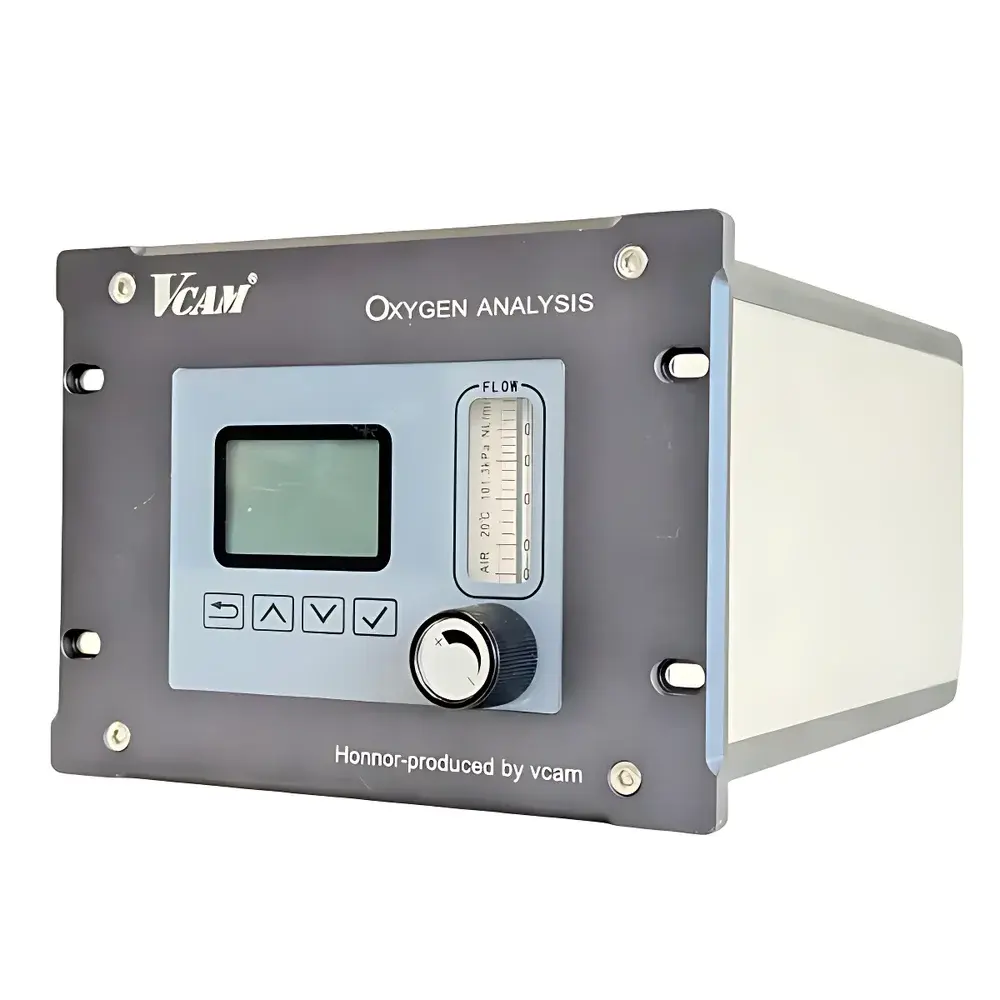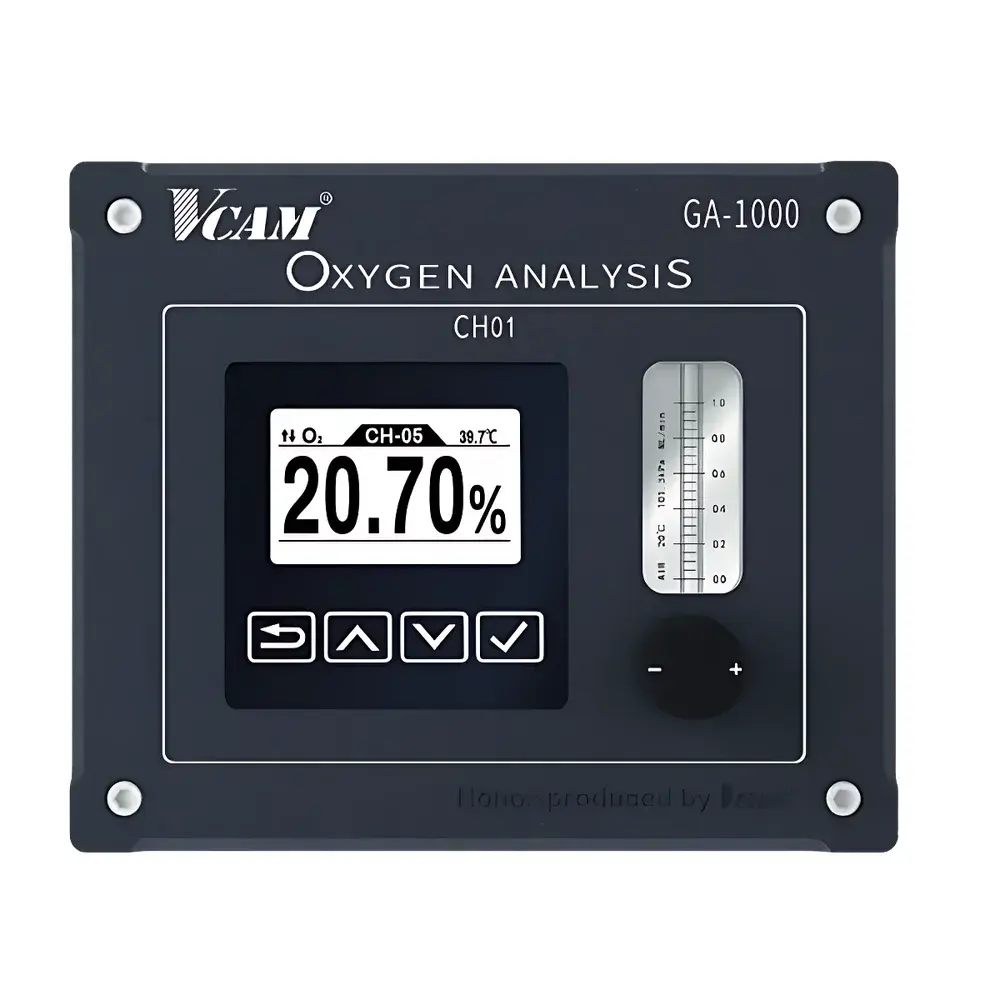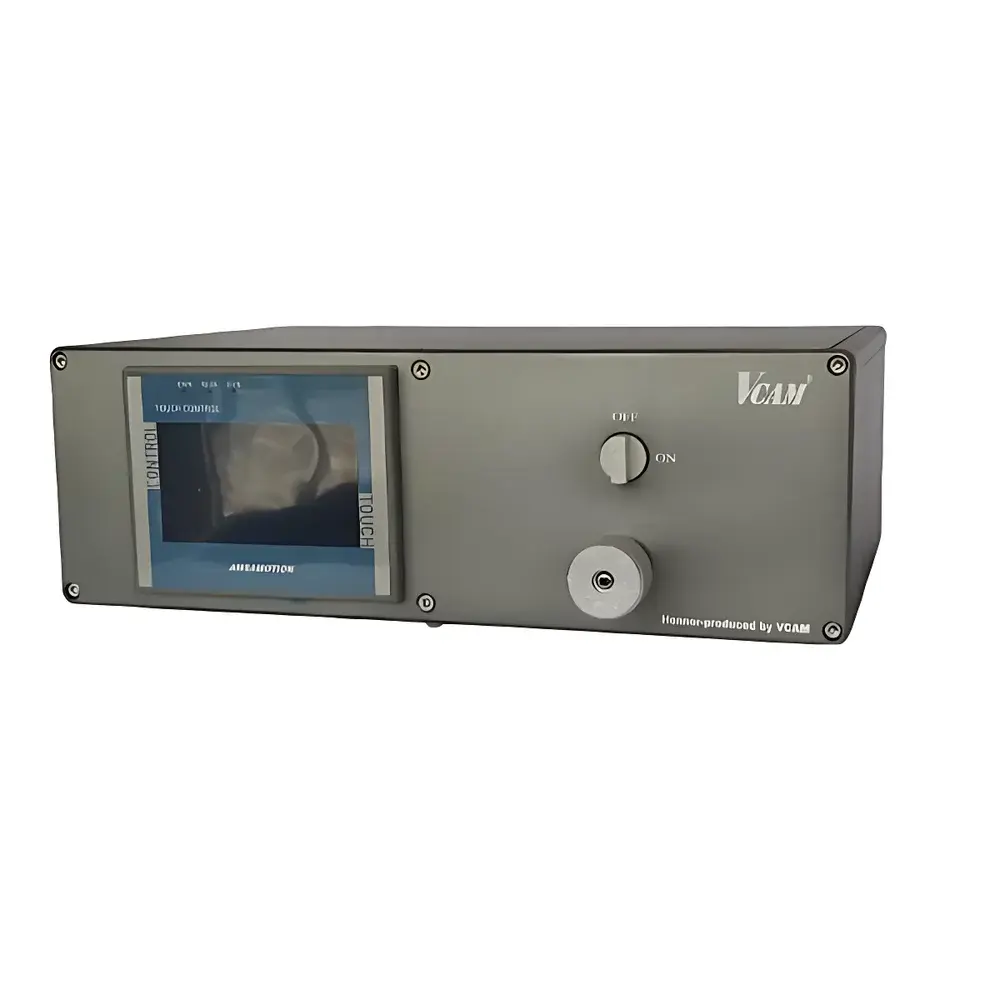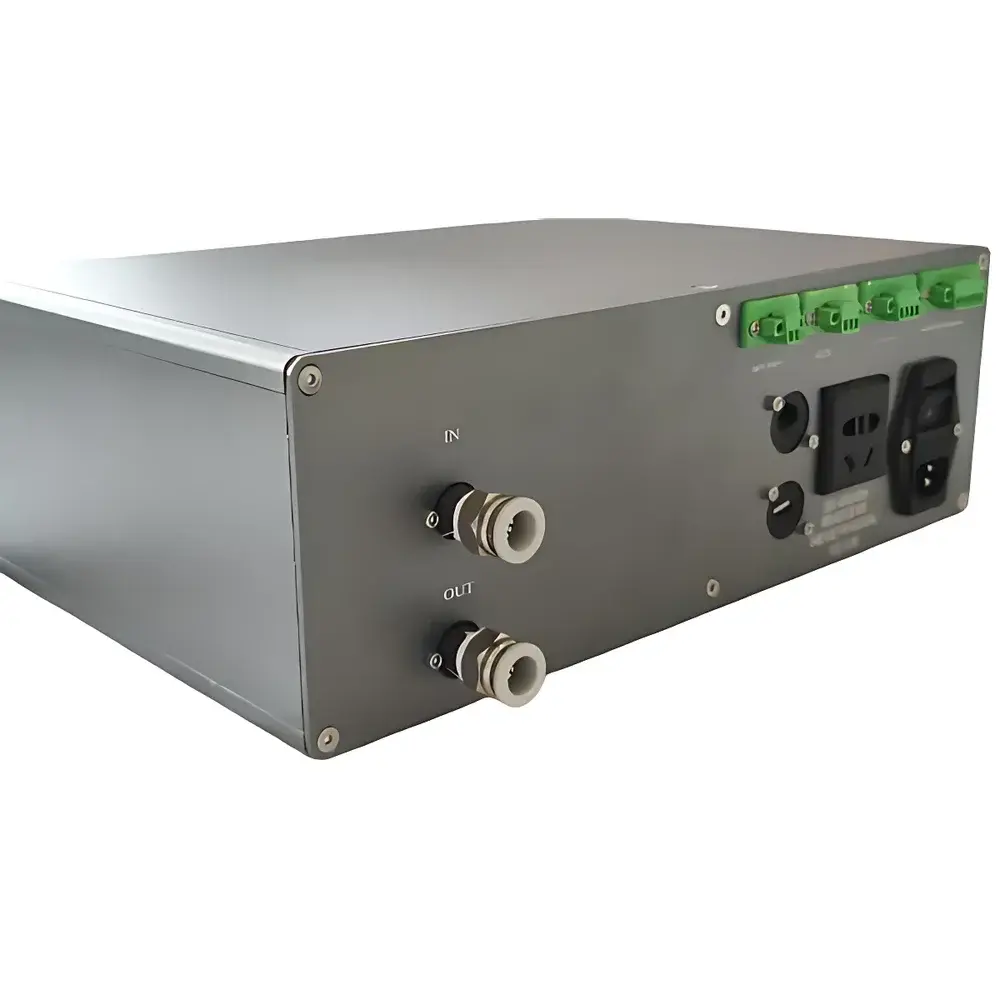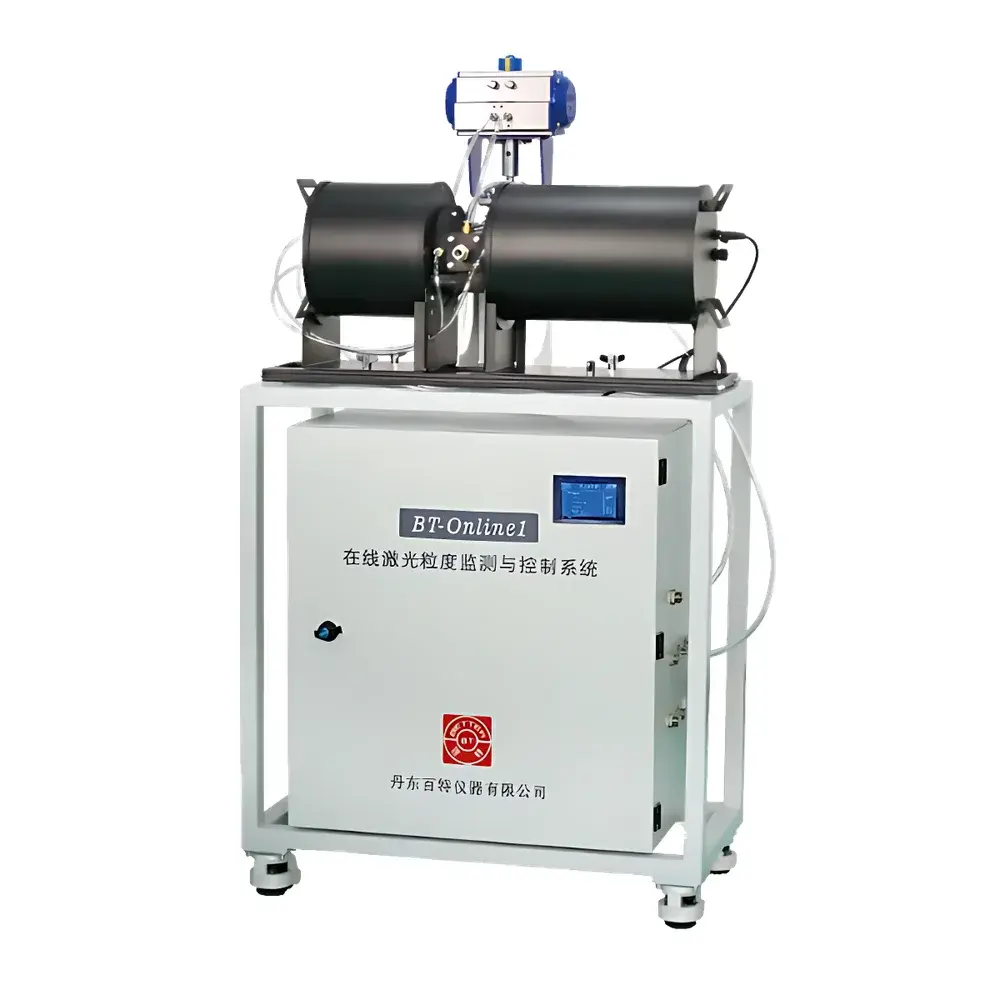
Bettersize BT-Online1 Online Dry-Process Laser Diffraction Particle Size Monitoring and Control System
| Brand | Bettersize |
|---|---|
| Model | BT-Online1 |
| Measurement Principle | Mie Scattering Theory (default), Fraunhofer Diffraction Theory (optional) |
| Particle Size Range | 0.1–1000 µm |
| Accuracy & Repeatability | ≤1% D50 deviation against NIST-traceable or ISO-certified reference standards |
| Laser Source | High-power fiber-coupled laser |
| Detector Array | 68-element photodiode array (forward + side scattering) |
| Optical Design | Positive Fourier transform optical system |
| Sampling Methods | Venturi negative-pressure sampling via笛-type probe or auger sampler |
| Lens Protection | Dual-layer aerodynamic air curtain |
| Dispersing Medium | Compressed air or inert gas (N₂), 0.1–0.8 MPa |
| Test Interval | Continuous or user-defined discrete intervals (minimum 1 s) |
| Monitoring Channels | 1–4 independent process lines (1:1 to 1:4 configuration) |
| Dispersion Modes | Standard (e.g., cement) and high-energy (e.g., alumina, hard ceramic powders) |
| Ingress Protection | IP65 |
| Output Interfaces | Modbus-RTU, Modbus-TCP, 4–20 mA analog output |
| Data Security Compliance | FDA 21 CFR Part 11 (audit trail, electronic signature, role-based access) |
| Standards Compliance | ISO 13320:2020, GB/T 19077–2024, GB/T 41949–2022, GB/T 19077–2016, ISO 13320:2009, Q/ASA 001–2021 |
| Power Supply | 100–240 VAC, 50/60 Hz, 3 A |
| Measured Parameters | Full size distribution, D10/D50/D90/D97/D98, volume-weighted mean diameter D[4,3], surface-area-weighted mean diameter D[3,2], specific surface area, and user-definable fraction content (e.g., <3 µm, 3–32 µm, >45 µm, >80 µm) |
Overview
The Bettersize BT-Online1 is an industrial-grade online laser diffraction particle size monitoring and control system engineered for continuous, real-time measurement of dry powder streams in high-throughput manufacturing environments. It operates on the physical principle of laser light scattering—primarily Mie scattering for sub-wavelength and near-wavelength particles, with Fraunhofer approximation available for rapid coarse-mode analysis—enabling quantitative determination of particle size distribution (PSD) directly within pneumatic conveying pipelines. Unlike laboratory-based analyzers requiring manual sampling and offline preparation, the BT-Online1 integrates seamlessly into production infrastructure: it extracts representative material via venturi-driven negative-pressure sampling, disperses particles using precisely regulated compressed air or inert gas, performs optical measurement in a sealed flow cell, and returns conditioned sample to the process line—ensuring zero material loss, no environmental emissions, and full compliance with closed-loop manufacturing protocols. Designed for unattended operation over extended cycles, its robust architecture supports continuous duty up to 180 days between scheduled interventions, making it suitable for cement, battery cathode/anode materials, pharmaceutical excipients, metallurgical powders, agrochemicals, and advanced ceramics production.
Key Features
- Patented dual-air-curtain lens protection system based on aerodynamic boundary layer principles—eliminates particulate deposition on optical surfaces and extends optical maintenance intervals to ≥365 days under typical industrial conditions.
- Multi-modal sampling architecture: configurable integration of笛-type probe (for inline pipe insertion) and auger sampler (for bulk feed points); both support anti-clogging design, reverse-pulse cleaning, electrostatic dissipation, and multi-point spatial averaging.
- High-fidelity optical train featuring a large-aperture Fourier lens and a 68-channel photodetector array covering forward and side-scattering angles—optimized for resolution across the full 0.1–1000 µm range, especially enhancing sensitivity below 10 µm.
- Active auto-alignment subsystem comprising precision stepper actuators and closed-loop position feedback—dynamically corrects beam path deviations caused by thermal drift or mechanical vibration, ensuring long-term optical stability without operator intervention.
- Modular dry dispersion unit with two operational modes: standard dispersion (suitable for free-flowing materials such as Portland cement) and high-energy dispersion (for cohesive, hard-agglomerated powders including α-alumina and silicon carbide).
- Integrated four-stage compressed-air filtration system (particulate, coalescing, activated carbon, desiccant)—delivers ISO 8573-1 Class 2:2:2 air quality to guarantee consistent dispersion performance and eliminate moisture/oil-induced measurement artifacts.
Sample Compatibility & Compliance
The BT-Online1 is validated for use with non-aqueous, free-flowing to moderately cohesive dry powders transported via dilute-phase or dense-phase pneumatic conveyance. It accommodates materials with densities ranging from 0.5 g/cm³ (e.g., expanded perlite) to >6 g/cm³ (e.g., tungsten carbide), provided they remain stable under inert gas dispersion and do not exhibit significant photochemical reactivity at 635 nm or 780 nm laser wavelengths. The system meets structural and environmental requirements per IP65 enclosure rating and complies with electromagnetic compatibility (EMC) standards IEC 61326-1 and safety standard IEC 61010-1. Regulatory alignment includes full traceability to ISO 13320:2020 for instrument validation methodology, adherence to GB/T 19077–2024 for Chinese metrological certification, and conformity with FDA 21 CFR Part 11 for electronic records and signatures—including secure audit trails, user authentication, and immutable data archiving.
Software & Data Management
The embedded control software provides deterministic real-time acquisition with configurable test intervals down to 1 second, supporting both continuous streaming and programmable discrete sampling schedules. All raw scattering patterns, calculated distributions, and metadata (timestamp, pressure, temperature, flow rate, dispersion energy) are timestamped and stored locally on industrial-grade SSD storage with RAID-1 redundancy. Remote access is enabled via secure TLS-encrypted Modbus-TCP or legacy RS485 Modbus-RTU interfaces, allowing seamless integration into DCS, SCADA, or MES platforms. Process alarms—such as D50 drift exceeding ±2%, cumulative count deviation >5%, or pressure drop beyond preset thresholds—are transmitted as discrete digital signals or analog 4–20 mA outputs for immediate actuator response. Data export formats include CSV, XML, and HDF5; all reports conform to GLP/GMP documentation templates with revision-controlled versioning and electronic signature capability.
Applications
The BT-Online1 delivers measurable process optimization in industries where particle size critically affects downstream performance: in lithium-ion battery manufacturing, it monitors D50 and fines content (45 µm oversize fraction to prevent grittiness in coatings and inks. Its 1:4 multiplexing capability enables centralized monitoring of parallel milling-classification loops without cross-contamination or signal latency.
FAQ
Can the BT-Online1 be integrated with existing PLC-based control systems?
Yes—the system natively supports Modbus-RTU over RS485 and Modbus-TCP over Ethernet, enabling bidirectional communication with Allen-Bradley, Siemens, Schneider, and Mitsubishi PLCs without protocol gateways.
Is calibration traceable to international standards?
Yes—accuracy verification uses NIST-traceable or ISO 13320-certified reference materials (e.g., NIST SRM 1963, ERM-FD102); factory calibration certificates include uncertainty budgets per GUM guidelines.
What maintenance is required during the 180-day continuous operation cycle?
No optical cleaning or alignment is required; scheduled tasks include filter element replacement (every 90 days), pressure regulator inspection (every 120 days), and verification of air curtain flow rates (every 180 days).
Does the system support remote diagnostics and firmware updates?
Yes—via secure SSH or HTTPS-enabled web interface; all updates undergo cryptographic signature validation and rollback capability is retained.
How is sample representativeness ensured across different pipeline velocities and solid loadings?
The venturi sampling probe implements iso-kinetic velocity matching; mass flow compensation algorithms adjust sampling rate dynamically based on real-time differential pressure and temperature inputs.