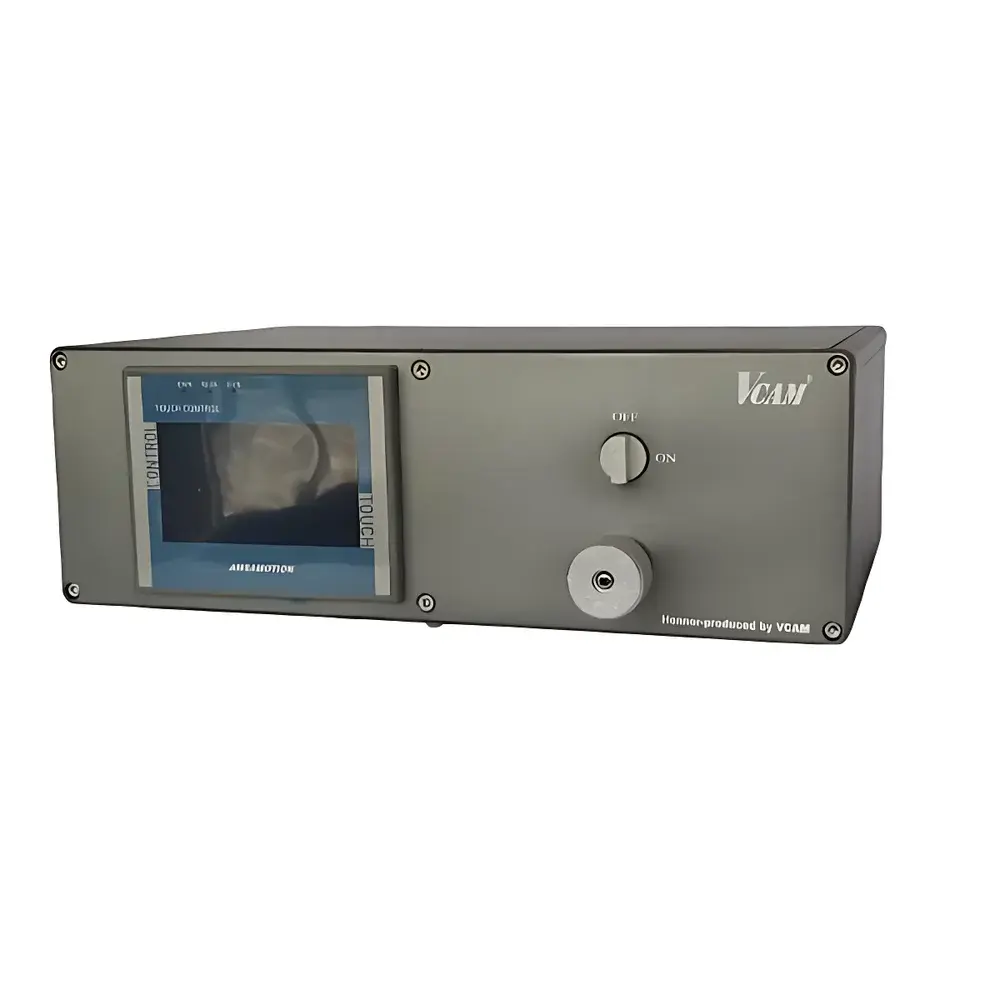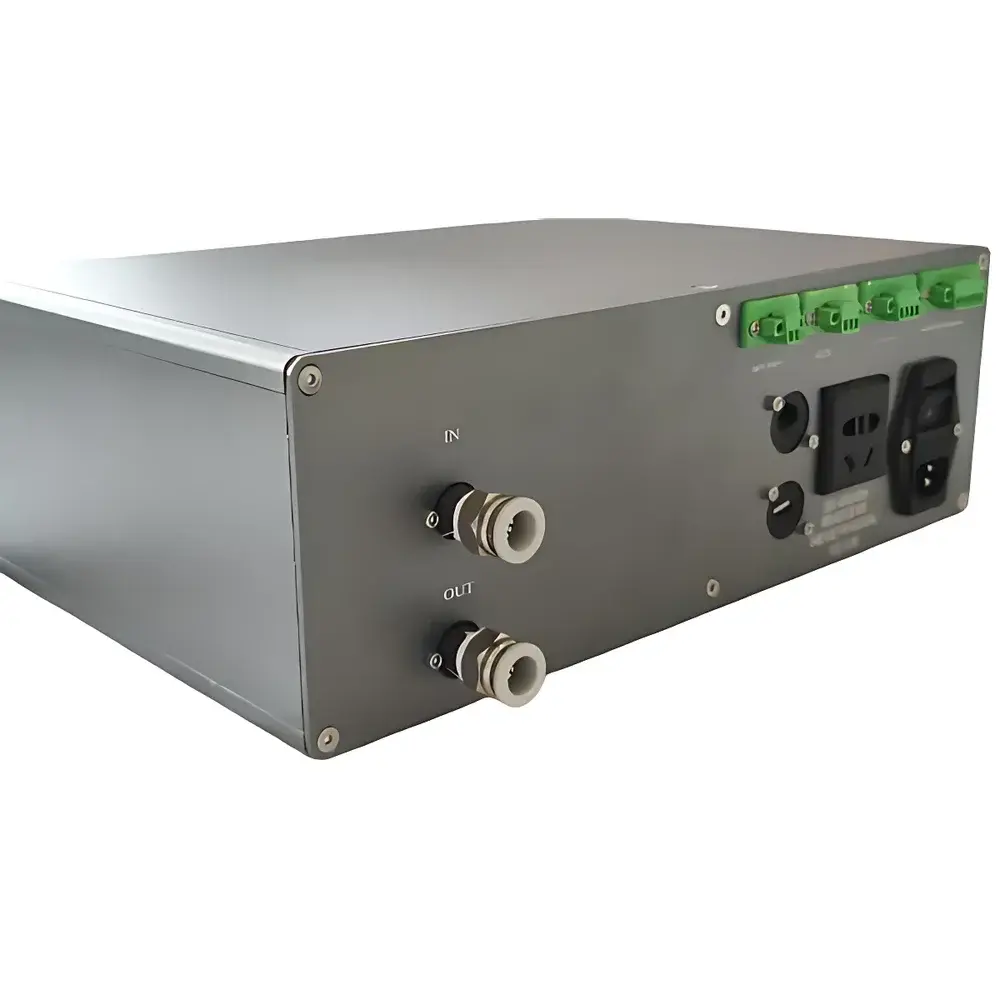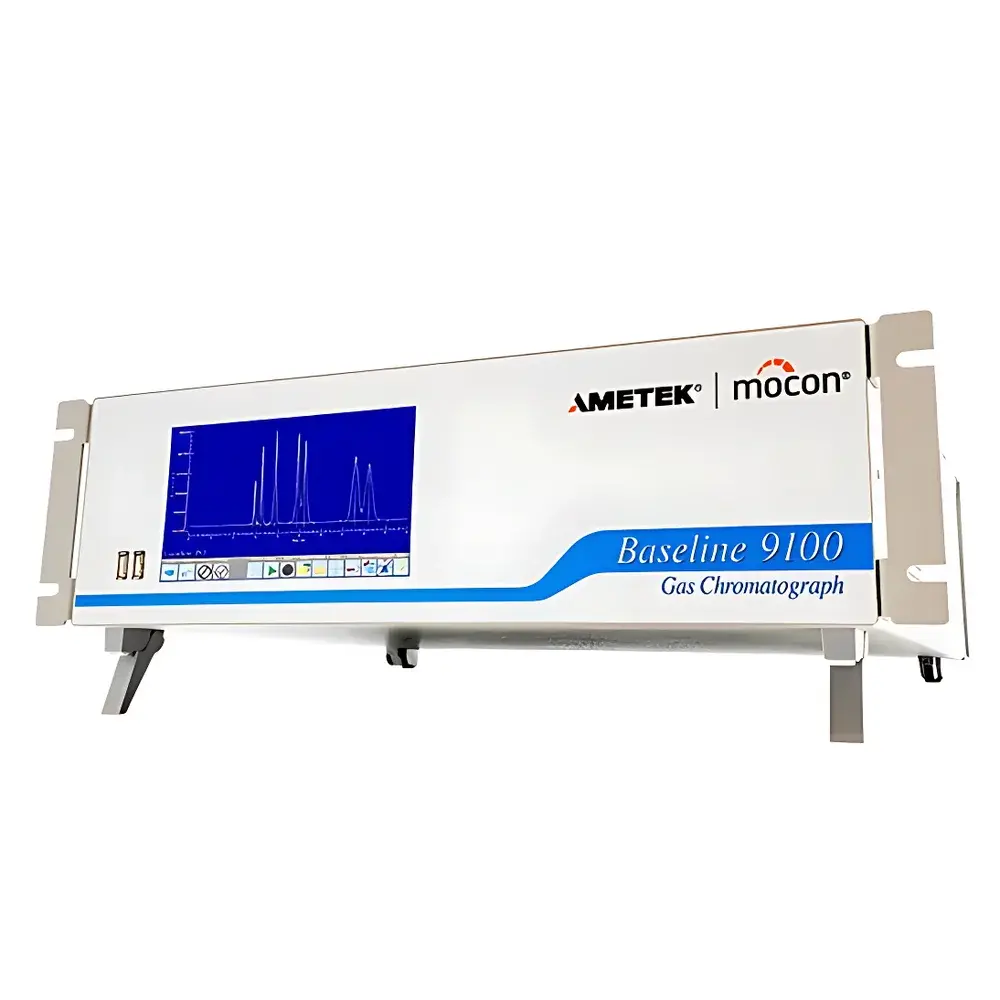
Baseline BASELINE 9100 Online Gas Chromatograph
| Brand | Baseline |
|---|---|
| Origin | USA |
| Manufacturer Type | Authorized Distributor |
| Origin Category | Imported |
| Model | BASELINE 9100 |
| Pricing | Available Upon Request |
Overview
The Baseline BASELINE 9100 Online Gas Chromatograph is an industrial-grade, continuous-duty analytical platform engineered for real-time, sub-part-per-trillion (sub-ppt) to sub-parts-per-billion (sub-ppb) quantification of volatile organic compounds (VOCs), permanent gases, and select inorganic species in process streams, ambient air, or emissions ducts. Built upon decades of chromatographic system design expertise, the instrument employs capillary or packed column gas chromatography with precise carrier gas flow control, temperature-programmed oven operation, and detector-specific signal conditioning. Its architecture follows fundamental GC principles—sample introduction via automated valving, separation in thermally stabilized columns, and selective detection using interchangeable, application-optimized detectors. The system is designed for unattended, long-term deployment in demanding environments including chemical manufacturing, semiconductor fab monitoring, environmental compliance stations, and pharmaceutical cleanroom air surveillance.
Key Features
- Modular detector compatibility: Supports Photoionization Detector (PID), High-Sensitivity PID (HS-PID), Flame Ionization Detector (FID), and Thermal Conductivity Detector (TCD)—each factory-calibrated and electrically isolated for optimal signal integrity.
- Automated FlowGuard™ system: Integrates electronic back-pressure regulation (EPR), programmable sample bypass, auto-ignition sequence for FID, and fail-safe shutdown logic for fuel/air lines during fault conditions.
- Embedded touchscreen HMI: 7-inch color LCD with intuitive, menu-driven interface; supports multilingual display (English, Spanish, French, German, Chinese) and user-defined configuration templates.
- Flexible sampling architecture: Configurable for single-point or multi-point sampling via solenoid-valve manifolds; compatible with heated sample lines and pressure-regulated inlet modules.
- Robust data handling: Onboard storage for up to 12 months of chromatograms (compressed binary format); ASCII output via RS-232 or TCP/IP (LAN); isolated 4–20 mA analog outputs with programmable scaling; dry-contact relay outputs for alarm, diagnostic, and event signaling.
- Compact industrial form factor: Designed for 19-inch rack-mount (2U) or benchtop installation; meets IP54 enclosure rating for dust and splash resistance; operating temperature range: 5–40 °C.
Sample Compatibility & Compliance
The BASELINE 9100 accommodates gaseous samples with dew points below –40 °C and particulate loading <0.1 µm. It supports direct injection of compressed air, nitrogen, helium, hydrogen, or synthetic air matrices, as well as conditioned stack or duct gas (with optional moisture and particulate filtration). Column chemistries include polyethylene glycol (WAX), porous polymer PLOT (e.g., Al₂O₃/KCl, molecular sieve 5Å), and fused-silica capillaries tailored for C₁–C₁₂ hydrocarbons, halogenated VOCs, sulfur compounds, or permanent gases. The system complies with ASTM D6420 (GC-PID for VOCs), EPA Method 25A (FID for total hydrocarbons), ISO 16000-6 (indoor air VOC analysis), and supports audit-ready data logging aligned with GLP and 21 CFR Part 11 requirements when paired with validated software configurations.
Software & Data Management
Internal firmware enables full method scheduling, automatic zero/span calibration at user-defined intervals (e.g., every 1, 4, or 24 hours), retention time locking, and peak integration using adaptive baseline algorithms. All chromatographic data—including raw detector voltage traces, processed peak tables, calibration logs, and system health metrics—are timestamped and stored locally on a removable SD card or streamed in real time via Ethernet. ASCII-formatted results are structured per IEC 61850-8-1 conventions for SCADA integration. Optional PC-based Baseline ChromaView™ software provides remote diagnostics, advanced reporting (PDF/CSV export), trend analysis, and configurable alarm thresholds with email/SNMP notification support.
Applications
- Continuous emissions monitoring (CEMS) for regulated VOCs (e.g., benzene, toluene, xylene) in refinery flare stacks and incinerator exhaust.
- In-line purity verification of high-purity process gases (e.g., N₂, Ar, He) used in semiconductor lithography and deposition tools.
- Indoor air quality (IAQ) surveillance in pharmaceutical cleanrooms per ISO 14644-8, detecting trace solvent residuals from cleaning agents.
- Leak detection and quantification (LDAR) programs compliant with EPA 40 CFR Part 60, Subpart VV and OOOOa.
- Real-time monitoring of biogas composition (CH₄, CO₂, H₂S, NH₃) in anaerobic digestion facilities.
FAQ
What detector options are available for the BASELINE 9100, and how are they selected?
Detector selection is application-dependent and determined by analyte class, required detection limit, and matrix interference profile. PID is preferred for aromatic and unsaturated VOCs; HS-PID extends sensitivity to aliphatics; FID delivers universal hydrocarbon response with ppm–ppb linearity; TCD suits permanent gas analysis (H₂, O₂, N₂, CO, CH₄) where flame-based detection is prohibited.
Does the system support remote calibration and validation?
Yes—automated zero/span calibration is fully programmable and can be triggered manually, on a fixed schedule, or in response to system events (e.g., power cycle, detector drift alert). Certified gas standards are introduced via dedicated calibration ports with integrated mass flow controllers.
Can the BASELINE 9100 integrate with existing DCS or MES platforms?
Absolutely—the instrument provides native Modbus TCP, OPC UA (via optional gateway), and 4–20 mA analog outputs with HART capability. ASCII data streams over Ethernet conform to industry-standard delimiter formats for seamless ingestion into PI System, Ignition, or Siemens Desigo CC.
What maintenance intervals are recommended for uninterrupted operation?
Routine maintenance includes quarterly column bake-out, biannual detector cleaning (FID jet, PID lamp), and annual verification of EPR accuracy and oven temperature uniformity. Preventive service kits and OEM-certified field support are available through authorized Baseline service partners.