
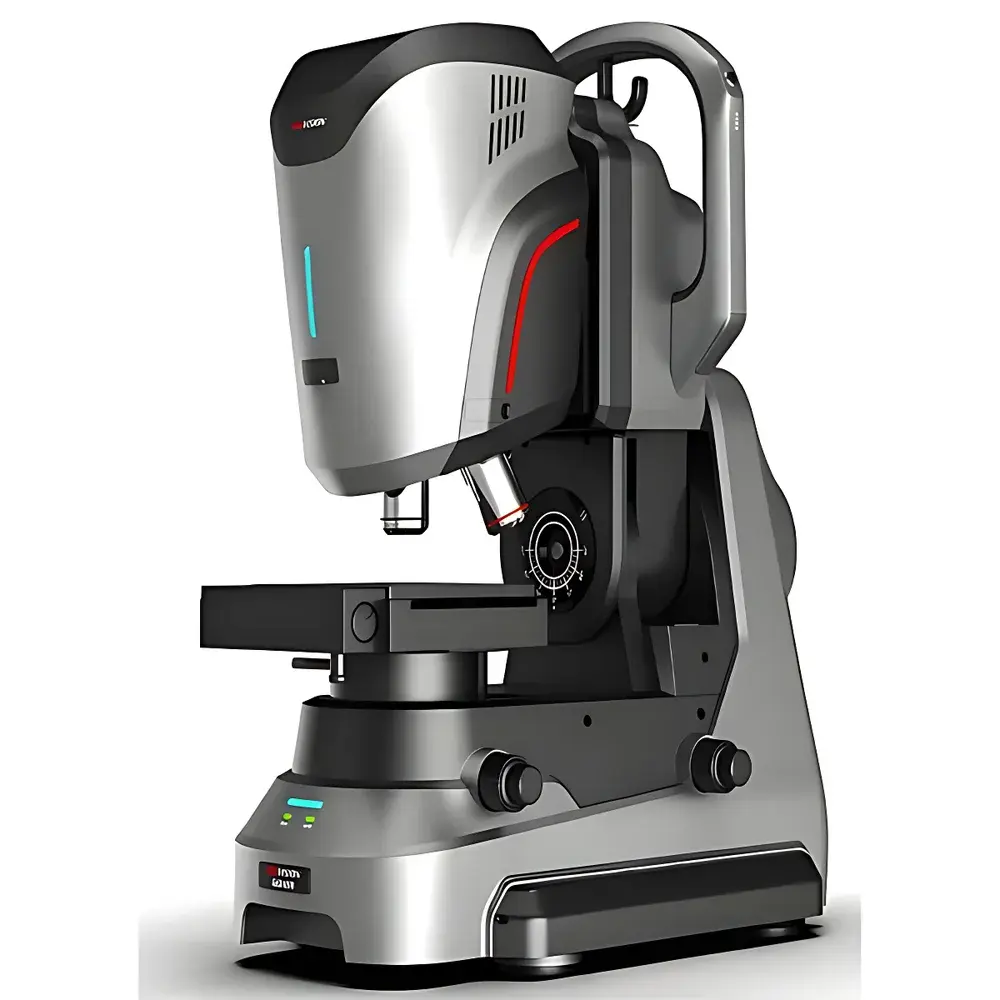
HIKVISION AM1160 Ultra-Deep-Field 3D Digital Microscope
| Brand | HIKVISION |
|---|---|
| Origin | Jiangsu, China |
| Manufacturer Type | Authorized Distributor |
| Country of Origin | China |
| Model | AM1160 |
| Imaging Sensor | 12 MP CMOS |
| Illumination | Adjustable LED (Brightfield Episcopic/Oblique, Darkfield Episcopic/Oblique, Mixed, Transmitted) |
| 3D Imaging Capability | Yes |
| Depth of Field Synthesis | Up to 30 mm |
| Magnification Range | 30×–6000× |
| Motorized Axes | XYZ (dual Z: upper & lower), XY translation stage |
| Objective Turret | 4-position fully motorized |
| Operating System | Windows 10 preinstalled on integrated industrial PC (12th Gen Intel Core processor) |
| Key Software Functions | Real-time auto-focus, 2D/3D panoramic stitching, AI-assisted 3D surface reconstruction, multi-mode metrology (length, angle, area, roughness profile, step height), image/video capture, HDR enhancement, split-screen viewing |
Overview
The HIKVISION AM1160 Ultra-Deep-Field 3D Digital Microscope is an industrial-grade optical inspection system engineered for high-fidelity surface topography analysis and quantitative dimensional metrology. It operates on a hybrid optical architecture combining telecentric imaging optics with structured illumination and focus-stacking algorithms to reconstruct volumetric surface data from serial focal planes. Unlike conventional compound microscopes limited by shallow depth of field at high magnifications, the AM1160 synthesizes up to 30 mm of axial depth in a single acquisition—enabling full-focus visualization of steep sidewalls, layered substrates, and irregularly contoured samples without mechanical repositioning. Designed for use in precision manufacturing environments, it delivers traceable, repeatable measurements compliant with ISO 25178-2 (surface texture) and ASTM E2923 (digital microscopy validation) frameworks.
Key Features
- 12-megapixel global-shutter CMOS sensor with real-time HDR processing for artifact-free imaging under variable reflectivity conditions
- Motorized dual-Z-axis configuration (upper and lower focus drives) enabling independent control of objective and sample positioning for optimized working distance management
- Four-position fully automated objective turret supporting seamless switching between 1×, 5×, 10×, and 50× telecentric objectives—each calibrated and registered within the software coordinate system
- Multi-modal LED illumination engine with independently adjustable intensity for six illumination modes: brightfield episcopic, brightfield oblique, darkfield episcopic, darkfield oblique, mixed (combined bright/dark), and transmitted backlight—programmable per measurement step
- Integrated industrial control unit featuring 12th-generation Intel Core i5/i7 CPU, 16 GB DDR4 RAM, 512 GB NVMe SSD, and native Windows 10 IoT Enterprise support for deterministic I/O timing and long-term system stability
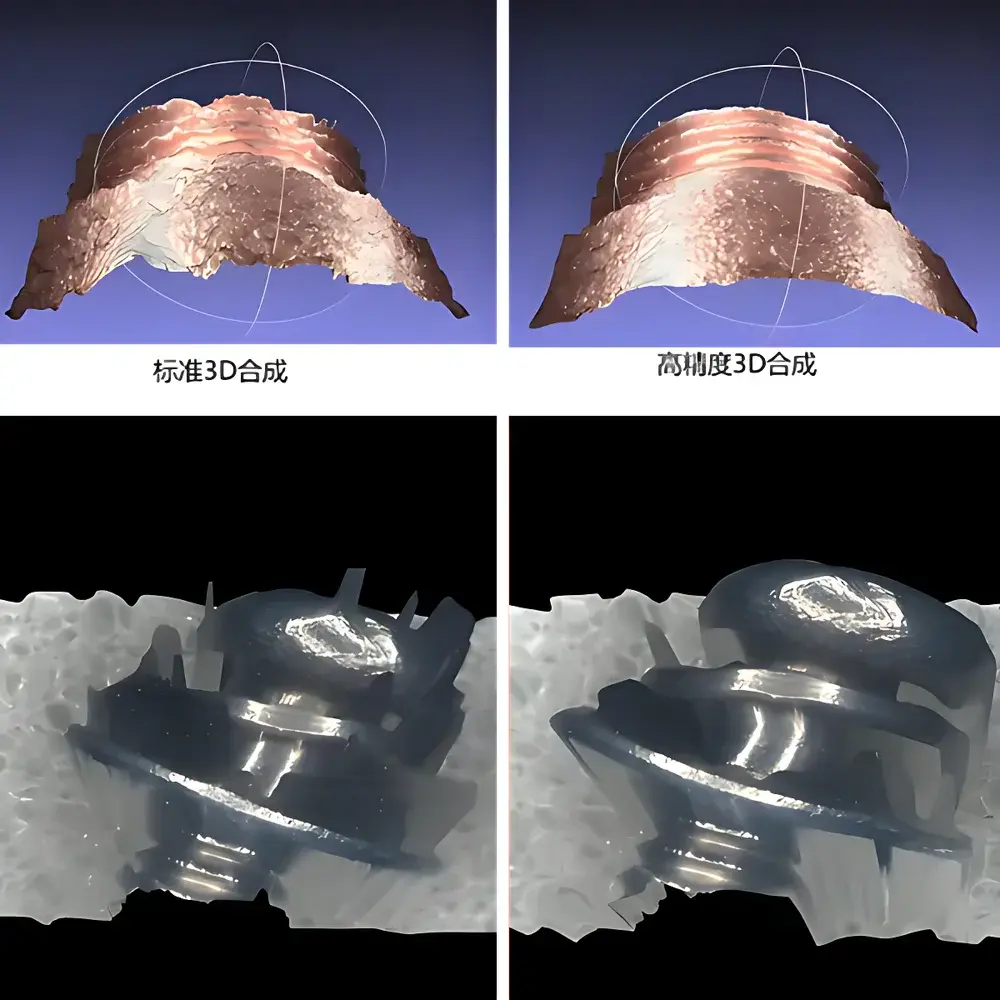
- Real-time AI-accelerated 3D surface reconstruction engine performing sub-pixel focus detection and adaptive mesh generation without external GPU dependency
Sample Compatibility & Compliance
The AM1160 accommodates specimens ranging from silicon wafers and PCB assemblies to metal alloy cross-sections, polymer composites, and coated optical components. Its large working distance (up to 110 mm at lowest magnification) and motorized XY stage (100 × 100 mm travel) support macro-to-micro transition without sample relocation. All measurement workflows comply with GLP/GMP documentation requirements via embedded audit trail logging (user actions, parameter changes, calibration events). Exported reports include metadata conforming to ASTM E2923 Annex A2 (digital image provenance) and support PDF/A-2b archival format. Optional calibration kits enable traceability to NIST-traceable standards for length and depth measurements.
Software & Data Management
HIKVISION’s proprietary VisionMaster™ 3D software provides a unified interface for acquisition, analysis, and reporting. It supports role-based access control (RBAC), electronic signatures per FDA 21 CFR Part 11, and encrypted local database storage. Measurement data—including point clouds, cross-sectional profiles, and annotated 2D/3D overlays—are exportable in standardized formats: CSV (for statistical process control), STL (for CAD integration), and TIFF/OME-TIFF (for microscopy data repositories). Batch processing scripts allow automated execution of recurring inspection routines across multiple parts or lots, with pass/fail thresholds configurable per feature type.
Applications
- Semiconductor packaging inspection: bond wire geometry, die attach void detection, mold compound delamination assessment
- Automotive electronics: solder joint integrity evaluation (IPC-A-610 Class 3), flex circuit trace continuity, connector pin coplanarity
- Advanced materials R&D: grain boundary mapping in sintered ceramics, coating thickness profiling on thermal barrier layers, fiber orientation analysis in CFRP laminates
- Pharmaceutical device manufacturing: laser-drilled aperture verification in inhaler nozzles, tablet coating uniformity quantification, microfluidic channel fidelity assessment
- Failure analysis labs: fracture surface characterization (ductile vs. brittle modes), corrosion pit depth profiling, intermetallic growth layer measurement
FAQ
What is the maximum achievable lateral resolution at 6000× magnification?
Lateral resolution is governed by the Nyquist-Shannon sampling criterion and objective NA; at 6000×, effective resolution is approximately 0.35 µm under optimal lighting and focus conditions.
Does the system support external trigger synchronization for inline production monitoring?
Yes—the AM1160 features TTL-compatible input/output ports for hardware-triggered image capture synchronized with PLC or motion controller signals.
Can measurement data be integrated into MES or QMS platforms?
Via RESTful API and OPC UA server module (optional license), enabling bidirectional communication with Siemens Opcenter, Rockwell FactoryTalk, or ETQ Reliance.
Is calibration required before each use?
No—system-level calibration is performed during installation and stored in non-volatile memory; daily verification using certified reference standards is recommended per ISO/IEC 17025.
How is focus-stacking depth determined for heterogeneous samples?
The software employs contrast gradient analysis across Z-stack frames to dynamically define start/end focus limits, eliminating manual range definition for mixed-height features.







